
Last updated: May 16, 2026
In this article
- Can Dogs Eat Thanksgiving Stuffing? The Short Answer
- Why the Onion and Garlic in Stuffing Matter So Much
- The Other Stuffing Ingredients That Make It Worse
- Symptoms to Watch for After Accidental Ingestion
- What to Do If Your Dog Stole Stuffing
- Dogs at Higher Risk From Stuffing Exposure
- Holiday Foods That Are Actually Dog-Safe
- Frequently Asked Questions
Can Dogs Eat Thanksgiving Stuffing? The Short Answer
If you are asking whether dogs can eat Thanksgiving stuffing, the answer is a firm no. Almost every traditional stuffing recipe — whether it goes into the bird or bakes alongside it — is built on a foundation of onion and garlic, and both belong to the allium family that is genuinely toxic to dogs. On top of those, many recipes add butter, sausage drippings, sage and thyme in heavy quantity, and sometimes raisins, currants, or chestnuts soaked in alcohol. Each addition adds a separate problem on top of the core allium hazard.
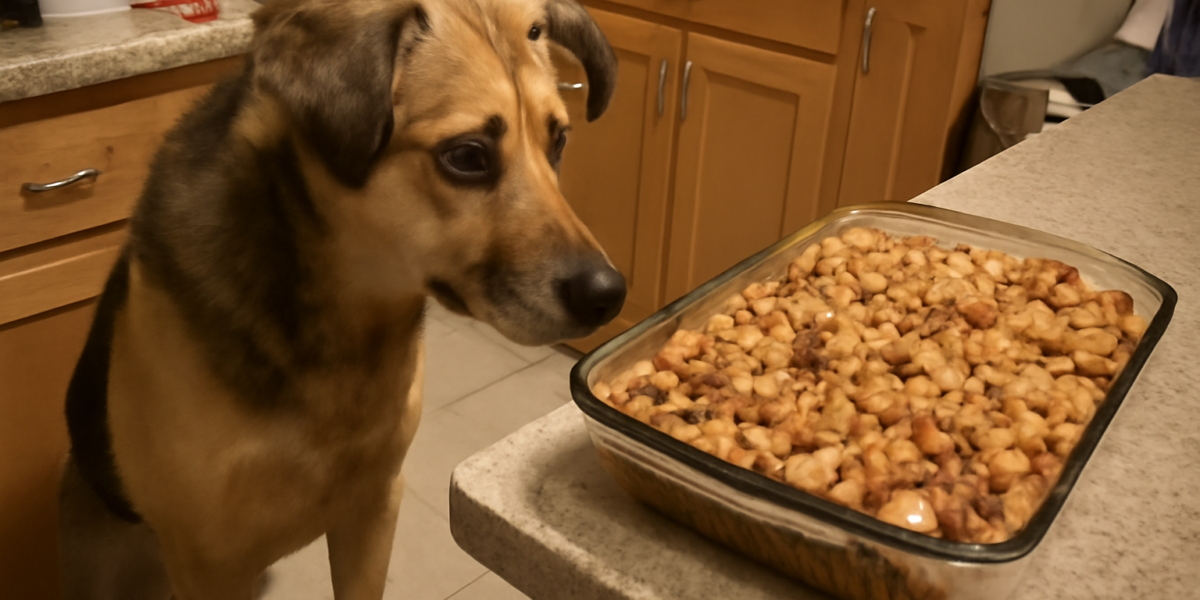
The hard part is that stuffing looks so harmless. A piece of buttery bread, a smell of herbs, no obvious “danger food” appearance — it does not register the same way a chocolate bar or a bowl of grapes does. But the allium load in a typical Thanksgiving stuffing is significant, and it does not take a large serving to put a small dog over the safe threshold. Plan to keep the stuffing well off the floor and well off the kids’ “share with the dog” plates this year.
Why the Onion and Garlic in Stuffing Matter So Much
Onions and garlic contain organosulfur compounds — most importantly N-propyl disulfide and thiosulfates — that damage the membranes of dog red blood cells. The damage shows up as Heinz bodies on a blood smear and can progress to hemolytic anemia, where the red blood cells rupture and the dog becomes oxygen-starved. The toxicity is dose-dependent, and the threshold most veterinary toxicologists cite is around 0.5 percent of body weight for onion and somewhat less for garlic, since garlic is more concentrated.
What makes stuffing particularly dangerous is that the cooked, mashed, soaked-into-bread form does not lose toxicity. Cooking and dehydrating actually concentrate the active compounds — that is why onion powder and garlic powder are even more dangerous per gram than the fresh vegetables. A typical stuffing recipe might use one or two whole onions and four to six garlic cloves blended into the bread mass, then bake them down. A single cup of finished stuffing can carry the toxic equivalent of a small fresh onion. Our deeper guides on onions and dogs and garlic and dogs walk through the chemistry and the dose math in plain language.
Allium toxicity has a frustrating delay. You will rarely see immediate signs in the first hours; it takes one to three days for the red blood cell damage to manifest as pale gums, dark or coffee-colored urine, weakness, rapid breathing, and exercise intolerance. Some dogs vomit shortly after the meal, but the absence of immediate vomiting does not mean the dog is safe. Treat the calendar, not the moment of ingestion.
The Other Stuffing Ingredients That Make It Worse
Even setting aside alliums, several other common stuffing ingredients are problems on their own. Sausage stuffing — especially Italian sausage, breakfast sausage, or chorizo varieties — adds fat, sodium, and often more garlic and onion powder. Oyster stuffing carries shellfish risk for sensitized dogs. Cornbread stuffings often include jalapeno or other peppers, which cause GI upset.
Some heritage and regional recipes include raisins or dried cranberries with added grape juice. Raisins are catastrophically toxic to dog kidneys, with no known safe dose — see our detailed guide on raisins for dogs. Even a small handful of raisin-laced stuffing can cause acute kidney injury in some dogs, and the susceptibility appears to be individual rather than predictable from breed or size. Fruitcake-style stuffings or Italian “panettone” stuffings can include alcohol-soaked dried fruit, layering ethanol toxicity on top of everything else.
Butter and pan drippings push the fat content high enough to provoke pancreatitis in fat-sensitive dogs. Heavy use of fresh sage and thyme is unlikely to cause serious harm in the amounts found in stuffing — see our sage for dogs and thyme guides for context — but combined with the rest of the ingredient list, they add nothing helpful.
Symptoms to Watch for After Accidental Ingestion
Stuffing toxicity unfolds in two phases. The first phase, in the first six to twelve hours, often shows simple gastric upset — vomiting, drooling, refusal to eat, mild lethargy. Many owners assume this is the worst of it and relax once the vomiting stops. The second phase, twenty-four to seventy-two hours later, is the dangerous one: pale or yellowish gums, weakness, rapid heart rate, brown or red-tinged urine, exercise intolerance, and increased respiratory effort. These are signs of hemolytic anemia and warrant emergency care.
If raisins were in the stuffing, you may also see decreased urination or no urination at all in the second-day window, along with bad breath and continued vomiting. Both pictures — anemia and kidney injury — call for IV fluids, blood work, and supportive care that no home remedy will substitute for. Dogs treated within the first twelve to twenty-four hours typically do well; dogs whose owners “wait and see” past forty-eight hours can face serious or even fatal outcomes.
What to Do If Your Dog Stole Stuffing
Step one is to assess the amount and the recipe. Ask whoever cooked: was there onion? Garlic? Onion powder? Sausage? Raisins? Alcohol-soaked dried fruit? Even a vague answer is more useful than nothing — “yes, lots of onions” tells you to act faster than “just bread, butter, and sage.” Weigh your dog if you don’t already know the current weight, since dose calculations in toxicology are body-weight based.
Call Pet Poison Helpline at 855-764-7661 or ASPCA Animal Poison Control at 888-426-4435. Both lines run twenty-four hours a day, charge a per-case consult fee, and can give you a specific risk assessment based on your dog’s weight, the recipe, and the amount eaten. They will tell you whether home monitoring is appropriate or whether you need to head to the emergency clinic for decontamination and supportive care.
Do not induce vomiting at home unless a veterinary professional tells you to. Hydrogen peroxide dosing is dangerous to get wrong, and inducing vomiting after some toxin exposures can cause more harm than good. If the ingestion happened within the past two hours and the helpline recommends decontamination, your veterinarian can do it safely with proper medications.
Dogs at Higher Risk From Stuffing Exposure
Some dogs are far more vulnerable to allium-induced anemia than others. Japanese breeds — Akita, Shiba Inu, and to some extent Jindo — carry a genetic variant of red blood cell potassium channels that makes them more sensitive to oxidative damage. Anemic dogs, dogs already on certain medications, and puppies under twelve weeks have less reserve to withstand red blood cell loss.
Small dogs face a math problem: a serving size that a Labrador’s body could probably tolerate represents a much larger percentage of a Chihuahua’s body weight. A four-pound dog eating two ounces of stuffing has consumed a far larger relative dose than an eighty-pound dog eating the same amount. For tiny dogs, even a “stolen mouthful” warrants a call to the helpline.
Dogs with chronic kidney disease, dogs on chemotherapy, dogs recovering from surgery, and dogs with pre-existing liver issues all do worse with toxin exposures of any kind. If your dog falls into any of these groups and you suspect any stuffing ingestion, skip the wait-and-see approach and head straight to the vet.
Holiday Foods That Are Actually Dog-Safe
You can absolutely include your dog in the Thanksgiving meal without going near the stuffing. Plain roasted turkey breast, with no skin and no gravy, is the standard “dog plate” item — see our turkey for dogs guide for portion guidance. A small spoonful of plain pumpkin puree (not pumpkin pie filling, which contains sugar and spices) is a classic dog-friendly Thanksgiving treat that helps with digestion and adds fiber that supports stool quality.
Plain steamed green beans, plain roasted sweet potato with no butter or marshmallow, and a few fresh cranberries are all reasonable additions to a small dog plate. Avoid mashed potatoes (usually loaded with butter, milk, and sometimes garlic), gravy (made from drippings, often with onion), green bean casserole (cream-of-mushroom soup contains onion), and anything labeled “savory” or “herbed” without a clear ingredient breakdown. Plain cooked carrots and a sliver of plain unbuttered roll are unobjectionable additions if your dog tolerates grain.
If the household is also serving cranberry sauce, our cranberry sauce guide covers the sugar and citrus considerations. For the post-meal dessert round, see our warnings on fruitcake and eggnog — both are firmly off-limits. The same applies to cured holiday ham, which carries similar sodium and pancreatitis concerns.
For the Thanksgiving table specifically, the simplest rule is to plate the dog before the seasonings come out. Set aside a few pieces of plain roasted turkey, a small spoon of plain pumpkin puree, and a handful of plain steamed vegetables before the cook starts adding herbs, butter, and salt. The dog gets a “real Thanksgiving meal” that they recognize as something special, with none of the toxic ingredients.
Frequently Asked Questions
Is the bread inside stuffing safe even if I pick out the onions?
No. Once the onion and garlic have cooked into the bread, the toxic compounds are dispersed throughout the dish. Picking out visible vegetables does not remove what has soaked into the bread crumb. Treat the entire dish as off-limits.
My dog ate a small piece of stuffing — should I rush to the vet?
For a healthy medium or large dog who ate a small bite, watch closely for forty-eight to seventy-two hours and call your vet or Pet Poison Helpline at 855-764-7661 if you see any vomiting, lethargy, pale gums, or dark urine. For small dogs, puppies, or dogs eating a meaningful portion, call right away rather than waiting for symptoms.
What about stuffing without onion or garlic?
If you make a deliberately dog-safe stuffing using only bread, broth, plain herbs like rosemary or parsley, and lean cooked meat — no onion, garlic, raisins, alcohol, or heavy butter — a small spoonful is reasonable. Use low-sodium broth, since traditional broth and stock often contain onion and garlic powder.
Are stuffing balls or sausage stuffing worse than bread stuffing?
Yes. Sausage adds fat and concentrated seasonings, and many sausage products contain garlic powder. Pancreatitis risk goes up alongside the allium risk. Treat sausage-based stuffings as especially off-limits.
How long do I need to monitor my dog after stuffing exposure?
Watch for at least seventy-two hours. Allium-induced anemia is famously delayed — the dog can look perfectly normal on day one and start showing pale gums or weakness on day three. If raisins were involved, also watch urination patterns for the same window. When in doubt, get blood work done.


