
Last updated: May 4, 2026
In this article
Can Dogs Eat Eggnog? The Short Answer
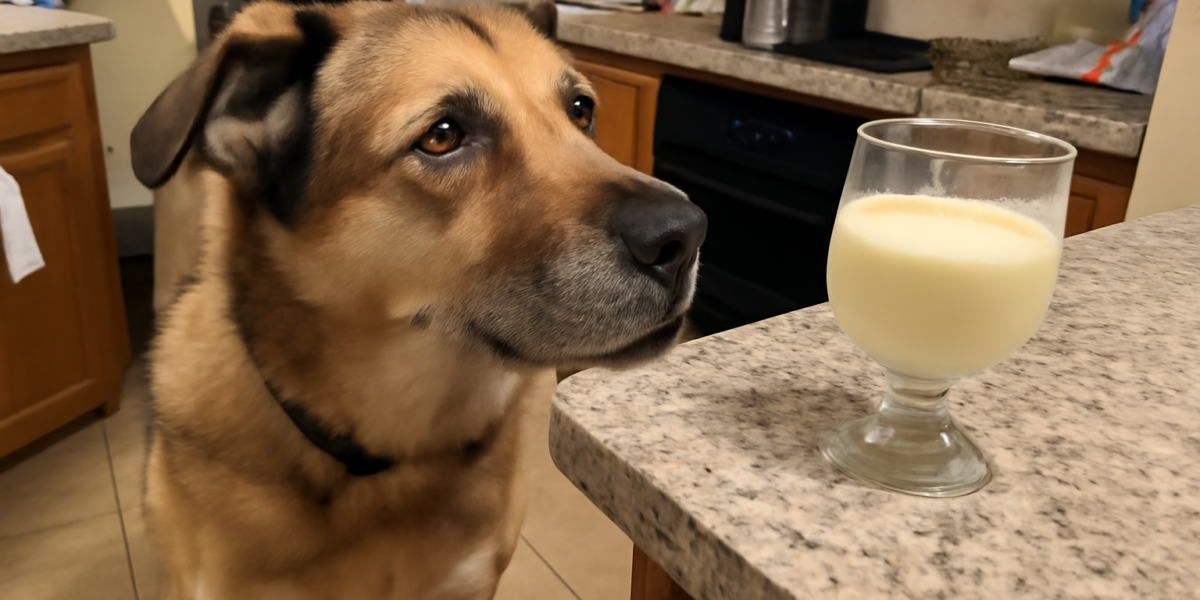
If you are wondering whether dogs can have a sip of eggnog, the honest answer is no. Even the version that looks innocent — a creamy yellow drink in a punchbowl, served at a holiday party — is built on a stack of ingredients that work against dog physiology. Traditional eggnog includes raw eggs, heavy cream, milk, sugar, nutmeg, and almost always rum, bourbon, brandy, or whiskey. Each of those is a problem for dogs in its own right. Stacked together in a single sweet drink that dogs find appealing, eggnog is one of the more underestimated holiday hazards.
Non-alcoholic and “kid-friendly” eggnog versions remove the rum but keep the sugar, dairy, nutmeg, and often raw egg. So while they are less dangerous, they are not safe. Tell guests not to share their cup with the dog, set the punch bowl on a high counter, and treat any commercial eggnog carton as if it were on the same shelf as the chocolate liqueurs. We will go through the specific risks below.
The Alcohol Problem
Most adult eggnog recipes include rum, bourbon, brandy, cognac, or whiskey at meaningful concentrations. Some commercial bottled eggnogs contain alcohol; some do not — read the label. Homemade versions vary widely, with some recipes calling for a quarter cup or more of liquor per cup of finished drink. Aged eggnog, a popular old-fashioned tradition, contains even higher alcohol concentrations because the spirit is part of the preservation.
Dogs metabolize ethanol poorly, and the consequences include hypoglycemia, central nervous system depression, vomiting, metabolic acidosis, low body temperature, and in severe cases respiratory failure. Small dogs face proportionally higher exposure from any given amount, and puppies are especially vulnerable. There is no helpful “safe sip” amount for ethanol — the dose-response varies with body weight, the alcohol percentage, and the dog’s overall health.
Our parallel guide on fruitcake covers the ethanol toxicity picture in more detail, since fruitcake and eggnog share the alcohol risk. If your dog drank any meaningful amount of alcoholic eggnog, call Pet Poison Helpline at 855-764-7661 or your vet right away. Look for wobbliness, sleepiness, slowed breathing, vomiting, or unusual coldness — those are signs to head straight to the emergency clinic.
The Dairy Layer
Even setting aside the alcohol, the dairy load in eggnog is significant. A typical glass contains a mix of whole milk and heavy cream — often a one-to-one ratio — which works out to roughly twelve to fifteen grams of fat and a meaningful lactose dose per serving. Adult dogs are typically lactose-intolerant to varying degrees because they produce less lactase enzyme than puppies do.
For most dogs, the lactose-related symptoms are mild and self-limiting: gas, loose stool, abdominal cramping, sometimes vomiting six to twelve hours after the dairy hit. For dogs with sensitive stomachs, inflammatory bowel disease, or a history of pancreatitis, the response can be more severe. The fat content alone — heavy cream is about 36 percent fat — is enough to provoke pancreatitis in fat-sensitive breeds. Our pancreatitis guide covers the at-risk profile.
If you want to share a dairy treat with your dog occasionally, plain unsweetened yogurt or a small spoon of cottage cheese is a much better choice than eggnog. Both are lower in lactose and contain none of the other concerning ingredients. See our yogurt for dogs and cottage cheese guides for safe portions and brand selection tips.
The Nutmeg Concern
Nutmeg is the spice that gives eggnog its signature warmth, and it is more concerning for dogs than most owners realize. Nutmeg contains myristicin, a compound that at higher doses can cause disorientation, increased heart rate, dry mouth, abdominal pain, and in severe cases hallucinations or seizures. The toxic threshold is well above the trace amount in a sip of eggnog, so a dog who licks a small drop is not in immediate danger from nutmeg alone.
The trouble is that nutmeg-containing exposures stack — a glass of eggnog plus a slice of pumpkin pie plus a piece of spiced cake adds up. Dogs that get into a punchbowl of eggnog can ingest enough nutmeg to show GI signs and mild neurological signs, especially if the eggnog is heavily spiced. Most dogs recover without intervention, but the symptoms are unpleasant and disorienting for both dog and owner.
The same caution applies to other “warming spice” desserts — pumpkin pie filling, gingerbread, spiced cookies, and chai-flavored treats can all contain nutmeg. Trace amounts in baking are not the issue; deliberately fed nutmeg-heavy items are.
Raw Eggs and Salmonella Risk
Traditional eggnog is made with raw eggs that are emulsified into the dairy and never cooked. The salmonella and e. coli risk for human drinkers is real, which is why the FDA and food-safety bodies regularly suggest pasteurized egg substitutes or heated egg-yolk preparations. The same risk applies to dogs, although healthy adult dogs have stronger gastric defenses than humans do.
Salmonella infection in dogs typically presents as vomiting, diarrhea (sometimes bloody), fever, and lethargy. Most healthy adults clear the infection on their own with supportive care. Puppies, senior dogs, and immunocompromised dogs can become quite sick. Dogs with raw food experience are not immune to this risk — egg-borne salmonella is a different exposure profile from pre-frozen muscle meat.
Cooked eggs are dog-safe and a useful protein source — see our eggs for dogs guide. Raw egg whites alone, fed regularly, can also bind biotin in the diet and cause a deficiency over time. The eggnog raw-egg combination, mixed with the rest of the drink, is not a safe protein source for dogs.
The Sugar Load
Eggnog is sweet by design. A typical half-cup serving carries somewhere between fifteen and twenty-two grams of sugar, depending on the recipe. Commercial cartoned eggnogs sometimes use high-fructose corn syrup; homemade versions usually use granulated sugar plus the natural lactose in the dairy.
For a healthy adult dog, that sugar level is not directly toxic, but it contributes to GI upset, dental disease over time, and weight gain. For diabetic dogs, the picture is different — a single glass can spike blood glucose enough to disrupt insulin balance. Some “sugar-free” eggnog products are sweetened with xylitol, which is acutely toxic to dogs at low doses and can cause rapid hypoglycemia and liver injury. Always read labels carefully on “low-sugar” or “diet” beverage products before they come anywhere near your dog.
If Your Dog Drank Eggnog
Step one is to identify what was in the cup. Was it homemade or commercial? Alcoholic or not? How much? When did the dog drink it? A sip of non-alcoholic commercial eggnog from a guest’s glass in a healthy adult medium-sized dog is unlikely to cause more than minor GI upset. A dog that drank from a punchbowl of homemade brandy-spiked eggnog is in a different category entirely.
For small or non-alcoholic exposures, watch for vomiting, diarrhea, and lethargy over the next twelve to twenty-four hours. Most dogs are fine. For alcoholic eggnog or larger amounts, call Pet Poison Helpline at 855-764-7661 or your veterinarian right away. Bring information on the recipe, the alcohol percentage if known, the amount consumed, and your dog’s current weight.
Watch closely for ethanol-specific signs — disorientation, wobbly walking, unusually deep sleep, slow breathing, pale or gray gums, or low body temperature. Hypothermia is a real concern with alcohol exposure, so keep the dog warm with a blanket while you arrange transport. Do not induce vomiting at home.
Dogs Who Should Never Have Eggnog
Some dogs have so little safety margin that even a “harmless taste” of non-alcoholic eggnog is unwise. Dogs with diagnosed pancreatitis, hyperlipidemia, or any prescription low-fat diet should be kept entirely away from eggnog because of the cream and egg yolk fat content. Diabetic dogs cannot safely handle the sugar load. Dogs with chronic kidney disease, IBD, or food sensitivities tolerate the dairy and spice mix poorly.
Puppies under six months, senior dogs over twelve years, and dogs recovering from any GI illness should also stay clear. Pregnant or nursing dogs add a second-line concern: dietary indiscretions during gestation can affect milk quality and puppy GI health. For these dogs, the answer to “can my dog have a sip” is simply no.
Holiday-Friendly Drink and Treat Options for Dogs
If you want to give your dog something festive while the rest of the household has eggnog, you have several clean options. Plain bone broth, gently warmed (not hot), is a dog-friendly “holiday drink” that most dogs love. Make sure the broth is salt-free and contains no onion or garlic — see our bone broth powder and chicken broth guides for selection tips, since most grocery-store broths contain onion powder.
For a sweet treat, a small spoonful of plain unsweetened pumpkin puree mixed with a little plain yogurt makes a creamy, festive-looking “dog eggnog” that uses none of the toxic ingredients. A few blueberries on top add color. For larger gatherings, freeze the mixture in silicone molds for “holiday pupsicles.”
Skip every other festive drink option you might be tempted by — hot cocoa is acutely toxic, hot toddies contain alcohol, mulled wine is alcohol plus citrus zest, and apple cider is high in sugar and often contains spices. Our broader holiday warnings on fruitcake, stuffing, and candy cover the rest of the season’s hazards.
Frequently Asked Questions
Is non-alcoholic eggnog safe for dogs?
Not really. Removing the alcohol takes care of the most acute risk, but the dairy, sugar, raw egg, and nutmeg remain. A small accidental taste in a healthy adult dog is unlikely to cause real harm, but deliberate sharing is not recommended. There are better ways to include the dog in the holiday.
What about eggnog ice cream or eggnog flavoring?
Eggnog ice cream contains the same dairy, sugar, and nutmeg risks plus added stabilizers — and may contain alcohol depending on the brand. Treat it the same as the drink. “Eggnog-flavored” coffee creamers and syrups can contain xylitol or alcohol; always check the label.
My dog licked a glass — should I call the vet?
For a small lick from a healthy adult dog, monitor at home for the next twelve to twenty-four hours. For small dogs, puppies, or any dog where the amount might have been more than a lick, call your vet or Pet Poison Helpline at 855-764-7661 for case-specific advice. If alcohol was involved, call right away regardless of the amount.
How much alcohol is too much?
There is no universal safe threshold — even small amounts can cause hypoglycemia in puppies and small dogs. Higher-proof eggnog (aged or “stiff” varieties) is more dangerous per ounce than light commercial eggnog. Treat any meaningful alcohol exposure as a vet call.
What signs of alcohol poisoning should I look for?
Disorientation, stumbling, unusual sleepiness, slow or shallow breathing, vomiting, low body temperature, and pale gums are all warning signs. Severe cases progress to seizures, collapse, or coma. Any of these signs after eggnog exposure means you need an emergency clinic now.


