
Last updated: May 4, 2026
In this article
- Can Dogs Eat Halloween Candy? The Short Answer
- Chocolate: The Headline Hazard
- Xylitol: The Quiet Killer
- Raisins, Macadamia Nuts, and Other Hidden Toxins
- The Wrapper Problem
- What to Do If Your Dog Ate Halloween Candy
- Symptoms to Watch For After Candy Ingestion
- Halloween Prevention Strategy
- Dog-Safe Halloween Treat Alternatives
- Frequently Asked Questions
Can Dogs Eat Halloween Candy? The Short Answer
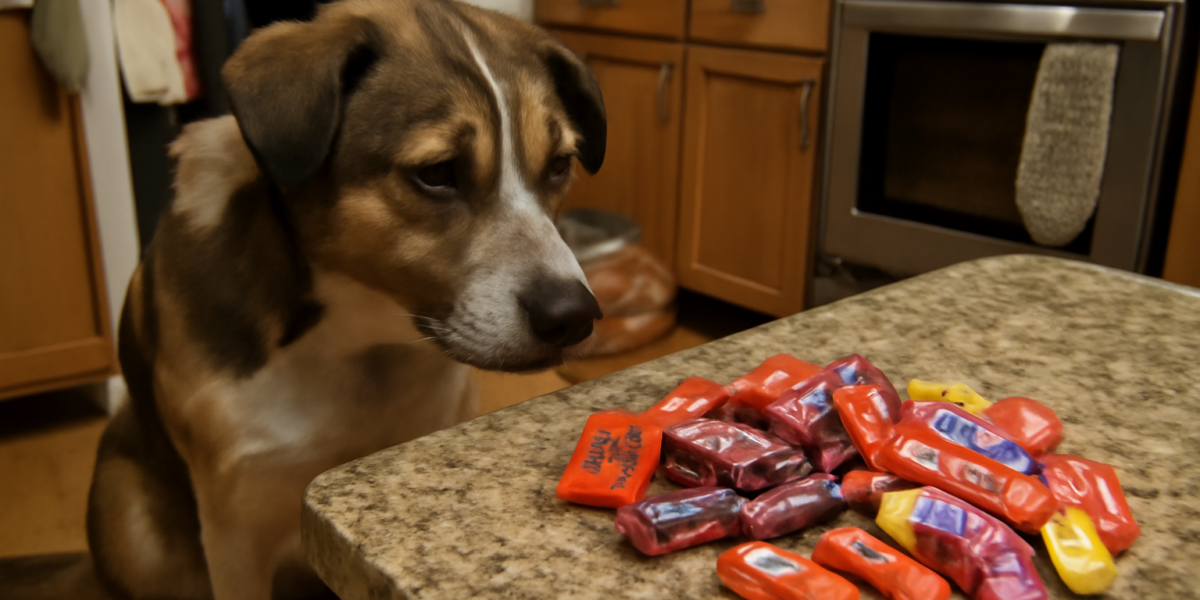
If you are asking whether dogs can eat any of the candy in a Halloween bag, the answer is no — and Halloween night is one of the busiest emergency calls of the year for veterinary toxicologists. The trick-or-treat haul is essentially a sampler box of dog-toxic substances. Chocolate, xylitol, raisins, macadamia nuts, and small wrappers all show up in the same bowl. Add the chaos of a doorbell ringing every two minutes, kids running in and out, and candy spilled across the floor, and you have the perfect conditions for a dog to ingest something dangerous before anyone notices.
The single most important Halloween rule: every piece of candy is off-limits to dogs. The wrappers are off-limits too. If your dog gets into a candy stash, do not assume “it was probably just one piece” — call Pet Poison Helpline at 855-764-7661 or ASPCA Animal Poison Control at 888-426-4435 and have them help you figure out what was eaten and what to do. We will walk through each major hazard below so you know what you are dealing with.
Chocolate: The Headline Hazard
Chocolate is the most familiar Halloween toxicity for dog owners, and it is also one of the most dose-dependent. The two active compounds — theobromine and caffeine — are stimulants that dogs metabolize slowly, leading to vomiting, hyperactivity, rapid heart rate, tremors, and at higher doses seizures and cardiac arrhythmia. Toxicologists generally consider mild signs to begin around 9 milligrams of theobromine per kilogram of body weight, with severe signs and risk of death at 100 milligrams per kilogram or higher.
The type of chocolate matters enormously. Milk chocolate contains roughly 50 milligrams of theobromine per ounce. Dark chocolate runs 130 to 450 milligrams per ounce depending on the cocoa percentage. Baking chocolate and cocoa powder are the most dangerous, sometimes exceeding 700 milligrams per ounce. White chocolate has very little theobromine but plenty of fat and sugar, so it carries pancreatitis and GI risks rather than stimulant toxicity.
Halloween bags often contain a mix — fun-size milk chocolate bars, dark chocolate truffles, chocolate-covered nuts, and chocolate-covered raisins. Each piece needs to be counted. Our deeper guide on chocolate for dogs walks through dose math by body weight and chocolate type, and our coverage of pancreatitis covers what happens after the high-fat chocolate exposure passes.
Xylitol: The Quiet Killer
Xylitol is a sugar alcohol used in many “sugar-free” candies, gums, mints, and increasingly in some peanut butter brands. It is dramatically more toxic to dogs than chocolate is, and it is the ingredient most owners do not check for. In dogs, xylitol triggers a rapid insulin release that can drop blood sugar dangerously within fifteen to thirty minutes of ingestion, with hepatotoxicity (liver injury) developing over the next twelve to seventy-two hours.
The threshold for hypoglycemia is around 0.1 grams of xylitol per kilogram of body weight; for hepatotoxicity, around 0.5 grams per kilogram. A single piece of sugar-free gum can contain enough xylitol to cause hypoglycemia in a small dog. Some products are now labeling xylitol as “birch sugar” or hiding it under generic “sugar alcohols” — read every ingredient list carefully, and if a product just says “sugar-free” without specifying the sweetener, treat it as suspect.
Xylitol can show up in candy you would not expect: sugar-free gummies, mints, candy canes, chocolate bars marketed as keto or low-carb, and some bake-sale homemade items. Signs of xylitol poisoning include vomiting, weakness, wobbliness, collapse, and seizures within an hour of ingestion. If you suspect xylitol exposure, head to the emergency clinic immediately — this is one of the few toxin exposures where every minute genuinely matters.
Raisins, Macadamia Nuts, and Other Hidden Toxins
Beyond chocolate and xylitol, Halloween candy bags often hide other dog-toxic ingredients. Chocolate-covered raisins (Raisinets and similar) deliver a double hit — chocolate plus raisins, with the raisin component capable of causing acute kidney injury at unpredictable doses. Our grapes for dogs and raisins for dogs guides cover the toxicity mechanism in detail.
Macadamia nuts hide in some chocolate bars (notably some Mauna Loa and Hawaiian-themed varieties) and in white-chocolate-macadamia cookies that show up in homemade Halloween treats. Macadamias cause weakness, hyperthermia, vomiting, and tremors typically within twelve hours. See our macadamia nuts guide for the full picture.
Some homemade or international candies contain alcohol — chocolate liqueurs, rum balls, and brandied cherries are sometimes mixed in. Some candies contain coffee or espresso — espresso beans dipped in chocolate are particularly dangerous because they combine the theobromine of chocolate with significant caffeine. Hard candies and lollipops carry choking risk. Even seemingly innocent candies — taffy, caramels, peanut brittle — are loaded with sugar and can stick to teeth or cause GI obstruction.
The Wrapper Problem
An often-overlooked Halloween hazard is the wrapper itself. Dogs that find a candy stash typically eat candy and wrapper together, and the wrappers — foil, plastic, paper, and the cardboard boxes from candy multipacks — can cause GI obstruction or perforation. Lollipop sticks are particularly bad. Some dogs swallow whole bars in their wrappers and then have wrappers come up in vomit hours later.
If you find evidence of wrapper ingestion — pieces of foil in your dog’s mouth, missing wrappers from a stash you can only partially count — note it specifically when you call the helpline or your vet. The wrapper changes whether vomiting can be safely induced and whether imaging is needed. It also means a “small amount” of candy might still be a concern because of the wrapper alone.
What to Do If Your Dog Ate Halloween Candy
The first move is to count what is missing. Save the wrappers, save the bags, and save the receipts if you have them. Note the chocolate types, the specific brands, the presence of “sugar-free” labeling, and the presence of nuts, raisins, or coffee. Note your dog’s weight. Note the time of ingestion if you can pin it down.
Then call. For chocolate exposures, call your veterinarian or Pet Poison Helpline at 855-764-7661 — they will calculate theobromine dose and tell you whether home monitoring is appropriate or whether you need to head in for decontamination. For xylitol exposures, do not wait for the helpline — head to the emergency clinic now and call from the car. For mixed exposures (chocolate plus xylitol, chocolate plus raisins), the most dangerous component drives the urgency.
Do not induce vomiting at home unless explicitly directed by a veterinary professional. The wrong dose of hydrogen peroxide, or vomiting after the wrong toxin, can cause more harm than good. Veterinary teams have safer medications for emesis, and they can also give activated charcoal and other decontamination measures that home owners cannot.
Symptoms to Watch For After Candy Ingestion
Different toxins produce different timelines and symptom pictures. Chocolate signs typically appear two to four hours after ingestion: restlessness, panting, increased thirst, vomiting, diarrhea, then progressing to tremors, racing heart rate, and possibly seizures. The full course can last twelve to thirty-six hours because theobromine clears slowly. Xylitol signs appear faster — within fifteen to thirty minutes for hypoglycemia (weakness, wobbliness, collapse, seizures), and twelve to seventy-two hours for liver injury (jaundice, vomiting, lethargy).
Raisin-induced kidney injury is delayed — vomiting in the first six to twelve hours, then often a deceptively quiet period, then decreased urination and worsening illness twenty-four to seventy-two hours later. Macadamia signs appear within twelve hours: hind-end weakness, fever, tremors, vomiting. Wrapper obstruction signs can take twelve to forty-eight hours: vomiting, refusal to eat, abdominal pain, straining without producing stool.
Any of these symptom pictures after a known candy exposure warrants emergency veterinary care. Even if your initial helpline conversation suggested home monitoring, escalating symptoms always change the plan. Call back rather than waiting it out.
Halloween Prevention Strategy
The cheapest, easiest fix is keeping candy completely out of dog reach. Store the trick-or-treat bowl on a high shelf or counter. After the kids return home, sort candy at the table — not on the floor or low coffee table. Empty wrappers go straight into a closed trash can, not a tabletop bowl. Children old enough to trick-or-treat are old enough to learn the “don’t share with the dog” rule, but you will still need to enforce it actively for younger kids.
If your dog is excitable around the doorbell or anxious in costumes, consider crating them in a quiet room with a stuffed lick mat or a long-lasting chew during peak trick-or-treat hours. This both keeps them away from candy traffic and reduces stress. A meal of their regular food given right before the doorbell starts ringing helps reduce the “I am so hungry I will eat anything I find” drive.
For neighborhoods that bring candy to your house, a covered candy bowl on the porch (rather than just inside the door) reduces dog exposure. After Halloween night, check the floor, under furniture, and along the kid’s trick-or-treat route inside the house — stray pieces and dropped wrappers are common. The morning after Halloween is when many ingestion calls happen.
Dog-Safe Halloween Treat Alternatives
If you want to include your dog in the holiday without candy, you have plenty of clean options. Plain pumpkin puree (not pie filling) is the obvious Halloween mascot food and a generally well-tolerated dog snack — see our advice on combining it with plain yogurt or unsweetened applesauce. A few blueberries or strawberries add a “trick-or-treat” colorful element without sugar overload.
For a chewy treat option, plain dehydrated sweet potato slices, plain freeze-dried liver, or commercial dog treats with simple ingredient lists work well. Our broader holiday guides — stuffing, cranberry sauce, fruitcake, and eggnog — cover the rest of the seasonal hazards. Skip anything sold as “candy for dogs” unless you can verify the ingredient list; some novelty products use cocoa powder for color or contain xylitol.
Frequently Asked Questions
How much chocolate is too much for my dog?
It depends entirely on body weight and chocolate type. As a rough guide, a 50-pound dog eating one fun-size milk chocolate bar is unlikely to develop serious signs, while the same dog eating an ounce of dark chocolate or baking chocolate is in toxic dose territory. Use Pet Poison Helpline (855-764-7661) for a precise dose calculation rather than estimating yourself.
What if my dog ate sugar-free candy?
Treat any “sugar-free” exposure as a potential xylitol emergency. Head to the emergency clinic now and call ahead from the car. Even small amounts can cause life-threatening hypoglycemia and liver injury, and time-to-treatment is the single biggest predictor of outcome.
My dog ate one candy wrapper — should I worry?
A single small wrapper from a piece of fun-size candy will usually pass through a medium or large dog without incident, but watch for vomiting, refusal to eat, or straining over the next forty-eight hours. Multiple wrappers, foil bunched into a ball, or any lollipop stick warrants a vet call.
Are dog-themed Halloween treats from the pet store safe?
Most are formulated for dogs and use carob (a chocolate substitute) rather than real cocoa, with no xylitol. Read the label to confirm. Avoid any pet treat with vague “natural flavors” or “sweetener” listings without a specific ingredient — better to choose treats with clearly listed ingredients.
How long should I monitor after Halloween candy ingestion?
For chocolate, monitor for 24 to 36 hours. For xylitol, monitor for 72 hours after ingestion regardless of initial appearance, since liver injury can develop late. For raisin exposures, monitor kidney function with a vet recheck at 48 to 72 hours. When in doubt, longer monitoring is always safer than shorter.


