
Last updated: May 16, 2026
In this article
Can Dogs Eat Easter Ham? The Short Answer
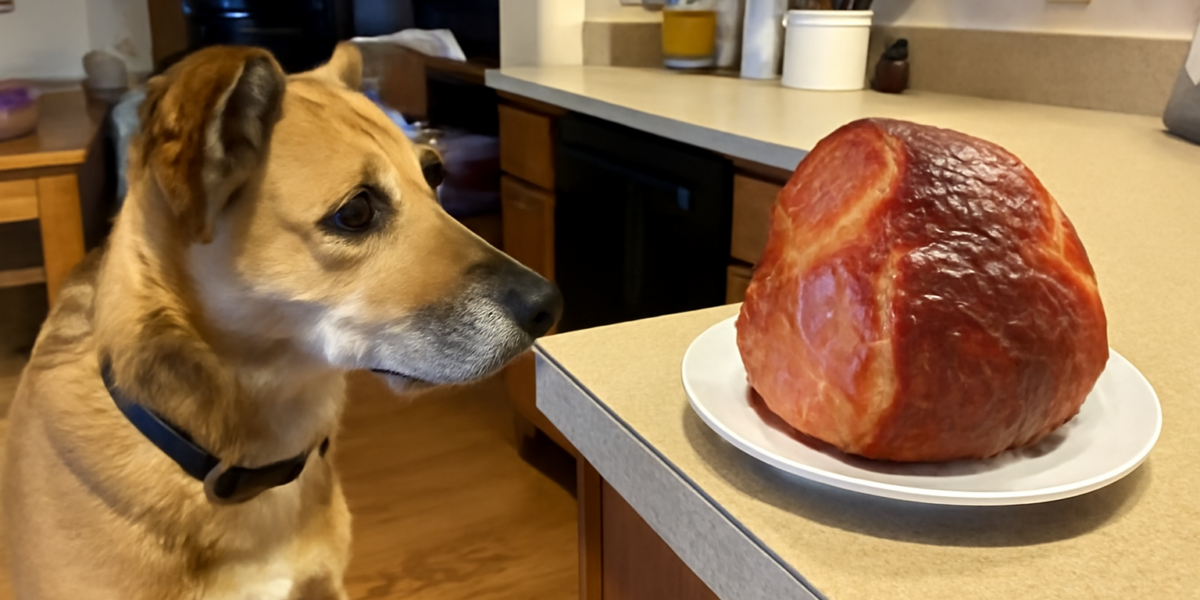
If you are wondering whether dogs can eat Easter ham, the practical answer is: not as a real treat. A tiny piece of plain center-cut ham now and again will not poison a healthy dog, but the cured, glazed, bone-in ham at the center of most Easter tables is built around sodium, sugar, and fat in proportions that are hard for canine kidneys, hearts, and pancreases to handle. The honey-glazed and brown-sugar varieties make the picture worse, not better, because they add concentrated sugar and sometimes mustard, clove, or pineapple to an already over-seasoned base.
The bone is the other half of the problem. Cooked ham bones — including spiral-cut shanks, butt portions, and shoulder bones — splinter readily and absorb sodium during the cure and bake. Giving a dog the post-dinner bone is a classic Easter mistake that lands dozens of dogs in emergency rooms each spring. We will walk through the sodium math, the pancreatitis risk, the bone hazard, and the better options below.
The Sodium Problem With Cured Ham
Cured ham is one of the saltiest meats in routine human cooking. A standard three-ounce portion of cured, glazed ham carries somewhere between 1,100 and 1,500 milligrams of sodium — sometimes higher in commercial spiral-cut hams, where brine injection drives the salt content up and the sugar glaze adds another flavor layer. For comparison, a healthy twenty-pound dog has a daily sodium tolerance of roughly 200 to 250 milligrams. A single ounce of ham can blow past that allowance.
For most healthy dogs eating a tiny piece, the result is mild — increased thirst and a couple more trips outside to urinate. For dogs with heart disease, kidney disease, or hypertension, even a small ham serving is meaningful. Sodium overload can worsen congestive heart failure, push fluid retention in dogs already on diuretics, and increase blood pressure in ways their compromised systems cannot easily reverse. If your dog is on a prescription cardiac or renal diet, treat ham as completely off-limits.
True salt poisoning, with neurological signs like tremors, disorientation, and seizures, is rare from ham consumption alone — it usually requires very large amounts in a small dog with limited water access. But “rare” is not “impossible.” A small dog that gets into half a ham slice and a glaze-soaked pineapple ring during a bustling Easter gathering, with no one watching the water bowl, can show concerning signs within a few hours.
Why the Fat Content Triggers Pancreatitis
Beyond the salt, ham is a fatty cut. The fat cap and the marbling work out to something like fifteen to twenty percent fat in a typical glazed slice, and considerably higher in fattier cuts of country ham. That fat load can trigger acute pancreatitis in dogs whose pancreases are not used to a sudden rich meal. Pancreatitis is the single most common reason dogs end up in the ER during American holidays — Thanksgiving, Christmas, Easter, and the Fourth of July all show measurable spikes in cases.
Some breeds and individual dogs are markedly more vulnerable. Miniature Schnauzers, Yorkshire Terriers, Cocker Spaniels, and any dog with a previous pancreatitis episode have less margin for fatty exposures. Senior dogs and overweight dogs sit in the same higher-risk bucket. Our pancreatitis in dogs guide covers the full clinical picture, the warning signs, and the recovery process — most importantly, why one episode often leads to lifelong dietary restrictions.
The classic warning signs after a fatty meal indiscretion are vomiting, lethargy, refusal to eat, hunched posture, and a tender belly. They typically appear twelve to seventy-two hours after the meal, not immediately. Watch the calendar, not just the dinner table.
Glazes, Pineapple, and the Sugar Layer
Most Easter hams come pre-glazed or are baked with a household glaze recipe at home. Those glazes are built on brown sugar, honey, maple syrup, or fruit juice, often with mustard, clove, allspice, or cinnamon. None of those individual components are catastrophically toxic in small amounts, but stacked onto a salty fatty meat, they push the dish further from “occasional dog treat” toward “skip entirely.”
Pineapple rings — a long-running American garnish — and pineapple juice are not toxic to dogs and can be eaten in moderation on their own. Soaked in ham glaze, however, they pick up the sodium and sugar of the meat and lose their dog-friendly profile. Cherries used as ham garnishes are usually maraschino cherries, which are mostly sugar syrup with red food dye and sometimes alcohol; they are not a useful dog snack.
Brown sugar mustard glazes deserve a separate note. Mustard seed is mildly toxic to dogs in volume, causing GI upset rather than serious illness, but combined with the rest of the dish it adds another reason to keep the dog away. Our brief on mustard for dogs walks through the seed-versus-condiment distinction.
Never Feed the Ham Bone
The single most dangerous part of the Easter ham, hands down, is the bone. Cooked ham bones look like they should be a perfect dog treat — meaty, rich, satisfying — but they are a triple hazard. First, cooked bones become brittle and splinter, with the splinters perforating the gum, esophagus, stomach, or intestine in some unlucky dogs. Second, the bone has been sitting in salt-cure brine and oven heat for hours, and it carries a substantial sodium load on the surface and in the marrow. Third, the bone marrow itself is extremely fatty and is a textbook pancreatitis trigger.
Veterinary emergency clinics see ham-bone cases every Easter Monday — punctured intestines, lodged fragments in the throat, severe pancreatitis flares from the marrow, and salt-driven thirst-vomit spirals. There is no safe way to give a dog a cooked ham bone. Wrap it in heavy paper, seal it in the trash, and take the trash out before the dog gets curious. Our broader guide on cooked bones for dogs covers the splintering issue across pork, beef, lamb, and poultry bones.
If your dog already swallowed a bone fragment, watch for vomiting, drooling, refusal to eat, abdominal pain, or any straining to defecate. Black tarry stools or fresh blood in the stool indicates internal injury and needs an immediate vet visit. Do not induce vomiting — the splinter coming back up can cause as much damage as it did going down.
If Your Dog Stole a Piece of Ham
Take a breath. Most “dog stole a slice” scenarios end with a thirsty dog, a couple of stomach gurgles, and an uneventful next day. The bigger questions are how much, how salty the ham was, whether any glaze, bone, or pineapple was involved, and whether your dog has any underlying conditions.
For a healthy adult medium or large dog who ate a slice or two of plain ham, your job is to provide free access to fresh water, skip the next meal, and watch for vomiting, diarrhea, lethargy, or excessive thirst. Most dogs are back to normal in twenty-four hours. For a small dog, a senior dog, a dog with heart, kidney, or pancreatitis history, or any dog that ate glaze, bone, or a large amount, call your veterinarian or Pet Poison Helpline at 855-764-7661 for triage advice.
If neurological signs appear — disorientation, head pressing, tremors, seizures — that is salt poisoning territory and you need an emergency clinic now, not a phone call. Bring the ham label or a description of the recipe with you so the team knows what they are dealing with.
Better Easter Plate Options for Dogs
Sharing the holiday with your dog is easy if you set aside a small portion of ingredients before the cure, glaze, or seasoning goes on. Plain unsalted cooked pork tenderloin, plain roasted chicken, or plain cooked turkey are all clean swaps for ham at the dog’s plate. Our pork for dogs, chicken, and turkey guides cover safe portions and preparation tips for each protein.
For the side dishes, plain steamed green beans, plain steamed carrots, plain roasted sweet potato (no marshmallow, butter, or brown sugar), and a small spoonful of plain mashed potato made without garlic or onion are reasonable additions. Skip the deviled eggs (mayonnaise and seasoning), the scalloped potatoes (cream and onion), and the casseroles. A single hard-boiled egg, plain, is a fine dog snack — see our eggs for dogs guide for portion guidance.
For the post-meal sweets, our warnings on fruitcake and eggnog apply year-round, and our guide on candy is a reminder that Easter chocolate eggs are just as dangerous as Halloween candy. Keep the dessert table off the floor and the chocolate eggs sealed in a basket the dog cannot reach. The same caution applies to jellybeans, marshmallow chicks, and any “sugar-free” candy that may contain xylitol.
If you are hosting Easter brunch and the dog is underfoot, consider a stuffed lick mat or a long-lasting chew during peak food activity. A pre-meal walk also helps settle excited dogs and reduces opportunistic counter-surfing during the buffet.
Frequently Asked Questions
Is unsalted ham safe for dogs?
“Unsalted” is rare in commercial hams and almost never accurate — most “low-sodium” or “natural” hams still carry several hundred milligrams of sodium per serving. If you genuinely have a fresh, uncured pork roast labeled as ham, plain pieces in moderation are reasonable. Most grocery-store hams do not qualify.
What about ham bones if I just give my dog the joint to chew on, not eat?
Cooked ham bones are dangerous regardless of intent — splinters can break off during chewing, and the salty marrow is a pancreatitis trigger. Use a recreational raw beef bone or an appropriately sized commercial chew instead. Never give cooked ham bones, even big ones.
Can dogs eat ham fat trimmings?
This is one of the worst options. Ham fat trimmings concentrate sodium and fat, and they are a leading cause of holiday pancreatitis flare-ups in dogs. Toss the trimmings rather than feeding them.
How much ham would actually poison my dog?
Sodium toxicity from ham requires a meaningful relative amount — there is no single number, since it depends on body weight, water access, and the dog’s underlying health. Pancreatitis can be triggered by much smaller amounts in fat-sensitive dogs. Call Pet Poison Helpline at 855-764-7661 for case-specific risk assessment.
What should I do if my dog ate the glaze pan drippings?
Glaze drippings combine concentrated sodium, sugar, and fat — possibly the worst single component of an Easter ham for dogs. Watch closely for vomiting, lethargy, and excessive thirst, and call your vet if symptoms appear. For small dogs, call right away rather than waiting.


