
Last updated: May 4, 2026
In this article
- The Short Answer on Daikon and Dogs
- What Is Daikon?
- Nutritional Highlights of Daikon
- Raw vs Cooked Daikon for Dogs
- Safe Serving Sizes by Dog Size
- Pickled Daikon and Other Forms to Avoid
- Daikon Greens and Tops
- When to Skip Daikon
- How to Prepare Daikon for Your Dog
- Symptoms of Trouble After Eating Daikon
- Frequently Asked Questions
The Short Answer on Daikon and Dogs
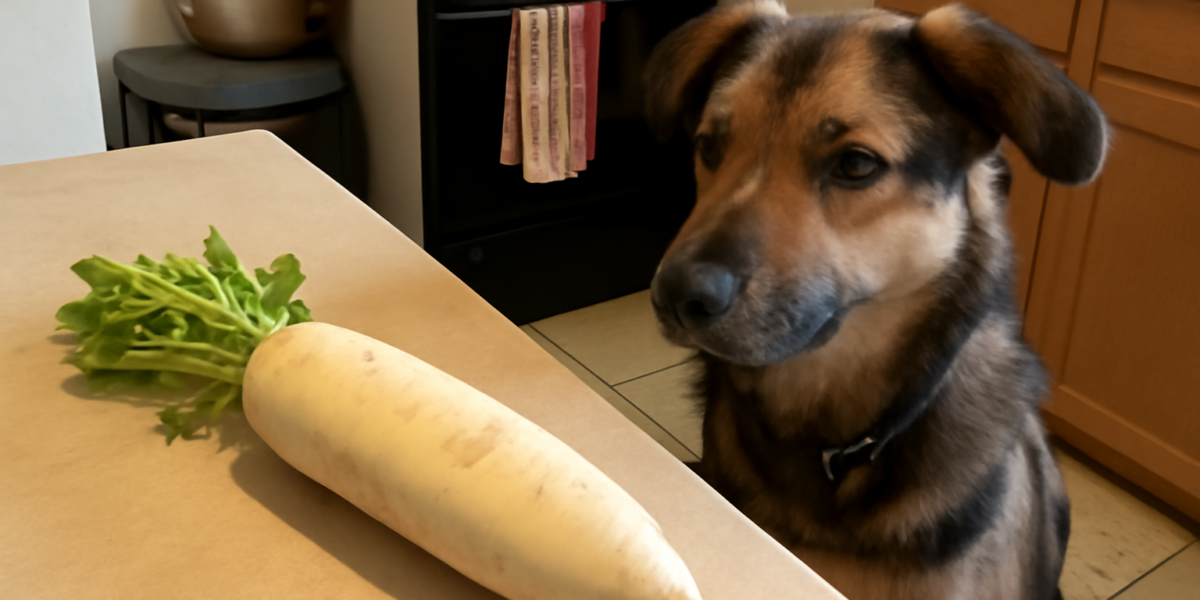
Yes, dogs can eat daikon in moderation. Daikon — the long, white Asian radish common in Japanese, Korean, and Chinese cooking — is non-toxic, low-calorie, high-water, and gentle in flavor compared to spicier red radishes. Plain raw or cooked daikon offered in small portions is a fine occasional treat for healthy adult dogs and may provide modest fiber and vitamin C.
That said, daikon does have a few caveats. Raw daikon can cause gas and bloating in some dogs, especially in larger amounts. Pickled daikon (a popular Asian condiment) is heavily salted and unsuitable for dogs. And dogs with thyroid conditions should avoid daikon and other cruciferous vegetables. So the answer to “can dogs eat daikon” is yes — with moderation, plain preparation, and attention to your dog’s individual response.
What Is Daikon?
Daikon (Raphanus sativus var. longipinnatus) is a large white radish cultivated extensively across East Asia and now widely available in supermarkets globally. It can grow up to 18 inches long and several inches thick, with crisp white flesh and a mild, slightly peppery flavor — far gentler than the bright bite of small red radishes. The leaves and tops are also edible and used in some Asian dishes.
In Asian cuisines, daikon shows up in countless dishes: grated raw as a garnish for sashimi, simmered in Japanese oden stews, used as the base for Korean kimchi, pickled into Japanese takuan, made into Chinese radish cakes, and shredded into salads. For dogs, only plain raw or plain cooked daikon should be considered. Anything with sauces, salt, vinegar, sugar, or fermented seasonings is off-limits.
If your dog enjoys other gentle root vegetables like jicama or kohlrabi, daikon will likely sit similarly well in their stomach. It’s also a member of the broader cruciferous family that includes broccoli and bok choy.
Nutritional Highlights of Daikon
Daikon is genuinely low-calorie and high-water. A 100-gram serving (about a half cup) contains roughly 18 calories, 0.6 grams of protein, almost no fat, 1.6 grams of fiber, and a useful 22 milligrams of vitamin C. It also offers small amounts of folate, potassium, and various B vitamins. Water content is about 95 percent, making it gently hydrating.
The fiber in daikon is mostly insoluble, which can support gut motility and add satisfying bulk to food. Some pet owners use small amounts of grated raw daikon as a low-calorie food topper for dogs on weight management plans, though always with a vet’s blessing for the specific situation.
Daikon also contains enzymes called myrosinase and small amounts of glucosinolates — the same compound family found in broccoli and other cruciferous vegetables. These compounds are responsible for the slightly peppery flavor and have been studied for human health benefits. For dogs, the amounts in a treat-sized portion are not a concern in either direction. Your dog isn’t eating daikon for the glucosinolates.
Raw vs Cooked Daikon for Dogs
Both raw and cooked daikon can be safe for dogs, but they sit slightly differently. Raw daikon retains its full vitamin C content and a satisfying crunch that some dogs love. The downside: raw daikon can cause gas and mild bloating in some dogs, especially when given in larger amounts or to dogs with sensitive stomachs.
Cooked daikon (steamed, simmered, or roasted plain) is gentler on digestion. Cooking softens the cell walls and reduces the gas-producing potential. The texture is more forgiving for senior dogs with dental issues, and the milder flavor is sometimes more palatable to picky eaters. The vitamin C content drops with cooking, but other nutrients hold up reasonably well.
Most dogs do fine with either form, but if you’re introducing daikon for the first time, cooked is the more conservative choice. Boil or steam a few small cubes plain — no salt, no oil, no seasonings — and let them cool before serving. Watch for any gas, loose stool, or appetite changes over the next 12 to 24 hours.
Safe Serving Sizes by Dog Size
Daikon falls under the 10 percent rule like all treats — no more than 10 percent of your dog’s daily calories.
- Toy and small breeds (under 20 lb): 1 to 2 small slices (about a tablespoon) per serving, 2 to 3 times a week.
- Medium breeds (20 to 50 lb): 2 to 3 tablespoons of small pieces per serving.
- Large and giant breeds (over 50 lb): A small handful of slices per serving.
Cut daikon into appropriately sized pieces for your dog — too large and there’s a choking risk, too small and tiny dogs may inhale them. For first-time tasters, start with one small piece and watch for any reaction before offering more. Some dogs simply don’t like daikon’s mild peppery note and will turn their noses up; that’s fine, you don’t need to push it.
Pickled Daikon and Other Forms to Avoid
Many traditional preparations of daikon are not appropriate for dogs:
- Pickled daikon (takuan, mu-saengchae, danmuji): Heavily salted and often vinegared, frequently with added sugar and food coloring. The sodium content alone makes pickled daikon unsuitable for dogs.
- Kimchi or kimchi-style daikon (kkakdugi): Contains garlic, ginger, chili, and salt — multiple ingredients that are problematic or toxic to dogs.
- Daikon in soy sauce or miso: High sodium plus seasonings that aren’t dog-friendly. See our soy guidance for context on soy products.
- Pickled daikon strips in sushi or fast food: Salted, sometimes dyed yellow with artificial coloring.
- Daikon radish cakes or other dim sum preparations: Often include shrimp paste, sausage, mushrooms, and seasonings.
- Daikon in spicy curries or stews: Spices, salt, and often onions or garlic make these dishes off-limits.
If your dog steals a piece of pickled daikon from a sushi platter, the most likely consequence is GI upset and excessive thirst from the sodium. Watch for vomiting and diarrhea, and call your vet if your dog seems unwell or ate a large amount.
Daikon Greens and Tops
The leafy green tops of daikon are sometimes sold attached to the root and used in Asian cooking. They’re more peppery and bitter than the root itself but are technically edible. For dogs, daikon greens are generally fine in small amounts when cooked plain — they have a similar profile to other leafy greens like arugula or watercress.
Raw daikon greens can be tough and somewhat bitter, which most dogs don’t enjoy. They also contain modest oxalate levels. If you’re cooking daikon greens for yourself, setting aside a small unseasoned portion for your dog as an occasional treat is fine, but they aren’t necessary or particularly beneficial.
Don’t confuse daikon greens with other “wild” or “rescue” greens you might encounter — proper identification matters. Stick to garden- or grocery-purchased greens.
When to Skip Daikon
A few situations call for keeping daikon off the menu:
- Dogs with diagnosed thyroid disease: Cruciferous vegetables in larger amounts may interfere with thyroid function in susceptible dogs. Talk to your vet first.
- Dogs prone to gas, bloating, or digestive sensitivity: Especially with raw daikon.
- Dogs with a history of inflammatory bowel disease: Add foods to a sensitive system only with vet guidance.
- Dogs at risk of bloat (deep-chested breeds like Great Danes, Standard Poodles, Weimaraners): While daikon isn’t a known bloat trigger, gas-producing foods are best minimized.
- Puppies under 4 months: Stick to puppy-appropriate foods until digestive systems mature.
For most healthy adult dogs without these concerns, plain daikon in modest amounts is a fine occasional treat. If you’re unsure whether your dog falls into a cautious category, ask your vet during the next checkup.
How to Prepare Daikon for Your Dog
For raw daikon:
- Rinse and scrub the daikon thoroughly under cool water.
- Peel the outer skin (not strictly necessary, but easier to digest).
- Slice into thin coins, then dice into appropriate-sized pieces for your dog.
- Serve plain — no salt, no oil, no seasonings.
For cooked daikon:
- Peel and dice as above.
- Steam or simmer in plain water until tender (about 10 to 15 minutes for small cubes).
- Drain and let cool completely before serving.
- Serve plain or mix a tablespoon into your dog’s regular food.
You can also grate daikon raw and sprinkle a small amount over your dog’s food as a topper. Refrigerate any leftover prepared daikon and use within 3 to 4 days.
Symptoms of Trouble After Eating Daikon
Most dogs tolerate plain daikon without any reaction. But if your dog has eaten an unusually large amount, eaten pickled or seasoned daikon, or has any underlying sensitivity, watch for:
- Excess gas or bloating
- Loose stool or diarrhea
- Vomiting (less common)
- Excessive thirst (especially after pickled daikon)
- Lethargy
- Loss of appetite for the next meal
- Belly tenderness when pressed
Most cases resolve within 24 hours with bland food and rest. If symptoms persist or worsen, especially after a pickled-daikon ingestion, call your vet. Sodium poisoning from very large pickle ingestions is rare but possible in small dogs.
Frequently Asked Questions
Is daikon better raw or cooked for dogs?
Cooked is gentler on digestion and easier for senior dogs with dental issues. Raw retains more vitamin C and offers a satisfying crunch. Either is fine for most dogs in moderation.
Can puppies eat daikon?
Wait until at least 4 to 6 months and a stable diet are established. Then introduce a tiny piece of cooked daikon and watch for any reaction.
Why does my dog have gas after eating daikon?
Daikon contains fiber and natural sulfur compounds that can produce gas during digestion, especially in raw form. Cook the daikon, reduce portion size, or skip it for that particular dog.
What if my dog ate a piece of pickled daikon?
Most dogs will be fine with a small accidental bite, but expect excessive thirst, possible vomiting, or diarrhea from the sodium. Provide fresh water and call your vet if symptoms are significant or your dog ate a large amount.
Are daikon and Japanese radish the same thing?
Yes — “daikon” is a Japanese word for a category of large white radish. The same vegetable goes by other names in different cuisines (mooli in Indian cuisine, lobak in Cantonese, mu in Korean), but the safety profile for dogs is the same.


