
Last updated: May 4, 2026
In this article
Quick Answer: Is Oxtail Safe for Dogs?
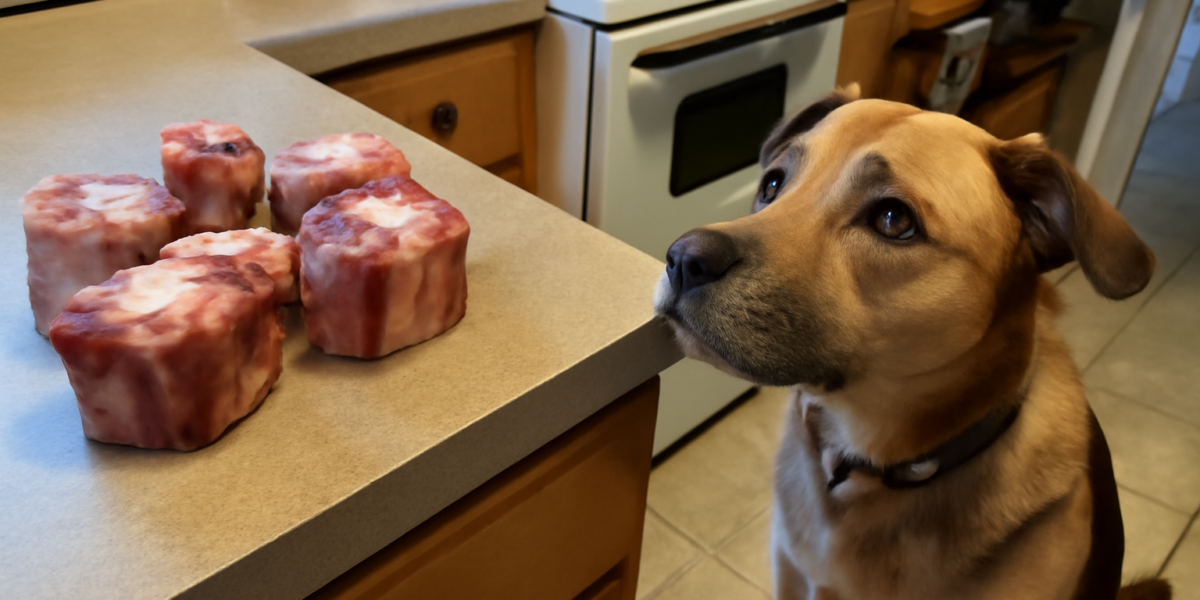
Oxtail should be approached with caution. The meat itself, when slow-cooked, stripped from the bones, and trimmed of excess fat, is fine for dogs in moderation. The bones, on the other hand, are a real hazard. Cooked oxtail bones can splinter into sharp shards that puncture the gastrointestinal tract or lodge in the esophagus, and even raw oxtail bones bring bacterial and dental risks. The honest summary: enjoy the rich braised oxtail at the dinner table, share a small portion of plain meat with your dog, and dispose of the bones securely.
This is one of those cuts where the cooking method also matters enormously. Oxtail is almost always slow-braised with onions, garlic, wine, and tomato, all of which add layers of risk on top of the bone hazard. Even traditional Caribbean and Korean oxtail preparations rely heavily on aromatics that are toxic to dogs. If you are sharing leftovers, the safest approach is to set aside a small portion of unseasoned oxtail meat before adding any seasoning to the pot, then prepare it specifically for the dog with no salt, no garlic, no wine, and no onion.
Nutritional Profile of Oxtail
Oxtail is the cut from the tail of the cow (despite the name, it is no longer literally an ox). It consists of a series of small, bone-in segments with a generous amount of meat, connective tissue, and fat surrounding each vertebra. The fat content of cooked oxtail meat (separated from bones) runs roughly fifteen to twenty percent depending on how thoroughly it has been trimmed. A three-ounce serving of cooked, deboned, trimmed oxtail provides roughly twenty grams of protein.
The standout nutritional feature is the collagen content. Oxtail is rich in connective tissue, which breaks down during slow cooking into gelatin (a form of digested collagen). This gelatin supports joint health, skin and coat condition, and digestive lining health. The marrow inside the bones contributes iron, healthy fats, and vitamin K2, though the bones themselves are not safe to feed.
Compared to beef heart, oxtail meat is fattier but offers more collagen. Compared to beef brisket, it is similar in fat content with a richer connective-tissue profile. The slow-cooking liquid (if unseasoned) makes a collagen-rich broth that can be used as a topper, similar to bone broth powder.
Benefits for Dogs
The collagen and gelatin in oxtail meat are the primary benefits for dogs. Collagen supports cartilage health and may help with joint mobility, particularly in senior dogs and breeds prone to hip and elbow issues. The gelatin coats the digestive tract during digestion and may support gut lining repair, though formal research in dogs is limited.
The protein quality is high, and the rich flavor makes oxtail meat a high-value treat for picky eaters. The B-vitamin density supports neurological function, and the iron content supports red blood cell production. For senior dogs with declining appetite, a small amount of slow-cooked oxtail meat mixed into food often restores interest.
The slow-cooking liquid is the unsung hero of oxtail nutrition. When cooked plain (no salt, no aromatics), the broth captures most of the collagen, gelatin, and minerals from the bones without the splinter risk. Strain it well and use as a kibble topper or freeze in ice cube trays for portion control.
Risks and Concerns
Cooked oxtail bones are the dominant risk. The vertebrae in oxtail are dense but become brittle when cooked and can crack into needle-sharp fragments. Dogs who chew on or swallow these fragments risk perforation of the esophagus, stomach, or intestines, all of which are surgical emergencies. Our cooked bones safety guide covers what to watch for.
Raw oxtail bones come with their own concerns. Some raw-feeding advocates argue that raw bones are softer and less likely to splinter, but raw bones still carry bacterial risk (Salmonella, Campylobacter, E. coli) for both dogs and humans handling shared surfaces. Dental fractures are another real risk, particularly in dogs with vigorous chewing styles. Raw feeding is a defensible choice but should be made with veterinary guidance, not casually.
The seasonings that accompany most oxtail dishes are problematic. Caribbean oxtail stew typically includes onion, garlic, soy sauce, and sometimes scotch bonnet pepper. Korean oxtail soup (kkori-gomtang) is simpler but often includes garlic and scallions. Italian-style oxtail (coda alla vaccinara) includes red wine, garlic, and celery. Onions and garlic are toxic to dogs in any amount, and the cumulative exposure from a saucy oxtail dish can be significant.
The fat content also matters. Oxtail is fattier than lean beef cuts, and dogs with pancreatitis history should have small portions only. Our pancreatitis in dogs guide walks through the warning signs.
Safe Serving Size for Dogs
Stick to the deboned, trimmed meat and follow the ten-percent rule for treats. Small breeds under twenty pounds can have one to two ounces of cooked, deboned, trimmed oxtail meat. Medium-sized dogs in the twenty to fifty pound range can have two to three ounces. Large breeds over fifty pounds can handle three to four ounces. These are weekly portions, not daily.
If oxtail is new to your dog, start with a single small cube and wait twenty-four hours. Watch for digestive upset, including loose stools, gas, or refusal of the next meal. The richness of slow-cooked oxtail can shock a dog’s system, so gradual introduction matters.
Preparation: Cooked vs Raw
For most households, slow-cooked oxtail with bones strictly removed is the right answer. Braise the oxtail in plain unsalted water for three to four hours until the meat falls off the bones easily. Use no salt, no aromatics, no oil. Once the cooking is done, pull out every piece of oxtail and carefully separate the meat from each vertebra. Trim the fat. Strain the cooking liquid through a fine sieve to catch any bone fragments. Discard the bones immediately into a sealed bin that your dog cannot access.
Counter-surfing dogs and trash divers find their way to oxtail bones surprisingly often, so do not just throw them in an open kitchen trash can. The cooked meat keeps in the fridge for up to four days or freezes well for two months. The strained broth is excellent on its own as a topper.
Raw oxtail (sometimes called raw meaty bone or RMB in BARF circles) is offered by some raw feeders. The argument is that raw bones flex rather than splinter, but bacterial and dental risks persist. If you raw feed, work with a veterinarian familiar with the practice, source carefully, freeze meat at minus four degrees Fahrenheit for at least twenty-one days to reduce parasitic risk, and supervise every chew session. Never leave a dog unsupervised with a raw oxtail bone.
Symptoms of Trouble After Eating Oxtail
If your dog has eaten cooked oxtail bones, watch for difficulty swallowing, repeated gagging, drooling, refusal to eat, vomiting (with or without blood), retching with no production, abdominal pain, lethargy, and dark or bloody stool. Bone fragments can cause damage anywhere from the mouth to the rectum, and symptoms can develop hours or even days after the meal. Never assume your dog has gotten away with it until at least seventy-two hours have passed.
If your dog ate only the meat, the more common symptoms are digestive: vomiting, diarrhea, soft stools, gas, or refusal of the next meal. Pancreatitis is possible if the meat was very fatty. If garlic or onion was in the cooking liquid, watch for signs of hemolytic anemia (pale gums, weakness, dark urine) over the following several days; these toxicities sometimes have delayed presentations.
When to Call the Vet
Call your veterinarian immediately if you suspect your dog ate cooked oxtail bones. Do not wait for symptoms; many dogs do not show signs until perforation has occurred. Your vet may recommend imaging or a bulk-forming food protocol to help fragments pass safely. Do not try to induce vomiting at home; bringing sharp bone fragments back up can cause more damage than letting them pass.
Call urgently if vomiting persists, if your dog refuses water, if there is blood in stool or vomit, or if you see signs of pancreatitis. If the oxtail dish contained onions or garlic, mention the amount and timing; toxic effects can build with cumulative exposure.
Better Alternatives
For collagen and joint support without the bone risk, bone broth powder made specifically for pets gives the joint-supporting benefits without the splinter hazard. For chewing satisfaction, duck necks and air-dried beef trachea offer natural cartilage and chew time without the hazards of cooked bones.
For lean beef alternatives, beef heart is one of the best options, leaner than oxtail and rich in taurine and CoQ10. Plain single-ingredient beef jerky made for dogs offers chewy beef satisfaction without the bones. Sibling reading on related cuts: our beef tongue safety guide covers another lean organ option, and our lamb rack safety guide covers similar bone-in concerns. Adopters considering active or large breeds with joint concerns can review breed care info on the adopt a dog resource hub.
Frequently Asked Questions
Are oxtail bones safe for dogs?
Cooked oxtail bones are not safe; they splinter and can cause perforations. Raw oxtail bones are sometimes used in structured raw diets but carry bacterial, dental, and choking risks and should be approached with veterinary guidance.
What if my dog ate a piece of oxtail bone?
Call your veterinarian right away. Do not induce vomiting at home. Your vet may recommend imaging, a feeding protocol with bulk-forming foods like canned pumpkin, or, in serious cases, surgery.
Can I give my dog oxtail soup?
Only if you cooked it specifically for your dog with no salt, no garlic, no onion, no wine, and no other aromatics. Restaurant or recipe-style oxtail soup almost always contains ingredients that are unsafe for dogs.
How is oxtail different from other bone-in cuts?
Oxtail bones are dense vertebrae rather than long bones, but they still splinter when cooked. The meat has more collagen than typical muscle cuts, which is the main nutritional draw.
Can puppies eat oxtail meat?
Puppies over twelve weeks can have very small amounts of plain, slow-cooked, deboned oxtail meat as a treat. Their balanced puppy food should remain the main meal source. Never give puppies oxtail bones in any form.


