Last updated: May 4, 2026
In this article
Overview of the Kanaani Cat
The Kanaani cat is a relatively recent breed developed to capture the look of the African wildcat (Felis lybica) while remaining a fully domestic companion. The foundation combined domestic wild-spotted cats from the Middle East with Bengal and Oriental Shorthair lineage, producing a tall, lean, athletically built cat with distinct ticked or spotted coat patterns.
The breed name comes from “Canaan,” the historical region encompassing parts of modern Israel where the original foundation cats were sourced. Recognition has been partial, with some German and European breed clubs listing the Kanaani in experimental or preliminary classes. Population numbers remain small.
This profile covers the breed’s history, distinctive look, energetic temperament, daily care needs, hybrid health considerations, and what realistic adoption looks like.
Quick Facts
- Origin: Israel and Germany, late 1990s onward
- Foundation: Wild-spotted domestic cats from the Levant, Bengal, Oriental Shorthair
- Size: Medium to large; most adults weigh 8 to 14 pounds
- Coat: Short, ticked, or spotted
- Energy level: High
- Grooming: Low — weekly brushing
- Good with families: Yes, with active households
- Registry status: Limited; primarily European recognition
History and Origins
The Kanaani project began in Israel and Germany in the late 1990s under breeder Doris Pollatschek. The intent was to develop a domestic breed that resembled the African wildcat — the ancestor of all domestic cats — without using recent wild hybrid lineage. Foundation cats included naturally spotted domestic cats from the Levant region, with Bengal and Oriental Shorthair contributions added to refine body type and pattern.
Recognition has been concentrated in European breed clubs and has shifted over time. The Kanaani is rarely seen outside Germany, Israel, and a handful of other European countries. As an adopter, the practical takeaway is that pedigree paperwork tied to the Kanaani name varies in weight by region — confirm current registry status directly.
For background on the Bengal and Oriental Shorthair influences, see our Bengal profile and Oriental Shorthair profile.
Appearance
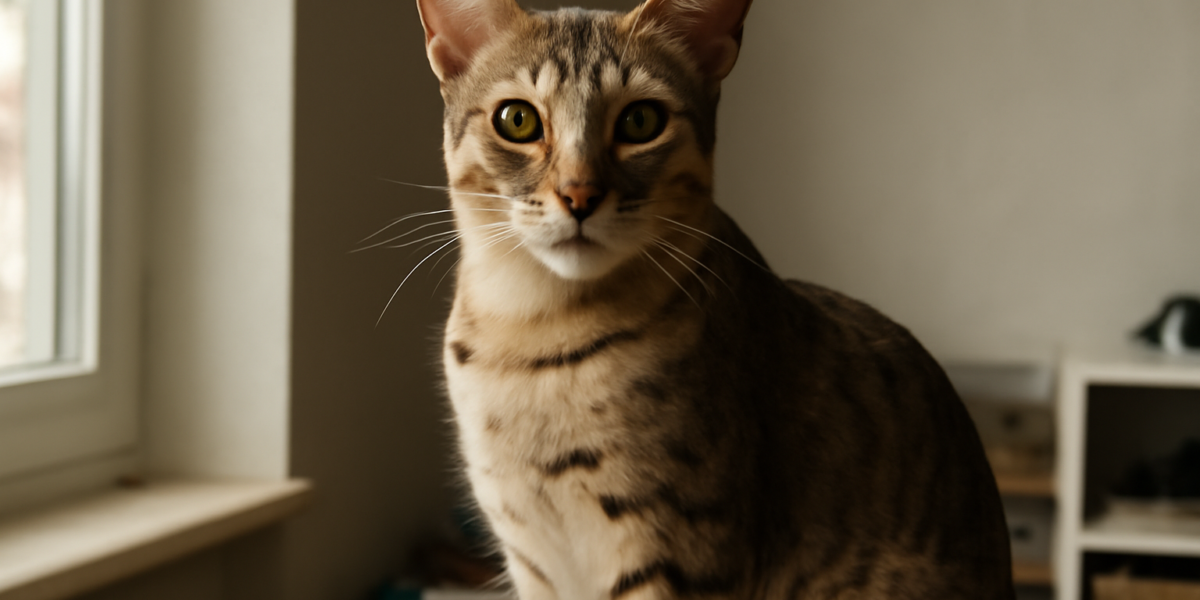
The Kanaani is built for athletic movement. The body is long, lean, and muscular, with long legs and a fine bone structure that recalls the Oriental Shorthair side of the lineage. The overall silhouette is taller and more elegant than a Bengal’s, and the head carries a slightly wedge shape with large, set-wide ears.
The coat is short, close-lying, and either ticked (each hair banded with multiple colors) or spotted, often with both patterns showing in the same cat. The base coat is typically warm tan, sand, or fawn, with darker spotting in tones from brown through black. Some cats have rosetted markings rather than solid spots.
Eye color is most often green or gold, contributing to the alert, watchful expression that many breeders aim for. White spotting is generally not part of the breed standard.
Size and Weight
Adult Kanaanis typically weigh 8 to 14 pounds, with males larger than females. The lean build can make them look smaller than they actually weigh, especially compared to stockier breeds.
Temperament and Personality
Kanaanis are active, curious, and intelligent. They climb constantly, investigate everything, and tend to be highly engaged with household activity. Many owners describe them as needing more enrichment than the average house cat, and they thrive in homes that match their pace.
They form strong attachments to their families and dislike long stretches alone. A second active cat or a friendly dog often makes a good companion. Children are typically fine with Kanaanis, provided early socialization happens and play is supervised — these cats use claws and teeth in play more readily than calmer breeds.
Vocally they can be moderate to loud, depending on the individual. Oriental Shorthair influence shows in some bloodlines as more talkative cats; Bengal influence contributes chirps and trills. If quiet is a priority, this is not the breed for you.
Daily Care and Enrichment
This is a high-energy breed that requires structured daily play. Plan on two or three interactive sessions per day with wand toys, plus puzzle feeders, food-dispensing toys, and rotating enrichment. Without this engagement, Kanaanis become destructive or reactive — opening cupboards, knocking over plants, and waking the household at odd hours.
Vertical territory is essential. Tall cat trees, sturdy shelves, and window perches let an athletic cat burn climbing energy. Many Kanaanis enjoy water more than typical cats; a circulating fountain often appeals.
Indoor living is the safer default. The wild appearance and active temperament can tempt owners to allow outdoor freedom, but predators, cars, infectious disease, and the cost of a rare breed all argue against it. A secure catio or harness training is a good middle path. Our best indoor cats roundup covers strategies for keeping active cats engaged indoors.
Grooming
The short coat needs only weekly brushing with a rubber curry or grooming mitt. Bathing is rarely needed unless the cat gets into something. Trim claws every two to three weeks and check ears monthly for wax buildup.
Health Considerations
Hybrid lineage means health honesty matters. Bengal-derived lines have higher reported rates of inflammatory bowel disease and digestive sensitivities than many breeds. Oriental Shorthair lines contribute their own concerns, including dental issues and certain heart conditions. Watch for chronic loose stool, intermittent vomiting, weight loss, or unusual breathing sounds.
Hypertrophic cardiomyopathy is reported across many breeds, including in lines that contributed to the Kanaani foundation. Annual exams with attention to heart auscultation and bloodwork as the cat ages are good practice. The hypertrophic cardiomyopathy in cats guide explains what to watch for.
Hybrid lineage notes: F1 to F3 generation Bengals (and early-generation hybrids that include them) face ownership restrictions in some US states. Kanaanis marketed today are generally later-generation domestic cats, but verify your state and county rules before adopting. Verification is your responsibility — rules vary by state and locality.
Lifespan
Reliable breed-specific lifespan data is limited because the population is small and primarily European. Other Bengal-derived and Oriental-derived breeds typically live into their teens with attentive preventive care.
Kanaani vs Other Wild-Look Spotted Breeds
The Kanaani occupies a niche between the Bengal and the Egyptian Mau in look and lineage. The Bengal is more muscular and rosetted; the Egyptian Mau is naturally spotted with broader registry recognition; the Ocicat is fully domestic with spots and a friendly disposition. The Kanaani is leaner than all three, with a more pronounced wildcat profile. Adopters who cannot find a Kanaani often settle on one of these alternatives. See our cat breeds with spotted coats roundup and the Bengal vs Savannah piece for context on the wider category.
Is the Kanaani Right for You?
This breed suits adopters who want an active, intelligent, dramatic-looking cat and have time for daily enrichment. Households with another energetic cat, cat-friendly dog, or older children who can join in play often work well. So does a single-adopter household where the cat gets undivided attention.
It is the wrong match if you want a quiet decorative cat, travel often without a sitter, live in a small apartment without vertical space, or want established pedigree paperwork. The combination of high energy, hybrid lineage, and limited geographic availability all matter.
Adoption and Finding a Kanaani
Kanaanis are very rare outside Europe. Realistic adoption paths include direct contact with European breed clubs, breed-specific rescues that occasionally take in mixed-lineage cats, and importation — which requires research into the receiving country’s quarantine and health certificate rules.
Vet any breeder thoroughly. Look for routine health screening, willingness to discuss the small-population gene pool honestly, and contracts that allow return at any age. Our reputable rescue red flags guide names warning signs that apply to breeders too.
If a Kanaani is unavailable, the more accessible Bengal, Egyptian Mau, or Ocicat may suit your goals. The adopting a rescue Bengal cat guide covers expectations for any wild-look adopter, and the cat-only rescues overview and adopt cats hub are good starting points for any spotted-cat search.
Frequently Asked Questions
Is the Kanaani a wild cat hybrid?
No. The Kanaani is fully domestic. Foundation cats included naturally spotted domestic cats from the Levant, with no recent wild ancestry contributed. The wild appearance comes from selective breeding of domestic spotted lines plus Bengal and Oriental Shorthair influence.
Where can I adopt a Kanaani in the US?
Genuine Kanaanis are very rare in the US. Most adoption paths run through European breed clubs and importation. Dedicated American breeders are few, and waits can be long.
Are Kanaanis hypoallergenic?
No. The Kanaani produces normal levels of the Fel d 1 protein. If allergies are a concern, see our best hypoallergenic cat breeds roundup.
Are Kanaanis good with children?
Generally yes, with respectful handling and supervised play. Kanaanis use claws and teeth in play more readily than calmer breeds, so very young children should always be supervised.
Are Kanaanis recognized by major registries?
Recognition is concentrated in European breed clubs and has shifted over time. TICA, CFA, and other major registries have not consistently listed the Kanaani in championship classes. Confirm current status directly.
Looking to adopt a Kanaani Cat Breed Profile?
Browse Kanaani Cat Breed Profile cats and mixes available for adoption from shelters and rescues near you.
Find Kanaani Cat Breed Profile Cats for Adoption