Last updated: May 4, 2026
In this article
Overview
This Akbash breed profile is for the reader considering a Turkish livestock guardian that is often confused with the Great Pyrenees, the Kuvasz, or even white Anatolian variants. The Akbash (the name means “white head” in Turkish) is a distinct breed from western Turkey, lighter and more athletic than the Anatolian or Kangal, with a working tradition focused on flock guardianship in hilly terrain. The Akbash has been used as an LGD in the United States since the 1970s, particularly in the western states, and is one of the more practical choices for hobby-farm livestock protection.
The breed is more responsive to handlers than some LGDs and is sometimes described as one of the easier guardian breeds to live with — within the LGD framework. That framework matters: the Akbash is still a livestock guardian, still suspicious of strangers, still independent in its decision-making, and still entirely capable of escalating when it decides the situation calls for it. The breed is not, fundamentally, a family pet.
Quick facts: Group: livestock guardian (working). Origin: western Turkey. Size: large to giant, typically 27–34 inches and 75–140 pounds. Coat: medium to long double coat, white. Energy: moderate, with calm working baseline. Lifespan: large-breed range. Grooming: weekly brushing, seasonal heavy shed. Best for: hobby farms with livestock, rural acreage with experienced LGD owners.
History and Origin
The Akbash comes from western Turkey, where the breed has guarded sheep flocks for thousands of years. Turkish shepherds traditionally distinguish between the dark-coated guardians of central Turkey (Kangal, Anatolian) and the light-coated Akbash of the western regions, although in practice these populations have always overlapped. The Akbash was introduced to the United States by ranchers and researchers in the late 1970s, particularly through the U.S. Department of Agriculture’s investigations into non-lethal livestock protection from coyotes and other predators.
That research-and-ranching introduction matters: many North American Akbash lines were selected with practical livestock work in mind, and the breed has a working track record on American hobby farms. The Akbash is not currently AKC-recognized, although the United Kennel Club recognizes the breed.
Temperament and Personality
Watchful, calm, deeply loyal to family, and serious about livestock. Akbash dogs are typically a touch more responsive to handler cues than the most independent LGDs (Caucasian Shepherd, Central Asian Shepherd), which is part of why they have worked well on American farms where ranchers want a livestock guardian that can also be managed somewhat by humans.
With family, well-socialized Akbash dogs are warm, often quietly affectionate, and patient with children they have grown up with. With strangers, they are reserved at minimum and assess each interaction on the visitor’s behavior. The breed is not the most physically reactive of LGDs and tends to vocalize warning before escalating, which gives owners a chance to read situations and intervene.
Force-free training fits the breed. Same-sex dog aggression is common in adults, particularly outside the dog’s family group. Akbash dogs raised with livestock, cats, and other pets generally accept them; introducing new animals to an adult Akbash is harder.
Size and Appearance
Akbash dogs are large to giant. Males stand 30–34 inches at the shoulder and weigh 100–140 pounds; females run 27–30 inches and 75–110 pounds. The build is leaner and more athletic than the Anatolian or Kangal — closer to a sighthound-Mastiff blend than a heavy mastiff type, which reflects the breed’s historical role covering hilly western-Turkish terrain.
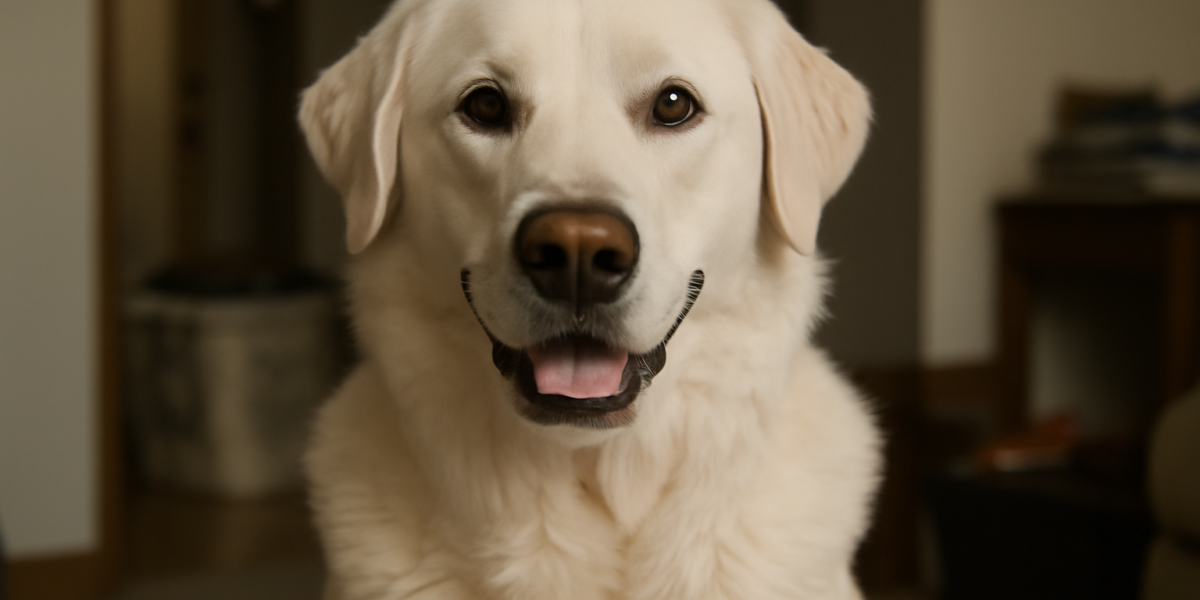
The coat is medium to long, dense, and white throughout, sometimes with very light biscuit shading on the ears or back. The skin is pigmented dark, particularly on the nose, lips, and eye rims. Eyes are typically amber to dark brown. Tail carriage is moderate, often curled when alert.
Exercise and Activity Needs
Akbash dogs need space and work more than they need structured exercise. A working Akbash on a hobby farm meets activity needs through patrolling. A pet-home Akbash without livestock needs daily walks, access to securely fenced acreage or a large yard, and an honest understanding that the breed will spend significant time observing and patrolling rather than playing.
Off-leash freedom in unfenced areas is a poor idea. LGDs roam to expand territory, and an Akbash that decides the next pasture is now its responsibility will go check it. Six-foot perimeter fencing minimum, with attention to gates and dig-prevention. The breed is athletic enough to scale poorly designed fencing, particularly when motivated.
Grooming and Care
The white double coat sheds year-round and blows heavily twice a year. Weekly brushing in normal seasons, daily during coat blow, occasional baths. Like most double-coated white LGDs, the Akbash coat is mostly self-cleaning when properly maintained, and the dog often dries to a clean white after rolling in mud.
Never shave the double coat. It insulates against both cold and heat, and shaving disrupts that system. Standard ear, nail, and dental care otherwise. Watch weight — Akbash dogs benefit from staying at a lean working weight throughout life. Diet should be a quality large-breed formula, with deliberate slow growth in puppies for joint health.
Health and Lifespan
Akbash dogs are generally a hardy breed by large-dog standards. Hip and elbow dysplasia are the most common skeletal concerns and worth screening. Bloat is a real emergency risk in any deep-chested breed. Hypothyroidism, cardiac issues, and certain skin conditions are also worth monitoring in adults.
Lifespan tends to fall in the upper end of the large-breed range, generally longer than the giants but shorter than smaller dogs. A working Akbash kept lean, active, and joint-protected often does well into older age. Plan for large-breed veterinary costs and budget appropriately.
Living With an Akbash
The functional home is a rural or hobby farm with livestock, or a large fenced acreage with an experienced LGD owner. Suburban half-acre lots are usually too small for the breed’s territorial instincts. Apartment life is incompatible.
Children in the family are typically safe with well-socialized Akbash dogs. Visiting children should be supervised and not allowed to chaotically invade the dog’s space. Other dogs visiting the property is a territorial event and should be managed carefully or avoided. Visitors of any species should be introduced calmly and on the dog’s terms.
Training and Socialization
Start socialization early — exposure to varied people, surfaces, sounds, and other dogs in controlled, positive ways. The Akbash adolescent phase, around 12–24 months, brings out independence and territorial behavior. Consistent, force-free handling through this period pays off. Heavy-handed correction damages the trust the breed runs on.
Realistic obedience expectations: solid sit, down, stay, leave-it, recall under low distraction, and good leash manners. The breed is somewhat more responsive than the most independent LGDs but still not a precision-obedience breed. Reading dog body language well matters more than collecting obedience titles, because Akbash dogs warn before they act.
Is the Akbash Right for You?
For pet households without livestock and acreage, generally no. The Akbash is a working livestock guardian and most pet homes are not the right setup. If you have a hobby farm with chickens, goats, sheep, or alpacas, the Akbash is one of the more practical LGD choices for North American conditions. If you have rural acreage and want a watchful family guardian, the breed can fit with realistic expectations.
If you want a large white family dog without the strong guarding instincts, the Great Pyrenees with the right setup is closer to a companion temperament, and breeds like the Bernese Mountain Dog are genuinely better-suited to family life. If the Akbash is the right fit, breed-specific or LGD rescue is the responsible path. Read the 3-3-3 rule for rescue dogs before bringing one home and start at the adopt a dog hub.
Frequently Asked Questions
Is the Akbash the same as the Anatolian Shepherd?
No. Both are Turkish livestock guardians, but the Akbash is from western Turkey and is recognized as a distinct landrace and breed. Akbash dogs are typically lighter and more athletic than Anatolians, with white coats rather than the fawn-and-mask coloring most often associated with the Anatolian and Kangal.
Is the Akbash the same as the Kuvasz?
No. The Kuvasz is Hungarian; the Akbash is Turkish. Both are large white LGDs but they have different histories, breed standards, and conformation.
Are Akbash dogs good with children?
With children in their family, well-socialized Akbash dogs tend to be patient and protective. With visiting children, supervision is essential and chaotic play around the dog should be discouraged.
Do Akbash dogs need livestock?
Not strictly required, but the breed thrives with a clear job. Without livestock, the home needs to substitute meaningful patrol territory and a stable household.
Are Akbash dogs aggressive?
Not in a reactive sense. The breed is watchful and willing to escalate when it perceives a real threat. Most Akbash dogs warn first and escalate only if needed. With proper socialization, they are deliberate rather than impulsive.
Looking to adopt a Akbash Breed Profile?
Browse Akbash Breed Profile dogs and mixes available for adoption from shelters and rescues near you.
Find Akbash Breed Profile Dogs for Adoption