
Last updated: May 16, 2026
In this article
- Is Amazon Sword Safe for Pets? The Quick Answer
- Meet the Echinodorus Genus, the Background Workhorse
- Why Amazon Sword Is Non-Toxic
- What Happens If a Cat or Dog Eats a Leaf
- Drinking the Aquarium Water
- The Real Pet Risks Around an Aquarium
- Amazon Sword as a Cat Toy and Dog Snack
- Trimming and Replanting Without Mess
- Safer Tank Setups That Welcome Pets
- Vet Routing and Final Reassurance
- Frequently Asked Questions
Is Amazon Sword Safe for Pets? The Quick Answer
Yes, amazon sword is safe for pets. The plants sold under the amazon sword label, principally Echinodorus amazonicus and the very similar Echinodorus bleheri (now sometimes reclassified as Echinodorus grisebachii), are not listed by the ASPCA as toxic to cats, dogs, or horses. Aquatic-plant nurseries and veterinary references treat the entire Echinodorus genus as non-toxic to household mammals. A cat who licks a wet leaf clipping, a dog who slurps tank water during a refill, or a puppy who chews a stray frond fished out of a maintenance bucket will not be chemically poisoned.
That reassurance covers the broad lance-shaped leaves, the long stems, the runners that produce daughter plants, and the occasional flower stalk a mature sword can throw above the waterline. The honest caveats around any aquarium are the usual ones: tank water can carry residual fish medications or fertilizer dosing, equipment cords run live current, and sharp glass edges present mechanical risk. The plant tissue itself is the lowest-risk part of the system. This guide walks through the biology, the realistic pet interactions, and how to integrate an amazon sword into a tank that lives peacefully alongside cats and dogs.
Meet the Echinodorus Genus, the Background Workhorse
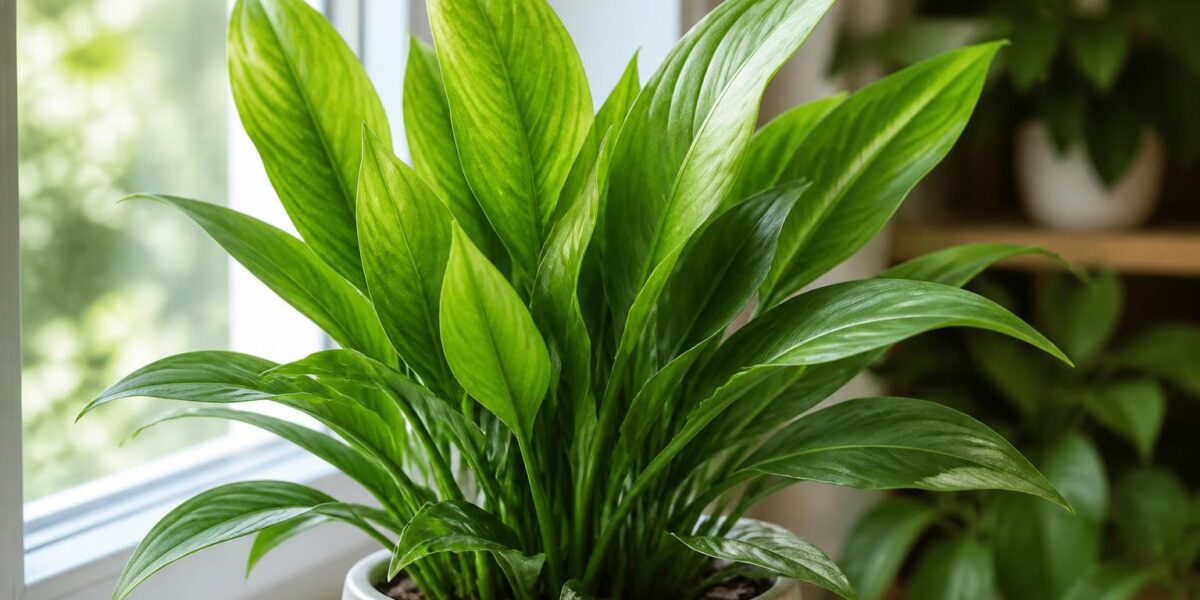
Amazon swords are South American aquatic plants from the Alismataceae family, native to slow-moving rivers and seasonally flooded basins across the Amazon and Orinoco watersheds. In a tank they form rosettes of long lance-shaped leaves that grow upward and outward from a central crown, easily reaching twelve to twenty inches in good light. The leaves are bright green, slightly textured, and tough enough to handle decent water flow without damage.
The two species most often sold as “amazon sword” in pet stores are Echinodorus amazonicus, with narrower pointed leaves, and Echinodorus bleheri (or Echinodorus grisebachii under the newer name), which has slightly broader leaves but otherwise looks nearly identical. Both function as classic background plants in a planted tank, providing height and hiding spots for fish. Mature plants send out runners along the substrate, producing baby plants that detach and root downstream, which is why a healthy sword often turns into several swords over a year or two.
Why Amazon Sword Is Non-Toxic
The chemistry inside an amazon sword leaf is the same cellulose, water, and benign plant tannins found in most non-flowering aquatic greenery. There are no alkaloids, no cardiac glycosides, no calcium oxalate raphides, and no documented poisonous compounds. The Alismataceae family in general does not produce the kind of defense chemistry that drives serious houseplant poisonings.
Veterinary toxicology references and ASPCA-style audits do not flag Echinodorus species. That places amazon sword on the safe column alongside other tank plants in the same category, including anacharis, java fern, vallisneria, hornwort, and floating duckweed. A planted tank stocked entirely with these species is one of the lowest-risk plant features a pet owner can keep around the house.
What Happens If a Cat or Dog Eats a Leaf
Realistically, almost nothing. Amazon sword leaves are tough and have a slightly bitter green flavor that most pets sample once and leave alone. The most common interaction scenario is a leaf trimmed during pruning that lands on the kitchen counter or in the maintenance bucket, where a cat patrols by and licks or grabs it. Some cats lose interest immediately; others chew once and walk away. Dogs may eat a whole leaf if they happen to get one out of a bucket.
From a poisoning perspective, none of this matters. The non-poisoning worst case is mild stomach upset from any unfamiliar plant matter consumed in volume. A pet who eats half a large leaf may have one episode of vomiting or a soft stool the next day, similar to the response from grazing on lawn clippings. There is no antidote, no targeted treatment, and no need for at-home emesis. Monitor for twelve to twenty-four hours, offer water, and call your veterinarian if the upset persists.
Drinking the Aquarium Water
The more common pet-tank interaction is a cat or dog who drinks directly from the tank. The water itself is not chemically dangerous by default, but it is also not as clean as a fresh bowl. Realistic concerns are unrelated to the amazon sword: residual fish medications still circulating after a recent treatment, dosed liquid fertilizers (often used to support sword growth, since swords are heavy feeders), traces of dissolved organic matter from the biological filter, and any algaecide product applied recently.
Iron-rich liquid fertilizers and root tabs deserve a specific mention because amazon swords are commonly fed with them. A pet who licks a freshly dosed area of substrate may pick up a small amount of fertilizer; in dilute aquarium concentrations this is unlikely to cause significant upset, but a chewing puppy who gets into the bottle of liquid fertilizer or a box of root tabs is a different problem. Store the fertilizer bottles closed and high, the same way you would store any household chemical.
The Real Pet Risks Around an Aquarium
The genuine aquarium hazards in a household with pets are mechanical and electrical, not botanical. Heater cords and filter cords run live current along surfaces a chewing puppy can reach. Glass canopies and bowed-front tanks tip if a cat leans hard enough on the rim. CO2 cylinders, used by some planted-tank keepers to boost sword growth, are pressurized vessels that need careful storage. Live fish food, frozen bloodworm cubes, and similar products can cause stomach upset if a pet eats half a tray.
The plant tissue, by comparison, is the least eventful part. A planted tank with amazon sword as a centerpiece, java fern on driftwood, and anacharis as a fast-growing background is one of the safer indoor green features in the household, far less hazardous than a windowsill of unscreened houseplants or a backyard with unaudited garden plantings. Build the cords and canopy carefully, and the sword chemistry is not the concern.
Amazon Sword as a Cat Toy and Dog Snack
A small minority of cats develop a fascination with leaves that grow tall enough to break the waterline and brush against the canopy. Amazon swords often outgrow their tank and either flop over the surface or push against the glass top, which is exactly the kind of moving green object a cat may bat at through a feeding hole. The fix is pruning. Trim the tallest leaves at the base, and the rosette responds by sending up new leaves that take a few weeks to reach the surface again.
Dogs who snack on pruned leaves are usually fishing them out of the trash. Bag the trimmings inside a closed bin or add them to an outdoor compost. Amazon sword leaves break down on a normal timeline and do not poison the compost or anything that grows from it. The plant material is also non-toxic to ducks and chickens if you happen to feed compost into a backyard flock.
Trimming and Replanting Without Mess
Amazon swords benefit from periodic pruning of older outer leaves that have collected algae or lost their bright color. The neat way to prune is to cut the leaf at its base with sharp scissors during a water change, lift it out with the trimmings net, and put it directly into a sealed bag. This avoids the trail of wet leaves on the kitchen counter that a cat might find later.
If your sword has produced runners with daughter plants, you can detach a baby and replant it in a different part of the tank or share it with another aquarist. Daughter plants are robust and tolerate handling. They also represent a steady supply of free plants for anyone who wants to set up a second aquarium, which is a nice side benefit of a healthy mature sword.
Safer Tank Setups That Welcome Pets
If you want a sword-centric planted tank that coexists with pets, a few choices reduce friction. A rimmed tank with a tight-fitting canopy keeps leaves inside and snouts out. Choosing a smaller-growing variant such as the dwarf amazon sword (Echinodorus parviflorus) keeps the rosette below the surface and avoids the cat-batting issue entirely. A surge protector mounted to the wall keeps electrical risks above the floor.
Pairing the amazon sword with sturdy slow-growing plants like java fern on driftwood and a carpet of dwarf plants gives a layered tank that needs less pruning. Less pruning means fewer trimmings escape the lid, which means fewer chances for a cat to find a wet leaf on the floor. None of this changes the safety story; it just keeps the household tidier.
Vet Routing and Final Reassurance
Living with amazon sword and pets is overwhelmingly a non-event from a poisoning standpoint. The plant is non-toxic per all common references, the realistic risks of an aquarium are mechanical and electrical, and the worst-case ingestion outcome is mild stomach upset. Keep your own veterinarian’s number, the ASPCA Animal Poison Control Center at 888-426-4435, and the Pet Poison Helpline at 855-764-7661 saved for general emergencies, since aquarium plants are not the things to call about even on a long maintenance day.
If you are stocking other parts of the household, our cat-safe houseplants guide covers indoor inventory. The adopt-a-cat hub and adopt-a-dog hub include preparation checklists for adopters with existing aquariums. Amazon sword itself simply belongs on the safe column.
Frequently Asked Questions
Will amazon sword hurt my cat if she eats a whole leaf?
No. The plant is chemically non-toxic. A cat who eats a large leaf may have one episode of vomiting or a soft stool from the unfamiliar fiber, but there is no targeted poisoning concern, no antidote, and no special treatment needed.
Are the runners and daughter plants any different from the parent in toxicity?
No. Daughter plants are clones of the parent and share the same non-toxic chemistry. A pet who chews on a runner with a baby plant attached faces the same negligible risk as chewing on the parent rosette.
What if my dog drinks tank water that has root tabs dosed in the substrate?
A small sip of fertilized tank water is unlikely to cause significant upset; the iron and trace mineral concentrations dissolved in the column are dilute. The bigger risk is the unopened bottle or box of fertilizer, which should be stored closed and out of reach.
Can my puppy choke on a long sword leaf?
It is uncommon. The leaves are flat and pliable rather than rope-like, and most pets either chew through them or spit them out. If you have a determined chewer, prune the longer leaves below the canopy line and supervise during maintenance.
Is the white root tab residue at the substrate surface dangerous?
The residue is dilute fertilizer compounds that have dispersed into the surrounding water. It is not the kind of concentrated dose that causes acute toxicity, but it is still better not to let pets drink directly from a freshly dosed tank. Cover the tank or wait a day before allowing access.


