
Last updated: May 16, 2026
In this article
- Is Anacharis Safe for Pets? The Quick Answer
- Meet Elodea, Anacharis, and Egeria Densa
- Why Anacharis Is Non-Toxic
- What Happens If a Cat or Dog Eats a Trimming
- Drinking the Aquarium Water
- The Real Pet Risks Around an Aquarium
- Anacharis as a Cat Toy and Dog Snack
- What If Your Pet Knocks the Tank Over
- Safer Tank Setups That Welcome Pets
- Vet Routing and Final Reassurance
- Frequently Asked Questions
Is Anacharis Safe for Pets? The Quick Answer
Yes, anacharis is safe for pets. The plants sold under the anacharis label, including Elodea canadensis, Elodea densa, and Egeria densa, are not listed by the ASPCA as toxic to cats, dogs, or horses, and aquatic-plant nurseries treat them as one of the most pet-tolerant species you can keep in a home aquarium. A cat who licks a trimmed sprig that landed on the kitchen counter, a dog who slurps tank water during a daily refill, or a curious puppy who chomps a piece of plant matter dragged out of the tank will not be chemically poisoned by the anacharis itself.
That reassurance covers the leaves, stems, and any algae-tinged water clinging to the plant. The honest caveats are different from plant chemistry. Aquarium water can carry mineral residues, fertilizer dosing, fish-medication traces, or stray bacteria, and an aquarium with a heater and filter cords presents an electrical-shock hazard for a chewing pet. The actual anacharis tissue, which is what most owners worry about when they spot a cat sniffing the tank, is the lowest-risk part of the whole setup. This guide walks through the plant biology, the realistic interaction scenarios, and how to keep both your fish and your fuzzy housemates comfortable.
Meet Elodea, Anacharis, and Egeria Densa
“Anacharis” is a common-name umbrella that covers a small handful of closely related freshwater stem plants, all members of the Hydrocharitaceae family. The plant most North American hobbyists buy at a chain pet store is Egeria densa (sometimes still labeled with the older name Anacharis densa), a fast-growing import originally from South America. The native North American Elodea canadensis is sold in cooler climates and shows up in pond-plant kits. Elodea densa is an older synonym for Egeria densa that you will still see on labels.
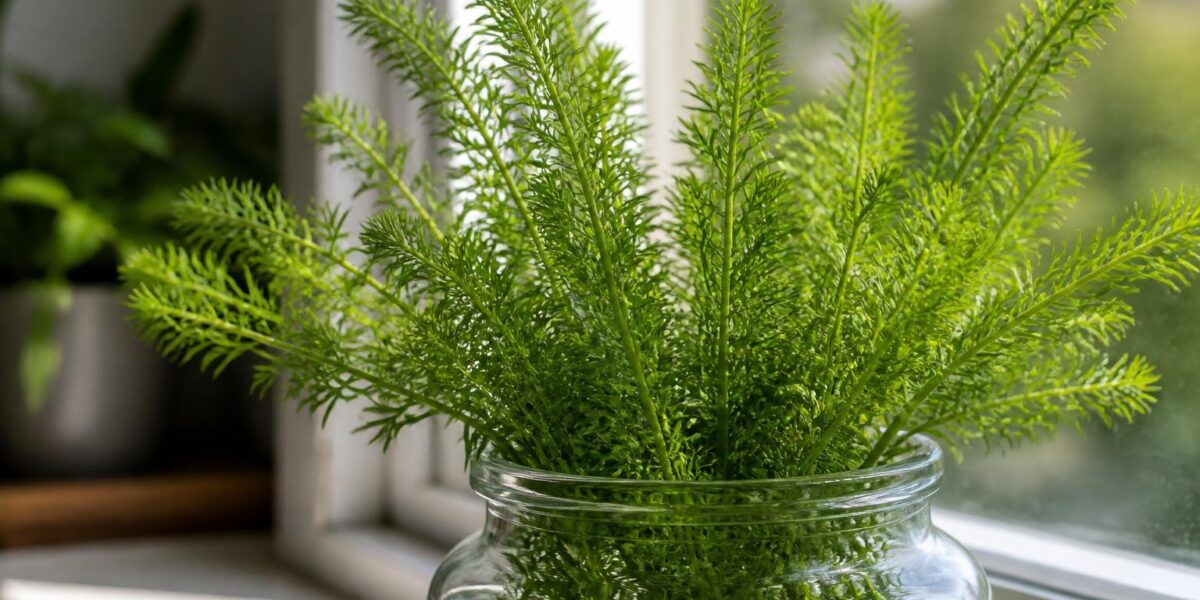
All three look essentially the same to a casual aquarist: long green stems with whorls of small lance-shaped leaves wrapped tightly around them, looking a bit like a bottle brush turned plant. They grow remarkably fast in moderate light, take nutrients straight from the water column, and can be trimmed and replanted endlessly from cuttings. They are the entry-level aquarium plant for a reason. The same fast growth that makes them beginner-friendly also produces a steady supply of trimmings that may end up on the floor, the counter, or the kitchen sink, which is where pet curiosity tends to find them.
Why Anacharis Is Non-Toxic
The leaves and stems of anacharis are mostly water and chlorophyll, with the same kind of mild plant tannins and cellulose you find in lettuce or spinach. There are no alkaloids, no cardiac glycosides, no calcium oxalate raphides, none of the chemistry that drives serious houseplant poisonings. Veterinary toxicology references and aquarium-keeping guides line up on the listing, and ASPCA-style audits that catalog dangerous houseplants do not flag Egeria densa or Elodea canadensis.
That places anacharis on the green-light shelf alongside other aquatic and semi-aquatic plants in the safe column, including java fern, amazon sword, vallisneria, hornwort, and the floating duckweed. If you keep all six in a planted tank, none of them produces a chemical risk to a cat or dog who steals a wet leaf.
What Happens If a Cat or Dog Eats a Trimming
Realistically, almost nothing. The most common scenario is the one where you have just done a water change, dropped a few stems on the kitchen counter while netting them out, and a cat patrols by and licks or grabs a piece. The plant tastes a bit grassy and faintly bitter; some cats lose interest immediately, others chew once and walk away. Dogs are slightly more enthusiastic about anything wet and grassy and may eat a whole sprig.
From a poisoning perspective, none of this matters. From a digestive perspective, a pet who eats a meaningful volume of any unfamiliar plant matter may have a single bout of vomiting or a soft stool the next day, the same way they might react to grazing on lawn clippings. There is no antidote, no targeted treatment, and no reason to induce vomiting at home. Monitor for one or two episodes, offer water, and call your veterinarian if the upset persists beyond a normal twelve to twenty-four hour reset.
Drinking the Aquarium Water
The more interesting question is what happens when a cat or dog drinks from the tank, because this is the behavior owners actually witness. Aquarium water is not chemically scary by default. It is room-temperature, dechlorinated, and biologically active in a way that means it is not as sterile as bottled drinking water. The realistic risks are not from the anacharis but from the additives the tank received earlier in the week.
Common concerns include fish medications that may still be circulating after a recent treatment cycle (some are mild for mammals, others are designed to be antibacterial and may upset gut flora in a pet), liquid fertilizers dosed for plant growth (most are dilute trace minerals, but iron and copper supplements at higher doses can cause GI upset), and any algaecide product that is recent. The water itself, free of additives, is not dangerous, but it is also not as clean as a fresh bowl of water, and a pet who consistently drinks from the tank may pick up minor stomach upset over time. The fix is a covered tank or a top with cutouts that fit your equipment but block a curious snout.
The Real Pet Risks Around an Aquarium
If you are doing a home audit because you just adopted a new cat or dog, the genuine aquarium hazards are worth listing. Heater cords and filter cords run live electricity along surfaces a teething puppy or chewing kitten can reach. Glass canopies and bowed-front tanks tip if a determined cat leans hard enough on the rim. Salt creep on a marine tank is irritating but not poisonous. Live fish food, including bloodworms and tubifex worms, can cause a stomach upset if a cat eats half a cube.
The plant tissue, by comparison, is the least eventful part. A planted freshwater tank with anacharis, java fern, and amazon sword is one of the safer indoor green features you can keep around pets, far less hazardous than a windowsill of non-cat-safe houseplants or a backyard with unaudited garden plantings. Build the tank carefully, manage the cords, and the plant chemistry simply is not on the worry list.
Anacharis as a Cat Toy and Dog Snack
A small minority of cats develop a fascination with batting at floating anacharis stems through the glass, and an even smaller minority manage to fish them out the top during a maintenance session. If your cat treats trimmings as wet noodles, you have two options: weight the planting better so stems do not float free, and provide a more attractive substitute toy. Wand toys, kicker toys with a rough fabric texture, and a window birdwatching perch usually outcompete a damp stem of pondweed within a week.
Dogs who snack on trimmings are usually scavenging from the trash bag after a water change. The fix is to bag and seal the prunings inside a closed bin rather than tossing them in the kitchen waste basket where the dog can fish them out. Composting the trimmings outside also works, since anacharis breaks down quickly in a regular bin.
What If Your Pet Knocks the Tank Over
The biggest single worry around fish tanks and pets is mechanical, not chemical. A cat who launches off a shelf onto a poorly-anchored tank lid can shift the canopy, splash water onto cords, or in a worst-case scenario tip a small unbraced tank. Glass shards, a sudden flood across an outlet strip, and a stressed fish that may need quick rescue all matter more than anything anacharis would do to your pet.
Sensible setup includes a stand rated for the full filled weight of the tank, a canopy clipped or weighted to its frame, equipment cords routed with drip loops, and a habit of placing the surge protector on a wall, not on the floor below the tank. None of this is anacharis-specific; it applies to any planted aquarium. But the behaviour-shaping reality is that pets who learn the tank is “off limits” early settle into ignoring it, and pets who can climb on it freely keep treating it as a feature.
Safer Tank Setups That Welcome Pets
If you want a planted tank that coexists peacefully with a cat or dog, a few choices reduce friction. A rimmed tank with a snug glass canopy keeps trimmings inside and curious snouts out. A sump-style filter under a closed cabinet keeps cords away from teeth. Anacharis floated as a dense raft instead of planted in substrate gives fish the same shelter without producing as many loose trimmings during pruning.
Pairing anacharis with sturdy slow-growing plants like java fern attached to driftwood and amazon sword anchored in substrate also reduces total maintenance. Less pruning means fewer trimmings escape the lid, which in turn means fewer chances for a cat to find a wet stem on the floor. None of this changes the safety story; it just keeps the household calmer.
Vet Routing and Final Reassurance
Living with anacharis and pets is essentially a non-event from a poisoning perspective. The plant is non-toxic by every common reference, the realistic risks of an aquarium are mechanical and electrical rather than chemical, and the worst-case ingestion outcome is mild stomach upset. Keep your own veterinarian’s number, the ASPCA Animal Poison Control Center at 888-426-4435, and the Pet Poison Helpline at 855-764-7661 saved for general emergencies, since aquatic plants are not the things to call about even on a busy water-change day.
If you are stocking other parts of the household, our cat-safe houseplants guide and pet-safe garden plants overview cover the rest of your indoor and outdoor inventory. The adopt-a-cat hub and adopt-a-dog hub include preparation checklists for households with existing aquariums, since prospective adopters often ask. Anacharis itself simply belongs on the safe column.
Frequently Asked Questions
Can my cat get sick from drinking water out of a freshwater tank with anacharis?
The plant itself is not the issue. The water may contain residual fish medications, dosed liquid fertilizers, or trace bacteria that can cause mild stomach upset over time. A single sip is unlikely to cause anything, but daily drinking from the tank is worth preventing with a tighter lid.
What if my dog eats a whole bunch of pulled-out anacharis stems?
You may see one or two episodes of vomiting or a soft stool, the same generic plant-matter reaction a dog might have to grazing on grass. The plant is non-toxic, so there is no targeted treatment. Monitor for twenty-four hours, offer water, and call your vet if the upset does not resolve.
Is the slime that grows on aquarium plant leaves dangerous to pets?
The biofilm and algae on tank-grown plants are not chemically dangerous, but they can carry trace bacteria. A pet who licks a slimy leaf is unlikely to get sick from the algae itself; if anything causes upset it is the same gut-flora effect as drinking the water.
Are pond-grown anacharis trimmings safe to compost where my dog can reach them?
The plant matter is non-toxic and breaks down quickly. The bigger composting risk is unrelated, including molds that develop on rotting compost and food scraps mixed in. Use a closed bin if your dog is a scavenger.
Can my cat be poisoned by Egeria densa specifically rather than the native Elodea canadensis?
No. Egeria densa, Elodea densa, and Elodea canadensis are all treated as non-toxic in standard veterinary plant references. The naming is a botanical history quirk; the chemistry is essentially the same harmless aquatic-plant tissue.


