
Last updated: May 16, 2026
In this article
- Is Java Fern Safe for Pets? The Quick Answer
- Meet Microsorum Pteropus, the Driftwood Fern
- Why Java Fern Is Non-Toxic
- What Happens If a Cat or Dog Chews a Leaf
- The Driftwood and Rhizome Question
- Drinking the Aquarium Water
- The Real Pet Risks Around an Aquarium
- Java Fern as a Cat Toy and Dog Snack
- Safer Tank Setups That Welcome Pets
- Vet Routing and Final Reassurance
- Frequently Asked Questions
Is Java Fern Safe for Pets? The Quick Answer
Yes, java fern is safe for pets. The plant most aquarists know as java fern (Microsorum pteropus, recently reclassified by some taxonomists as Leptochilus pteropus) is not listed by the ASPCA as toxic to cats, dogs, or horses, and aquatic-plant nurseries treat it as one of the most pet-tolerant species in the freshwater hobby. A cat who steals a leaf clipping from your maintenance bucket, a dog who licks the dripping rhizome you just lifted out for cleaning, or a kitten who chomps a stray frond will not be chemically poisoned.
That reassurance covers the leaves, the rhizome, the small dark scales on the underside, and the tiny baby plantlets that sometimes form along leaf edges. The honest caveats around any aquarium hover at the edges of the plant question. Tank water can carry residual fish medications or fertilizer dosing, equipment cords carry live current, and sharp edges on canopies and stands present mechanical risk. Java fern itself, the actual plant tissue, is the lowest-risk piece of the whole setup. This guide walks through the biology, the realistic pet-interaction scenarios, and how to integrate a fern-decorated tank into a home with cats and dogs.
Meet Microsorum Pteropus, the Driftwood Fern
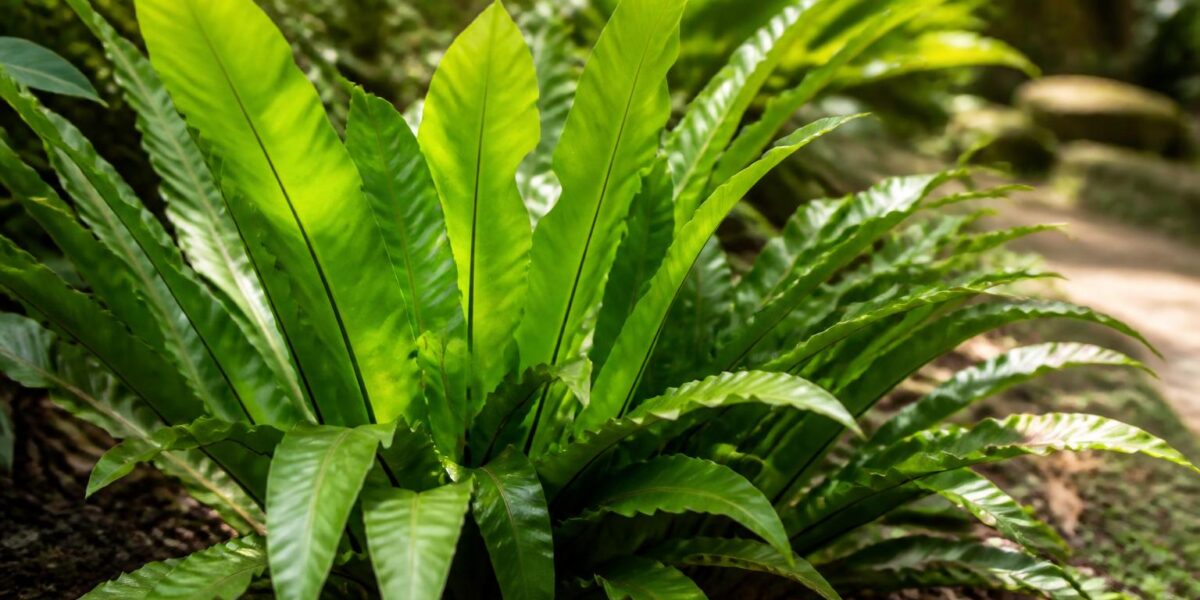
Java fern is a tropical Southeast Asian fern, native to streams and humid forest margins from India through Indonesia. Unlike most aquarium plants, it is an epiphyte, meaning it does not root into substrate but instead anchors its rhizome to driftwood, lava rock, or any rough surface using fine dark rhizoids. The leaves are tough, leathery, and dark green, with a slightly textured surface and a pronounced midrib. Cultivars include the broad-leaf “Windelov” with branching crested tips, the narrow-leaf “needle-leaf” form, and the standard wide-leaf type.
Java fern is famously easy to keep alive. It tolerates low light, handles a wide pH range, does not need fertilizer dosing, and propagates by sending up small plantlets from the leaf surface that detach and float to a new spot. The same toughness that makes it beginner-friendly also makes it durable when a curious cat fishes a leaf out of a maintenance bucket; the leaf bends rather than tears, and rinses clean of cat saliva without harm to the plant.
Why Java Fern Is Non-Toxic
The chemistry inside a java fern leaf is the same kind of cellulose, water, and benign plant tannins you find in most non-flowering greenery. Ferns as a group occasionally contain compounds that matter for grazing livestock, but Microsorum pteropus is not in that toxic category. There are no alkaloids, no cardiac glycosides, and no calcium oxalate raphides, the three classes of compounds responsible for most houseplant poisonings.
That places java fern firmly on the safe shelf alongside other planted-tank species you can keep without pet worry, including anacharis, amazon sword, vallisneria, hornwort, and duckweed. None of these aquatic plants register on standard household-toxicity lists, and a tank stocked entirely with these species is one of the lowest-risk plant features a pet owner can keep.
What Happens If a Cat or Dog Chews a Leaf
Realistically, very little. Java fern leaves are tough and slightly bitter, and the texture alone discourages most pets from chewing more than a single experimental nibble. A dog who slurps a frond off a wet driftwood centerpiece during cleanup may swallow a small piece, and a cat who patrols the tank lid may bat at a leaf poking through a feeding hole. Neither encounter is chemically dangerous.
The non-poisoning version of the worst case is mild stomach upset from any unfamiliar plant matter eaten in volume. A pet who eats a quarter of a large leaf may have one episode of vomiting or a soft stool the next day, the same response you might see from grazing on lawn clippings. There is no antidote, no targeted treatment, and no reason to induce vomiting at home. Monitor, offer water, and call your veterinarian if the upset persists beyond twenty-four hours.
The Driftwood and Rhizome Question
Java fern is almost always sold attached to driftwood or lava rock, sometimes tied with cotton thread or fishing line until the rhizoids grip the surface. The driftwood itself is the more interesting object to many pets, because dry driftwood smells appealing and is the right size to chew. A dog who grabs a chunk of pet-store driftwood out of a setup bucket has bigger problems than the fern, since chewing on softwood can cause splinters and constipation if pieces are swallowed.
The thread or fishing line is also worth attention. Cotton thread used by some growers dissolves over weeks and is harmless, but nylon fishing line is a foreign-body hazard if a pet swallows a length of it. Once the fern has rooted onto the wood, you can usually trim and remove any remaining thread or line, and most aquarists do this during the first few months. If you have an active chewer, prefer cotton-tied or pre-rooted ferns, and inspect new pieces before they go into a tank where the dog can stick a snout in.
Drinking the Aquarium Water
The more common pet-tank interaction is a cat or dog who drinks directly from the tank during a refill or through an open feeding hole. The water itself is not chemically scary by default, but it is also not as clean as a fresh bowl. Realistic concerns include residual fish medications still circulating after a recent treatment, dosed liquid fertilizers, traces of dissolved organic matter from the biological filter, and any algaecide product applied recently.
Java fern is not the source of any of these concerns. It does not produce defensive chemistry, it does not leach toxins, and it does not increase the bacterial load in any meaningful way. The fix for a cat who has decided the tank is a water dish is mechanical: a snug canopy, a feeding-hole cover that closes between feedings, and a fresh bowl of water nearby that is always more attractive than the warm tank.
The Real Pet Risks Around an Aquarium
The genuine aquarium hazards in a household with pets are mechanical and electrical rather than botanical. Heater cords and filter cords run live current along surfaces a teething puppy or chewing kitten can reach. Glass canopies tip if a cat hops on the rim. Plug strips on the floor below a tank can flood during a hose mishap. Live fish food, including bloodworms and brine shrimp cubes, can cause stomach upset if a pet eats half a tray.
The plant tissue, by comparison, is the least eventful part. A planted freshwater tank with java fern, anacharis, and amazon sword is one of the lowest-risk green features in the home, much less hazardous than a windowsill of unscreened houseplants or a backyard with unverified plant species. Set up the cords and canopy carefully, and the plant chemistry simply is not the concern.
Java Fern as a Cat Toy and Dog Snack
A small minority of cats become fascinated with the long arching leaves of mature java fern when they protrude through a feeding hole. The leaf is tough enough that a cat usually loses interest after a few bats and a single test nibble; the texture is closer to leather than to lettuce. If your cat persists, the answer is placement and substitution. Cover the feeding hole between feedings, route the leaf away from the open spot, and provide a wand toy that delivers more interesting movement.
Dogs who snack on trimmed leaves are usually fishing them out of the trash. Bag the trimmings inside a closed bin or compost them outside. Java fern leaves break down on a normal compost timeline and do not poison the compost or anything that grows from it.
Safer Tank Setups That Welcome Pets
If you want a planted tank that coexists with cats and dogs, a few choices reduce friction. A rimmed tank with a tight-fitting glass canopy keeps leaves inside and snouts out. Java fern attached high on a tall driftwood centerpiece keeps the canopy of the plant well inside the tank rather than poking through openings. A surge protector mounted to a wall, not the floor, keeps electrical hazards out of mop-water and pet-paw range.
Pairing java fern with anacharis as a fast-growing background and amazon sword as a substrate plant gives a layered look without demanding much pruning. Less pruning means fewer trimmings escape the lid, which in turn means fewer chances for a cat to find a wet leaf on the floor. None of this changes the safety story; it just keeps the household tidier.
Vet Routing and Final Reassurance
Living with java fern and pets is overwhelmingly a non-event. The plant is non-toxic per all common references, the realistic risks of an aquarium are mechanical and electrical, and the worst-case ingestion outcome is mild stomach upset. Keep your own veterinarian’s number, the ASPCA Animal Poison Control Center at 888-426-4435, and the Pet Poison Helpline at 855-764-7661 saved for general emergencies, since aquarium plants are not the things to call about even during a long maintenance day.
If you are stocking other parts of the household, our cat-safe houseplants guide and pet-safe garden plants overview cover indoor and outdoor inventory. The adopt-a-cat hub and adopt-a-dog hub include preparation checklists for adopters with existing aquariums. Java fern itself simply belongs on the safe column.
Frequently Asked Questions
Will java fern hurt my cat if she chews on the leathery leaves?
No. The leaves are tough and slightly bitter but chemically benign. A cat who chews and swallows a piece may have a mild stomach upset from the unfamiliar plant matter, but there is no targeted poisoning concern.
Are the small black scales on the leaf undersides toxic?
No. Those structures are sori, the spore-bearing organs of the fern, and they are part of normal reproduction. They are not poisonous to mammals, and pets who lick or chew them face the same negligible risk as the rest of the leaf.
What about the plantlets that grow on the leaves, can my dog eat those?
The small plantlets that form on java fern leaves are simply baby plants of the same species, and they share the same non-toxic profile. A dog who swallows several is unlikely to have any reaction beyond mild stomach upset at most.
Is the driftwood my java fern is attached to safe if my puppy chews it?
The wood is not poisonous, but pet-store driftwood is the wrong shape and density for chewing and can splinter or cause constipation if swallowed. Keep new pieces out of reach of an active chewer until the fern has rooted and the wood lives permanently inside the tank.
Can my cat be poisoned by drinking water from a tank that grows java fern?
The plant does not contaminate the water. If anything causes upset, it is the residual fish medications, dosed fertilizers, or dissolved organic matter rather than the fern itself. A snug canopy and a fresh bowl of clean water nearby usually solve the behavior.


