
Last updated: May 6, 2026
In this article
- Is Vallisneria Safe for Pets? The Quick Answer
- Meet Vallisneria, the Ribbon Plant
- Why Vallisneria Is Non-Toxic
- What Happens If a Cat or Dog Chews a Ribbon Leaf
- The Long-Leaf Question and Choking Risk
- Drinking the Aquarium Water
- The Real Pet Risks Around an Aquarium
- Vallisneria as a Cat Toy
- Trimming and Spreading Vallisneria
- Safer Tank Setups That Welcome Pets
- Vet Routing and Final Reassurance
- Frequently Asked Questions
Is Vallisneria Safe for Pets? The Quick Answer
Yes, vallisneria is safe for pets. The plants sold under the vallisneria label, including Vallisneria spiralis (straight vallisneria), Vallisneria americana (jungle val), Vallisneria asiatica, and the corkscrew form Vallisneria torta, are not listed by the ASPCA as toxic to cats, dogs, or horses. Aquatic-plant nurseries and veterinary references treat the whole genus as non-toxic to household mammals. A cat who licks a clipped leaf, a dog who slurps tank water, or a kitten who drags a soggy ribbon out of a maintenance bucket will not be chemically poisoned.
That reassurance covers the long ribbon-shaped leaves, the runner roots that spread along the substrate, and any baby plants forming at the ends of those runners. A note on naming first: the common name “eelgrass” is shared with the marine plant Zostera, which is unrelated and grows in saltwater. The freshwater eelgrass that aquarists keep is vallisneria, and that is what this guide covers. The honest caveats around any aquarium are the usual ones, mostly mechanical and electrical, with the plant tissue itself sitting at the bottom of the worry list.
Meet Vallisneria, the Ribbon Plant
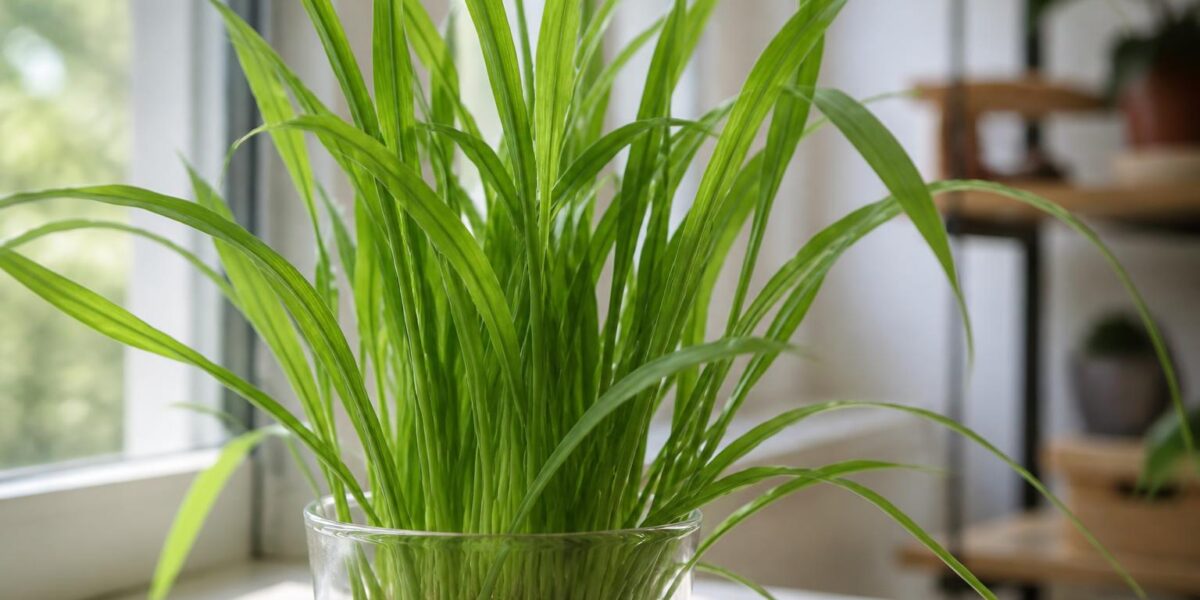
Vallisneria is a genus of freshwater grass-like plants in the Hydrocharitaceae family, found in temperate and tropical waters worldwide. In an aquarium it forms long ribbon-like leaves that grow up from the substrate to the surface, often reaching twelve to thirty-six inches depending on species and conditions. The leaves are usually a translucent bright green, narrow at maybe a quarter to half an inch wide, and either straight (V. spiralis), broadly straight (V. americana), or twisted into a corkscrew (V. torta).
The growth pattern is distinctive. A planted vallisneria sends out underground runners that produce daughter plants every few inches, slowly forming a dense thicket along the back of the tank. Mature plants can flower at the surface, with female flowers floating up on long thin stalks and male flowers releasing free-floating pollen, which is one of the more unusual reproductive setups in the planted-tank hobby. None of this affects pet safety; it just means a healthy vallisneria patch grows faster and trims more often than many other species.
Why Vallisneria Is Non-Toxic
The chemistry inside a vallisneria leaf is the same cellulose, water, and mild plant tannins found in most non-flowering aquatic greenery. There are no alkaloids, no cardiac glycosides, no calcium oxalate raphides, and no documented poisonous compounds. The Hydrocharitaceae family that includes vallisneria, anacharis, and many other aquarium plants does not produce defense chemistry of the type that drives serious houseplant poisonings.
Veterinary toxicology references and ASPCA-style household-plant audits do not flag Vallisneria species. That places vallisneria firmly on the safe column alongside other planted-tank species, including anacharis, java fern, amazon sword, hornwort, and floating duckweed. A tank stocked entirely with these species is one of the lowest-risk indoor plant features for a pet owner.
What Happens If a Cat or Dog Chews a Ribbon Leaf
Realistically, very little. Vallisneria leaves are pliable and grass-like, with a slightly bitter green flavor that most pets sample once and abandon. The most common interaction is a leaf trimmed during pruning that lands on the kitchen counter or in the maintenance bucket; a cat patrols by, bats it around, and occasionally chews. Dogs may eat a whole leaf if they fish one out of the bucket.
From a poisoning perspective this is uneventful. The non-poisoning worst case is mild stomach upset from any unfamiliar plant matter eaten in volume, similar to the response from grazing on lawn clippings. A pet who eats several leaves may have one episode of vomiting or a soft stool the next day. There is no antidote and no targeted treatment. Monitor for twenty-four hours, offer water, and call your veterinarian if the upset persists.
The Long-Leaf Question and Choking Risk
Mature vallisneria leaves are long and ribbon-shaped, which sometimes raises a worry about whether a pet could swallow a leaf and choke. In practice this is rare. The leaves are flat and pliable, not rope-like, and they tear under any meaningful tension. A dog who grabs a long leaf either chews through it or pulls it apart well before any swallowing risk arises.
The more realistic mechanical concern is a long leaf trailing out of a feeding hole and tempting a cat to bat it. Even then, the leaf usually tears off cleanly when pulled, and the loose end either floats back into the tank or ends up on the floor as a damp ribbon. The fix is the same one that solves most cat-and-tank issues: a snug canopy with a feeding hole that closes between feedings.
Drinking the Aquarium Water
The more common pet-tank interaction is a cat or dog who drinks from the tank during a refill or through an open lid. The water itself is not chemically scary by default, but it is also not as clean as a fresh bowl. Realistic concerns are unrelated to the vallisneria: residual fish medications, dosed liquid fertilizers, dissolved organic matter from the biological filter, and any algaecide applied recently.
Vallisneria does not need heavy fertilizer dosing in most setups, and many keepers run their vallisneria-heavy tanks lean. That makes a vallisneria-only planted tank one of the less chemically-active aquarium environments your cat could possibly drink from. The fix for a habitual tank-drinking pet is mechanical: a snug canopy, a fresh bowl of clean water nearby, and the routine of replacing the tank water rather than letting the pet sample it.
The Real Pet Risks Around an Aquarium
The genuine aquarium hazards in a household with pets are mechanical and electrical rather than botanical. Heater cords and filter cords run live current along surfaces a chewing puppy can reach. Glass canopies tip if a cat leans hard enough. Plug strips on the floor below a tank can flood during a hose mishap. Live or frozen fish food can cause stomach upset if a pet eats half a tray.
The plant tissue, by comparison, is the least eventful part. A planted tank with vallisneria as a tall background, java fern on driftwood, and anacharis as a fast-growing fill is one of the safer indoor green features around, much less hazardous than a windowsill of unscreened houseplants or a backyard with unverified species. Set up the cords and canopy carefully, and the plant chemistry is not the concern.
Vallisneria as a Cat Toy
A small minority of cats develop a fascination with the long ribbon leaves of vallisneria precisely because they look so much like ribbons. The plants reach the surface, then bend and trail along the canopy, sometimes poking through any open feeding hole. The cat-batting habit is the most predictable behavioral consequence of keeping vallisneria.
Solutions are practical rather than chemical. Trim the longest leaves below the canopy line during regular maintenance, cover any feeding hole between feedings, and provide a wand toy or kicker toy that delivers more interesting movement than a damp leaf trailing through water. Within a week or two, most cats lose interest and the canopy stays uneventful. The plant itself does not mind; vallisneria pruning encourages denser growth.
Trimming and Spreading Vallisneria
Vallisneria spreads aggressively when conditions suit it, which means most keepers eventually find themselves thinning the runner system to keep it from taking over the back of the tank. The neat way to thin is to lift unwanted runners with a substrate dip, snip them at the base, and either replant the daughters elsewhere or compost them. Trimmings should go into a sealed bag or directly into an outdoor compost rather than sitting on the kitchen counter where a cat may find them.
The pruned material is non-toxic to humans, pets, and wildlife. Composting outdoors is safe; outdoor ponds with vallisneria are also safe for any backyard birds or visiting animals. The plant is a known component of natural freshwater ecosystems where it provides shelter and food for fish and invertebrates without harm to mammals.
Safer Tank Setups That Welcome Pets
If you want a vallisneria-rich planted tank that coexists with pets, a few setup choices reduce friction. A rimmed tank with a snug canopy keeps the long leaves contained. A taller tank gives vallisneria room to grow without breaking the surface, which avoids the cat-batting trigger. Pairing vallisneria with sturdy slow-growing plants like java fern keeps the maintenance schedule manageable.
Choose a vallisneria species sized to your tank. Jungle val (V. americana) can reach three feet and is a back-of-tank-only choice for tall aquariums. Straight val (V. spiralis) tops out around twelve to twenty inches and works in standard tanks. Corkscrew val (V. torta) stays shorter still and gives a textured look in smaller setups. Sizing the species to the tank prevents most surface-poking issues.
Vet Routing and Final Reassurance
Living with vallisneria and pets is overwhelmingly a non-event from a poisoning perspective. The plant is non-toxic per all common references, the realistic risks of an aquarium are mechanical and electrical, and the worst-case ingestion outcome is mild stomach upset. Keep your own veterinarian’s number, the ASPCA Animal Poison Control Center at 888-426-4435, and the Pet Poison Helpline at 855-764-7661 saved for general emergencies, since aquatic ribbon plants are not the things to call about.
If you are stocking other parts of the household, our cat-safe houseplants guide and pet-safe garden plants overview cover indoor and outdoor inventory. The adopt-a-cat hub and adopt-a-dog hub include preparation checklists for adopters with existing aquariums. Vallisneria belongs on the safe column.
Frequently Asked Questions
Is freshwater vallisneria the same as marine eelgrass (Zostera)?
No. The “eelgrass” common name is shared between two unrelated plants. Vallisneria is freshwater and lives in aquariums and freshwater rivers; Zostera is marine and grows in saltwater coastal beds. This guide covers freshwater vallisneria, which is non-toxic to pets.
Will vallisneria hurt my cat if she eats a long leaf?
No. The plant is chemically non-toxic. A cat who eats a long leaf may have one episode of mild stomach upset from the unfamiliar fiber, but there is no targeted poisoning concern. The leaf is also pliable enough that choking is uncommon.
What about the runner roots and baby plants, are they any different in toxicity?
No. The runners and daughter plants are clones of the parent and share the same non-toxic chemistry. A pet who chews on a runner faces the same negligible risk as chewing on the leaves.
Can my dog be poisoned by drinking water from a vallisneria-only tank?
The plant does not make the water dangerous. If anything causes upset, it is the residual fish medications or dosed fertilizers rather than the vallisneria. A snug canopy and a fresh bowl of clean water nearby usually solve the behavior.
Is corkscrew vallisneria (V. torta) more or less safe than the straight forms?
The same. All commonly sold vallisneria species share the same non-toxic chemistry. The differences are visual (leaf shape, height) rather than safety-related. Pick the variety that fits your tank without worrying about poisoning risk.


