
Last updated: April 9, 2026
In this article
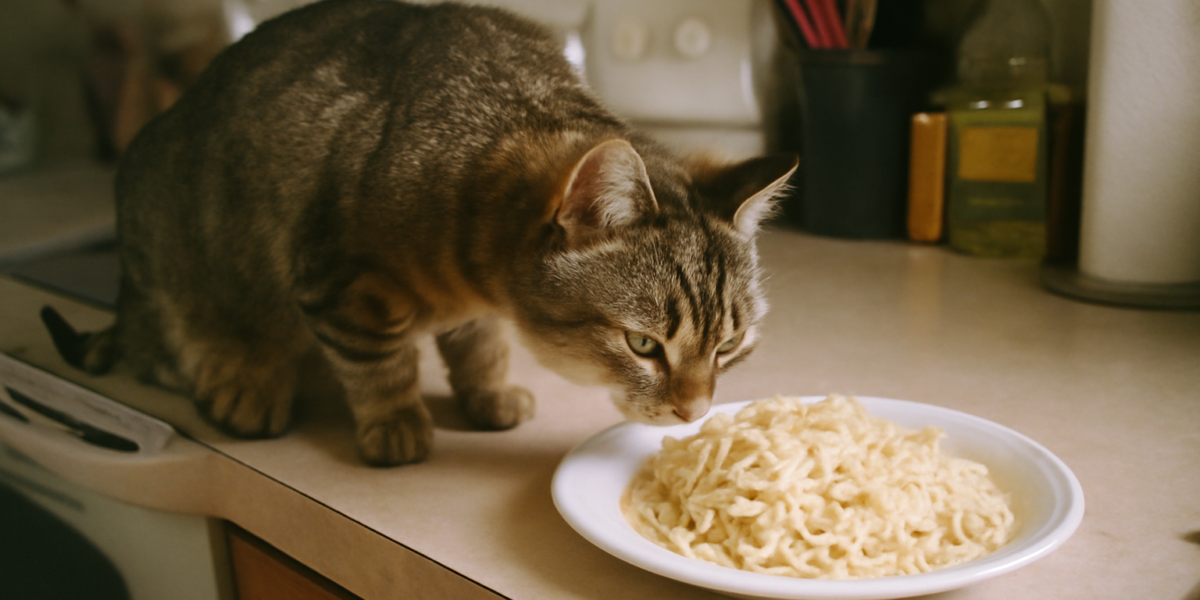
Noodles are a universal comfort food, and if you have ever sat down to a bowl of pasta, ramen, or lo mein, you have probably noticed your cat showing interest. The soft texture and mild aroma of cooked noodles can be attractive to cats, and many owners wonder whether sharing a strand or two is harmless fun or a dietary mistake. The short answer is that plain cooked noodles are not toxic, but they represent one of the least nutritionally useful foods you could offer your cat. As obligate carnivores, cats need animal protein, specific amino acids, and animal-based fats to survive — not the refined wheat carbohydrates that make up the vast majority of a noodle’s composition.
Quick Answer: Plain, cooked noodles without sauce, seasoning, garlic, or onion are not toxic to cats and a small amount will not cause harm. However, noodles are essentially empty carbohydrates that provide no essential nutrients for cats. The real danger lies in the sauces, seasonings, garlic, and onions that typically accompany noodles — several of which are toxic to felines.
Are Noodles Safe for Cats?
The safety of noodles for cats depends on what kind of noodle and, more importantly, what is on the noodle. Plain cooked pasta, egg noodles, rice noodles, or udon are not toxic. They are made from flour (wheat or rice), water, and sometimes egg — none of which are poisonous to cats in small quantities.
However, noodles are rarely eaten plain. The sauces, seasonings, and accompaniments are where the real danger lies:
Garlic and onion: Present in virtually every pasta sauce, stir-fry sauce, and ramen broth. Both are members of the allium family and are toxic to cats. They cause oxidative damage to red blood cells, leading to Heinz body anemia. Even small, repeated exposures can be cumulative and dangerous.
Tomato sauce: While ripe tomatoes in small amounts are generally not toxic, tomato sauce typically contains garlic, onion, salt, and sometimes sugar — a combination of problematic ingredients.
Cream sauces: Alfredo and similar cream-based sauces contain dairy (triggering lactose intolerance), butter (excess fat), and often garlic.
Soy sauce: Extremely high in sodium. A single tablespoon of soy sauce contains about 900 milligrams of sodium — more than 40 times a cat’s daily minimum requirement.
Instant ramen seasoning packets: These are essentially concentrated sodium and MSG, along with dried garlic and onion. They are among the most dangerous noodle accompaniments for cats.
Raw pasta or noodles should also be avoided. Uncooked noodles are hard, can splinter, and may pose a choking hazard or cause gastrointestinal irritation.
Nutritional Profile of Noodles
A one-cup serving of cooked plain pasta (about 140 grams) contains approximately 220 calories, 43 grams of carbohydrates, 1 gram of fat, 8 grams of protein, and minimal sodium (if cooked without salt). Egg noodles have a similar profile with slightly more fat and protein from the egg content.
While the protein content might seem reasonable, it comes entirely from wheat gluten — an incomplete protein source for cats. Cats require 11 essential amino acids, including taurine and arginine, which are found in animal tissue but not in wheat. A cat eating noodles gets calories without any of the building blocks it needs for muscle maintenance, heart function, vision, and immune health.
The carbohydrate load is the other major concern. Cats metabolize carbohydrates differently than humans. They have lower levels of carbohydrate-digesting enzymes, and their bodies are adapted to derive glucose primarily through gluconeogenesis (converting amino acids into glucose in the liver). Flooding their system with dietary carbohydrates from noodles can lead to blood sugar spikes, weight gain, and over time, insulin resistance.
Potential Benefits of Noodles for Cats
The potential benefits of noodles for cats are extremely limited:
Bland diet component: Veterinarians sometimes recommend a bland diet for cats recovering from gastrointestinal illness. While plain boiled chicken and rice is the classic recommendation, a very small amount of plain cooked pasta can serve a similar purpose — providing easily digestible calories while the gut recovers. However, this should only be done under veterinary guidance and for a limited time.
Caloric supplementation: In rare cases where a cat needs to gain weight quickly and is refusing all other food, a small amount of plain noodles mixed with meat-based food can add calories. Again, this is a veterinary-supervised decision, not a DIY solution.
Enrichment: Some cats enjoy playing with a strand of cooked spaghetti before eating it. The unusual texture provides brief mental stimulation. However, this is a very minor benefit that does not justify regular feeding.
Risks and Side Effects of Noodles for Cats
The risks associated with feeding noodles to cats include:
Garlic and onion toxicity from sauces: This is the primary danger. Garlic is about five times more potent than onion in terms of toxicity to cats. Symptoms of allium toxicity include lethargy, pale gums, elevated heart rate, reduced appetite, dark red or brown urine, and in severe cases, collapse. Symptoms may be delayed by 2 to 5 days after ingestion.
Excessive sodium from seasoned noodles: Ramen, soy sauce-based noodle dishes, and even pasta cooked in salted water contain sodium levels that are problematic for cats. High sodium strains the kidneys and can cause dehydration, hypertension, and worsen existing kidney disease.
Obesity from carbohydrate excess: Regular noodle consumption contributes to caloric excess and weight gain. Obesity is the most common nutritional disorder in domestic cats and leads to diabetes, joint disease, and reduced lifespan.
Wheat allergy: Some cats are allergic or sensitive to wheat gluten. Symptoms can include itching, skin irritation, chronic ear infections, vomiting, or diarrhea.
Choking or intestinal blockage: Long strands of noodle can tangle and pose a choking risk. In very rare cases, a large amount of undigested noodle material could contribute to intestinal obstruction, particularly in kittens or cats that bolt their food.
Nutritional dilution: If noodles replace even a portion of a cat’s regular diet, the cat misses out on essential nutrients. Over time, this can lead to deficiencies even if the cat appears well-fed and is maintaining weight.
How to Feed Noodles to Cats Safely
If you decide to let your cat have a small taste of noodles, safety precautions are essential:
- Kittens: Avoid feeding noodles to kittens. Their caloric needs should be met entirely through nutritionally complete kitten food to support rapid growth and development.
- Adult cats (6–10 lbs): One to two small pieces of plain, cooked noodle (each about one inch long), no more than once every two weeks. No sauce, no seasoning, no salt.
- Large cats (over 10 lbs): Up to three small pieces of plain, cooked noodle, no more than once every two weeks.
The noodles must be completely plain — cooked in unsalted water with no sauce, butter, oil, garlic, onion, or any seasoning. Cut long strands into short pieces to eliminate choking risk. Serve at room temperature, not hot. Ensure fresh water is available.
Never share your plate of seasoned noodles directly with your cat. The trace amounts of garlic and onion in most noodle dishes are enough to be harmful with repeated exposure.
Signs of Problems After Eating Noodles
Watch for these symptoms depending on what type of noodles your cat consumed:
Plain noodles — mild symptoms: Slight digestive upset, soft stool, or minor gas. These typically resolve within 24 hours without intervention.
Seasoned noodles — moderate symptoms: Vomiting, diarrhea, excessive thirst (from sodium), or lethargy. Contact your veterinarian for advice.
Garlic/onion-containing noodles — delayed symptoms (2-5 days): Lethargy, pale or yellow gums, rapid breathing, dark urine, weakness, loss of appetite. These indicate hemolytic anemia and require immediate veterinary care. Allium toxicity is cumulative, so repeated small exposures are as dangerous as a single large dose.
Emergency symptoms: Collapse, seizures, difficulty breathing, inability to stand, or bloody vomit/stool. Seek emergency veterinary care immediately regardless of what caused the reaction.
Better Alternatives to Noodles for Cats
If your cat enjoys the soft, chewy texture of noodles, try these healthier substitutes:
Shredded cooked chicken: The soft, stringy texture of shredded chicken can mimic the appeal of noodles while providing high-quality protein and essential amino acids. Cook without seasoning.
Cooked fish: Flaked salmon or whitefish offers a soft texture, excellent protein, and beneficial omega-3 fatty acids. Cook without oil or seasoning.
Meat-based puree treats: Squeezable meat purees are soft and appealing, providing the textural variety your cat may be seeking without carbohydrates.
Small pieces of cooked egg: Softly scrambled egg (no oil or seasoning) is nutritious and has a soft texture that many noodle-loving cats enjoy.
For more information on grain-based foods and cats, see our articles on can cats eat couscous and can cats eat crackers. Ready to welcome a new cat into your home? Visit our adoption page to find your perfect match.
Frequently Asked Questions
Can cats eat ramen noodles?
The plain noodles in ramen are not toxic, but ramen broth and seasoning packets are extremely dangerous for cats. They contain very high levels of sodium (often over 1,000 milligrams per serving) along with garlic powder, onion powder, and MSG. Never give your cat ramen broth or noodles that have been cooked in flavored broth. If your cat ate a few plain, rinsed ramen noodles, they should be fine. If they consumed the broth, contact your vet.
Are egg noodles better than regular pasta for cats?
Egg noodles contain slightly more protein and fat from the egg content, making them marginally more nutritious than plain wheat pasta. However, the difference is negligible from a feline health perspective. Neither provides the animal-based protein and amino acids that cats need. Both are acceptable in tiny amounts if completely plain.
Can cats eat rice noodles?
Rice noodles are free of wheat gluten, which makes them suitable for cats with wheat allergies. However, they are even more carbohydrate-dense than wheat pasta and contain less protein. A small piece of plain cooked rice noodle is not harmful, but it offers even less nutritional value than wheat-based noodles.
What about pasta sauce — is it safe for cats?
Most pasta sauces are not safe for cats. Tomato-based sauces almost always contain garlic and onion, which are toxic. Cream-based sauces contain dairy and often garlic. Pesto contains garlic and pine nuts. Oil-based sauces may contain garlic and excess fat. There is essentially no commercially available pasta sauce that is safe for cats without modification.
My cat ate a significant amount of garlic noodles — what should I do?
Contact your veterinarian or the ASPCA Animal Poison Control Center (888-426-4435) immediately. Garlic toxicity in cats can cause serious hemolytic anemia, and symptoms may not appear for 2 to 5 days after ingestion. Early treatment with deoxidizing agents and supportive care can prevent serious complications. Do not wait for symptoms before seeking help — early intervention is critical with allium toxicity.


