
Last updated: April 10, 2026
In this article
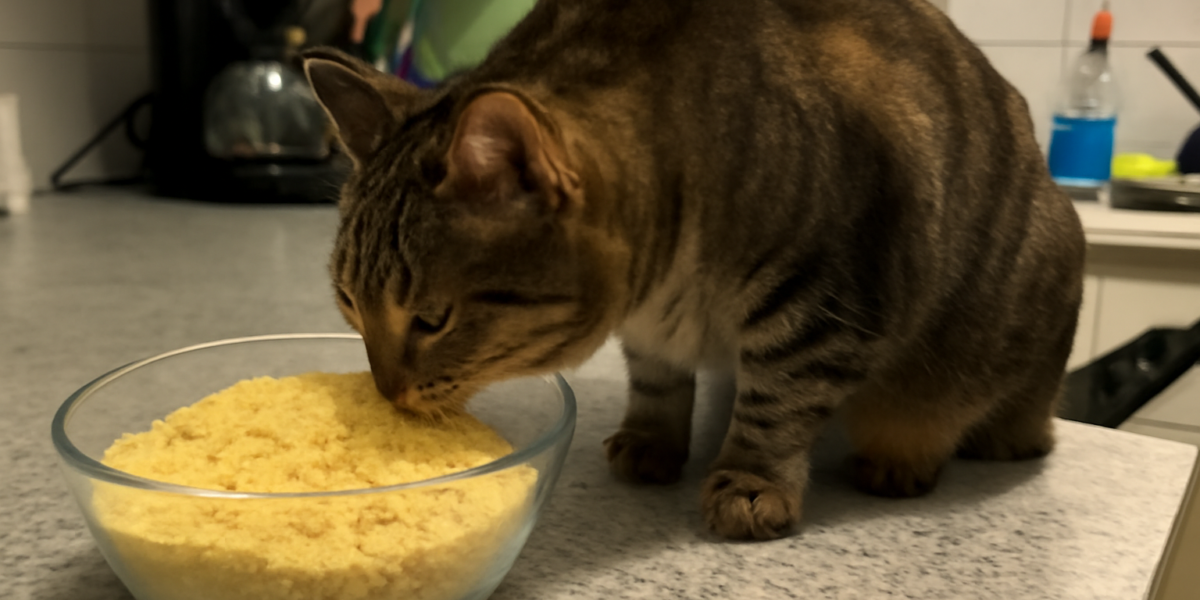
Couscous is a staple in North African and Middle Eastern cuisine, and its light, fluffy texture has made it a popular side dish in kitchens around the world. If your cat has shown interest in this tiny pasta — yes, couscous is technically a pasta, not a grain — you may be wondering whether a taste is safe. Like most plain grain-based foods, couscous occupies a gray zone for cats: it is not poisonous, but it serves no purpose in an obligate carnivore’s diet. Cats are biologically designed to extract their nutrition from animal tissue, and the refined wheat semolina that forms the basis of couscous provides nothing they cannot get in better form from proper cat food.
Quick Answer: Plain, cooked couscous with no added seasonings, butter, or broth is not toxic to cats. However, it is almost pure carbohydrate and provides no essential amino acids, taurine, or other nutrients cats require. A few grains will not hurt your cat, but couscous should not be a regular part of their diet. Seasoned couscous — especially with garlic, onion, or raisins — is dangerous.
Is Couscous Safe for Cats?
Traditional couscous is made from semolina wheat flour and water, formed into tiny granules and steamed. In its simplest form, it is not toxic to cats. The basic ingredients — wheat flour and water — are the same as plain pasta, and they do not contain compounds that are acutely dangerous to felines.
However, there is an important distinction between plain steamed couscous and the couscous dishes most people actually prepare and eat. Couscous is almost always served with additions that can be harmful to cats:
Garlic and onion: A huge number of couscous recipes call for sauteed garlic and onion as a flavor base. Both are toxic to cats, causing oxidative damage to red blood cells that can lead to hemolytic anemia.
Raisins and dried fruit: North African-style couscous frequently includes raisins, which are toxic to cats and can cause acute kidney failure.
Spices: Cumin, coriander, turmeric, and paprika are common in couscous dishes. While most of these spices are not acutely toxic in tiny amounts, they can cause gastrointestinal irritation and are unnecessary for cats.
Chicken or vegetable broth: Couscous is often cooked in broth rather than plain water. Commercial broths typically contain garlic, onion, and high levels of sodium — all problematic for cats.
Butter and oil: Many recipes call for generous amounts of butter or olive oil, which add excess fat that can cause digestive upset or contribute to pancreatitis.
Israeli (pearl) couscous and Lebanese (moghrabieh) couscous are larger variants that pose the same nutritional concerns as regular couscous, though their larger size makes portion estimation easier.
Nutritional Profile of Couscous
One cup of cooked plain couscous contains approximately 175 calories, 36 grams of carbohydrates, less than 1 gram of fat, 6 grams of protein, and about 8 milligrams of sodium (when cooked in plain water). It also provides small amounts of selenium, B vitamins, and iron.
At first glance, the low sodium and moderate protein might seem acceptable. However, the protein in couscous comes from wheat gluten, which is an incomplete protein for cats. It lacks taurine entirely — an amino acid so essential to cats that deficiency causes blindness, heart failure, and death. It also lacks adequate arginine, another amino acid that cats cannot synthesize and that is critical for the urea cycle (removing ammonia from the body).
The carbohydrate content is the dominant feature of couscous from a feline dietary perspective. At 36 grams of carbs per cup, couscous represents a massive dose of a macronutrient that cats process inefficiently. Their limited amylase production and metabolic preference for gluconeogenesis mean that dietary carbohydrates are largely converted to fat storage rather than used as immediate energy.
Potential Benefits of Couscous for Cats
The benefits of couscous for cats are negligible:
Bland diet filler: In veterinary contexts, very small amounts of plain cooked grain (typically rice, but couscous could serve similarly) are sometimes used as part of a temporary bland diet for cats recovering from GI illness. This should only be done under veterinary supervision and alongside a primary protein source like boiled chicken.
Selenium content: Couscous is a decent source of selenium, a trace mineral important for thyroid function and antioxidant activity. However, cats obtain adequate selenium from meat-based diets, and supplementing through couscous introduces far too many carbohydrates relative to the selenium benefit.
Low sodium when plain: Unlike many processed snack foods, plain couscous cooked in water has very low sodium. This makes it one of the less harmful grain-based foods if your cat happens to eat a small amount. For comparison, see the much higher sodium concerns discussed in our pretzels article.
Risks and Side Effects of Couscous for Cats
The risks of feeding couscous to your cat include:
Toxic recipe ingredients: The greatest danger is not the couscous itself but the garlic, onion, and raisins commonly prepared with it. Always assume that a prepared couscous dish contains these ingredients unless you made it yourself and know otherwise.
Carbohydrate excess: Regular consumption of couscous displaces the protein-rich food cats need and contributes to obesity, insulin resistance, and eventually type 2 diabetes.
Wheat sensitivity: Cats with wheat or gluten allergies may experience itching, skin problems, vomiting, or diarrhea after eating couscous. Food allergies in cats often manifest as skin issues rather than gastrointestinal symptoms, making the connection to diet harder to identify.
Nutritional dilution: Even if couscous does not cause acute symptoms, using it as a regular treat means your cat is consuming calories that provide none of the essential nutrients they need. Over time, this can contribute to subclinical nutritional imbalances.
Digestive discomfort: Some cats experience gas, bloating, or soft stools after consuming wheat-based foods. The refined nature of semolina flour makes couscous easier to digest than whole grains, but it can still cause issues in sensitive individuals.
How to Feed Couscous to Cats Safely
If you want to let your cat try a small amount of couscous, strict preparation guidelines apply:
- Kittens: Do not feed couscous to kittens. Their rapid growth requires nutrient-dense, species-appropriate food. Empty carbohydrate calories from couscous displace the nutrition they critically need.
- Adult cats (6–10 lbs): No more than one teaspoon of plain cooked couscous (cooked in plain water only), offered no more than once every two weeks.
- Large cats (over 10 lbs): No more than one tablespoon of plain cooked couscous (cooked in plain water only), no more than once every two weeks.
The couscous must be cooked in plain water — not broth. It must have no butter, oil, salt, spices, garlic, onion, raisins, or any other additions. Serve at room temperature. Do not mix couscous into your cat’s regular food habitually, as this can create a preference for the carbohydrate-enriched version and lead to food rejection when you stop adding it.
Warning Signs After Eating Couscous
Monitor your cat after couscous consumption for these symptoms:
After plain couscous — mild symptoms: Soft stool, mild gas, or slight decrease in appetite. These should resolve within 24 hours. No veterinary intervention is typically needed.
After seasoned couscous — moderate symptoms: Vomiting, diarrhea, excessive thirst, abdominal discomfort, or lethargy. Contact your veterinarian, especially if the couscous contained garlic or onion.
After couscous with raisins — urgent: Any amount of raisin consumption warrants an immediate call to your veterinarian. Symptoms of grape/raisin toxicity include vomiting, lethargy, decreased urination, and signs of kidney distress. Treatment is time-sensitive.
Delayed symptoms (2-5 days after garlic/onion exposure): Pale gums, rapid breathing, dark-colored urine, extreme lethargy, and weakness. These indicate hemolytic anemia from allium toxicity and require emergency veterinary care.
Healthier Alternatives to Couscous for Cats
Instead of couscous, offer your cat these more appropriate options:
Cooked plain chicken: Shredded, boneless, skinless chicken breast without seasoning is the ideal cat treat — high in complete protein, rich in taurine, and easy to digest.
Small pieces of cooked fish: Salmon, cod, or tilapia cooked without oil or seasoning provides protein and omega-3 fatty acids that benefit coat and skin health.
Plain canned pumpkin: If your cat needs a small amount of plant-based fiber (for constipation, for example), unsweetened canned pumpkin is a much better choice than couscous. It is lower in carbohydrates and higher in fiber.
Commercial cat treats: Quality cat treats are formulated to provide species-appropriate nutrition in controlled portions.
For more information about similar grain and carbohydrate-based foods, check out our articles on can cats eat noodles and can cats eat crackers. If you are looking for a new feline family member, visit our adoption page to find cats waiting for loving homes.
Frequently Asked Questions
Is whole wheat couscous better for cats than regular couscous?
Whole wheat couscous contains more fiber than refined couscous, which is theoretically a small advantage. However, the additional fiber does not offset the fundamental problem: couscous is almost entirely carbohydrates and provides no essential feline nutrients. Whole wheat couscous is marginally better but still not a recommended food for cats.
Can cats eat Israeli (pearl) couscous?
Israeli couscous is made from the same semolina flour as regular couscous, just formed into larger balls and toasted. The nutritional profile is nearly identical, and the same safety considerations apply. The larger size makes it slightly easier to portion control, but it is no more appropriate for cats than regular couscous.
Is couscous better than rice for cats?
Couscous and white rice have very similar nutritional profiles — both are refined carbohydrates with minimal protein and fat. Rice is more commonly used in veterinary bland diets because it has a long track record and tends to be very easy on the stomach. If your veterinarian recommends a bland diet, rice is the better choice. For treats, neither is ideal — stick with meat-based options.
My cat ate a couscous dish from my plate — should I worry?
Check what was in the dish. If it contained garlic, onion, raisins, or high-sodium broth, contact your veterinarian. If it was a very small amount of mildly seasoned couscous, monitor for vomiting, diarrhea, or lethargy over the next 24 to 48 hours. If symptoms develop or if you are unsure about the ingredients, call your vet to be safe.
Can couscous cause allergies in cats?
Yes. Couscous is made from wheat, and wheat is one of the more common food allergens in cats. Food allergy symptoms in cats often present as skin issues — itching, over-grooming, hair loss, and recurring ear infections — rather than the immediate gastrointestinal symptoms humans typically associate with food allergies. If you notice these symptoms after introducing any new food, including couscous, discontinue it and consult your veterinarian about an elimination diet.


