
Last updated: May 16, 2026
In this article
- Is Autumn Fern Safe for Pets?
- Meet Autumn Fern: Dryopteris Erythrosora
- Why Autumn Fern Is Considered Non-Toxic
- What Happens if a Pet Eats Autumn Fern
- First Aid if You’re Unsure
- How to Tell Autumn Fern from Look-Alikes
- Care Basics for Autumn Fern
- Pet-Friendly Placement Tips
- Sibling Safe Ferns and Other Pet-Safe Plants
- When to Call the Vet Anyway
- Bringing Autumn Fern into a New Adopter’s Home
- Frequently Asked Questions
Is Autumn Fern Safe for Pets?
Yes, autumn fern is safe for pets. The American Society for the Prevention of Cruelty to Animals (ASPCA) lists Dryopteris erythrosora as non-toxic to dogs and cats, and the entire Dryopteris genus does not carry any of the toxic compounds (cyanogenic glycosides, calcium oxalates, terpenoids) that put many ornamental plants on the danger list. If your dog or cat has nibbled a fresh bronze-tipped frond from an autumn fern, you can exhale and skip the emergency call.
The honest caveat applies to autumn fern as it does to every safe plant: any plant matter eaten in volume can cause mild self-limiting GI upset (a little vomiting, soft stool, brief loss of appetite) as the digestive tract clears the unfamiliar fiber. That is not poisoning. If symptoms persist, escalate, or your pet otherwise seems unwell, call your veterinarian, the ASPCA Animal Poison Control Center at 888-426-4435, or the Pet Poison Helpline at 855-764-7661. This guide walks through what autumn fern is, why it earns its safe rating, and how to keep this graceful woodland fern thriving in a home with paws.
Meet Autumn Fern: Dryopteris Erythrosora
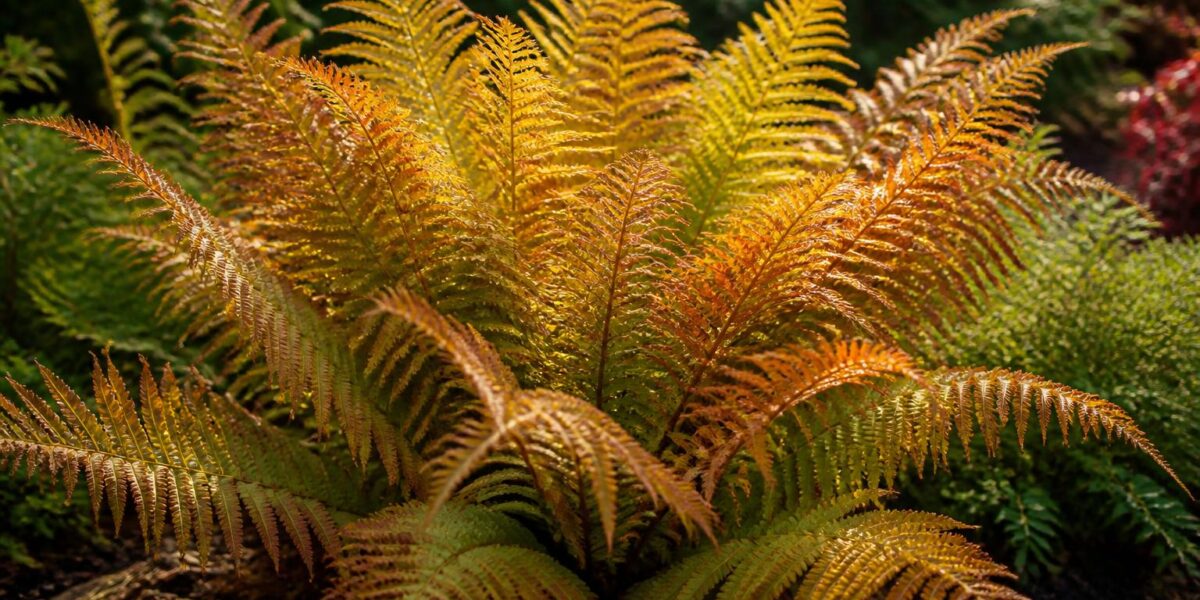
Autumn fern (Dryopteris erythrosora) is a deciduous to semi-evergreen woodland fern native to East Asia, particularly Japan, China, the Korean peninsula, and Taiwan. The plant earns its name from the dramatic bronze-red color of new fiddleheads and unfurling fronds, which transition through copper and amber tones before settling into glossy deep green at maturity. Each frond is twice-pinnate (cut into pinnae and then pinnules) and lance-shaped, growing on a thin upright petiole.
Mature plants reach 18 to 24 inches tall and a similar spread. The crown is a tight clump of arching fronds, and outdoor specimens slowly form colonies through underground rhizomes. The species is hardy in USDA zones 5 to 9, so it grows widely as a landscape fern in the eastern and Pacific United States, the United Kingdom, and most of temperate Asia. Indoor culture is uncommon but possible in a cool, humid spot.
You will see autumn fern sold under the trade name “Brilliance Autumn Fern” (a more vividly bronze cultivar) as well as plain “autumn fern.” Both are the same species and share the safe rating. The plant is sometimes confused with sword fern (Nephrolepis cordifolia), which IS toxic to pets — see our sword fern toxicity guide for the contrast.
Why Autumn Fern Is Considered Non-Toxic
Most true ferns (the polypodiopsids) are safe for pets. Ferns reproduce by spores rather than seeds, and they do not carry the seed-protective alkaloids, glycosides, or oxalates that drive toxicity in many flowering plants. The compounds that the ASPCA lists as concerning in some “ferns” usually turn out to be from non-fern look-alikes (asparagus fern is actually a member of the asparagus family and is genuinely toxic) or from the single Nephrolepis cordifolia species.
Autumn fern’s biochemistry is dominated by structural carbohydrates, mucilage, and very small amounts of plant defense compounds at levels that do not cause systemic toxicity in companion animals. Veterinary toxicology references and the ASPCA both place Dryopteris species on the non-toxic list. That puts autumn fern in the same broadly safe category as Boston fern (cats), Boston fern for cats deeper guide, blue star fern, maidenhair fern, rabbit’s foot fern, staghorn fern, and java fern.
“Non-toxic” does not mean “edible.” Autumn fern fronds are tough, fibrous, and not designed as snacks. Most pets lose interest after a chew or two. A few dogs and cats are persistent grazers, and even with safe plants, repeated chewing produces repeated mild stomach upset.
What Happens if a Pet Eats Autumn Fern
The most common outcome is nothing at all. Pets often mouth a frond, decide the texture is not appealing, and walk away. When ingestion does cause a reaction, the signs are mild and short-lived:
- Mild drooling for a few minutes
- One or two episodes of vomiting
- Soft stool or short-lived diarrhea
- Brief loss of appetite
- Occasional sneezing if frond pieces touched the nasal passages
Severe symptoms — repeated vomiting over many hours, neurological signs, breathing difficulty, collapse — are not consistent with autumn fern ingestion. If your pet shows any of those, look for another exposure: a different plant in the home, a household chemical, or an unrelated illness. Save a piece of every plant your pet may have accessed so a vet can ID it on the spot.
First Aid if You’re Unsure
Even with a safe plant, a sensible first step is to remove any remaining frond fragments from your pet’s mouth, offer fresh water, and watch for the next few hours. Skip the next meal if your pet has vomited, then offer a small bland meal of plain boiled chicken and rice. Most pets are entirely fine by the time you finish that mental conversation about whether to call.
If you are not sure of the plant ID, call your veterinarian or one of the poison control hotlines listed above. Photograph the frond and the plant before you call. Take a photo of any chewed-off pieces too; the vet’s mental picture goes from “you described a fern” to “yes, that is autumn fern” in seconds with a clear image.
How to Tell Autumn Fern from Look-Alikes
Autumn fern is one of dozens of woodland ferns that share a similar arching-frond silhouette. The biggest concern is mistaking it for sword fern (Nephrolepis cordifolia), which is on the ASPCA toxic list. Some cues:
- Autumn fern — twice-pinnate (deeply cut) fronds, bronze-red new growth that transitions through copper into deep green; clumping habit
- Sword fern (N. cordifolia) — once-pinnate (single row of leaflets along the stem), narrow upright fronds, runs aggressively on stolons; toxic per ASPCA
- Boston fern (N. exaltata) — once-pinnate, longer arching fronds, classic indoor fern; SAFE
- Holly fern (Cyrtomium falcatum) — once-pinnate with broad glossy leaflets resembling holly leaves; SAFE
- Asparagus fern (Asparagus aethiopicus) — not a true fern; needle-like cladodes; TOXIC per ASPCA
If a label is missing or unreadable, photograph the frond pattern and ask a local nursery or extension office for an ID. Erring on the side of “treat as toxic until confirmed” is a reasonable conservative approach for any unidentified plant in a pet home.
Care Basics for Autumn Fern
Autumn fern is one of the easier ferns to grow because it tolerates a wider range of light and moisture conditions than many of its cousins. Outdoor plants prefer dappled to full shade, consistently moist humus-rich soil, and protection from harsh summer sun. The plant is reliably hardy in zones 5 to 9 and shrugs off cold winters down to about minus 20 degrees Fahrenheit.
Indoor culture is possible but trickier. Autumn fern wants cool nights (under 65 degrees), high humidity (60 percent or more), and moist soil that never dries to the touch. A bathroom or covered porch with bright indirect light is the typical sweet spot. Most growers find autumn fern thrives outdoors and struggles in heated dry living rooms, so you may have better luck planting it in a shady garden corner.
Propagate by division of the rhizome in early spring. New plants establish quickly in compost-amended soil. Avoid overfertilizing; ferns grow lush on a quarter-strength balanced liquid feed every six to eight weeks during active growth, and stronger doses cause leaf scorch.
Pet-Friendly Placement Tips
Even with a safe plant, you generally want to discourage chewing as a habit. Pets that learn to chew plants do not discriminate well between safe ferns and dangerous ones, and the next plant might be a sword fern, a croton, or a lily. Set up your autumn fern where supervision is easy at first.
For cats, an autumn fern in an outdoor patio bed or in a hanging planter at window height works well. Indoor floor placement next to an active cat results in some chewed fronds and possibly some knocked-over pots, neither dangerous but neither convenient. A heavy clay container survives feline patrol better than a thin plastic pot.
For dogs, especially puppies in the chew-everything phase, place outdoor autumn fern away from the main play path. Outdoor planters benefit from a barrier of decorative gravel that discourages digging. A serious yard-grazer benefits more from training and enrichment than from plant rearrangement.
Sibling Safe Ferns and Other Pet-Safe Plants
Autumn fern is one of many safe ferns to choose from. Each cousin offers a different texture and growing habit. Our companion guides cover holly fern, cinnamon fern, Christmas fern, leatherleaf fern, bird’s nest fern, and button fern. The umbrella articles on ferns and cats and ferns and dogs cover the genus-level safety picture.
Beyond ferns, our cat-safe houseplants guide rounds up other pet-safe options for indoor displays, and the umbrella adoption hubs at adopt-cats and adopt-dogs include planning resources for households making the switch to a pet-safe interior.
When to Call the Vet Anyway
Even though autumn fern is non-toxic, a small share of pets react badly to any plant material. Call your veterinarian if you see repeated vomiting beyond two episodes, diarrhea that lasts more than 24 hours, blood in vomit or stool, lethargy that does not lift after a nap, or any sign of breathing difficulty. These point to an issue beyond a simple safe-plant nibble: another plant exposure, a household chemical, an allergic reaction, or an unrelated condition.
Have your pet’s weight, age, recent diet, and a clear photo of the plant ready when you call. Vets and poison hotlines move faster when they can confirm the species rather than work from a description alone. If you have not already done so, snap a photo of every plant in your home and store the album where you can find it during a stressful moment.
Bringing Autumn Fern into a New Adopter’s Home
If you are adopting a dog or adopting a cat, the safest approach is a plant audit before pickup day. Autumn fern can stay where it is. Anything you cannot identify should move to a closed room until you confirm what it is. Most accidental plant ingestions happen during the first month, when a pet is exploring and the home routine is still settling.
Keep poison control numbers visible: your vet’s emergency line, ASPCA APCC at 888-426-4435, and Pet Poison Helpline at 855-764-7661. Even a non-toxic plant is a useful prompt to reread your pet’s safety plan, since the next nibble might land on a less forgiving plant.
Frequently Asked Questions
Is autumn fern safe for cats?
Yes. Dryopteris erythrosora is on the ASPCA non-toxic list for cats. The fronds are not designed to be eaten, but a chewed leaflet does not poison your cat.
Is autumn fern toxic to dogs?
No. Dryopteris erythrosora is non-toxic to dogs as well. A small chew rarely causes more than mild self-limiting stomach upset, and most dogs lose interest in the fibrous fronds.
How do I tell autumn fern from toxic sword fern?
Autumn fern has twice-pinnate, deeply cut fronds with bronze new growth. Sword fern (Nephrolepis cordifolia) has once-pinnate, narrow upright fronds and spreads aggressively on stolons. When in doubt, ask a nursery or extension office for an ID.
Can autumn fern fronds upset my pet’s stomach?
A large chew of any fibrous plant can cause brief vomiting or soft stool as the gut clears the unfamiliar matter. That is self-limiting GI upset, not poisoning, and usually resolves on its own within a day.
Should I keep autumn fern indoors or outdoors with pets?
Outdoors usually fits autumn fern’s care needs better. Indoors, a humid bathroom with bright indirect light works. Either way, the plant is safe; placement is purely a care-of-the-plant decision rather than a safety decision.


