
Last updated: May 16, 2026
In this article
- Is Christmas Fern Safe for Pets?
- Meet Christmas Fern: Polystichum Acrostichoides
- Why Christmas Fern Is Considered Non-Toxic
- What Happens if a Pet Eats Christmas Fern
- First Aid if You’re Unsure
- How to Tell Christmas Fern from Look-Alikes
- Care Basics for Christmas Fern
- Pet-Friendly Placement Tips
- Sibling Safe Ferns and Other Pet-Safe Plants
- When to Call the Vet Anyway
- Bringing Christmas Fern into a New Adopter’s Home
- Frequently Asked Questions
Is Christmas Fern Safe for Pets?
Yes, Christmas fern is safe for pets. The American Society for the Prevention of Cruelty to Animals (ASPCA) places Polystichum acrostichoides on its non-toxic list for dogs and cats. Like most true ferns, Christmas fern reproduces by spores rather than seeds and does not carry the alkaloids, glycosides, or oxalates that drive toxicity in many flowering plants. If your dog or cat has chewed a Christmas fern frond, you can exhale and skip the emergency call.
The honest caveat applies as it does to every safe plant: any plant matter eaten in volume can cause mild self-limiting GI upset. If symptoms persist or your pet otherwise seems unwell, call your veterinarian, the ASPCA Animal Poison Control Center at 888-426-4435, or the Pet Poison Helpline at 855-764-7661. This guide walks through what Christmas fern is, why it earns its safe rating, where pets are most likely to encounter it, and how to keep it healthy in a yard or shaded woodland garden shared with paws.
Meet Christmas Fern: Polystichum Acrostichoides
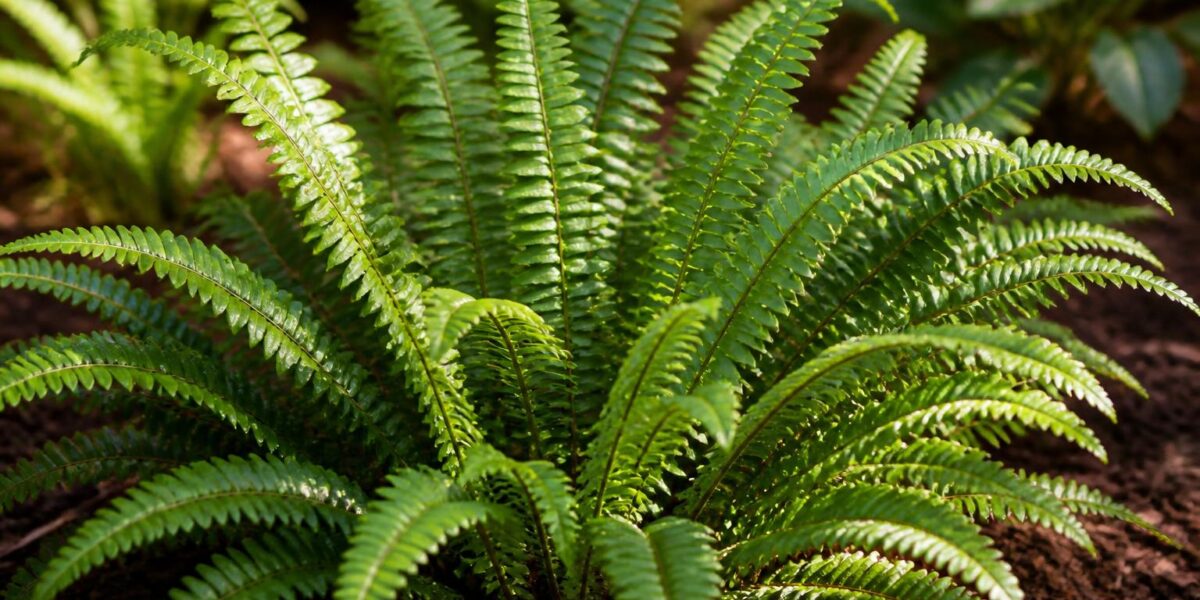
Christmas fern (Polystichum acrostichoides) is an evergreen woodland fern native to eastern North America, from southern Canada down through the Appalachian range and into the Gulf Coast states. The name comes from two traditions: the fronds stay glossy green through winter and were once gathered for Christmas decoration, and each individual leaflet has a distinctive shape said to resemble a Christmas stocking, with a small “toe” at the base.
Mature plants reach 12 to 24 inches tall and a similar spread, growing as a tight clump of arching fronds emerging from a fibrous rhizome. The species is hardy in USDA zones 3 to 9 and is one of the most reliable native woodland ferns across the eastern United States. Christmas fern tolerates clay, dry shade, slopes, and the occasional dry spell better than most ferns, which makes it a workhorse of native-plant gardens, erosion-control plantings, and naturalized woodland edges.
You will see Christmas fern sold under the common name without a cultivar tag in most native-plant nurseries. The species is not heavily hybridized in the trade. It is occasionally confused with sword fern (Nephrolepis cordifolia), which IS toxic to pets — see our sword fern toxicity guide for the contrast.
Why Christmas Fern Is Considered Non-Toxic
Most true ferns (the polypodiopsids, including the Polystichum genus in the Dryopteridaceae family) are safe for pets. Ferns reproduce by spores rather than seeds and do not carry the seed-protective alkaloids, glycosides, or oxalates that drive toxicity in many flowering plants. Polystichum’s biochemistry is dominated by structural carbohydrates, mucilage, and trace plant defense compounds at levels that do not produce systemic toxicity in companion animals.
Veterinary toxicology references and the ASPCA both place Polystichum species on the non-toxic list. That puts Christmas fern in the same broadly safe category as autumn fern, holly fern, cinnamon fern, Boston fern (cats), Boston fern deeper guide, blue star fern, maidenhair fern, rabbit’s foot fern, staghorn fern, and java fern.
“Non-toxic” does not mean “edible.” Christmas fern fronds are leathery, fibrous, and not designed as snacks. Most pets find the texture unpleasant after a single chew and lose interest. A few persistent chewers can still cause themselves mild GI upset by eating volume, even of a safe plant.
What Happens if a Pet Eats Christmas Fern
The most common outcome is nothing at all. Pets typically mouth a leaflet, decide the leathery texture is unappealing, and walk away. When ingestion does cause a reaction, signs are mild and short-lived:
- Mild drooling for a few minutes
- One or two episodes of vomiting
- Soft stool or short-lived diarrhea
- Brief loss of appetite
- Occasional sneezing if frond fragments touched the nose
Severe symptoms — repeated vomiting over many hours, neurological signs, breathing difficulty, collapse — are not consistent with Christmas fern ingestion. If your pet shows any of those, look for another exposure: a different plant in the yard, contaminated water, a household chemical, or an unrelated illness. Save a piece of every plant your pet may have accessed.
First Aid if You’re Unsure
Even with a safe plant, a sensible first step is to remove any remaining frond fragments from your pet’s mouth, offer fresh water, and watch for the next few hours. Skip the next meal if your pet has vomited, then offer a small bland meal of plain boiled chicken and rice. Most pets are entirely fine by the time you finish your mental conversation about whether to call.
If you are unsure of the plant ID, call your veterinarian or one of the poison control hotlines listed above. Photograph the plant before you call. The “Christmas stocking” shape of each leaflet is a good identification clue; a clear close-up of one leaflet usually settles the species question quickly.
How to Tell Christmas Fern from Look-Alikes
Christmas fern shares its evergreen woodland habit with several other ferns. The classic identifying feature is the asymmetric “stocking” shape of each individual leaflet (called a pinna), with a small forward-pointing lobe at the base of the leaflet:
- Christmas fern — once-pinnate fronds, leaflets each shaped like a Christmas stocking with a small basal toe; evergreen; clumping habit
- Sword fern (Nephrolepis cordifolia) — once-pinnate, narrow upright fronds, leaflets symmetrical without the stocking lobe; spreads aggressively on stolons; TOXIC per ASPCA
- Boston fern (Nephrolepis exaltata) — once-pinnate, longer arching fronds, soft texture; SAFE
- Holly fern (Cyrtomium falcatum) — once-pinnate but with much broader, glossier leaflets resembling holly leaves; SAFE
- Tassel fern (Polystichum polyblepharum) — same genus as Christmas fern; twice-pinnate fronds with prominent dark scales on the petiole; SAFE
If you are not sure which fern is in your yard, photograph one leaflet up close. The stocking shape is so distinctive that even a quick photo settles the question. Local native-plant societies and extension offices can confirm the ID for free.
Care Basics for Christmas Fern
Christmas fern is one of the most forgiving ferns to grow because it tolerates a wider range of conditions than most cousins. Outdoor plants prefer dappled to full shade, humus-rich soil, and consistent moisture, but the species accepts dry shade, clay soil, and rocky slopes that defeat other ferns. Hardy in USDA zones 3 to 9, Christmas fern is reliable from southern Canada to the Gulf Coast.
The species is not commonly grown indoors. Christmas fern wants cold winter dormancy and accepts the mild seasonal swings of a temperate climate; indoor heated winters confuse the dormancy cycle and the plant tends to decline. For indoor culture, choose autumn fern, holly fern, or Boston fern instead.
Propagate by division of the rhizome in early spring before new growth emerges. Established colonies are slow to spread but live for decades. Cut back winter-damaged fronds in early spring to make room for the new fiddleheads. The plant rarely needs fertilizer; a thin top-dressing of compost in spring is enough.
Pet-Friendly Placement Tips
Christmas fern is almost always an outdoor woodland plant, so pet-safety questions usually concern dogs roaming the yard and indoor-outdoor cats. Even with a safe plant, you generally want to discourage chewing as a habit. Pets that learn to chew yard plants do not discriminate between safe ferns and dangerous ones, and the next plant might be a yew, lily, or hosta.
For dogs, especially puppies, place Christmas fern away from the main play path and behind a low decorative fence if you want to discourage trampling. The arching fronds are surprisingly resilient but a heavy dog can flatten a young clump if it becomes a regular sleeping spot.
For cats, Christmas fern in a shaded woodland corner usually escapes attention because the cat is more interested in birds, chipmunks, and movement than in static fern fronds. The plant itself is safe; placement is purely a care-of-the-plant decision.
Sibling Safe Ferns and Other Pet-Safe Plants
Christmas fern is one of many safe ferns. Each cousin offers a different texture, growing habit, and best use. Companion guides cover autumn fern, holly fern, cinnamon fern, leatherleaf fern, bird’s nest fern, and button fern. The umbrella articles on ferns and cats and ferns and dogs cover the genus-level safety picture.
For more pet-safe plants beyond ferns, see cat-safe houseplants. Note that one Nephrolepis species is the toxic exception in the otherwise-safe fern world; the sword fern toxicity guide covers the contrast and is essential reading for anyone with both Christmas fern and sword fern in the yard.
When to Call the Vet Anyway
Even though Christmas fern is non-toxic, a small share of pets react badly to any plant material. Call your veterinarian if you see repeated vomiting beyond two episodes, diarrhea that lasts more than 24 hours, blood in vomit or stool, lethargy that does not lift after a nap, or any sign of breathing difficulty. These point to an issue beyond a simple safe-plant nibble: another plant exposure, contaminated water, a household chemical, an allergic reaction, or an unrelated condition.
Have your pet’s weight, age, recent diet, and a clear photo of the plant ready when you call. Vets and poison hotlines move faster when they can confirm the species. If your pet has chronic GI conditions, a follow-up visit a week after exposure can confirm baseline labs and stool quality have returned to normal.
Bringing Christmas Fern into a New Adopter’s Home
If you are adopting a dog or adopting a cat, walk the yard before pickup day. Christmas fern can stay where it is — its evergreen presence even gives a winter green corner that helps with year-round pet-friendly garden planning. Anything you cannot identify should be flagged or photographed for later research.
Keep poison control numbers visible: your vet’s emergency line, ASPCA APCC at 888-426-4435, and Pet Poison Helpline at 855-764-7661. A safe yard is a quiet gift to your future self. Most accidental plant ingestions happen in the first month after a pet joins a new household, when curiosity is high and routines have not settled.
Frequently Asked Questions
Is Christmas fern safe for dogs?
Yes. Polystichum acrostichoides is on the ASPCA non-toxic list for dogs. A small chew rarely causes more than mild self-limiting stomach upset, and the leathery fronds are not appealing to most dogs.
Is Christmas fern safe for cats?
Yes. The same non-toxic rating applies to cats. Indoor-outdoor cats may sniff the plant but rarely chew the leathery fronds.
How can I tell Christmas fern from sword fern?
Christmas fern leaflets each have a small forward-pointing lobe at the base, giving a “stocking” silhouette. Sword fern leaflets are symmetrical without that lobe. Christmas fern is also a clumping plant; sword fern spreads aggressively on stolons.
Can I bring Christmas fern indoors as a houseplant?
It rarely thrives indoors. The species needs cold winter dormancy and consistent outdoor seasons. For indoor culture, autumn fern, holly fern, or Boston fern are better choices.
Is Christmas fern safe for kittens and puppies?
Yes, the same non-toxic rating applies. Young pets have small bodies and can react more dramatically to any GI upset, so still discourage chewing as a habit even with safe plants.


