
The Short Answer for Dog Owners
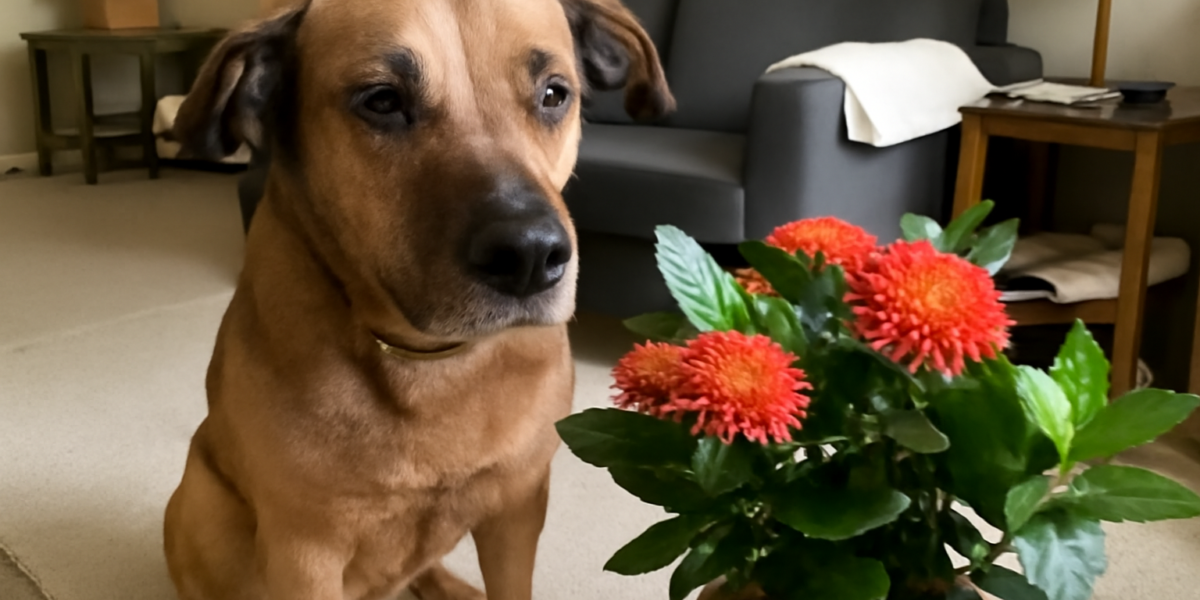
Here is the headline you came for: ixora is not toxic to dogs. The ASPCA’s toxic-plant database lists ixora (Ixora coccinea and related species) as non-toxic to both cats and dogs. The popular tropical flowering hedge — also called jungle geranium, flame of the woods, or Santan — is one of the rare ornamental shrubs you can keep in a dog-accessible yard without worrying about chemical poisoning.
In this article
- The Short Answer for Dog Owners
- What Ixora Actually Is
- Why Dogs Tend to Sample Ixora
- Toxicology — Why Ixora Is Considered Non-Toxic
- What Symptoms to Watch For Anyway
- Foreign-Body and Mechanical Risks
- What to Do If Your Dog Eats Ixora
- Distinguishing Ixora from Toxic Tropical Look-Alikes
- Building a Dog-Friendly Tropical Garden Around Ixora
- Multi-Pet Households and Mixed Plant Choices
- Frequently Asked Questions
The severity tier for a dog-ixora encounter is essentially “minimal risk, mild GI possible.” There is no documented toxic principle that causes serious illness. The realistic worst case for most dogs is a stomach ache, some drooling, or a soft stool after a binge — the same response any dog would have after eating a salad bowl of grass. Foreign-body issues are theoretically possible if a dog swallows a tough flower stalk whole, but this is uncommon.
What Ixora Actually Is
Ixora is an evergreen flowering shrub in the coffee family, native to tropical Asia and naturalized across the global tropics. Ixora coccinea is the species you are most likely to encounter — it is the standard hedge plant in Singapore, Malaysia, India, Sri Lanka, the Caribbean, southern Florida, Hawaii, and parts of South America and northern Australia.
The shrub produces dense rounded clusters of small four-petaled tubular flowers, typically in red or orange, but cultivars come in pink, yellow, white, and salmon. Glossy paired leaves give the plant a lush appearance year-round. In Singapore and Malaysia, it is among the top three landscaping plants used for low-maintenance hedges along driveways, roadsides, and condominium grounds.
Common names vary by region. “Jungle geranium” is North American horticultural marketing. “Flame of the woods” is West Indian. “Santan” is Filipino. “Rugmini” is southern Indian. The species itself is the same plant in every case, with the same safety profile.
Why Dogs Tend to Sample Ixora
Dogs are opportunistic omnivores who will sample almost anything — especially if it is bright, scented, or located somewhere new. Ixora flowers smell faintly sweet, attract butterflies and small birds, and look enticing to a curious dog. Puppies in particular will mouth flowers and leaves as part of normal exploration.
Dogs from Singapore HDB estates, Florida coastal yards, and Caribbean villas all encounter ixora regularly. The plant is so common in tropical landscaping that virtually any walk through a residential neighborhood will pass several specimens. Owners often discover their dog has been chewing ixora because they find a scattering of bitten-off leaf tips along the hedge line.
The good news: this is one of the few common encounter plants where the answer is genuinely “do not worry.” Compare with oleander, frangipani, or allamanda, all of which would warrant immediate concern if your dog had been browsing through them.
Toxicology — Why Ixora Is Considered Non-Toxic
Ixora has been screened in modern veterinary toxicology references and consistently appears as non-toxic. The plant contains the usual background phenolic compounds and tannins found in most leafy plants, but at levels well below any threshold that causes clinical signs in dogs. There is no cardiac glycoside, no insoluble calcium oxalate raphide, no irritant latex, and no cyanogenic glycoside.
The coffee family connection sometimes worries owners who know that coffee beans (Coffea) contain caffeine and are dangerous to dogs. Ixora does not produce caffeine. The two plants share an ancestral lineage but have evolved very different chemistry. You can confidently treat ixora as caffeine-free.
Some traditional medicine systems (Ayurveda and Caribbean folk medicine) have used ixora preparations for various ailments. This historical use further supports a generally low-toxicity profile, though it does not constitute a veterinary recommendation. The takeaway is that even in concentrated extract form, ixora has not been associated with serious adverse events.
What Symptoms to Watch For Anyway
“Non-toxic” does not mean “no possible reaction.” A dog who eats a large volume of any plant matter can develop transient GI upset. With ixora, the most common reaction is a single episode of vomiting that brings up the chewed plant material, followed by full recovery. Some dogs will have one soft stool the next day. Drooling can occur if the dog disliked the taste.
True symptoms to take seriously — and that warrant a vet call regardless of which plant was eaten — include repeated vomiting, severe diarrhea, lethargy, refusing food for more than 12–24 hours, abdominal pain (hunched posture, reluctance to be touched on the belly), pale gums, or any neurological signs like wobbliness or tremors. These would be unexpected from ixora and would suggest either an underlying medical issue or that the dog ate something else as well.
If your dog ingested ixora and is showing severe symptoms, do not assume the ixora caused it. Look for evidence of other plant intake, accidental ingestion of garden chemicals, or a pre-existing condition flaring up. Ixora is rarely the cause of a true emergency.
Foreign-Body and Mechanical Risks
The one mechanical concern with ixora — applicable to almost any plant — is foreign-body obstruction in dogs who swallow tough material whole. Ixora stems are not particularly woody, but a small dog who gulps an entire flower cluster could theoretically have a partial blockage. Watch for repeated unproductive vomiting, bloated abdomen, or refusal to eat for over 24 hours.
Puppies and small breeds are at higher risk for any kind of GI obstruction simply because of their smaller intestinal diameter. A French Bulldog puppy who eats a fistful of ixora trimmings should be monitored more carefully than a 70-pound Labrador who did the same.
If you suspect any kind of obstruction, do not induce vomiting at home. Plant material lodged in the esophagus can be made worse by emesis. Call your veterinarian for guidance.
What to Do If Your Dog Eats Ixora
The sensible response to a dog eating ixora is observation, not panic. If your dog ate a few flowers or a mouthful of leaves and is acting normally, give them clean water and watch for the next 12–24 hours. Note appetite, energy, vomiting, and stool quality. The vast majority of dogs will show no symptoms or, at worst, one mild GI episode.
Call your veterinarian if your dog is very young, very old, has known health problems, or ate an unusually large amount. Also call if symptoms develop and persist. Both ASPCA Animal Poison Control (888-426-4435, fee applies) and Pet Poison Helpline (855-764-7661, fee applies) are available for telephone advice, but for ixora specifically the answer will almost always be to monitor at home unless something else is going on.
Do not induce vomiting at home as a first response. Modern emergency veterinary guidance is to call before doing anything. For a non-toxic ingestion like ixora, induced vomiting offers no benefit and creates aspiration risk. Save the home-emesis instructions for actual emergencies (and even then, only when a vet directs you).
Distinguishing Ixora from Toxic Tropical Look-Alikes
Plenty of dangerous tropical plants grow alongside ixora and can be confused with it at a glance. Knowing the difference matters because the answer changes dramatically by species. Ixora has glossy paired leaves and tight rounded clusters of small four-petaled tubular flowers, usually in red or orange. The flower clusters look like little dense bouquets sitting on top of leafy stems.
If your “ixora” has large trumpet-shaped flowers, that is more likely allamanda (yellow trumpet flowers, toxic) or mandevilla. If the flowers smell strongly fragrant in the evening, it might be tropical jasmine or frangipani. If the leaves are silvery-narrow and the flowers are pink-red and clustered along whippy branches, that is oleander, which is severely toxic.
For dogs in Singapore and Southeast Asia, the tropical toxic plants Singapore garden guide covers most of the plants you’ll meet on a typical neighborhood walk. Photograph any uncertain plant and ask a horticultural society or pet poison hotline for an ID before assuming it is ixora.
Building a Dog-Friendly Tropical Garden Around Ixora
Because ixora is genuinely safe and reliably colorful, it is a good anchor plant for dog-friendly tropical landscaping. Pair it with other verified-safe choices: hibiscus (most species are non-toxic), curry leaf, pandan, and certain ferns. The pet-safe garden plants roundup is a good starting checklist.
Avoid clustering ixora next to oleander, frangipani, allamanda, or yew. Even if your dog generally ignores the hedge, you do not want to gamble on the day they decide to sample. Many tropical landscaping firms will design pet-aware gardens on request — just be specific about which species you want excluded.
Mulch and pesticide choices matter too. Cocoa mulch is toxic to dogs (theobromine). Many “natural” pesticides labeled organic still cause GI upset. Discuss any chemical applications with your vet, especially if your dog grazes regularly.
Multi-Pet Households and Mixed Plant Choices
In a household with both dogs and cats, ixora remains safe — see the companion ixora and cats article for the cat-specific picture. The same hedge can serve both species without species-specific concerns. Small pets (rabbits, guinea pigs, parrots) have less complete data and should generally be kept away from ornamental plants regardless of dog-cat safety status.
If you are part of a dog adoption journey and trying to choose plants for your future home, ixora is one of the easiest “yes” answers. It is widely available in nurseries across tropical and subtropical zones, blooms reliably, requires only basic pruning, and tolerates the rough-and-tumble of a backyard with active dogs.
The honest framing: ixora is a relief in a tropical-plant landscape full of hazards. Treat it as one of your safer choices, but stay vigilant about the actually-dangerous neighbors. The plants that hurt dogs are usually the ones owners did not realize they had.
Frequently Asked Questions
My dog ate ixora flowers. Will he get sick?
Almost certainly not. Ixora is non-toxic to dogs. He may have a mild GI upset (one episode of vomiting or a soft stool) but should otherwise be fine. Watch him for 24 hours and call your vet if anything more serious develops.
Is jungle geranium the same as regular geranium?
No. “Jungle geranium” is a marketing name for ixora, which is unrelated to true geraniums (Pelargonium). Confusingly, true geraniums and pelargoniums have their own toxicity considerations for pets — pelargoniums in particular are mildly toxic. Always identify the actual plant, not the common name.
Are ixora berries dangerous?
Ixora occasionally produces small dark berries after flowering. These are not listed as toxic to dogs, but as with any unfamiliar berry, watch for GI upset if your dog eats them. Most dogs ignore the berries; the flowers are the more common chew target.
Can my dog get sick from rolling in ixora flowers?
Highly unlikely. Ixora has no contact-irritant chemistry. Some dogs roll in dropped flower clusters and come away with petals stuck in their fur, which is messy but harmless. A quick brush or rinse handles it.
Should I still call the vet if my dog ate a lot of ixora?
For a healthy adult dog, monitoring at home is usually appropriate. Call the vet if your dog is a puppy, senior, or has chronic illness; if symptoms persist beyond a single mild episode; or if you are not 100% sure the plant was ixora and not a toxic look-alike like oleander.


