
Last updated: May 16, 2026
In this article
- The Reassuring Answer Up Front
- What Mache Actually Is
- The ASPCA Position on Mache
- Why Mache Is So Reliably Safe
- What Garden Encounter Actually Looks Like
- Mechanical Caveats Worth Knowing
- Mache in a Pet-Friendly Cool-Season Garden
- The “Rapunzel” Naming Note
- What to Watch For After a Mache Encounter
- If You Need a Phone Number
- Frequently Asked Questions
The Reassuring Answer Up Front
Mache plants are safe for pets in the everyday garden sense. Valerianella locusta — the small rosette green known by an unusual collection of common names including corn salad, lamb’s lettuce, mâche, fetticus, rapunzel, and field salad — is not listed on the ASPCA’s database of plants toxic to dogs, cats, or horses. If your dog snuffled through a row of seedlings in your fall garden or your cat brushed past a small rosette on a kitchen windowsill, you are not facing a poisoning emergency. Mache is among the safer leafy greens you can grow in a pet household.
Mache also lacks the modest caveats that apply to spinach (oxalates), Brassica greens (goitrogens), and watercress (peppery isothiocyanates). The plant has a mild, slightly nutty, almost buttery flavor with no significant pungent or bitter chemistry. There is no group of compounds in mache that produces meaningful pet toxicity. The honest framing is “yes, plant freely” — one of the genuinely uncomplicated entries in this leafy-green roster.
What Mache Actually Is
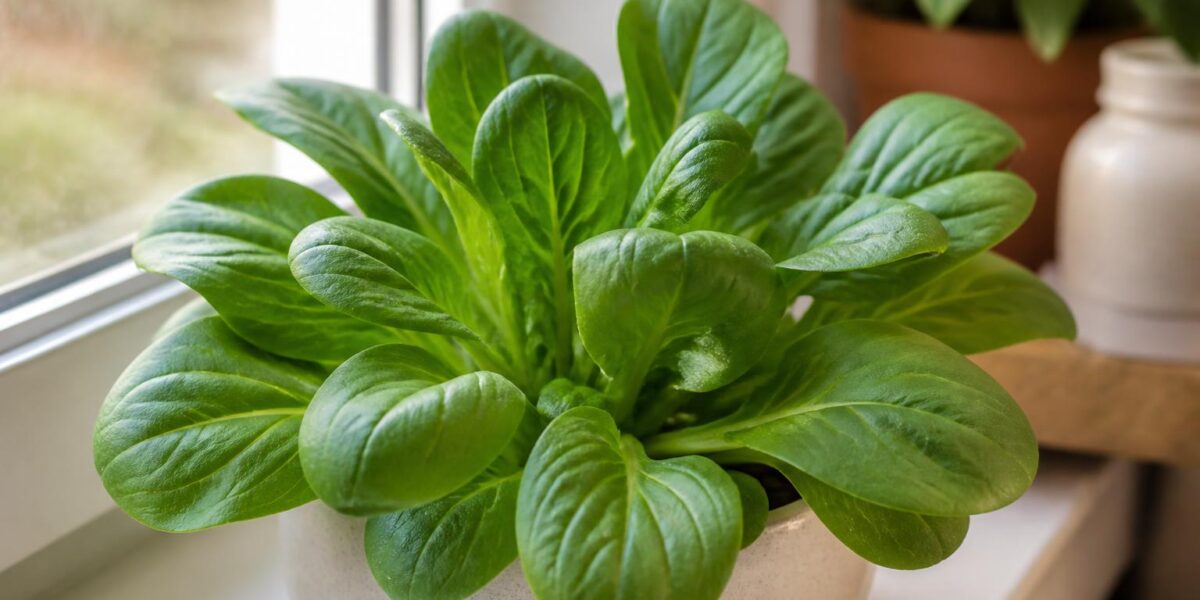
Mache (Valerianella locusta) is a cool-season annual leafy green in the Caprifoliaceae family — historically the Valerianaceae, the same family as garden valerian, though current taxonomy folds valerian into the honeysuckle family. The plant grows as a small flat rosette of paired, smooth, oval-to-spoon-shaped leaves typically 2 to 4 inches across at harvest. Mature wild plants reach about 6 inches tall and produce tiny pale lavender or white flowers in late spring before going to seed.
The “corn salad” common name comes from the plant’s habit of self-sowing in disturbed grain fields across Europe — corn in the British sense meaning grain, especially wheat, not maize. “Lamb’s lettuce” refers to the plant’s traditional March harvest timing matching when lambs are born. “Rapunzel” is the German common name. “Mâche” is the French. All these names refer to the same plant. American gardeners are increasingly familiar with mache as a winter or cool-season specialty green sold in mesclun mixes.
The ASPCA Position on Mache
Mache (Valerianella locusta) is not listed on the ASPCA Animal Poison Control Center’s database of plants toxic to dogs, cats, or horses. Within the broader Valerianaceae / Caprifoliaceae family, ASPCA does mention some honeysuckle species (Lonicera) under cautionary listings for the berries, but the related Valerianella corn salad is not flagged at any growth stage.
Veterinary toxicologists treat mache as a “not specifically listed” plant: no documented species-specific toxicity at normal exposure, generally considered safe with the standard mechanical caveats. There are no published clinical cases of significant mache poisoning in dogs or cats. Within the safe-leafy-green roster on our site, sister articles include spinach, lettuce, endive, and collard greens. Mache earns one of the cleanest safety positions of the group because it lacks even the mild caveats that apply to many of those neighbors.
Why Mache Is So Reliably Safe
Plant chemistry is the answer to why some greens carry caveats and others don’t. Spinach contains oxalates. Brassica greens contain glucosinolates. Sorrel contains soluble oxalates at higher concentration. Lettuce contains a tiny amount of lactucarium. Mache contains essentially none of those. The plant is biochemically uncomplicated — water, fiber, vitamin C, vitamin A precursors, mild minerals, and the typical cell-wall constituents of any tender salad leaf.
The closest “active” compound in mache is a small amount of valepotriates and sesquiterpenes shared with the related garden valerian (Valeriana officinalis), but in mache they are present at trace amounts that do not produce sedative or pet-relevant effects. The valerian connection is sometimes asked about — does mache have the cat-attracting effect of valerian root? The answer is no, not at any meaningful level. Cats who respond strongly to valerian root have no comparable response to mache foliage.
What Garden Encounter Actually Looks Like
The real-world mache encounter for a pet is genuinely uneventful. A dog runs through a fall vegetable bed and chews a few small rosettes — typical outcome is no symptoms, since mache is mild-flavored and digests cleanly. A cat investigates a windowsill flat of mache seedlings and bats at the leaves — typical outcome is nothing, since cats find the mild flavor neither attractive nor off-putting and usually lose interest after one taste.
The slightly less common scenario is a pet who eats a substantial volume — say, an entire small fall bed of mache — in one go. The realistic outcome is one episode of soft stool the next day from the fiber load, no further symptoms. Healthy adult dogs and cats clear mache cleanly. There is no toxin to neutralize, no specific antidote to consider, and no urgent veterinary call required.
Mechanical Caveats Worth Knowing
Mache is mechanically forgiving — small soft tender leaves, no thorns, no stinging hairs, no irritating sap, no sharp ribs. The plant is one of the gentlest greens you can grow on every axis. The mature flowering plant produces tiny seeds in dry capsules that can occasionally stick to a long-haired coat as the season ends, which is a grooming nuisance rather than a safety concern.
The growth habit is low and ground-hugging. Dogs running through a mache bed will crush the rosettes more than they will ingest them — a horticultural problem rather than a pet-safety one. The plant tolerates light frost well and actually sweetens after a cold snap, which is why mache is a popular winter and early-spring crop in milder climates.
Mache in a Pet-Friendly Cool-Season Garden
For owners building a pet-tolerant vegetable garden, mache is one of the more interesting “yes” crops alongside the more familiar lettuce and spinach. The cultivation pattern that works best is direct-seeded broadcasting in a small dedicated bed during fall (August through October in temperate zones). Mache germinates in cool soil, grows slowly through the winter, and produces harvestable rosettes from late winter through spring. The plant self-sows readily in beds where you let a few rosettes flower and set seed.
The pet-friendly cool-season garden in many homes is built around mache, lettuce, spinach, kale, arugula, and a few cold-tolerant herbs. None of those plants are flagged by ASPCA, and the cool-season window means dogs and cats spend less time in the garden — fewer encounters happen at all. For owners who want indoor companion plants that complement an outdoor mache patch, the cat-safe houseplants guide walks through indoor options.
The “Rapunzel” Naming Note
The German common name for mache is Rapunzel — the same name as the long-haired princess in the Brothers Grimm fairy tale. In the original story, a pregnant woman craves rapunzel from a witch’s garden; her husband sneaks into the garden to harvest it; the witch catches him and demands the unborn child as payment. The “rapunzel” the woman craved was almost certainly Valerianella locusta — corn salad, mache — though some scholars argue it was rampion (Campanula rapunculus), an edible bellflower with similar early-spring rosettes.
This is purely cultural-history trivia, not pet-safety information, but it sometimes comes up in conversations about garden naming. From a pet-safety perspective, both possible Rapunzel candidates (Valerianella mache and Campanula rampion) are generally considered safe — neither is on the ASPCA toxic list, and a pet who chews either would face no meaningful risk. The fairy-tale princess is safe in both interpretations.
What to Watch For After a Mache Encounter
Realistic, low-probability outcomes after a pet eats fresh mache foliage from the garden include:
- One episode of soft stool within 24 hours (resolves on its own)
- One episode of vomiting from a large gulped piece (resolves on its own)
- Mild bloating from the fiber load (resolves on its own)
- Green-tinged stool from chlorophyll (resolves on its own)
What you should not see are persistent vomiting, weakness, tremors, irregular breathing, dilated pupils, blood in stool, or any neurological signs. Mache does not produce those at any growth stage. If those signs appear after what you believed was mache ingestion, look hard for an alternative cause — alliums planted nearby, a nightshade-family ornamental in the same border, slug bait, or a fertilizer applied to the bed. Mache itself is essentially never the cause of dramatic pet illness.
If You Need a Phone Number
Even with one of the genuinely safest leafy greens in the garden, professional reassurance is reasonable when something unusual happens. Start with your own veterinarian. If unavailable, the ASPCA Animal Poison Control Center at 888-426-4435 (per-call fee) and the Pet Poison Helpline at 855-764-7661 (per-call fee) are staffed by veterinary toxicologists 24/7. Both will tell you whether monitoring at home is sufficient or whether your specific situation deserves a clinic visit.
Bring or photograph the plant when you call. Mache rosettes are visually distinctive — small, paired-leaf, flat-spreading rosettes — but at the seedling stage can be confused with several other small Asteraceae or Caryophyllaceae volunteers. If your pet ate from a mixed-seed mesclun bed where mache was sown alongside other greens, mention all the species that were planted in that bed; that helps the toxicologist rule out any confounding cause if symptoms develop.
Frequently Asked Questions
Is mache toxic to dogs?
No. Valerianella locusta is not on the ASPCA’s list of plants toxic to dogs. A dog who chews mache typically has no symptoms or, at most, one episode of soft stool the next day. The plant is biochemically mild and digests cleanly. There is no specific antidote needed because there is no specific toxin.
Is mache safe for cats?
Yes, mache is not listed by the ASPCA as toxic to cats. Most cats find the mild flavor uninteresting and won’t chew much past one taste-test. There is no oxalate, no isothiocyanate, no goitrogen, no alkaloid, and no documented species-specific toxicity at any growth stage. Indoor cats with access to a windowsill mache flat generally ignore it.
Does mache have any of the cat-attracting effect of valerian?
No. Although mache (Valerianella) and garden valerian (Valeriana officinalis) are botanically related — both are in the Caprifoliaceae family in modern taxonomy — the cat-attracting compounds in valerian root (actinidine and related actinidine analogs) are present at trace amounts in mache foliage. Cats who respond strongly to valerian root have no comparable response to mache leaves.
What if my dog ate a whole bed of mache?
Most likely outcome is no symptoms — mache is mild and digests cleanly. At most you might see soft stool over the next 24 hours from the fiber load. A healthy adult dog will clear it without intervention. Offer fresh water, watch for any unusual signs, and skip one meal if the dog seems uninterested in food. There is no specific risk that would warrant urgent veterinary care.
Can mache be grown in a windowsill kitchen garden where my pets roam?
Yes. Mache is one of the most pet-tolerant indoor crops. The plant tolerates cool windowsill conditions, is biochemically mild, and the rosette growth habit means a curious cat investigation rarely damages the whole tray. Use a stable shallow tray, water from below, and accept that occasional pet-sniffing is harmless. The mild flavor means most pets lose interest after the first taste.


