
Last updated: May 16, 2026
In this article
- The Reassuring Answer Up Front
- What Collard Greens Actually Are
- The ASPCA Position on Collards
- The Glucosinolate / Goitrogen Caveat, Honestly
- What Garden Encounter Actually Looks Like
- Mechanical Caveats Worth Knowing
- Collards in a Pet-Friendly Vegetable Garden
- Comparing to Mustard Greens and Brassica Cousins
- What to Watch For After a Collard Encounter
- If You Need a Phone Number
- Frequently Asked Questions
The Reassuring Answer Up Front
Collard green plants are safe for pets in the everyday garden sense. Brassica oleracea var. acephala — the same plant that gives you the broad blue-green leaves cooked into Southern-style greens — is not listed on the ASPCA’s database of plants toxic to dogs, cats, or horses. If your dog raided a low-growing rosette or your cat brushed past a leaf hanging over a raised bed, you are not facing a poisoning emergency. Collard greens are safe for pets at the level of any normal kitchen-garden encounter.
The honest caveat is the same one that applies to all the Brassica leafy greens — kale, cabbage, Brussels sprouts, broccoli, mustard greens. The family contains glucosinolates that can break down into goitrogenic compounds (interfering with thyroid function) and isothiocyanates (mild GI irritants) when chewed. In garden quantities — a curious mouthful, a tooth-mark on a leaf — those compounds do nothing to a pet. In repeated daily large servings to a thyroid-compromised pet, they deserve a different conversation. Most pets and most gardens never get anywhere near that threshold.
What Collard Greens Actually Are
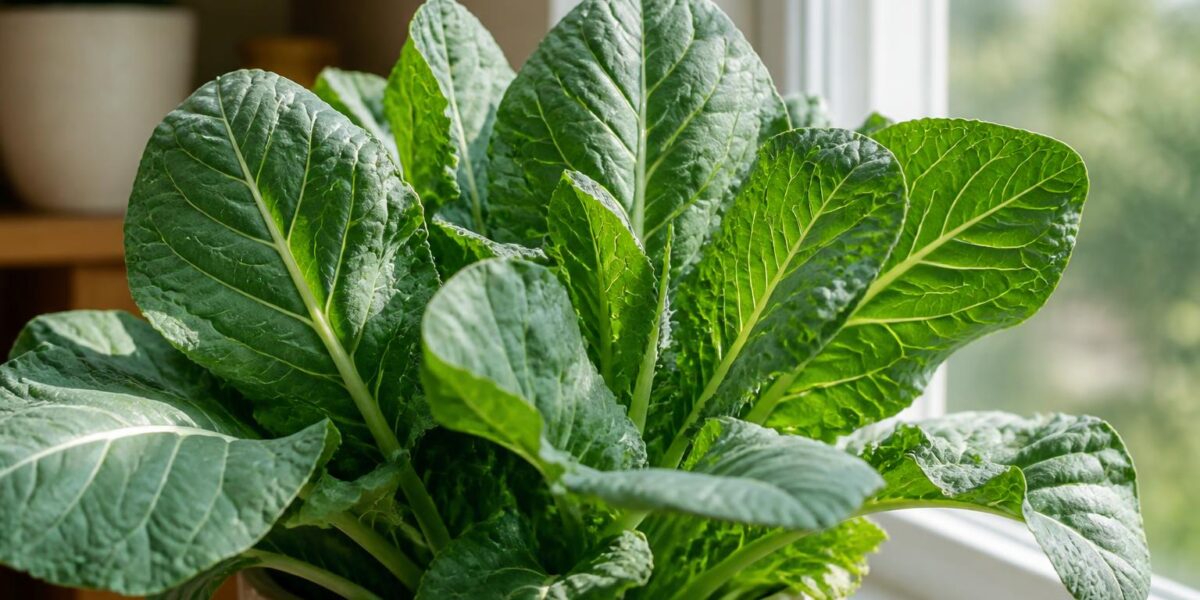
Collard greens (Brassica oleracea var. acephala) are a non-heading cabbage cultivar, the same species as kale, cabbage, broccoli, cauliflower, kohlrabi, and Brussels sprouts. The “acephala” group means “without a head” — the plant grows as a tall, woody stalk with broad paddle-shaped leaves rather than forming a tight cabbage head. Mature plants reach 2 to 3 feet tall and produce harvestable leaves from the bottom up across a long season; a single plant can feed a family from late summer through hard frost.
Cultivars like ‘Georgia Southern’, ‘Champion’, ‘Vates’, and ‘Morris Heading’ all share the same basic safety profile for pets. Tree collards — a perennial form that grows woody and produces side branches — also fall under Brassica oleracea and carry the same generic Brassica caveats. The plant is one of the most cold-hardy garden vegetables in temperate climates; collards actually sweeten after a frost, which is why Southern gardens center on them through winter.
The ASPCA Position on Collards
Collard greens are not specifically listed on the ASPCA Animal Poison Control Center’s database of plants toxic to dogs, cats, or horses. Within the broader Brassica genus, ASPCA does flag mustard species (Brassica nigra and several relatives) under the umbrella label of toxic plants, citing GI upset and the goitrogenic risk on chronic intake. Cultivated collards, despite being the same biological species as cabbage and kale, are not on the toxic list — likely because the goitrogenic load is significantly lower in the leafy-cabbage cultivars than in the seed-mustard relatives.
For owners reading the literature carefully, our existing collard plants overview and the species-food article can cats eat collard greens both confirm the same reassurance. Within the safe-Brassica neighborhood, sister articles that read on the same continuum include kale, bok choy, and arugula. The genuinely cautionary cousin is mustard plants, which sit at the higher-glucosinolate end of the family.
The Glucosinolate / Goitrogen Caveat, Honestly
Brassica vegetables contain glucosinolates — sulfur-containing compounds that, when crushed by chewing, are converted by enzymes into isothiocyanates and other breakdown products. These breakdown products are responsible for the slightly pungent, peppery flavor of raw cabbage, kale, and collards. They also have a documented but generally mild interaction with thyroid function: in very large repeated raw doses, they can interfere with iodine uptake and contribute to goiter. This is the basis of the goitrogen label.
For pets, the practical translation is simple. A one-time garden chew is not a problem. A pet eating an occasional collard leaf alongside a normal complete diet has no thyroid issue. The pets who deserve more careful consideration are those already diagnosed with hypothyroidism, those on thyroid medication, and those whose owners feed a homemade diet built heavily around raw cruciferous vegetables — for those individuals, talk with your veterinarian about the right amount and the cooking method (cooking deactivates many of the glucosinolate enzymes and reduces the goitrogenic load).
What Garden Encounter Actually Looks Like
The real-world collard encounter for a pet falls into two patterns. A dog tears through a row of mature collards and chews a leaf or two — typical outcome is no symptoms or, at worst, one episode of slightly soft stool. A cat sniffs at the cool blue-green leaves brushing the edge of a raised bed and gets a tooth-mark out of curiosity — typical outcome is nothing, since cats find the sulfurous taste more off-putting than dogs do.
The slightly less common scenario is a pet who eats a large amount of raw collard plant material — say, an entire mature leaf — in one go. The realistic outcome is mild GI upset over the next 24 hours: gas, soft stool, possibly one episode of vomiting. None of this is poisoning; it is the digestive system encountering a lot of fiber and glucosinolate breakdown products at once. A healthy adult dog or cat clears it without intervention, and offering plain water with a smaller-than-usual next meal is the right home approach.
Mechanical Caveats Worth Knowing
Collard plants don’t carry thorns, stinging hairs, or irritating sap. The leaves are smooth and waxy, and the stems are firm but not sharp. The mechanical caveat is choking — a small dog or cat that gulps a wad of fibrous leaf can occasionally get a piece lodged in the throat. This is the same generic risk that applies to any plant material; it is not poisoning. If your pet has a history of gulping food, the practical intervention is to keep the collard rows fenced or in raised beds out of reach.
The flowering or bolted collard plant is taller and the seed pods, called siliques, contain seeds with a higher mustard-like flavor. The plant becomes notably less palatable at this stage and is essentially self-deterrent. If your collards have bolted to seed, the pet risk drops further because the bitterness keeps most animals from chewing more than once.
Collards in a Pet-Friendly Vegetable Garden
For owners building a pet-tolerant vegetable garden, collards are a strong “yes” crop alongside spinach, lettuce, and the sibling Brassica family. The cultivation pattern that works best in pet households is row-planting in a raised bed with a low border or cage. Collards are tall and somewhat woody at the base, so they’re less vulnerable than tender lettuce to dog-trample damage, but a young seedling can still be uprooted in a single enthusiastic dig.
Companion planting in pet households deserves attention. Common collard companions — alliums (onions, garlic, chives) for pest control — are toxic to pets. Keep alliums in their own clearly-defined bed, separate from the collard rows, and label them. Plant tomatoes and the rest of the Solanaceae nightshades in beds your pets don’t access freely, since the foliage of those plants is genuinely toxic per ASPCA. The general rule that holds: leafy greens for the pet-accessible side of the garden, alliums and nightshade foliage for the fenced side. The dog-safe plants guide walks through indoor companions that complement an outdoor collard patch.
Comparing to Mustard Greens and Brassica Cousins
The Brassica family runs a genuine spectrum of pet safety. At the safer end sit cabbage, collards, kale, bok choy, broccoli, cauliflower, and the headed cabbages — all considered generally safe with the goitrogen caveat. At the more cautionary end sit mustard greens (Brassica juncea, B. nigra), which carry significantly higher glucosinolate concentrations and are flagged by ASPCA as having greater GI-irritation potential. Watercress, which we cover separately in this batch, sits closer to the mustard end on the pungency scale but is also generally considered safe per ASPCA.
The honest framing is that the mustard end of Brassica is mildly cautionary, the cabbage end is mildly safe, and collards sit firmly on the safe side. A pet who eats a few collard leaves is in better shape than a pet who eats the same volume of raw mustard greens. Both will recover; the latter just has a higher probability of the next-day GI upset.
What to Watch For After a Collard Encounter
Realistic, low-probability outcomes after a pet eats fresh collard foliage from the garden include:
- One episode of soft stool within 24 hours (resolves on its own)
- One episode of vomiting from a large gulped piece (resolves on its own)
- Mild gas or bloating from the fiber and sulfur compounds (resolves on its own)
- Green-tinged stool from leaf pigments (resolves on its own)
What you should not see are persistent vomiting, weakness, tremors, irregular breathing, dilated pupils, or any neurological signs. Collards do not produce those. If you see them after what you believed was a collard ingestion, look hard for an alternative cause — alliums in the same bed, ornamentals nearby, or a fertilizer or slug bait used on the patch. Collards by themselves do not produce dramatic pet toxidromes.
If You Need a Phone Number
Even with a benign plant, calling for professional reassurance is reasonable when something unusual happens. Start with your own veterinarian. If they are unavailable, the ASPCA Animal Poison Control Center at 888-426-4435 (per-call fee) and the Pet Poison Helpline at 855-764-7661 (per-call fee) are staffed by veterinary toxicologists 24/7. Both will tell you whether monitoring at home is sufficient or whether your specific situation deserves a clinic visit.
Bring or photograph the plant when you call. Collards are visually distinctive — broad blue-green paddle leaves on a tall woody stem — but young plants can resemble cabbage, kale, or other Brassicas. If your pet has known thyroid disease or is on thyroid medication, mention that up front so the toxicologist can tailor the advice. List anything else planted in the same bed: alliums, nightshade foliage, herbs in the mint family — all of those have different chemistry profiles and matter for triage.
Frequently Asked Questions
Are collard greens toxic to dogs?
No. Brassica oleracea var. acephala is not on the ASPCA’s list of plants toxic to dogs. A dog who chews garden collards typically has no symptoms or, at worst, one episode of soft stool. The honest caveat is the Brassica family goitrogen concern, which becomes meaningful only with very large repeated raw servings — not garden chewing. Dogs with diagnosed hypothyroidism should not be encouraged to graze raw collards regularly.
Are collard greens safe for cats?
Yes, collard plants are not listed by the ASPCA as toxic to cats. Most cats find the sulfurous, slightly pungent flavor of raw collards unappealing and won’t chew much. The same Brassica goitrogen caveat applies in theory but is essentially irrelevant for the volume a cat would actually eat. Indoor cats with access to a kitchen-garden window box generally ignore collard seedlings.
What if my dog ate a whole collard plant from the garden?
Most likely outcome is mild GI upset over the next 24 hours — soft stool, gas, possibly one episode of vomiting from the fiber load. A healthy adult dog will clear it without intervention. Offer fresh water, withhold one meal if the dog seems off, and watch for signs that point to something more serious (persistent vomiting, lethargy, tremors). If your dog has thyroid disease or is on a urinary or thyroid prescription diet, call your veterinarian. Otherwise home monitoring is sufficient.
Can I plant collards in the same bed as onions or garlic?
You can horticulturally — alliums are good companion plants for pest deterrence — but in a pet-active garden, separating them is the safer choice. Onions, garlic, and chives are genuinely toxic to dogs and cats, and a pet that chews “the leafy part of the garden” risks getting alliums along with the collards. Keep alliums in a clearly-bordered, ideally fenced section of the garden, separate from the pet-accessible rows.
How are collards different from mustard greens, which ASPCA flags?
Both are in the Brassica genus, but at different points on the glucosinolate-concentration spectrum. Collards (Brassica oleracea) are a leafy cabbage with relatively low glucosinolate content. Mustard greens (Brassica juncea, B. nigra) are bred for higher pungency and carry significantly more isothiocyanate-precursor glucosinolates. ASPCA flags mustard accordingly. The two plants look different — collards have broad smooth blue-green leaves, mustard greens have more lobed or frilled lighter leaves with a sharper peppery taste.


