
Last updated: May 16, 2026
In this article
- Collard Plants and Your Pets: The Short Answer
- What Collards Actually Are
- Why Collards Land in the Safe Bucket
- The Goitrogen Footnote — Same Story as Kale
- What “Non-Toxic” Doesn’t Mean
- Cats and Collard Plants
- Dogs and Collard Plants
- Collards’ Brassica Cousins in the Same Bed
- Designing a Pet-Friendly Greens Bed
- If Your Pet Just Ate Collards
- Frequently Asked Questions
Collard Plants and Your Pets: The Short Answer
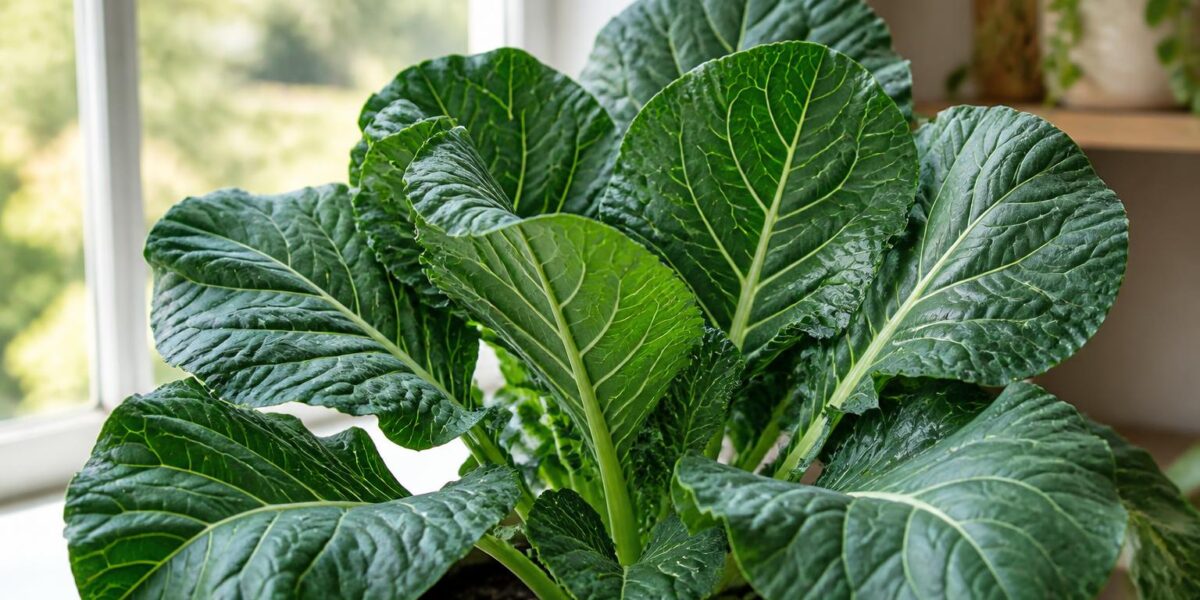
Collard plants (Brassica oleracea var. acephala — the same species as kale and cabbage in a different cultivated form) are not on the ASPCA’s toxic-plants list. Whether your dog rummages a row of collards in the back yard or your cat sniffs around the seedlings on a sunny porch, collards are considered non-toxic to dogs, cats, and horses. The typical garden encounter — a few broad blue-green leaves grabbed off a stem — almost never causes anything worse than mild GI upset.
This article covers the collard PLANT — what happens if your dog or cat nibbles the leaves, stems, or seedlings in your vegetable garden. For whether cooked collard greens are appropriate to feed your pet on purpose, search our food-safety side for the matching can-dogs-eat or can-cats-eat guide. The plant-side answer is reassuring: collards belong in the safe column, with sensible caveats around volume and chronic feeding.
What Collards Actually Are
Collard greens are a non-heading cabbage. Botanically, they’re the same species as kale, cabbage, broccoli, and brussels sprouts (Brassica oleracea), but they’ve been bred for big, broad, smooth leaves on a tall central stem rather than a tight head or curly leaf. They’re a Southern US staple alongside cornbread and ham hocks, and they’re the backbone of “Sunday dinner greens” in many households. Globally, they’re also widely grown across East Africa, Brazil, and parts of Portugal, where they go by their own local names.
In a kitchen garden, collards are a forgiving cool-weather crop. They tolerate frost (and arguably taste better after one), they keep producing leaves through autumn, and a single plant can be tall enough that a dog can reach the lower leaves easily. That accessibility is why pet owners ask about them — a dog who decides leafy greens are interesting can graze a collard plant readily.
Why Collards Land in the Safe Bucket
The ASPCA classifies Brassica oleracea, including the collard cultivars, as non-toxic to dogs and cats. There are no acutely dangerous compounds in collard leaves at the levels you find in normal garden plants. The plant carries the typical Brassica family chemistry — glucosinolates, sulforaphane precursors, and small amounts of oxalates — but at concentrations that don’t cause clinical poisoning when a pet grazes a few leaves.
For pet-safety purposes, collards sit in the same bucket as kale, broccoli, cabbage, and arugula: a dog can graze a leaf without an emergency. They’re not in the same category as truly toxic ornamentals like lilies, sago palms, or oleander, which can cause severe organ-level effects in small amounts. The distinction matters when you’re triaging a “my dog ate something from the garden” call to yourself in the middle of the day.
The Goitrogen Footnote — Same Story as Kale
Collards, like all Brassica family plants, contain compounds called goitrogens that can interfere with thyroid hormone production by blocking iodine uptake. In livestock studies, animals fed almost exclusively on raw Brassica leaves over weeks have shown thyroid changes. This is the source of the “Brassica is bad for the thyroid” caution.
For ordinary pet exposure, this is rarely a meaningful concern. A foraging dog who pulls down a collard leaf in passing isn’t being chronically dosed. The thyroid concern lives in “your dog’s only food source for weeks is raw greens,” not “your dog ate a leaf yesterday.” If you cook with collards daily and feed scraps every meal, mention portion sizes to your vet — especially if your pet is on thyroid medication. For garden foraging, the goitrogen footnote almost never needs to change anything.
What “Non-Toxic” Doesn’t Mean
Non-toxic is not synonymous with “infinite quantities are fine.” A medium dog who tunnels into your collard bed and eats a meal’s worth of leaves can absolutely come back with vomiting, soft stool, gas, or a passed dinner. The cause is volume and indigestibility, not poisoning. A few practical caveats sit alongside the green light:
- Pesticide and fertilizer residues. Recently sprayed leaves carry whatever you applied — wait the full re-entry interval before letting pets graze.
- Tough central rib. Mature collard ribs are fibrous and chewy. A dog gulping a whole leaf can cough or retch as the rib slides through.
- Allium cross-contamination. Collards are often interplanted with onions and garlic, which ARE toxic to dogs and cats. A grazer may end up with the wrong mouthful.
- Compost rot. Slimy or moldy leaves in a compost pile carry mycotoxins. Fresh plant safe, rotted plant not.
Cats and Collard Plants
Cats don’t gain meaningful nutrition from leafy greens, but plenty of cats nibble plant material for fiber, hairball management, or sheer texture appeal. Most cats find collards’ bitter, sulfurous edge off-putting and stop after a bite or two. If your cat does eat a few leaves, expect them to pass uneventfully. A single vomit afterward is common with any plant matter and isn’t, on its own, a sign of poisoning.
Cats with thyroid disease should ideally avoid large amounts of any Brassica green, collards included. Casual nibbles aren’t a clinical concern, but consistent grazing is worth mentioning to your vet. Cats with chronic kidney disease have separate dietary considerations; collards are moderate, not high, in oxalates, but any leafy green should be cleared individually with your cat’s care team.
Dogs and Collard Plants
Dogs are the more common collard-bed offenders. Many dogs graze leafy greens in the garden during heat or while their stomach feels off, and the broad accessible leaves of collards make them an easy target. A casual mouthful is not a vet emergency. A dog who cleared half the row is more likely to give you a few hours of GI upset than anything serious.
Watch for volume-related signs rather than poisoning signs: soft stool, gas, a single episode of vomiting, or a refused meal. These usually settle within twelve to twenty-four hours with bland food and free water. Persistent vomiting, lethargy, blood in stool, or anything that looks unusual should always trigger a call to your vet — and remember that a foraging dog may have eaten more than just collards.
Collards’ Brassica Cousins in the Same Bed
Collards rarely grow alone. Most kitchen gardeners plant them as part of a Brassica rotation, which means a curious pet is encountering several similar-looking plants in the same trip. The good news is that most close relatives are in the same non-toxic category. Our companion guides walk through them: kale plants and pets, broccoli plants and pets, cabbage plants and pets, and bok choy and pets.
The notable exception within the family is mustard. Mustard plants accumulate higher glucosinolate concentrations than salad greens like collards or kale, and a moderate ingestion can produce more obvious GI signs. If a mustard patch sits near your collards, read are mustard plants toxic to pets for the contrast. Within the broader family, collards are on the safer end; mustard is the asterisk.
Designing a Pet-Friendly Greens Bed
If you want a salad-and-cooking-greens bed your dog or cat can wander without anxiety, collards are a productive backbone alongside kale, arugula, lettuce, and radish. Skip alliums entirely from anywhere a pet grazes — garlic, onion, shallot, chive, and leek are toxic to dogs and cats. Tomato and pepper foliage are another category to keep separate; the ripe fruits are generally fine but the foliage is a different story.
For broader planting ideas, our pet-safe garden plants roundup walks through ornamentals and edibles that earn the same green light. A foraging-tolerant greens bed is one of the easier wins for a pet-friendly outdoor space, and collards’ frost tolerance and prolific output make them a natural anchor.
If Your Pet Just Ate Collards
For a small to moderate amount of collard leaves or stems, the right move is usually to watch and wait. Offer fresh water, hold the next meal for an hour or two if your pet seems off, and observe stools and energy through the next day. Most pets need no further intervention.
If the amount eaten was unusually large, if the bed had been recently sprayed, if your pet is on thyroid medication, or if you’re not certain collards were the only thing eaten, contact your veterinarian. You can also call the ASPCA Animal Poison Control Center at (888) 426-4435 or the Pet Poison Helpline at (855) 764-7661 for around-the-clock guidance. Do not induce vomiting at home unless a veterinarian instructs you to — the wrong agent or wrong timing can do more harm than the original ingestion.
Frequently Asked Questions
Are collard greens any different from kale for pet safety?
Functionally no — both are Brassica oleracea cultivars on the non-toxic list. The leaves of collards are larger, smoother, and more accessible to a tall dog, but the chemistry is essentially the same.
My dog ate a whole collard leaf and is coughing — is that poisoning?
That’s almost always mechanical: the fibrous central rib catches as it goes down. If coughing settles within a few minutes and your dog is breathing comfortably, watch and wait. Persistent coughing, retching, or distress should be evaluated immediately to rule out an obstruction.
Are collard seeds and seedlings safe too?
Yes — the entire plant at every life stage is non-toxic. Seedlings, mature leaves, flowering stalks, and seed pods are all in the safe bucket. Avoid letting pets dig in seed-starting trays mainly to protect the trays.
Can I deliberately add cooked collards to my dog’s bowl?
In small amounts, plain cooked collards (no garlic, onion, butter, or salt) are fine for most dogs. As with any new food, introduce slowly and watch for individual sensitivities. Talk to your vet if your dog has thyroid disease, kidney disease, or a sensitive stomach.
Where can I learn more about safe garden planting?
Start with our adopt a dog hub or adopt a cat hub if you’re considering a new family member, and see radish plants and pets for another easy salad-bed companion to collards.


