
Last updated: May 16, 2026
In this article
- Kale Plants and Your Pets: The Short Answer
- What Kale Actually Is
- Why Kale Is on the Non-Toxic List
- The Goitrogen Footnote — Real but Often Overstated
- What “Non-Toxic” Doesn’t Mean
- Cats and Kale Plants
- Dogs and Kale Plants
- Kale’s Brassica Cousins in the Same Bed
- Designing a Pet-Friendly Kale Bed
- If Your Pet Just Ate Kale
- Frequently Asked Questions
Kale Plants and Your Pets: The Short Answer
Kale plants (Brassica oleracea var. sabellica for curly kale and var. acephala for lacinato or “dinosaur” kale) are not on the ASPCA’s toxic-plants list. Whether your dog snacks on a wide curly leaf or your cat sniffs around a row of seedlings, kale plants are considered non-toxic to dogs, cats, and horses. The ordinary garden encounter — a few leaves grabbed off a stem — almost never causes a problem worse than mild GI upset, and most pets walk away unscathed.
This article covers the kale PLANT — what happens if your dog or cat nibbles the leaves, stems, or seedlings in your vegetable garden. For whether kale as a prepared food is appropriate to feed your pet on purpose, search our food-safety side for the matching can-dogs-eat or can-cats-eat guide. The plant-side answer is reassuring: kale belongs in the safe column, with sensible caveats around extreme volumes and chronic feeding.
What Kale Actually Is
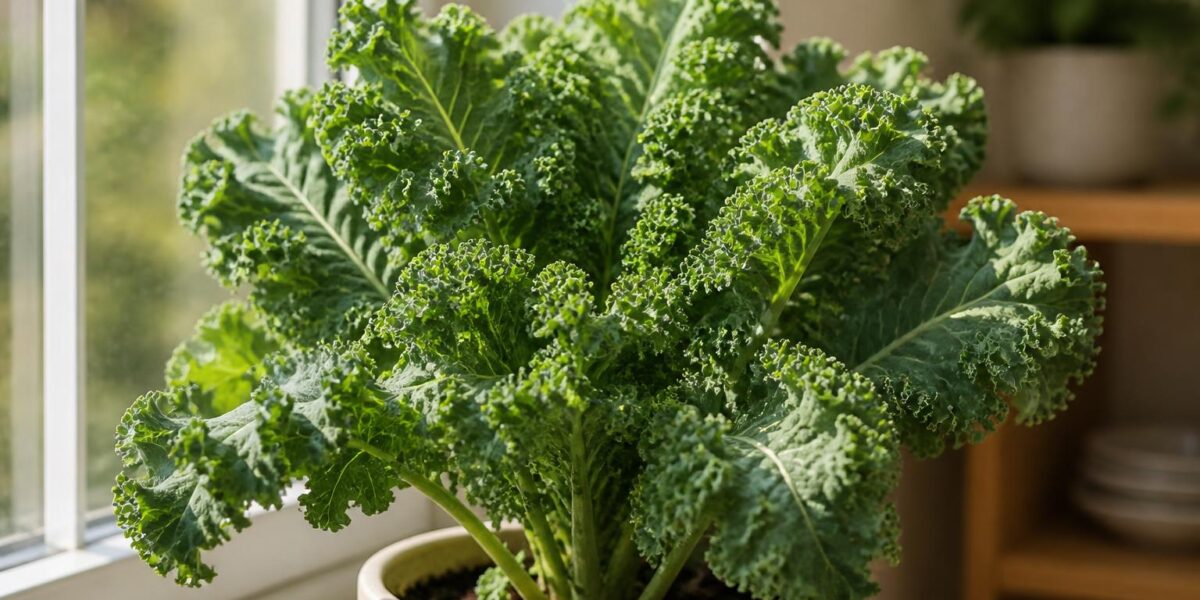
Kale is a cool-weather leafy member of the Brassica oleracea species — the same wild cabbage ancestor that humans have selectively bred into broccoli, cabbage, brussels sprouts, cauliflower, and kohlrabi. Curly kale, lacinato (Tuscan or “dinosaur”) kale, red Russian kale, and ornamental flowering kale are all the same species in different costumes. They share a thick central rib, a deeply textured or wavy leaf, and the slightly bitter, sulfur-tinged flavor characteristic of Brassica greens.
In a backyard plot, kale is one of the more durable salad-garden choices. It tolerates frost, regrows after harvest, and produces leaves your pet can absolutely reach. Many gardeners interplant kale with other Brassica family vegetables, which means a foraging dog or cat is rarely encountering kale alone. Knowing which neighbours are also safe — and which aren’t — is more practical than memorizing kale by itself.
Why Kale Is on the Non-Toxic List
The ASPCA classifies Brassica oleracea kale varieties as non-toxic to dogs and cats. There are no acutely poisonous compounds in the leaves at the levels found in normal garden plants. The bitter compounds — glucosinolates, sulforaphane precursors, and a small amount of oxalates — are present in concentrations that don’t cause clinical poisoning when a pet grazes a few leaves. Kale’s reputation as a “superfood” for humans rests on those same compounds at small dietary doses.
For pet-safety purposes, kale sits comfortably in the “your dog can graze a leaf without an emergency” category alongside arugula, lettuce, broccoli foliage, and many other kitchen-garden leafy greens. It is not in the same category as ornamentals like lilies, sago palms, or oleander, which can cause severe organ-level poisoning in small amounts. The framing matters because pet owners sometimes panic when a dog raids a Brassica bed and call about a chewed kale leaf as if it were a true poisoning — it almost never is.
The Goitrogen Footnote — Real but Often Overstated
Brassica family plants, kale included, contain compounds called goitrogens — substances that can interfere with thyroid hormone production by reducing iodine uptake. In farm-animal studies, livestock fed almost entirely on raw Brassica leaves over weeks have shown thyroid changes. This is the source of the “kale is bad for the thyroid” warning you may have read.
For ordinary pet exposure, this concern is small. A foraging dog who pulls down a kale leaf in passing, or a cat who nibbles a stem out of curiosity, isn’t being chronically dosed. The thyroid concern lives in the world of “your dog’s only food source for weeks is raw cabbage and kale,” not “your dog ate a leaf yesterday.” If you cook with kale daily and offer scraps every meal, talk to your vet about portion sizes — especially for dogs already on thyroid medication. For garden foraging, the goitrogen warning rarely needs to change anything.
What “Non-Toxic” Doesn’t Mean
Non-toxic does not mean “any quantity is fine.” A medium-size dog who tunnels into your kale bed and consumes a meal’s worth of leaves can absolutely come back with vomiting, soft stool, gas, or a refusal of dinner. The cause is volume and indigestibility, not a poison. A few practical caveats sit alongside the green light:
- Pesticide and fertilizer residues. Recently sprayed or treated leaves carry whatever you applied. Wait the full re-entry interval before letting pets near the bed.
- Choking on tough ribs. Curly kale’s central rib is fibrous; a dog who gulps a whole leaf can occasionally trigger gagging or coughing while it goes down.
- Allium cross-contamination. Kale is often grown next to onions, garlic, and chives, all of which ARE toxic to dogs and cats. A salad-bed grazer may end up with the wrong mouthful.
- Compost rot. Slimy or moldy leaves in a compost pile carry mycotoxins. The fresh plant is safe; the rotted one is not.
Cats and Kale Plants
Cats are obligate carnivores, so they don’t gain meaningful nutrition from kale, but plenty of cats nibble plants for fiber, hairball relief, or the simple appeal of crunchy texture. Most cats find kale’s sulfurous bitterness off-putting after one or two bites. If your cat does eat some, expect it to pass uneventfully. A single vomit afterward is common with any plant matter and is not, on its own, a sign of poisoning.
Cats with thyroid disease — including hyperthyroid cats on medication — should ideally be kept away from large amounts of any Brassica green, kale included. The interaction is small for casual nibbles, but consistent grazing is worth mentioning to your vet. Cats with chronic kidney disease have separate dietary guardrails; kale is moderate, not high, in oxalates, but any leafy green should be cleared individually with the team managing your cat’s diet.
Dogs and Kale Plants
Dogs are the more common kale-bed offenders. Plenty of dogs graze leafy greens in the garden, especially during heat or while their stomach feels off. A casual mouthful from a kale plant is not a vet emergency. A dog who cleared half the row is more likely to give you a few hours of mild GI upset than anything serious.
Watch for volume-related signs rather than poisoning signs: soft stool, gas, a single episode of vomiting, or a passed dinner. These usually settle within twelve to twenty-four hours with bland food and free water. Persistent vomiting, lethargy, blood in stool, or signs of discomfort that go beyond mild GI should always trigger a call to your vet — and remember that a foraging dog may have eaten more than just kale.
Kale’s Brassica Cousins in the Same Bed
Kale rarely grows alone. Most kitchen gardeners plant it as part of a Brassica rotation, which means a curious pet is likely to encounter several similar-looking leafy plants in the same trip through the bed. The good news is that most close relatives sit in the same non-toxic category. Walk through them with our companion guides on collard greens and pets, broccoli plants and pets, cabbage plants and pets, and bok choy and pets.
The notable exception within the family is mustard. Cultivated and wild mustard plants accumulate higher concentrations of glucosinolates than salad-stage greens like kale, and a moderate ingestion can produce more obvious GI signs. If your kale bed sits next to a mustard patch, read are mustard plants toxic to pets for the contrast. Within the broader family, kale is on the safer end and mustard is the asterisk.
Designing a Pet-Friendly Kale Bed
If you’d like a vegetable patch your dog or cat can wander without panic, kale is a good backbone. Pair it with arugula, lettuce, radish, and broccoli for a bed that’s almost entirely non-toxic. Keep alliums (garlic, onion, shallot, chive, leek) somewhere fenced off or in pots out of reach — they’re toxic to both species and they shed grazeable greens. Tomato and pepper plants are another category to keep out of a “free graze” bed; their fruit is mostly fine but the foliage is more concerning.
For broader planting ideas that pair well with a Brassica patch, see our pet-safe garden plants roundup. A grazeable salad bed is one of the easier wins for a pet-friendly outdoor space, and kale is a productive, frost-tolerant anchor for it.
If Your Pet Just Ate Kale
For a small to moderate amount of kale leaves or stems, the right move is usually to watch and wait. Offer fresh water, hold the next meal for an hour or two if your pet seems off, and observe stools and energy through the next day. Most pets need no further intervention.
If the amount eaten was unusually large, if the bed had been recently sprayed, if your pet is on thyroid medication, or if you’re not sure whether kale was the only thing eaten, contact your veterinarian. You can also call the ASPCA Animal Poison Control Center at (888) 426-4435 or the Pet Poison Helpline at (855) 764-7661 for around-the-clock guidance. Do not induce vomiting at home unless a veterinarian instructs you to — the wrong agent or wrong timing can do more harm than the original ingestion.
Frequently Asked Questions
Is curly kale or lacinato (dinosaur) kale safer for pets?
From a toxicity standpoint, they’re equivalent — both are Brassica oleracea cultivars on the non-toxic list. Lacinato has a smoother leaf and softer rib, which makes it slightly less of a choking-and-gagging risk for an enthusiastic dog grabbing a whole leaf, but neither is a “safer” plant chemically.
Can ornamental flowering kale (the colorful one in winter planters) hurt my pet?
Ornamental kale is the same species as edible kale, and it’s also non-toxic. The bigger concern with ornamental planters is what else is in the soil — fertilizer pellets, slug bait, and decorative top-dressings that can be more dangerous than the plant itself.
My dog ate a whole kale stem and is now coughing — is that the toxin?
That’s almost always a mechanical issue with the fibrous central rib rather than a toxic reaction. If the coughing settles within a few minutes and your dog is breathing comfortably, watch and wait. Persistent coughing, retching, or distress should be evaluated by a vet immediately to rule out an obstruction.
Should hyperthyroid cats avoid kale entirely?
Casual contact with a kale leaf is very unlikely to interact with thyroid medication. Routine feeding of kale is a different question and worth raising with your vet, since chronic intake of any goitrogenic plant is the situation where the interaction matters.
Where can I read more about pet-safe gardening?
Start with our adopt a dog hub or adopt a cat hub, and bookmark arugula plants and pets as another easy salad-bed companion to kale.


