
Last updated: May 16, 2026
In this article
- The Reassuring Answer Up Front
- What Lettuce Actually Is
- The ASPCA Position on Lettuce
- The Lactucarium Caveat, Honestly
- What Garden Encounter Actually Looks Like
- Mechanical Caveats Worth Knowing
- Lettuce in a Pet-Friendly Vegetable Garden
- Companion Plant Considerations
- What to Watch For After a Lettuce Encounter
- If You Need a Phone Number
- Frequently Asked Questions
The Reassuring Answer Up Front
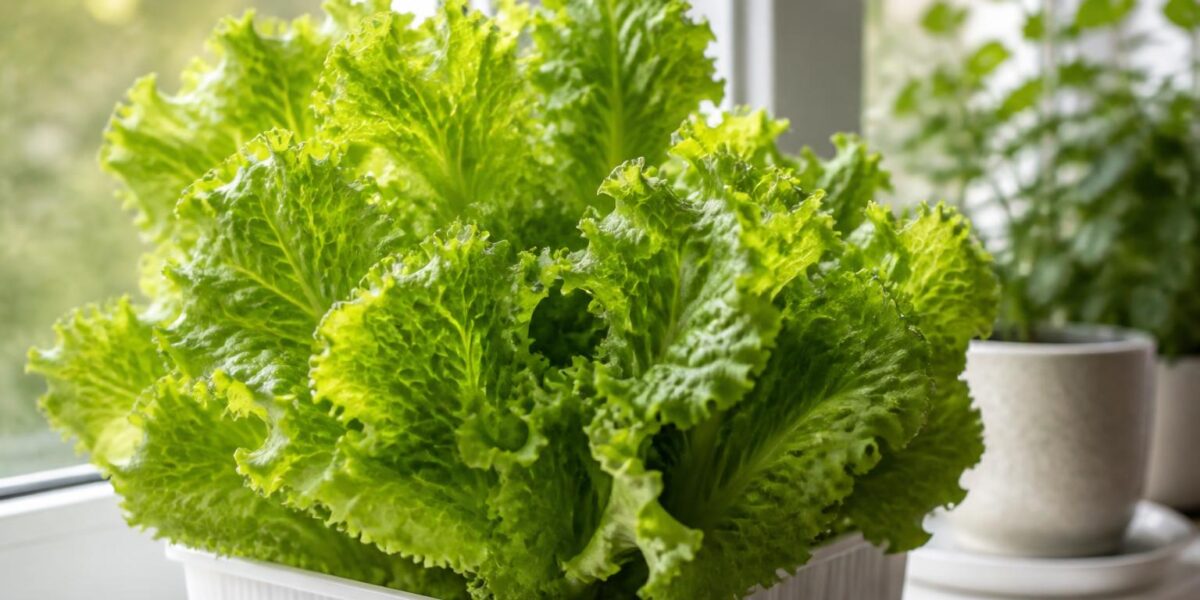
Lettuce plants are safe for pets in the everyday garden sense. Lactuca sativa — the species behind every common cultivated lettuce, from butterhead to romaine to crisphead — is not listed on the ASPCA’s database of plants toxic to dogs, cats, or horses. If your dog rolled through a row of seedlings or your cat batted at a leaf hanging over the edge of a window box, you are not facing a poisoning emergency. Lettuce plants are safe for pets at the level of any normal kitchen-garden encounter.
The honest caveat — and it is a small one — is that lettuce belongs to the genus Lactuca, and several of its wild relatives (Lactuca virosa, Lactuca serriola) contain a milky white sap called lactucarium with mild sedative compounds. Cultivated salad lettuce has been bred away from those bitter wild ancestors and contains only trace amounts. The cultivated plant in your raised bed is not pharmacologically interesting to your pet, and a chewed leaf produces nothing more dramatic than a possibly soft stool.
What Lettuce Actually Is
Lettuce (Lactuca sativa) is a cool-season annual leafy green in the Asteraceae family, the same family as sunflowers, daisies, and dandelions. It grows as a low rosette of crisp tender leaves that range from the loose ruffled outer leaves of a butterhead to the tight pale heart of a romaine or iceberg. Most home gardeners grow it from spring through fall in cooler climates and as a winter crop in milder regions; hot weather pushes lettuce to bolt, sending up a flower stalk and turning the leaves bitter.
The major cultivated types break down to crisphead (iceberg), butterhead (Boston, Bibb), romaine (cos), looseleaf (red leaf, green leaf, oak leaf), and stem lettuce (celtuce, where the stem is the eaten part). All are the same species, Lactuca sativa, and all carry the same generic safety profile for pets. Wild relatives like prickly lettuce (Lactuca serriola) and bitter lettuce (Lactuca virosa) are different — they are not what you grow in a salad bed, and they are not what this article addresses.
The ASPCA Position on Lettuce
Lettuce is not listed on the ASPCA Animal Poison Control Center’s database of plants toxic to dogs, cats, or horses. Veterinary toxicologists work with that finding straightforwardly: not specifically listed, no documented species-specific toxicity at normal exposure, generally considered safe with standard caveats. Lettuce belongs in that same category as spinach, kale, arugula, and most cultivated leafy greens.
For the food-versus-plant distinction, see also our species-specific food articles — can cats eat lettuce and can dogs eat lettuce — which cover the prepared, served, or shared scenario in detail. Lettuce is one of the rare leafy greens that even oxalate-cautious owners can offer freely. Unlike spinach, chard, or sorrel, lettuce does not carry a meaningful oxalate load, so it doesn’t enter the kidney-stone or kidney-disease conversation at all.
The Lactucarium Caveat, Honestly
If you snap the stem of a bolted lettuce plant or a wild lactuca, you’ll see a milky white latex ooze out. That is lactucarium, a complex of sesquiterpene lactones with mild sedative and bitter-tasting properties. Historically it was used as a folk sedative (“lettuce opium”) from the wild bitter species. Cultivated salad lettuce has been bred for low bitterness over centuries, and the cultivated plant produces only a small amount of weak lactucarium — primarily in the bolting stem and bolted-leaf veins, not in young tender leaves.
For pets, this means the practical risk is essentially nil. A puppy chewing fresh romaine leaves is not getting a sedative dose; the chemistry simply isn’t concentrated enough. Even a pet who chewed a bolted stem would face mild bitterness and possibly a brief drool, not sedation or toxicity. The wild Lactuca species, particularly prickly lettuce in disturbed waste ground, carry more lactucarium and more bitter compounds, but they are also genuinely unpalatable — pets rarely chew them voluntarily.
What Garden Encounter Actually Looks Like
The real-world lettuce encounter for a pet falls into three patterns. A dog runs through a raised bed and crushes or chews a head of butterhead — typical outcome is no symptoms, since lettuce is more water than substance and digests almost entirely. A cat noses at a romaine leaf hanging from a planter and takes a tooth-mark out of curiosity — typical outcome is nothing. An indoor cat with access to a windowsill of mesclun seedlings treats them as cat-grass — typical outcome is mild vomiting from the foliage stimulating the throat, not from any chemical effect.
None of these scenarios warrant urgent intervention. Lettuce digests cleanly; it does not contain solanine, oxalates, glycosides, alkaloids, or any of the chemistry classes that produce significant pet toxidromes. If you watch a pet who has eaten lettuce and you don’t see anything, that’s the expected outcome — not a happy accident. The plant is genuinely benign for both dogs and cats.
Mechanical Caveats Worth Knowing
Lettuce is mechanically forgiving. The leaves are tender, the stems are mild, and the plant has no thorns, prickles, or stinging hairs. The romaine and iceberg ribs are firm but not dangerous. The only realistic mechanical concern is choking — a small dog gulping a wad of fibrous leaves can occasionally hairball-cough or expel material via vomiting. That is not poisoning; it is the same generic risk that applies to any plant material a pet swallows whole.
Bolted lettuce produces a tall flower stalk that dogs sometimes brush against, breaking it and releasing the latex. The latex can stain a coat — washes out — and is mildly bitter, often deterring further chewing on its own. Wild prickly lettuce (Lactuca serriola), which sometimes appears as a weed in disturbed soil, carries small spines along the leaf midrib and stem. Pets generally avoid it; if a dog or cat does mouth it, the spines deter further interest before any meaningful ingestion.
Lettuce in a Pet-Friendly Vegetable Garden
For owners building a pet-tolerant vegetable garden, lettuce is one of the friendliest possible crops. Alongside spinach, collard greens, and arugula, lettuce earns a “yes, plant freely” rating in homes with curious dogs or roaming cats. The cultivation pattern that works best is succession planting — small bands every two weeks — so you have continuous tender leaves and the dogs and cats grazing impulse never depletes the whole row at once.
The pet-related complication that does sometimes come up with lettuce is contamination. Cats sometimes use loose garden soil as a litter substitute, and a free-grazing dog with a habit of leaving deposits in the garden creates the same problem. The fix is mechanical — wire mesh under mulch, raised beds, or a low fence — and a thorough wash of any leaves you actually plan to eat. Pets are not at risk from fellow-pet contamination; humans are. For broader plant-safety reading, the cat-safe houseplants guide walks through indoor companions that complement an outdoor lettuce patch.
Companion Plant Considerations
Owners who plant lettuce in a mixed bed should be conscious of what neighbors. Common companion plantings — chives, garlic, onions for pest deterrence — are genuinely toxic to pets per Allium chemistry. A pet that chews “the salad area” and gets a mouthful of chive along with the lettuce has a different conversation. The clean approach is to keep alliums in their own clearly-bordered bed, away from the pet-accessible salad rows, and to label or fence them.
The Asteraceae family connection — lettuce, endive, radicchio, and dandelion are all close relatives — is worth noting. None of those plants are flagged by ASPCA. Dandelion in particular is one of the most common “pet ate this” plants in the suburban yard and produces no toxidrome. If your pet chewed something that turns out to be dandelion or chicory and not lettuce, the plant-family chemistry is similar enough that the conclusion is the same: no urgent intervention needed.
What to Watch For After a Lettuce Encounter
Realistic, low-probability outcomes after a pet eats fresh lettuce foliage from the garden include:
- One episode of soft stool within 24 hours (resolves on its own)
- Brief drooling from the bitter taste of bolted lettuce sap (resolves in minutes)
- One episode of vomiting from a large gulped wad (resolves on its own)
- Green-tinged stool from leaf pigments (resolves on its own)
What you should not see are persistent vomiting, weakness, tremors, irregular breathing, dilated pupils, or any neurological signs. Lettuce does not produce those. If you see them after what you believed was lettuce ingestion, look hard for what else the pet might have encountered — alliums planted nearby, an ornamental in the same border, or a slug-bait or fertilizer that contaminated the area. Lettuce itself is essentially never the cause of dramatic pet illness.
If You Need a Phone Number
Even with a benign plant, professional reassurance is reasonable when something unusual happens. Start with your own veterinarian. If your veterinarian is unavailable, the ASPCA Animal Poison Control Center at 888-426-4435 (per-call fee) and the Pet Poison Helpline at 855-764-7661 (per-call fee) are staffed by veterinary toxicologists 24/7. Both will tell you whether monitoring at home is sufficient or whether your specific situation deserves a clinic visit.
Bring or photograph the plant when you call. Lettuce is visually distinctive but can be confused at the seedling stage with sorrel, dandelion, or other garden volunteers. An accurate ID matters more for the borderline plants than for lettuce itself, and it costs nothing to confirm. If your pet ate from a mixed bed or planter where alliums or ornamentals also grow, list everything you planted in that bed when you call — that helps the toxicologist rule out a confounding cause.
Frequently Asked Questions
Is lettuce toxic to dogs?
No. Lactuca sativa is not on the ASPCA’s list of plants toxic to dogs. A dog who chews garden lettuce typically has no symptoms or, at worst, one episode of soft stool. Lettuce is essentially water and fiber with very mild chemistry, and the cultivated plant has been bred away from the bitter wild ancestors that contain meaningful sedative latex.
Is lettuce safe for cats?
Yes, the lettuce plant is not listed by the ASPCA as toxic to cats. Most cats show no interest in lettuce foliage. Indoor cats sometimes chew seedlings as a cat-grass substitute, which can cause one episode of vomiting from foliage stimulation, but no chemical toxicity. There’s no oxalate concern, no alkaloid concern, and no kidney concern with cultivated lettuce.
What if my dog ate a whole head of lettuce from the garden?
Most likely outcome is no symptoms — lettuce is mostly water and digests cleanly. At most you might see soft stool over the next 24 hours from the fiber load. A healthy adult dog will clear it without intervention. Offer fresh water, watch for any unusual signs, and skip one meal if the dog seems uninterested in food. There is no specific antidote needed for lettuce because there is no specific toxin.
Are wild lettuce species the same as garden lettuce?
No. Wild prickly lettuce (Lactuca serriola) and bitter lettuce (Lactuca virosa) are related species that contain higher concentrations of lactucarium latex and bitter compounds. They are also less palatable, which means pets rarely chew enough to matter. Cultivated salad lettuce (Lactuca sativa) has been bred for centuries for tenderness and lack of bitterness — it is essentially mild on every axis.
Can I plant lettuce in a raised bed near my dog’s run?
Yes. Lettuce is one of the safest possible crops to grow in a pet-active garden. The practical issues are mechanical — dogs running through and crushing the rosettes — and contamination, since pets sometimes deposit waste in loose garden soil. Use a raised bed with a low border, wash leaves thoroughly before eating, and the lettuce-meets-pet routine works well long-term.


