
Last updated: May 16, 2026
In this article
- Are Dandelion Plants Safe for Pets? The Reassuring Answer
- What Dandelion Plants Look Like
- Why Dandelion Is Considered Non-Toxic
- What If My Pet Eats a Lot of Dandelion
- The Real Concern: Lawn Chemicals on Dandelions
- Why Pets Eat Dandelion
- Dandelion Compared to Look-Alikes
- Dandelion Compared to Other Lawn Weeds
- Dandelion in Herbal Pet Supplements
- Building a Pet-Friendly Dandelion-Tolerant Lawn
- Long-Term Pet-and-Lawn Living
- Frequently Asked Questions
Are Dandelion Plants Safe for Pets? The Reassuring Answer
Yes, dandelion plants are safe for pets in the sense that the ASPCA classifies Taraxacum officinale as non-toxic to cats and dogs. If your pet has nibbled the toothy leaves, batted at a yellow flower, or blown a seedhead across the yard, you can take a deep breath. Dandelion does not contain calcium oxalate raphides, cardiac glycosides, solanine alkaloids, capsaicin, or any of the major plant toxins that cause acute pet poisoning. The whole plant — leaves, flowers, stems, roots, and even the milky sap — is on the friendly side of the toxicology table.
Dandelions are one of the most familiar lawn weeds in the world, and they happen to be edible by humans too. Dandelion greens are a traditional spring salad ingredient, the flowers are used in syrups and wines, and the roasted root is a coffee substitute. This is one of the rare common weeds where the pet-safety guidance is essentially “do not worry about it.” This guide walks through the realistic safety profile, identification, and how dandelion fits into a pet-friendly lawn or garden.
What Dandelion Plants Look Like
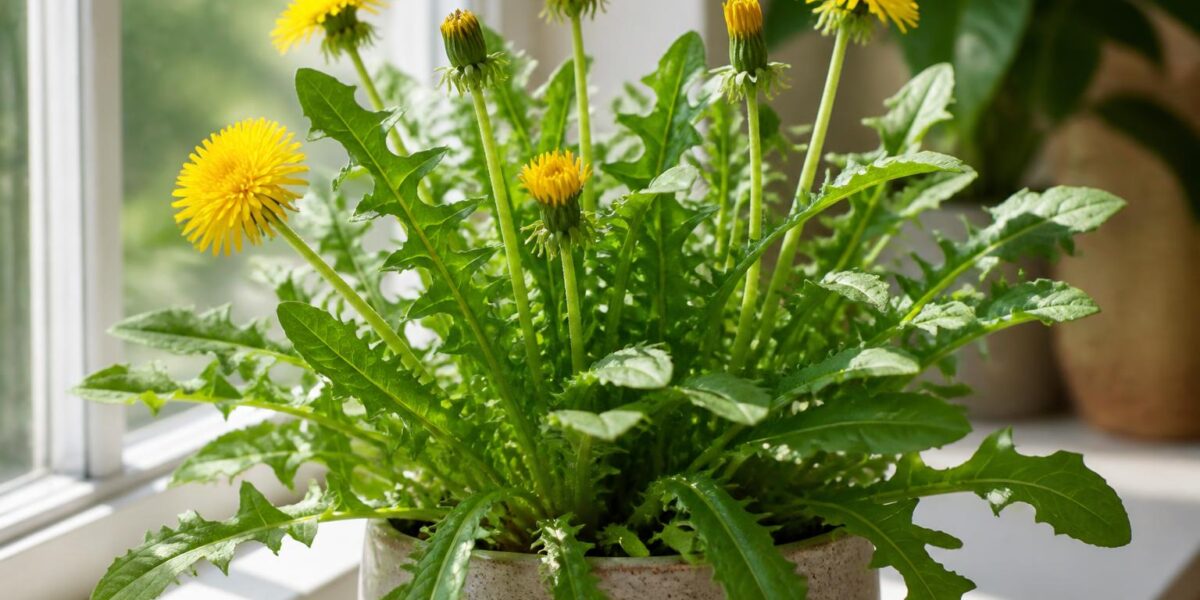
Dandelion grows as a low rosette of jagged leaves arising from a thick taproot that can extend a foot or more into the soil. The leaves are deeply lobed with backward-pointing teeth — the name comes from the French “dent de lion,” tooth of the lion. The leaves form a flat or slightly raised rosette, typically four to twelve inches across, hugging the ground in mowed lawns or growing taller in undisturbed soil.
The flowers are unmistakable. Each is a bright yellow composite head one to two inches across, made up of dozens of individual ray florets. They open in the morning and close at night and on cloudy days. After pollination, the flower head transforms into the iconic white puffball of parachute seeds that children blow across yards and meadows. Each parachute carries a single seed, and a vigorous dandelion plant produces hundreds of these seeds per season. The hollow flower stems contain milky white latex sap that some people mistake for a toxic indicator — it is not, and the sap is harmless to pets.
Why Dandelion Is Considered Non-Toxic
The ASPCA toxic-plant database does not flag Taraxacum officinale as toxic to cats, dogs, or horses. Dandelion is not on standard pet poison-control alert lists. The plant is widely used in herbal traditions for both human and animal use — dandelion root and leaf appear in some pet supplements as a gentle diuretic and digestive aid, sold by reputable companies for routine use.
Dandelion tissue does not contain raphides, cyanogenic glycosides at meaningful levels, alkaloids, cardiac glycosides, or any of the major chemical hazards that produce acute toxicity in pets. The leaves are mostly water, fiber, vitamins, and minerals (especially vitamin K and potassium). The yellow flowers are similar in chemistry. The milky latex sap is a complex of natural rubber compounds and bitter sesquiterpene lactones — bitter to the tongue but not poisonous. Some pets dislike the bitter taste and avoid the plant after a single sample, while others crunch through it without complaint.
What If My Pet Eats a Lot of Dandelion
A small chew of dandelion typically causes nothing at all. Many dogs and cats incidentally graze on dandelion leaves during walks or backyard time without any reaction. Larger ingestions can produce mild gastrointestinal upset — a single bout of vomiting, slightly soft stool, or a temporary loss of appetite. This is the same kind of reaction any pet might have to eating a substantial amount of any non-toxic plant matter, including grass or lettuce.
If your pet swallows a notable amount of dandelion, monitor for twelve to twenty-four hours. Offer water, keep meals on the smaller and blander side, and watch energy levels. Most pets bounce back without intervention. Persistent vomiting, refusing food for more than half a day, or unusual lethargy warrants a call to your veterinarian, the ASPCA APCC at 888-426-4435, or the Pet Poison Helpline at 855-764-7661, especially if the lawn has been treated with herbicide that the pet may have also encountered.
The Real Concern: Lawn Chemicals on Dandelions
The biggest pet-safety issue with dandelion is not the plant itself but what humans spray on it to kill it. Dandelions are aggressively targeted by lawn care services with broadleaf herbicides like 2,4-D, dicamba, MCPP, and combinations sold in “weed and feed” products. These chemicals can cause GI upset, drooling, skin irritation, and in severe cases more serious symptoms in pets that walk through freshly treated grass and then groom themselves.
Always wait the full label-stated reentry period (usually at least until the lawn is dry, often longer) before letting pets onto any treated area. Better yet, consider tolerating dandelions in moderation. They are early-season nectar sources for bees, they bring up minerals from deep soil, and they coexist peacefully with grass in most lawns. Our pet-safe garden plants guide covers broader low-tox lawn alternatives.
Why Pets Eat Dandelion
Cats and dogs explore the world by smell and taste. Pets often nibble grass and lawn weeds during walks for several reasons: a queasy stomach (grazing can sometimes trigger a small purge), boredom, a craving for fiber, or simple curiosity about new flavors. Dandelion leaves taste mildly bitter and grassy — some dogs enjoy the texture, while others sample once and pass.
If your pet grazes consistently on lawn or garden plants, increase enrichment, structured exercise, and access to safer chewable greens like cat-friendly grass or pet wheatgrass. Persistent grass-eating can also be a sign of mild GI distress that deserves a vet conversation. Most cases are completely benign and just reflect a pet’s natural foraging behavior. Dandelion specifically is one of the lower-concern targets a grazing pet might pick.
Dandelion Compared to Look-Alikes
Several plants resemble dandelion at a glance and have very different toxicity profiles. Cat’s ear (Hypochaeris radicata) and false dandelion (Hypochaeris) are closely related and similarly non-toxic but have hairy leaves and branched flower stems. Hawkweed and hawksbeard are related composite-family plants that look similar and are also generally considered non-toxic to pets, though they are less well-studied.
The plant to watch is anything in the Asteraceae family with a tall stalk, branched flower head, and milky sap that does not have the classic dandelion rosette. Some of these can be allergenic. If you are not sure, the giveaway for true dandelion is the single yellow flower per stem, the flat ground-hugging rosette of toothy leaves, and the lack of any branching in the flower stalk. Dandelion never has multiple flowers per stem.
Dandelion Compared to Other Lawn Weeds
Dandelion sits among other common lawn weeds that pets routinely encounter. Most are non-toxic. Clover is non-toxic and is sometimes intentionally encouraged in pet-friendly lawns. Chickweed is non-toxic and so commonly eaten by chickens that it gets the name. Plantain weed is non-toxic and has a long history of folk medicinal use for human and animal scrapes.
Some lawn weeds do carry toxicity. Yarrow contains achilleic acid and thujone and is on the ASPCA toxic list. Buttercups, foxglove, lily of the valley, and ragwort can show up in unmowed lawn edges and are genuinely dangerous. Dandelion, clover, chickweed, and plantain are the friendly four — the classic broadleaf weeds in a typical pet-friendly lawn.
Dandelion in Herbal Pet Supplements
Dandelion has a long history of use in both human and animal herbalism. Dried dandelion root and leaf appear in some commercial pet supplements as a gentle digestive bitter, mild diuretic, and liver-support ingredient. Dosing is conservative, the safety profile is strong, and reputable companies produce these supplements for routine use in dogs and cats.
That does not mean fresh dandelion from a treated lawn is automatically a supplement-worthy treat. Wild-foraged dandelion picked for pets should come from areas you know are free of pesticides, herbicides, and runoff from neighboring chemical-treated yards. Roadside dandelions also accumulate exhaust residue. If you want to use dandelion therapeutically, talk to your veterinarian and source the herb from a trusted supplement company rather than from random lawn collection.
Building a Pet-Friendly Dandelion-Tolerant Lawn
If you want to coexist with dandelions rather than fight them, the simplest approach is to mow regularly at three to four inches and let the plant be. Mowed dandelions stay short, produce few flowers, and gradually thin out as turfgrass density builds. Hand-pulling dandelions with a long-handled weeder removes the taproot and is satisfying for the gardener who wants fewer of them without resorting to chemicals.
Skip broadleaf herbicide if you have a pet that grazes the lawn. The dandelion population will plateau at a tolerable level with consistent mowing alone, especially if you also overseed any bare spots with grass or clover to outcompete weeds. A lawn with a few dandelions is more pet-friendly than a chemical-treated weed-free lawn, and the ecological benefits to pollinators are real.
Long-Term Pet-and-Lawn Living
Living happily with pets and a dandelion-tolerant lawn is one of the easier outdoor combinations because the plant is genuinely non-toxic and the maintenance burden is low. Walk through your yard from a pet’s-eye view once a season, paying attention to any neighboring plants that might pose a higher risk, and check whether neighbors have applied lawn chemicals that your pet could track in. Keep your veterinarian’s after-hours line, the ASPCA APCC at 888-426-4435, and the Pet Poison Helpline at 855-764-7661 stored in your phone for emergencies that might involve other plants or household chemicals.
If you are still in the early days of bringing a pet home, our adopt-a-cat hub and adopt-a-dog hub cover preparation tips that include simple lawn audits. Dandelion is one of the most pet-friendly lawn plants and a textbook example of a “weed” that is not worth chemical control in most pet households.
Frequently Asked Questions
Are dandelion flowers safe for my pet to eat?
Yes. The yellow flowers contain the same non-toxic plant tissue as the leaves and are even edible by humans (used in dandelion wine, syrup, and fritters). Pets that chew flowers will not show symptoms beyond the usual mild GI possibility from any plant matter in volume.
Is the milky white sap from broken dandelion stems toxic?
No. The latex sap is a natural rubber compound mixed with bitter sesquiterpene lactones. It is not poisonous to pets. Some pets find the bitter taste off-putting and stop eating the plant, while others continue without issue.
Can I feed my dog dandelion greens like a salad ingredient?
Small amounts of fresh, untreated dandelion greens are safe for most dogs and are even sold as a supplement ingredient. Avoid wild-foraged dandelion from treated lawns or roadsides. The plant-toxicity question covered here is separate from the food-side question.
What about the seedhead — are the parachute seeds dangerous if inhaled?
The seeds are not toxic. A pet that snorts a mouthful of seeds is more likely to sneeze than have any real problem. Mass inhalation of any small particulate can rarely cause respiratory irritation, but a typical dandelion seed encounter is harmless.
Will dandelion root in supplement form interact with my pet’s medications?
Dandelion is a mild diuretic and may interact with prescription diuretics, blood pressure medications, or potassium-altering drugs. Ask your veterinarian before adding any herbal supplement, even gentle ones, if your pet is on long-term medication.


