
Last updated: May 16, 2026
In this article
- Is Clover Safe for Pets? The Reassuring Answer
- The Common Clover Species
- Why Clover Is Considered Safe for Pets
- The Phytoestrogen Note: Red Clover and Livestock
- What If My Pet Eats a Lot of Clover
- Identifying Clover in the Lawn
- The Real Concern: Lawn Chemicals on Clover
- Why Pets Eat Clover
- Clover Compared to Other Lawn Weeds
- Building a Pet-Friendly Clover Lawn
- Long-Term Pet-and-Lawn Living
- Frequently Asked Questions
Is Clover Safe for Pets? The Reassuring Answer
Yes, clover is safe for pets in the sense that the ASPCA does not classify common Trifolium species as toxic to cats and dogs. If your pet has nibbled clover leaves on a walk, sniffed a flower, or rolled across a clover lawn, you can take a deep breath. Clover does not contain calcium oxalate raphides, cardiac glycosides, solanine alkaloids, capsaicin, or any of the major plant toxins that cause acute pet poisoning. Most pet owners encounter clover daily and never see a problem.
That said, “non-toxic” is not the same as “completely without caveats.” Red clover (Trifolium pratense) contains phytoestrogens and isoflavones that have caused reproductive disruption in livestock grazing on it heavily over months. White clover (Trifolium repens) and crimson clover (Trifolium incarnatum) carry similar but lower levels. For dogs and cats foraging normally on a typical lawn, this is essentially a non-concern. This guide covers the common clover species, the realistic safety profile, and how clover fits into pet-friendly lawns.
The Common Clover Species
“Clover” usually refers to plants in the genus Trifolium, with three species dominant in North American lawns and meadows. White clover (Trifolium repens) is the small white-flowered ground cover that pops up in mowed lawns and is sometimes intentionally seeded as a low-maintenance turf addition. Red clover (Trifolium pratense) is taller with pinkish-purple round flower heads and is common in pastures, hayfields, and wildflower mixes. Crimson clover (Trifolium incarnatum) has dramatic deep red elongated flower heads and is mainly used as a cover crop or wildflower planting.
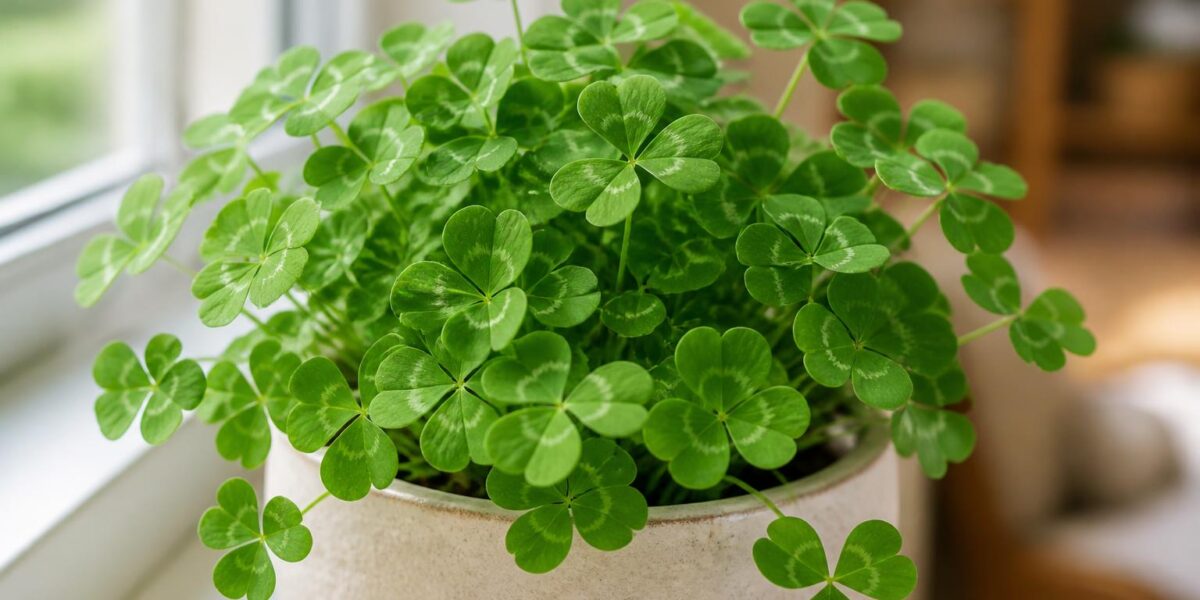
All three share the classic three-leaflet “clover” leaf shape (the shamrock pattern). Lucky four-leaflet variants are simply mutations of the same plants. Clovers fix atmospheric nitrogen through symbiosis with soil bacteria, which is why they thrive in nitrogen-poor lawns and improve pasture quality. From a pet-safety standpoint, the three species are essentially interchangeable, with red clover at the slight high end of the phytoestrogen spectrum and white clover at the low end.
Why Clover Is Considered Safe for Pets
The ASPCA toxic-plant database does not list common Trifolium species as toxic to cats, dogs, or horses. Clover is not on the standard pet poison-control alert lists. Many pet owners actively seed clover into their lawns precisely because it is pet-tolerant, drought-resistant, and does not require synthetic fertilizers. Clover also stays greener through summer dormancy than typical turfgrass, which makes a clover-rich lawn more resilient to dog urine spotting.
The plant tissue does not contain raphides, cyanogenic glycosides at meaningful levels, alkaloids, or cardiac glycosides. The leaves and flowers are mostly water, fiber, modest protein, and the bacteria-derived nitrogen fixed in their root nodules. From a pet’s eye view, clover is a small leafy weed with a mildly grassy taste that occasionally gets sampled and quickly forgotten. The bees that visit clover flowers can present an unrelated sting hazard for curious noses, which is the most realistic outdoor injury risk associated with clover lawns.
The Phytoestrogen Note: Red Clover and Livestock
Red clover and to a lesser extent the other Trifolium species contain isoflavones — plant compounds that mimic estrogen in the body. In dairy cattle and sheep grazing on red-clover-dominant pasture for extended periods, these phytoestrogens have caused reduced fertility, infertility, and reproductive cycle disruption. The condition is well-documented in livestock veterinary literature.
For dogs and cats, the situation is very different. Pets do not graze on clover continuously the way a cow does, and they consume tiny amounts compared to their body weight. There are essentially no reported cases of phytoestrogen disease in pets from normal yard or lawn exposure to clover. The risk is theoretical rather than practical. If you have a breeding female dog who grazes heavily on red-clover-rich pasture, that would be the rare scenario where a vet conversation might be worthwhile, but the average pet on a clover lawn faces no realistic phytoestrogen issue.
What If My Pet Eats a Lot of Clover
A small chew of clover typically causes nothing at all. Pets often nibble grass and clover during walks, sometimes seeking the slight stomach-settling effect that grazing provides. Larger ingestions can produce mild gastrointestinal upset — a single bout of vomiting, slightly soft stool, or a temporary loss of appetite. This is the same kind of reaction any pet might have to eating a substantial amount of any non-toxic plant matter, including grass, lettuce, or other leafy greens.
If your pet swallows a notable amount of clover, monitor for twelve to twenty-four hours. Offer water, keep meals on the smaller and blander side, and watch energy levels. Most pets bounce back without intervention. Persistent vomiting, refusing food for more than half a day, or unusual lethargy warrants a call to your veterinarian, the ASPCA APCC at 888-426-4435, or the Pet Poison Helpline at 855-764-7661, especially if there is any concern that the lawn has been treated with herbicide that the pet may have also encountered.
Identifying Clover in the Lawn
White clover stays low to the ground, typically two to six inches tall, with dark green three-leaflet leaves often marked with a faint white V-shaped band. The flowers are small white pom-poms about half an inch across, sometimes with a pink tinge. White clover spreads by stolons (above-ground runners) and is what most people picture when they say “clover” in a lawn context.
Red clover grows taller and more upright, eight to sixteen inches, with larger leaves marked by a chevron of light green. Flowers are pink to magenta and round, about an inch across, on stems above the leaves. Red clover is more common in unmowed pasture and meadow than in maintained lawns. Crimson clover is the showiest, with dramatic spikes of deep red flowers, typically grown intentionally rather than appearing as a volunteer. All three species have nodules on their roots — small white or pink lumps where nitrogen-fixing bacteria live, harmless to pets and beneficial to soil.
The Real Concern: Lawn Chemicals on Clover
The bigger pet-safety issue with clover is not the plant itself but what humans spray on it. Many lawn care companies treat clover as a weed and apply broadleaf herbicides like 2,4-D to kill it. These herbicides can cause GI upset, skin irritation, and in severe cases more serious symptoms in pets that walk through freshly treated grass and then groom themselves. Always wait the full label-stated reentry period (usually at least until the lawn is dry, often longer) before letting pets onto any treated area.
If you specifically want a clover-friendly pet lawn, skip the broadleaf herbicide entirely. Clover has come back into fashion as a low-maintenance turf component precisely because it stays green, fixes its own nitrogen, and tolerates mowing. A lawn with twenty to thirty percent clover is one of the most pet-friendly turf compositions available. Our pet-safe garden plants guide covers broader low-tox lawn alternatives.
Why Pets Eat Clover
Cats and dogs explore the world by smell and taste. Pets often nibble grass and lawn weeds during walks for several reasons: a queasy stomach (grazing can sometimes trigger a small purge), boredom, a craving for fiber, or simple curiosity about new flavors. Clover is one of the more palatable lawn weeds, with a mild slightly-sweet flavor that some dogs actively seek out.
If your pet grazes consistently on lawn or garden plants, increase enrichment, structured exercise, and access to safer chewable greens like cat-friendly grass or pet wheatgrass. Persistent grass-eating can also be a sign of mild GI distress that deserves a vet conversation. Most cases are completely benign and just reflect a pet’s natural foraging behavior.
Clover Compared to Other Lawn Weeds
Clover sits among other common lawn weeds that pets routinely encounter. Most are non-toxic. Dandelions are non-toxic and even nutritious, with the whole plant edible by humans. Chickweed is non-toxic and is so commonly eaten by chickens that it gets the name. Plantain weed is non-toxic and has a long history of folk medicinal use.
Some lawn weeds do carry toxicity. Yarrow contains achilleic acid and thujone and is on the ASPCA toxic list. Buttercups, foxglove, and lily of the valley are dangerous and can show up in unmowed lawn edges. The take-home message is that clover, dandelion, chickweed, and plantain are the friendly four — the classic broadleaf weeds in a typical pet-friendly lawn.
Building a Pet-Friendly Clover Lawn
If you want to encourage clover rather than fight it, the simplest approach is to overseed an existing lawn with white clover or microclover (a smaller-leafed cultivar bred for turf use) at one to two ounces per thousand square feet. Mow at three to four inches, water deeply but infrequently, and skip nitrogen fertilizer (clover provides its own through nitrogen fixation). Skip broadleaf herbicide entirely.
A clover-rich lawn benefits both pets and pollinators. Bees love clover flowers, which is the only realistic safety note: pets with bee-sting allergies can be at higher risk on a flowering clover lawn. If your dog or cat has a known bee allergy or anaphylaxis history, mowing flowers off before pet access reduces the sting risk. For most households, occasional bee encounters are part of outdoor life and not a major concern.
Long-Term Pet-and-Lawn Living
Living happily with pets and a clover lawn is one of the easier outdoor combinations because the plants are non-toxic, drought-resistant, and naturally low-maintenance. Walk through your yard from a pet’s-eye view once a season, paying attention to any neighboring plants that might pose a higher risk, and check whether neighbors have applied lawn chemicals that your pet could track in. Keep your veterinarian’s after-hours line, the ASPCA APCC at 888-426-4435, and the Pet Poison Helpline at 855-764-7661 stored in your phone for emergencies that might involve other plants or household chemicals.
If you are still in the early days of bringing a pet home, our adopt-a-cat hub and adopt-a-dog hub cover preparation tips that include simple lawn audits. Clover is one of the most pet-friendly lawn plants available and a long-term favorite for households that want a green low-maintenance yard.
Frequently Asked Questions
Can my dog eat clover regularly without health concerns?
Routine grazing on lawn clover is safe for most dogs. The phytoestrogen concern that affects livestock requires sustained heavy intake over months and is essentially never seen in pets. If your dog eats large quantities of any plant matter consistently, mention it to your vet during the next checkup as a behavior pattern worth noting.
Are clover flowers safe if my cat bats and chews on them?
Yes. The flowers contain the same non-toxic plant tissue as the leaves. Pets that chew flowers will not show symptoms beyond the usual mild GI possibility from any plant matter in volume.
Is microclover lawn turf safe for dogs to roll on?
Yes. Microclover is the same Trifolium repens species selected for smaller leaves and uniform turf appearance. The plant chemistry is identical to standard white clover. Many pet-friendly lawn programs feature microclover specifically.
What if my pet eats clover that has been treated with weed killer?
This is the bigger concern. Broadleaf herbicides like 2,4-D are widely used to kill clover and can cause GI upset, drooling, and other symptoms in pets that ingest treated foliage or groom treated paws. Wait the full label reentry period and call your vet if you suspect chemical exposure rather than just plant ingestion.
Are the four-leaf clover variants special in any way?
No, just lucky for humans. Four-leaf clovers are simply genetic mutations of the standard three-leaflet plants and have identical chemistry. Pets that find one will not experience anything different than from regular clover.


