
Last updated: May 16, 2026
In this article
- Is Chickweed Safe for Pets? The Reassuring Answer
- What Chickweed Looks Like
- Why Chickweed Is Considered Non-Toxic
- What If My Pet Eats a Lot of Chickweed
- The Real Concern: Lawn Chemicals on Chickweed
- Why Pets Eat Chickweed
- Identifying Chickweed in the Lawn or Garden
- Chickweed Compared to Other Lawn Weeds
- Chickweed in Herbal and Wild-Food Traditions
- Building a Pet-Friendly Chickweed-Tolerant Lawn
- Long-Term Pet-and-Lawn Living
- Frequently Asked Questions
Is Chickweed Safe for Pets? The Reassuring Answer
Yes, chickweed is safe for pets in the sense that the ASPCA classifies Stellaria media as non-toxic to cats and dogs. If your pet has nibbled the soft trailing stems, sampled a tiny white flower, or grazed across a chickweed-covered lawn corner, you can take a deep breath. Chickweed does not contain calcium oxalate raphides, cardiac glycosides, solanine alkaloids, capsaicin, or any of the major plant toxins that cause acute pet poisoning. The whole plant — leaves, stems, flowers, and even the small seeds — is on the friendly side of the toxicology table.
Chickweed gets its common name from a long history of being eaten readily by chickens, which is one of the original folk-test indicators that a wild plant is broadly safe for many animals. Humans also eat chickweed as a wild salad green — it has a mild fresh flavor reminiscent of corn silk or lettuce. This is one of the more reassuring common weeds in pet households. This guide walks through the realistic safety profile, identification, and how chickweed fits into a pet-friendly lawn or garden.
What Chickweed Looks Like
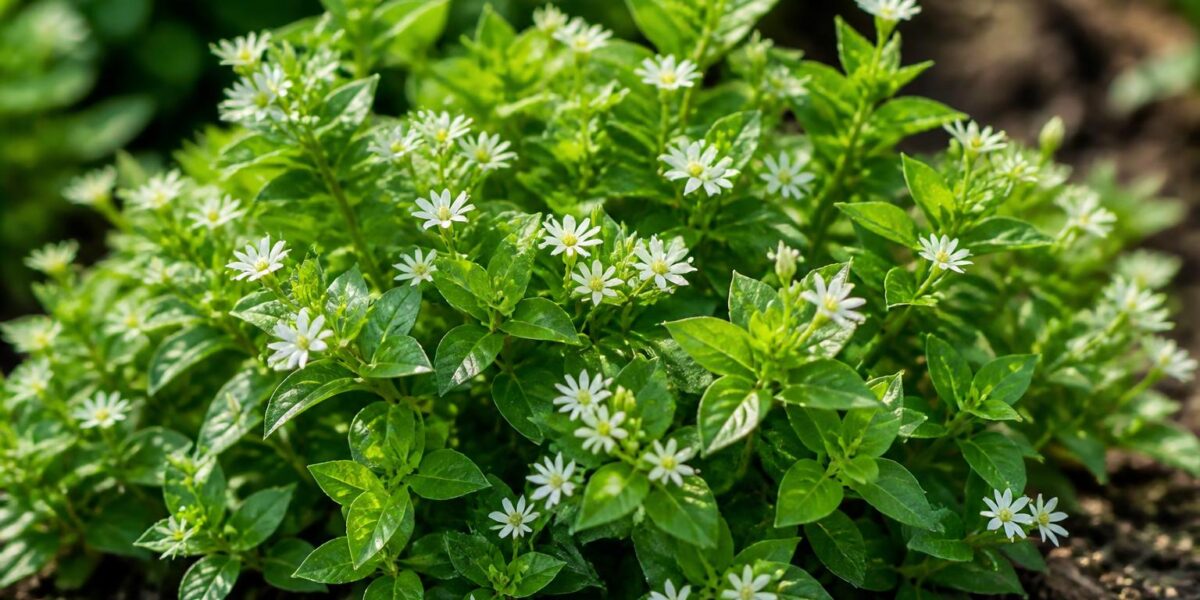
Common chickweed (Stellaria media) is a low-growing winter annual that thrives in cool wet weather. The plant forms a sprawling mat of soft trailing stems, typically four to twelve inches long, with small oval leaves arranged in opposite pairs along the stem. Each leaf is about a quarter to half an inch long, with a smooth surface and a pointed tip.
The flowers are tiny — about a quarter inch across — and bright white, with five deeply notched petals that look like ten petals at first glance (the genus name Stellaria refers to the star-shaped bloom). A diagnostic identification trick is the single line of fine hairs running along one side of each stem, switching sides at each leaf node. Pull a stem and you will see this hair pattern. Mouse-ear chickweed (Cerastium fontanum) is a hairier relative that grows in similar habitats and is also non-toxic. Both species often appear in shaded lawn edges, garden beds, and disturbed soil during cooler months.
Why Chickweed Is Considered Non-Toxic
The ASPCA toxic-plant database does not flag Stellaria media as toxic to cats, dogs, or horses. Chickweed is not on standard pet poison-control alert lists. The plant has been eaten by humans, chickens, rabbits, and many livestock species for centuries without poisoning concerns. Some commercial pet treats and bird foods include chickweed as a green ingredient.
The plant tissue does not contain raphides, cyanogenic glycosides at meaningful levels, alkaloids, cardiac glycosides, or any of the major chemical hazards that produce acute toxicity. The leaves and stems are mostly water, fiber, vitamins (especially vitamin C), and minerals. The white flowers are similarly inert. Some folk medicinal traditions use chickweed topically for skin irritations and internally as a mild gentle herb; while pet-specific research is sparse, the long safety record across many species supports the non-toxic classification.
What If My Pet Eats a Lot of Chickweed
A small chew of chickweed typically causes nothing at all. Pets that nibble lawn weeds during walks often sample chickweed without any reaction. Larger ingestions can produce mild gastrointestinal upset — a single bout of vomiting, slightly soft stool, or a temporary loss of appetite. This is the same kind of reaction any pet might have to eating a substantial amount of any non-toxic plant matter, including grass or lettuce.
If your pet swallows a notable amount of chickweed, monitor for twelve to twenty-four hours. Offer water, keep meals on the smaller and blander side, and watch energy levels. Most pets bounce back without intervention. Persistent vomiting, refusing food for more than half a day, or unusual lethargy warrants a call to your veterinarian, the ASPCA APCC at 888-426-4435, or the Pet Poison Helpline at 855-764-7661, especially if the lawn has been treated with herbicide that the pet may have also encountered.
The Real Concern: Lawn Chemicals on Chickweed
The biggest pet-safety issue with chickweed is not the plant itself but what humans spray on it to kill it. Chickweed is a common target of broadleaf herbicides like 2,4-D and dicamba, often applied as part of fall or early spring weed-and-feed lawn treatments. These chemicals can cause GI upset, drooling, skin irritation, and in severe cases more serious symptoms in pets that walk through freshly treated grass and then groom themselves.
Always wait the full label-stated reentry period (usually at least until the lawn is dry, often longer) before letting pets onto any treated area. Better yet, consider tolerating chickweed in moderation. It is a winter annual that dies back naturally in summer heat, fixes some nitrogen, and provides early-season ground cover that prevents soil erosion. It coexists peacefully with grass in most lawns. Our pet-safe garden plants guide covers broader low-tox lawn alternatives.
Why Pets Eat Chickweed
Cats and dogs explore the world by smell and taste. Pets often nibble grass and lawn weeds during walks for several reasons: a queasy stomach (grazing can sometimes trigger a small purge), boredom, a craving for fiber, or simple curiosity about new flavors. Chickweed has a mild fresh flavor that some dogs and cats find palatable, especially in early spring when fresh greens are scarce.
Cats sometimes nibble chickweed as a substitute for grass when grass is unavailable. The soft texture is easier on a cat’s mouth than tough grass blades, and the mild flavor invites repeat sampling. If your pet grazes consistently on lawn or garden plants, increase enrichment, structured exercise, and access to safer chewable greens like cat-friendly grass or pet wheatgrass. Persistent grass-eating can also be a sign of mild GI distress that deserves a vet conversation, but most cases are completely benign.
Identifying Chickweed in the Lawn or Garden
Chickweed is a cool-season weed that appears in fall, persists through mild winters, and dies back in summer heat. It thrives in moist shaded areas — under trees, along the north side of buildings, in irrigated flower beds, and in lawn edges. The mats of bright green soft stems are easy to spot when most other vegetation is dormant.
The diagnostic features are the opposite-paired oval leaves, the line of hairs on one side of the stem, the small white five-petaled (looking ten-petaled) flowers, and the overall soft tender texture. Pull a stem and the inner core often shows a thin elastic fiber running through it. This combination distinguishes chickweed from look-alikes like spotted spurge (which has milky sap and is mildly toxic) and pearlwort (a similar small low-grower that is also non-toxic but has finer needle-like leaves). When in doubt, do not assume — but for most North American gardens, the small soft mat in the shade with white star flowers is true chickweed.
Chickweed Compared to Other Lawn Weeds
Chickweed sits among other common lawn weeds that pets routinely encounter. Most are non-toxic. Clover is non-toxic and is sometimes intentionally encouraged in pet-friendly lawns. Dandelions are non-toxic and even nutritious, with the whole plant edible by humans. Plantain weed is non-toxic and has a long history of folk medicinal use.
Some lawn weeds do carry toxicity. Yarrow contains achilleic acid and thujone and is on the ASPCA toxic list. Buttercups, foxglove, lily of the valley, and ragwort can appear in unmowed lawn edges and are genuinely dangerous. Spotted spurge has milky toxic sap and looks superficially similar to chickweed at a quick glance — the milky sap when broken is the diagnostic giveaway. Chickweed, clover, dandelion, and plantain are the friendly four — the classic broadleaf weeds in a typical pet-friendly lawn.
Chickweed in Herbal and Wild-Food Traditions
Chickweed has a long history of use in both human and animal traditions. The fresh leaves and stems are eaten in salads or wilted into spring greens dishes. Folk medicine uses chickweed topically for skin rashes and minor scrapes. Some commercial bird seed mixes include dried chickweed as a green-feed ingredient, since wild birds and chickens enthusiastically eat the fresh plant.
For pet households, this safety record means an accidental encounter is almost always a non-event. If you keep chickens alongside dogs and cats, you may already see your chickens devour chickweed clumps in the run while the dogs sniff curiously and walk on. Pet rabbits and guinea pigs also tolerate chickweed well as a fresh-foraged green, though always introduce new foods slowly and source from chemical-free areas.
Building a Pet-Friendly Chickweed-Tolerant Lawn
If you want to coexist with chickweed rather than fight it, the simplest approach is to let the plant complete its winter-annual cycle and die back naturally in summer heat. Chickweed-rich patches dry up by midsummer in most climates, leaving room for warm-season grasses or replanting. Hand-pulling is easy because the shallow root system gives way readily, especially in moist soil.
Skip broadleaf herbicide if you have a pet that grazes the lawn. Chickweed populations naturally cycle with the seasons and rarely require chemical intervention in a healthy lawn. Improving turf density through proper mowing height (three to four inches), seasonal fertilization, and good watering reduces chickweed pressure over time without resorting to chemicals. A lawn with some chickweed is more pet-friendly than a chemical-treated weed-free lawn.
Long-Term Pet-and-Lawn Living
Living happily with pets and a chickweed-tolerant lawn is one of the easier outdoor combinations because the plant is genuinely non-toxic, the seasonal pattern is predictable, and the maintenance burden is low. Walk through your yard from a pet’s-eye view once a season, paying attention to any neighboring plants that might pose a higher risk, and check whether neighbors have applied lawn chemicals that your pet could track in. Keep your veterinarian’s after-hours line, the ASPCA APCC at 888-426-4435, and the Pet Poison Helpline at 855-764-7661 stored in your phone for emergencies that might involve other plants or household chemicals.
If you are still in the early days of bringing a pet home, our adopt-a-cat hub and adopt-a-dog hub cover preparation tips that include simple lawn audits. Chickweed is one of the most pet-friendly lawn plants — the fact that chickens devour it without harm is a strong real-world safety signal that translates well to dogs and cats.
Frequently Asked Questions
Are chickweed flowers safe for my pet?
Yes. The tiny white star-shaped flowers contain the same non-toxic plant tissue as the leaves. Pets that chew flowers will not show symptoms beyond the usual mild GI possibility from any plant matter in volume.
Can my dog or cat eat chickweed regularly?
Small amounts of fresh, untreated chickweed are safe for most pets. The long history of human and chicken consumption supports the safety profile. Source from chemical-free areas only — roadside or treated-lawn chickweed should be avoided. The plant-toxicity question covered here is separate from any structured supplement-use question.
What does chickweed look like compared to spotted spurge?
Chickweed has soft green stems with no milky sap when broken; spotted spurge has milky white sap that flows immediately from any broken stem. Spurge is mildly toxic and is the most common chickweed look-alike to watch for. Always check for the white sap to distinguish.
Will my chickens and dog get along around chickweed?
The chickens will demolish chickweed enthusiastically while your dog sniffs and walks on. There is no chemical interaction between the plant and either species. The bigger interaction question is whether your dog and chickens cohabit safely as animals, which is a separate topic.
Is mouse-ear chickweed the same as common chickweed for pet safety?
Yes. Mouse-ear chickweed (Cerastium fontanum) is a closely related hairier species in the same family. It shares the same non-toxic profile and pet-safety guidance. Both are common in cool-season lawns and gardens.


