
Last updated: May 16, 2026
In this article
- The Short Answer on Wheat Grass and Pets
- What Wheat Grass Actually Is
- What Compounds Are in Wheat Grass
- Why Pets Want to Eat Grass
- What Symptoms Look Like If a Pet Eats Too Much Wheat Grass
- What to Do If Your Pet Eats a Whole Tray
- When to Call a Vet
- How Wheat Grass Compares to Other Pet Grasses
- Wheatgrass Juice and Concentrated Forms
- Outdoor Lawn Grass vs. Wheat Grass
- Growing Your Own Wheat Grass
- Frequently Asked Questions
The Short Answer on Wheat Grass and Pets
Yes, wheat grass is safe for both dogs and cats. Triticum, the cereal wheat genus, is non-toxic at every life stage from seedling to mature grain, and the young shoots sold as wheat grass or pet grass are an entirely safe addition to a pet household. There is nothing in wheat seedling chemistry that interferes with canine or feline digestion or causes reactions in either species. A pet that nibbles on a tray of wheat grass is doing the indoor equivalent of grazing fresh greens, and most dogs and cats enjoy the soft tender shoots.
The only realistic concern is volume. A pet that demolishes an entire tray in one sitting may experience mild stomach upset, vomiting, or temporary diarrhea, the same way it would after any sudden bulk-fiber meal. None of those reactions is toxic in the medical sense. Treat wheat grass as a safe enrichment plant, offer it in moderation, and you will not need to think twice about chemistry.
What Wheat Grass Actually Is
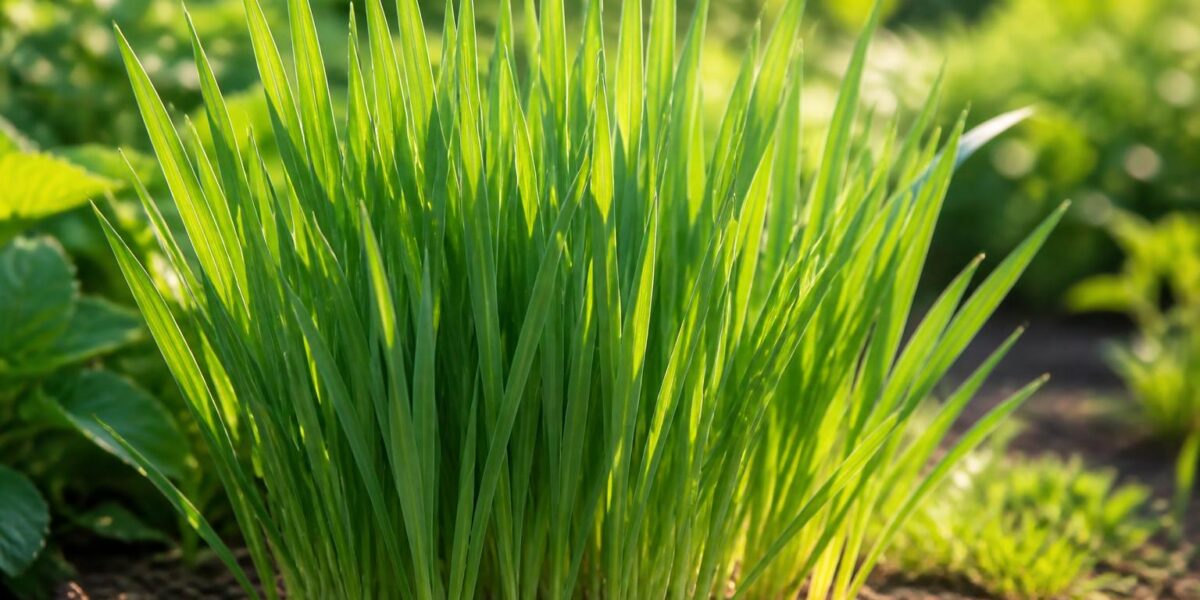
Wheat grass is the young green shoot of the wheat plant, harvested or chewed in the seedling stage before the plant has produced grain. The same species that yields flour, bread, and pasta produces these shoots in the first weeks after germination. You can grow wheat grass at home from any whole wheat berry, or you can buy ready-to-grow trays at pet stores under labels like “pet grass,” “wheat grass,” or as part of a “cat grass” mix.
Wheat grass is the same plant material that human juice bars use for their bright green wheatgrass shots, and it has a long history in human nutrition culture. None of those uses raises pet safety concerns at the fresh-shoot level. If you have come from our cat-grass safety guide for dogs or cat-grass safety guide for cats, wheat grass is one of the most common single-grain components of a cat-grass mix.
What Compounds Are in Wheat Grass
Young wheat shoots are mostly water and fiber, with modest amounts of vitamin C, vitamin K, magnesium, manganese, and a small amount of plant protein. Chlorophyll gives the shoots their bright green color and is harmless to pets. The fiber content is a mix of soluble and insoluble forms, both of which are well tolerated by dogs and cats in small amounts.
None of these compounds is harmful to pets at the doses delivered by a casual chew of fresh shoots. Wheat grass at the seedling stage does not contain gluten in the way mature wheat grain does. Pets with diagnosed wheat allergies should still avoid wheat grass to be safe, but the gluten concern that affects some humans is largely a mature-grain issue, not a fresh-shoot issue.
Why Pets Want to Eat Grass
Both dogs and cats eat grass for reasons that are still partly unclear. The behavioral options include settling mild stomach upset, satisfying a fiber craving, mimicking ancestral diets, simple boredom or oral fixation, and texture-driven chewing enjoyment. Our why-do-dogs-eat-grass guide goes through each of these for dogs. The general dog-eating-grass overview covers normal grazing, and the dog grass eating when sick piece covers the nausea-driven case.
For cats, indoor grass nibbling is even more common than for dogs, partly because indoor cats lack the outdoor grazing access that outdoor cats have. The general cat-grass guide covers the cultivation and feeding side. Whatever the species, providing a dedicated wheat grass tray is a clean alternative to lawn grazing or houseplant chewing.
What Symptoms Look Like If a Pet Eats Too Much Wheat Grass
Wheat grass is non-toxic, but any plant material can cause problems if a pet eats a large quantity in one sitting. The most common issue is simple gastrointestinal upset. A dog that grazes a whole tray may vomit once or twice as the gut clears the unusual fiber load. A cat may regurgitate the grass minutes after eating, which is actually one of the documented uses of grass for cats and is not necessarily a sign of toxicity. Diarrhea is possible if the volume is large enough.
None of these symptoms are toxic in the medical sense. They reflect a pet’s gut handling a sudden bulk-fiber dose it did not expect. A small chew or two from a tray will produce no symptoms at all in most pets. The problem is volume, not chemistry. Watch for a one-time vomit and then normal behavior. If symptoms persist beyond a few hours or escalate, move to the vet-call section below.
What to Do If Your Pet Eats a Whole Tray
Most cases need no intervention. Pick up any remaining grass and the soil tray to prevent further grazing. Offer fresh water. Skip the next meal if your pet has just vomited, and reintroduce a small bland meal a few hours later. Plain cooked rice with a small amount of plain boiled chicken is usually well tolerated by both dogs and cats.
Watch for repeated vomiting, profuse diarrhea, lethargy, refusal to drink, or any sign of bloating. None of those is typical, but they are the signs that turn an “ate too much grass” event into a vet visit. Most healthy adult pets walk this off in a few hours. Puppies, kittens, seniors, and pets with pre-existing GI conditions deserve closer monitoring.
When to Call a Vet
Call your own vet if vomiting persists beyond two or three episodes, if diarrhea is bloody or watery for more than twelve hours, if your pet refuses water or food for over twelve hours, or if you notice any swelling of the abdomen or unusual posture. Wheat grass itself does not cause these severe outcomes, but they can occur if a pet ate something else along with the grass, or if a hidden underlying condition was triggered by the dietary change.
If your regular vet is closed, the ASPCA Animal Poison Control Center at 888-426-4435 and the Pet Poison Helpline at 855-764-7661 are both twenty-four-hour resources. Wheat grass alone rarely warrants a poison-control call, but if your pet also accessed soil with fertilizer, plant food sticks, or other additives in the tray, those products can be toxic and may need professional guidance.
How Wheat Grass Compares to Other Pet Grasses
Wheat grass is essentially interchangeable with oat grass for canine safety purposes, and with oat grass for cats for feline safety. Both are safe, both are tender at the seedling stage, and both can be sourced as part of a cat-grass mix. Rye grass is the third common option in pet-grass mixes and is also safe. Millet grass rounds out the common options.
Wheat grass has a slightly sweeter flavor than rye and is broadly the most popular single-grain pet grass for cats. Dogs do not show strong preferences between wheat, oat, and rye, but if your pet refuses one, try another. Mixed cat-grass trays usually contain at least two of these grains by default.
Wheatgrass Juice and Concentrated Forms
Fresh wheat grass shoots eaten directly are safe. Concentrated wheatgrass juice or wheatgrass powder is a different matter. Concentrated grass products can be high in oxalates, vitamin K, and other compounds at levels well above what pets encounter from casual chewing. Read our can cats eat wheatgrass and can dogs eat wheatgrass articles for the full guidance on concentrated forms.
Stick to fresh shoots from a tray for casual nibbling, and treat juices and powders as a separate question for your vet. Most pets do not need supplemented grass nutrition. The benefit of wheat grass is the chew, not the calories.
Outdoor Lawn Grass vs. Wheat Grass
If your pet grazes outside, the safety question shifts from chemistry to chemicals. Lawn turf species like Bermuda grass, fescue grass, St. Augustine grass, and zoysia grass are all non-toxic in their natural state, but commercial lawn care products applied to them can be highly toxic. Indoor wheat grass sidesteps that risk entirely.
Ornamental grasses are a separate category. Pampas grass and fountain grass are non-toxic in chemistry but their sharp leaf edges can cause oral injury. Wheat grass shoots are soft and tender by comparison, which is one reason they make better chew material indoors.
Growing Your Own Wheat Grass
Wheat berries are widely available at health food stores, feed stores, and online. Use whole unprocessed wheat berries, not flour or cracked wheat, since processed wheat will not germinate. Soak the seeds for eight to twelve hours, then spread them on the surface of clean potting soil in a shallow tray with drainage. Cover lightly with soil, water gently, and place in indirect light.
Germination takes two to four days. Shoots are ready for chewing at one to two inches tall, typically seven to ten days after planting. Snip blades or let the pet graze directly. Replace the entire tray after two to three weeks when the shoots become tougher and less appealing. Run two trays in rotation if your pet goes through them quickly. Combine the tray with our pet-safe garden plants list and cat-safe houseplants list for a fully safe indoor-outdoor environment. If you are thinking about adding a pet to the family, the dog adoption hub and cat adoption hub are good places to start.
Frequently Asked Questions
Is wheat grass safe for cats with food sensitivities?
Generally yes. Cats with diagnosed wheat allergies should avoid wheat grass and choose oat grass or another non-wheat option instead. For cats with general food sensitivities but no wheat allergy, wheat grass is usually well tolerated.
How often can I let my pet chew wheat grass?
Daily access is fine for most dogs and cats, with a small tray sized to be a snack rather than a meal. Watch for any digestive changes the first week, and adjust if your pet tends to overeat.
Can wheat grass help with hairballs in cats?
It can. The fiber in fresh shoots may help move hairballs through the gut more efficiently. Many cat owners notice less hairball regurgitation when wheat grass or other pet grasses are part of the routine. It is not a guaranteed fix but is worth trying.
Is wheat grass safe for puppies and kittens?
Yes, in small amounts. Young pets have more sensitive guts than adults, so introduce slowly and watch for diarrhea. A few blades chewed during a play session is usually fine for both puppies and kittens.
Does wheat grass need sunlight to grow indoors?
Bright indirect light is enough. A windowsill or a spot near a sunny window works well. Direct hot sunlight can dry the tray out quickly, so monitor moisture if you place it in direct sun. Grow lights are optional but speed up growth.


