Last updated: May 4, 2026
In this article
Vocal Cat Criteria: How to Compare These Two
If you want a cat that talks back, comments on your day, and tells you exactly when dinner is late, you are shopping in a small but unmistakable category. The Siamese is the iconic conversational cat, with a voice so distinctive that most people recognize a “meezer yowl” the first time they hear one. The Oriental Shorthair was developed from Siamese stock and selectively bred for color variety, but along the way the breed retained, and arguably amplified, that famous chatter.
To choose between them on vocality, think about four traits: average volume, frequency of calling, range of sounds, and the social drive behind the noise. Both breeds use voice as a relationship tool rather than as background filler. Neither is suitable for owners who want a quiet companion or a cat content to be ignored for long stretches.
This comparison treats vocality as a feature, not a flaw, but stays honest about the trade-offs. A talkative cat is a wonderful housemate for the right person and a constant strain for the wrong one.
Origin and History
The Siamese is one of the oldest documented breeds, traced to the kingdom of Siam (modern Thailand) and depicted in the Tamra Maew manuscripts written between the 14th and 18th centuries. Western recognition began when Siamese cats arrived in the United Kingdom and the United States in the late 1800s, and the breed has been a fixture of cat fancy ever since. Early Siamese had a more moderate body and head shape; mid-20th-century breeders selected for the slender, wedge-headed look most modern registries now show.
The Oriental Shorthair grew out of post-war British breeding programs that crossed Siamese with other shorthairs to expand the color palette beyond the four traditional points. By the 1970s the Cat Fanciers’ Association recognized Oriental Shorthairs as their own breed. Genetically they are extremely close to Siamese, and many registries allow inter-variety breeding. The Oriental Shorthair is essentially a Siamese in any color and pattern except the classic pointed coat.
Because the Oriental was bred from vocal foundation cats and selected for the same outgoing temperament, voice carried over and often intensified.
Appearance and Build
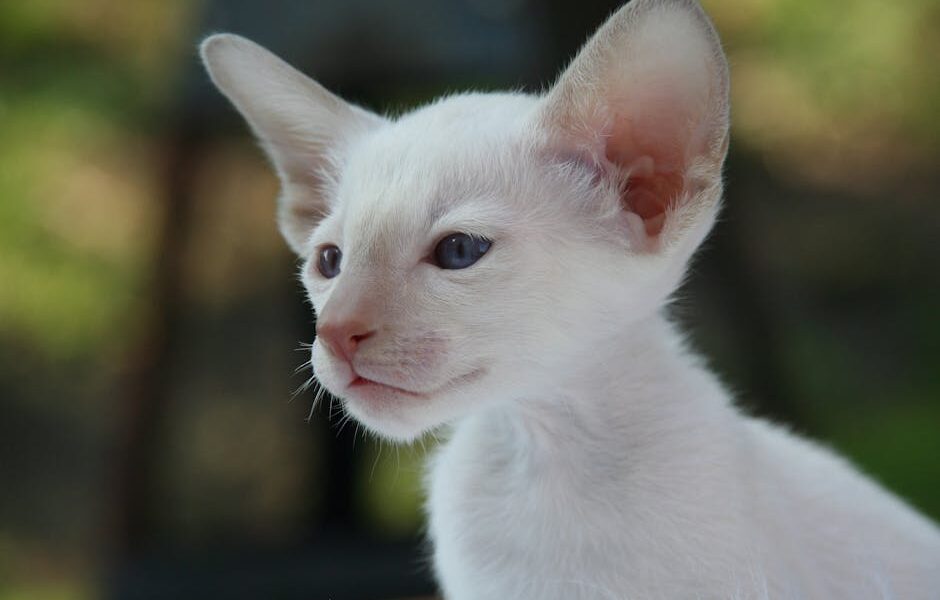
Both breeds share the same lithe, tubular silhouette: long bodies, fine bones, slim legs, whip-like tails, and large ears set on a wedge-shaped head. Almond eyes are standard, vivid blue in Siamese, and typically green in Oriental Shorthairs (white Orientals can have blue or odd eyes). Adult cats usually weigh between six and ten pounds, with males at the upper end. They feel lighter than they look because the build is athletic rather than stocky.
Siamese coats are short, smooth, and lie close to the skin. Color is restricted to point patterns: a paler body with darker face, ears, paws, and tail, in seal, chocolate, blue, lilac, and a handful of newer accepted variations. Oriental Shorthairs come in more than 300 recognized color and pattern combinations, including solids, tabbies, smoke, shaded, and parti-color. If coat variety matters to you, the Oriental wins decisively.
Beyond color, the silhouettes are nearly identical, and many owners describe their cats as “the same cat in a different paint job.”
Temperament and Personality
Both breeds are demanding in the most affectionate sense. They want to be near you, on you, or talking to you, ideally all three. Siamese tend toward intense one-person bonds and can be possessive of their chosen human. Oriental Shorthairs are typically more outgoing with the entire household and may distribute their affection among several family members. The difference is subtle but real: a Siamese can sulk visibly when its preferred person travels, while an Oriental Shorthair often switches focus to whoever is home.
The Siamese voice is famous for a reason: low, guttural, opinionated, and willing to lecture for several minutes if a meal is delayed. Many owners describe it as a half-meow, half-conversation. Oriental Shorthairs were bred from this stock and tend to be slightly more frequent in their calling, with a wider range of chirps, trills, and yowls. A few Oriental owners describe their cats as essentially nonstop commentators. The vocal repertoire of either breed extends well beyond the standard meow into mumbles, throaty growls of pleasure, and the famous Siamese “mahow” used as a greeting.
Both breeds learn routines fast, fetch readily, and often invent games. They will figure out how to open lever-handle doors, drawers, and food storage containers within weeks of moving in. Puzzle feeders that stump other cats often last only days. Many owners describe coming home to obvious evidence that their cat spent the day testing the limits of household physics.
They also struggle with long stretches of solitude. If you work twelve-hour days and travel frequently, neither breed is fair to bring home alone. A second cat with a similar activity level helps tremendously, and many breeders prefer to place oriental-type kittens in pairs. Two Siamese or two Oriental Shorthairs raised together typically maintain each other’s exercise level and entertain each other through long workdays. A confident, equally social cat from another breed can substitute, but a shy resident senior is unlikely to be a happy companion.
Care, Grooming, and Activity Needs
Coat care is delightfully simple for both breeds. A weekly rubdown with a soft brush or grooming mitt removes loose hair and distributes skin oils. Bathing is rarely needed, though Siamese point coloration can deepen with age and cooler temperatures. Trim claws every two to three weeks, brush teeth as the cat will tolerate, and check ears monthly because both breeds carry large, exposed ear leather.
Activity needs are substantial. Plan for at least two structured play sessions per day, plus puzzle feeders, climbing space, and rotating toys. Both breeds are intelligent enough to be bored by static toys within days. Many owners build cat shelves, train recall, or teach simple tricks. Look at indoor cat enrichment ideas and puzzle feeders for practical setups that suit highly engaged cats.
Vocalization itself is part of the activity profile. These cats use voice to seek attention, and ignoring them rarely lowers volume; engaging them does. Plan your work-from-home schedule with that in mind.
Health and Lifespan
Both breeds share an overlapping health profile because of their close genetic relationship. Dental disease, particularly gingivitis and tooth resorption, is reported more often than in mixed-breed cats. Routine dental care and regular vet checks help; review gingivitis in cats and tooth resorption for what to watch for. Owners should plan for annual dental exams from kittenhood and accept that professional cleaning under anesthesia may be needed sooner than for many breeds.
Other concerns reported in oriental-type breeds include amyloidosis affecting the liver, certain progressive eye conditions, and a higher reported rate of asthma than in many other breeds. None of these are universal, but a transparent breeder will share screening history. Read about feline asthma if you are weighing breed risk factors. Indoor air quality matters: avoid scented litter, plug-in fragrances, and aerosol cleaners around oriental-type cats with any respiratory history.
With attentive care, indoor living, and good nutrition, both breeds can live well into their mid-teens or beyond. The slim build benefits from careful weight management; obesity worsens dental disease and joint stress quickly. Measured meals, puzzle feeders, and consistent play sessions keep the body composition where it should be. Avoid breeders who refuse to discuss health testing, and consider an adult cat wellness checklist for ongoing monitoring throughout adulthood and a senior cat care checklist as your cat enters its golden years.
Living Situation Fit
Both breeds adapt well to apartments because their exercise demands are met through play rather than space. They are not suited to barn life, outdoor-only living, or households where they will be alone for the entire workday. Multi-cat homes work beautifully if the second cat is similarly social; a shy or low-energy companion may be steamrolled. Resident cats with established quiet routines often find an oriental-type addition disruptive, so introductions should be slow and supervised.
Children and dogs are usually fine if introductions are slow and the cat has elevated escape routes. Both breeds tend to be confident enough to set boundaries themselves. Apartment dwellers should also consider noise tolerance: thin walls plus a Siamese yowling at 6 a.m. is a recipe for neighbor complaints. Some owners use white-noise machines in bedrooms to mask early-morning conversation, and structured pre-bedtime play sessions help drain energy that otherwise emerges at sunrise.
Travel-heavy lifestyles do not suit either breed. Boarding kennels are stressful environments, and cat-sitters who only visit for thirty minutes once a day are not enough company. If you must travel often, plan to bring a second cat into the home, hire a longer-stay sitter, or consider a different breed. If you have already chosen a quieter household, look at the contrast in best quiet cat Russian Blue vs Chartreux to understand the opposite end of the spectrum.
Cost and Availability
Siamese are widely available through reputable breeders, breed-specific rescues, and occasionally general shelters. Oriental Shorthairs are less common and may require waiting lists or travel. Adoption fees through rescue are modest and usually include initial vetting; breeder pricing varies widely by region and pedigree, but expect a meaningful upfront investment for either breed.
Lifetime cost is dominated by routine care, dental work, and enrichment supplies rather than purchase price. Build an emergency fund early using a pet emergency fund target as a starting point, and check first-year cat costs for a realistic monthly picture.
Adoption-first families should explore adopt-a-cat listings; pointed and oriental-type cats turn up more often than people expect.
Decision Framework: When to Choose Each
Choose a Siamese if you want the original talkative cat with a single deep, distinctive voice; you prefer the classic pointed coat; you want a strong one-on-one bond; and you have time for daily interactive play. Siamese are an excellent fit for owners who appreciate a cat that gives clear, conversational feedback throughout the day.
Choose an Oriental Shorthair if you want even more variety in vocal range and color; you have a multi-person household where attention is distributed; and you can tolerate slightly higher overall volume. Oriental owners often describe their cats as “Siamese turned up to eleven,” which captures both the joy and the cost.
If your household includes anyone sensitive to noise, neither is the right choice. Look at calmest cat breeds and the Siamese cat profile alongside the Oriental Shorthair profile before you commit. Owners who want vocal but lower-key personalities sometimes prefer the Colorpoint Shorthair, a sibling variety with similar conversation skills.
Frequently Asked Questions
Which breed is louder, Siamese or Oriental Shorthair?
Volume varies by individual, but Oriental Shorthairs are generally reported as more frequent and slightly higher in pitch, while Siamese have a deeper, more guttural call. Both can be loud enough to wake a household.
Can either breed be trained to be quieter?
You cannot train away vocalization in these breeds, but you can reduce attention-seeking calls by establishing predictable feeding and play routines, ignoring purely demand-based meows, and reinforcing quiet behavior with affection.
Are Siamese and Oriental Shorthair good first cats?
They are best suited to owners with prior cat experience or strong willingness to invest time in daily interaction. First-time owners who want a similar look but lower demands may prefer a Domestic Shorthair from a shelter.
Do they get along with other cats?
Yes, especially with other social, active cats. Pairing two from the same litter or adopting two oriental-type cats together is often easier than introducing them to a calm resident senior. See introducing a kitten to a resident cat for slow, structured tips.
Is one breed healthier than the other?
The two share most genetic risks because of their close lineage. Choose a breeder who tests for heart disease and discusses dental and respiratory concerns honestly, and budget for routine veterinary care regardless of which you bring home.
Looking to adopt a Best Vocal Cat?
Browse Best Vocal Cat cats and mixes available for adoption from shelters and rescues near you.
Find Best Vocal Cat Cats for Adoption