
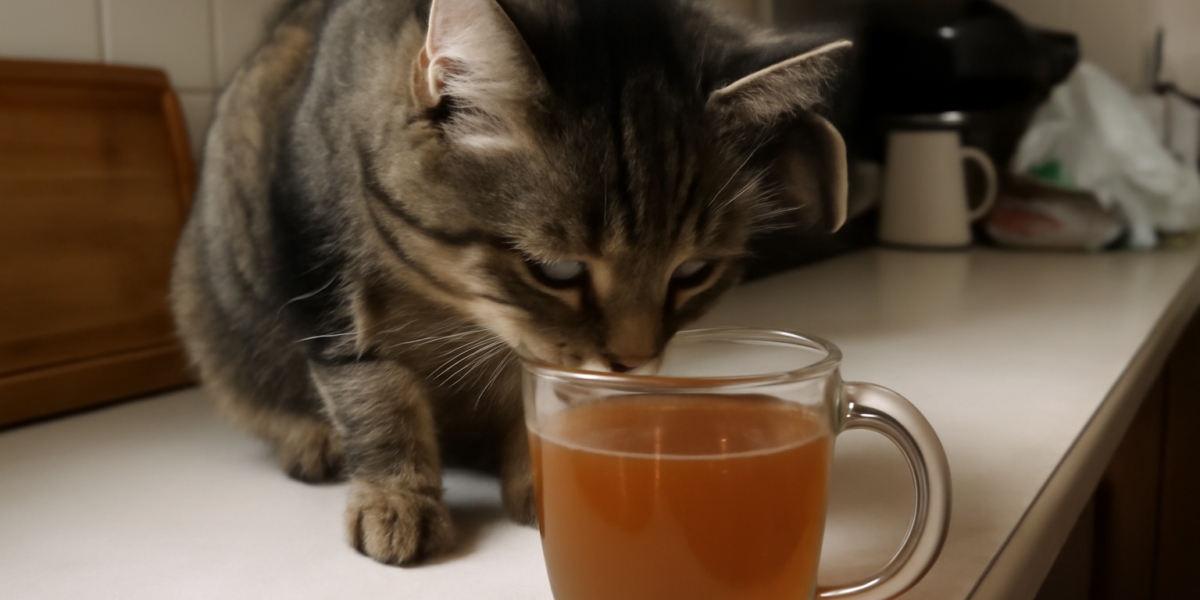
The Short Answer: Yes, If It Is Plain and Onion-Free
Can cats drink beef broth? Yes, cats can drink beef broth in small amounts as an occasional treat or hydration booster, but only if the broth is plain, unsalted, and contains no onion, garlic, or other Allium-family ingredients. The problem is exactly the same as with chicken broth: almost all commercial beef broths on supermarket shelves are seasoned with exactly the ingredients that are toxic to cats. Homemade beef broth or carefully chosen pet-formulated products are your safest options.
In this article
- The Short Answer: Yes, If It Is Plain and Onion-Free
- What Makes Beef Broth Risky
- How to Make Homemade Beef Broth for Cats
- What to Look For on Commercial Labels
- Safe Portion Size
- Nutritional Context
- Signs of Trouble After Beef Broth
- What to Do If Your Cat Had the Wrong Kind of Broth
- Using Beef Broth Effectively
- Frequently Asked Questions
Beef broth has a rich, meaty scent that many cats love, and a tablespoon can be a useful way to encourage drinking or tempt a picky eater. The risks come entirely from what has been added during manufacture, not from beef itself.
What Makes Beef Broth Risky
The beef broth you might cook with in a human kitchen is typically flavored heavily. Common problem ingredients in commercial beef broths:
- Onion and onion powder — toxic to cats, causes Heinz body anemia
- Garlic and garlic powder — same mechanism, often even more potent per gram
- Salt — commercial broths often contain hundreds of milligrams of sodium per serving
- Yeast extract, autolyzed yeast, or “natural flavor” — may include hidden Allium ingredients
- Celery, carrot, and herbs — usually not toxic but add no value for cats
- Monosodium glutamate (MSG) — not acutely toxic but unnecessary and common in cheaper broths
- Caramel coloring or sugar — unnecessary additions found in some products
Read every label every time. A broth that was safe last year might have been reformulated, and pantry staples like “low sodium beef broth” often still contain onion powder.
How to Make Homemade Beef Broth for Cats
Making your own is the most reliable way to guarantee safety. A basic cat-safe beef broth recipe:
- Use plain beef — stew meat, chuck, or a lean cut. About one pound works for a small batch.
- Place in a pot with four to six cups of water.
- Bring to a simmer and cook for one to two hours until the meat is very tender.
- Remove the meat and skim any fat off the surface of the broth. Cats should not have high-fat broth because of pancreatitis risk.
- Do not add salt, onion, garlic, pepper, herbs, or bouillon.
- Let cool to room temperature before serving.
- Strain if needed.
- Store in the fridge for up to three days or freeze in ice cube trays.
The cooked beef can be chopped into small pieces and offered as a plain meat treat separately. Nothing is wasted, and you get two cat-friendly foods from one prep session.
What to Look For on Commercial Labels
If you prefer store-bought, look for these criteria:
- Ingredient list that starts with “beef broth” or “beef stock” and water
- No onion, garlic, chives, leeks, or shallots in any form
- No “natural flavors” unless the company specifically states they do not include Allium ingredients
- Low sodium (under 50mg per serving if possible)
- No added sugar
- Products marketed specifically as pet broth from reputable companies
Pet-specific broths made for dogs and cats are the easiest option because they are formulated with pet safety in mind. They are usually found in the pet aisle or pet stores rather than the soup section.
Safe Portion Size
Beef broth is a treat, not a meal. Portion guidelines for a healthy adult cat:
- One to two tablespoons per serving
- Up to a quarter cup mixed into water to encourage drinking
- No more than two or three times a week
- Always offered alongside fresh water, not instead of it
Cats with kidney disease, heart disease, urinary issues, or a history of GI sensitivity should have broth portions discussed with their vet. Even homemade broth has some sodium from the meat, and fluid intake guidelines are specific for these conditions.
Nutritional Context
Plain beef broth is mostly water with dissolved protein, a small amount of fat, and trace minerals. Like chicken broth, it does not provide significant nutrition but can be useful as a flavor enhancer, hydration aid, appetite stimulant, and medication vehicle. It is not a replacement for a complete cat food and should not be used as a meal on its own.
Some owners are interested in beef bone broth for its purported collagen and glycine benefits. The evidence for these benefits in cats is limited, and the same safety rules apply — homemade or pet-formulated only, with no added seasonings. If you make bone broth for your own use and want to share a safe version with your cat, make a separate unseasoned batch or portion some off before adding aromatics.
Signs of Trouble After Beef Broth
Safe broth in appropriate portions is unlikely to cause issues. Watch for these signs, especially if you later realize the broth may have contained onion, garlic, or high salt:
- Vomiting or diarrhea
- Loss of appetite
- Lethargy or hiding
- Pale gums
- Dark or reddish urine
- Excessive thirst and urination
- Weakness or wobbly walking
- Rapid breathing or heart rate
Allium toxicity from onion or garlic in broth can take a day or two to become obvious because the red blood cell damage develops gradually. Any of these signs after broth exposure deserves a call to your vet.
What to Do If Your Cat Had the Wrong Kind of Broth
Accidents happen. A family member might share soup, a cat might get into a cooking pot, or you might realize after the fact that the broth you used contained onion powder. Steps to take:
- Stop offering the broth immediately.
- Identify the specific product and ingredient list.
- Estimate how much your cat consumed.
- Call your veterinarian or an animal poison control line right away.
- Follow their guidance about whether to come in for evaluation or monitor at home.
- Over the next 72 hours, watch for any of the signs listed above and report any concerns immediately.
Early intervention for Allium toxicity gives the best outcomes. Do not wait for obvious symptoms before seeking advice.
Using Beef Broth Effectively
The best use cases for beef broth in a cat’s life are the same as for chicken broth: encouraging drinking, reviving appetite in sick cats, softening kibble for cats with dental problems, and disguising medications. A spoonful of warm broth on food can turn a rejected meal into a finished bowl for many picky cats.
Variety helps some cats. Rotating between chicken broth and beef broth, or occasionally offering fish-flavored broth, keeps any single flavor from becoming the only option your cat will accept. Avoid letting your cat become dependent on broth-topped food because it makes transitions difficult if the broth is ever unavailable.
For more cat feeding topics, see our articles on chicken broth safety, tuna water for hydration, and baby food for picky eaters. The cat care blog covers feeding and hydration in depth, and the cat adoption hub helps new cat owners with first-week feeding.
Frequently Asked Questions
Is beef broth safer than chicken broth for cats?
Neither is inherently safer — the safety depends entirely on the ingredients. Plain homemade beef broth and plain homemade chicken broth are equally safe when prepared correctly.
Can cats drink bone broth?
Plain homemade bone broth without any seasonings is generally safe in small amounts. Commercial bone broths should be read carefully for Allium ingredients and salt. Pet-specific bone broths are often the most convenient safe option.
Is low-sodium beef broth okay?
Low-sodium labeling addresses only the salt, not the onion or garlic content. Many low-sodium broths still contain toxic Allium ingredients. Always check the full ingredient list.
How much beef broth is too much for a cat?
More than a quarter cup per day, or any significant amount of high-sodium broth, is too much. Stick to a few tablespoons at treat time and offer water separately.
Can kittens have beef broth?
Small amounts of plain homemade beef broth are generally safe for older kittens (12 weeks and up) as an occasional treat. Kittens should get most of their nutrition from a complete kitten food, and treats should be minimal.


