
The Short Answer
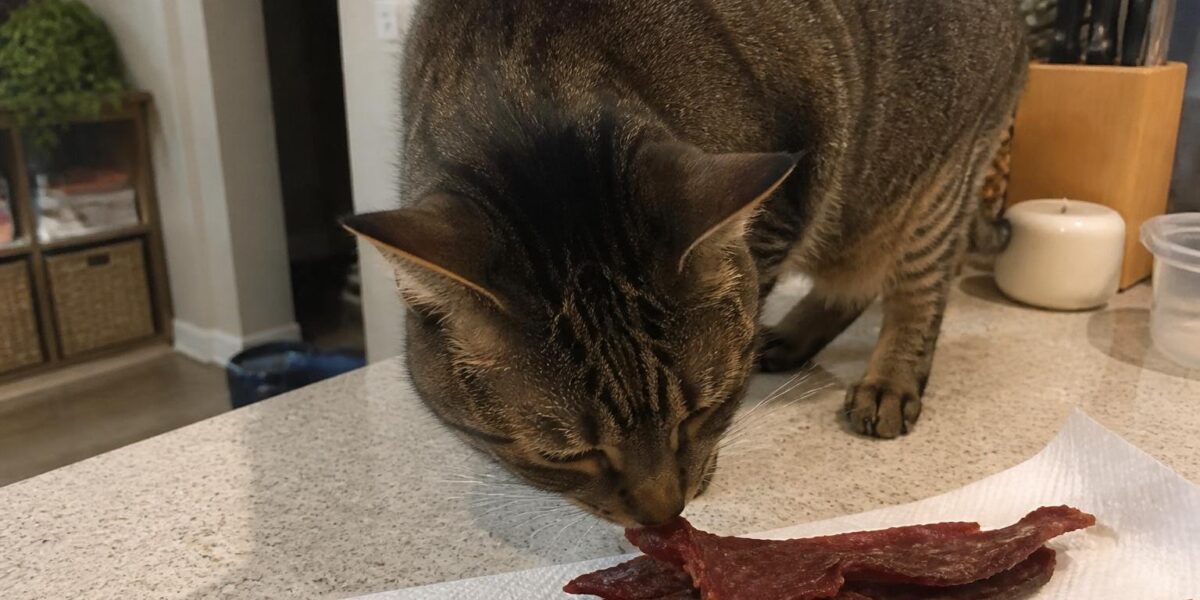
Can cats eat beef jerky? No, commercial human beef jerky should be avoided. While beef itself is a fine protein for cats, jerky is loaded with salt and is very commonly flavored with onion powder and garlic powder, both of which are toxic to cats. Add in sugar, soy, and other seasonings, and store-bought jerky becomes a risky snack. There is no safe serving of seasoned human jerky for a cat.
In this article
Cats are drawn to the strong meaty smell of jerky, so it is important to keep these snacks well out of reach. A bag left open on a desk or a piece dropped on the floor is exactly the kind of thing a curious cat will investigate, so awareness matters.
Why Commercial Beef Jerky Is Dangerous
The problem with jerky is not the beef but everything added during processing. A typical strip of human jerky contains:
- Heavy salt: Jerky is preserved with large amounts of sodium, which can cause excessive thirst, vomiting, and salt toxicity in cats.
- Onion and garlic powder: These allium flavorings are common in marinades and are toxic to cats even in powdered form.
- Sugar and soy: Teriyaki and barbecue flavors add sugar and salty soy sauce.
- Spices and preservatives: Pepper, chili, and additives can irritate a cat’s stomach.
Because powdered onion and garlic are more concentrated than fresh, the allium risk in jerky can be surprisingly high for such a small piece. Drying removes water and concentrates everything, including the harmful seasonings, so a thin strip packs a bigger punch than its size suggests.
This concentration effect is the heart of why jerky is more dangerous than its small size suggests. A piece of jerky started out as a much larger slice of marinated beef, then lost most of its water during drying. Everything that was dissolved in that marinade, the salt, the sugar, the onion and garlic powder, stays behind and becomes proportionally more intense in the finished strip. So a cat that eats a single piece of jerky is taking in the seasoning that was originally spread across a far bigger portion of wet meat. That is a meaningful dose packed into a deceptively small, chewy treat.
The Onion, Garlic, and Salt Risk
Onion and garlic belong to the allium family, which damages a cat’s red blood cells and can lead to Heinz-body anemia. You can read more about why onions are toxic to cats and how garlic carries an even stronger risk. Many jerky seasonings include both, often as concentrated powders that disperse through the meat.
Salt is the other major hazard. A cat’s small body needs very little sodium, and jerky’s heavy salt content can cause excessive thirst, vomiting, diarrhea, and in serious cases tremors or seizures. Together, the salt and alliums make jerky a clear avoid. The chewy texture also means a cat may work on a piece for a while, swallowing a steady dose of seasoning as they go.
Symptoms to Watch For
If your cat eats commercial beef jerky, watch for both salt and allium symptoms over the next several hours and days:
- Excessive thirst and urination
- Vomiting and diarrhea
- Lethargy or weakness
- Pale gums
- Rapid breathing or heart rate
- Reddish or brown urine (a sign of anemia)
Remember that allium toxicity can take one to several days to show, so a cat that seems fine at first may still need monitoring. Contact your veterinarian if your cat ate jerky, especially if it was onion or garlic flavored. Bringing the package so your vet can read the ingredients helps them judge the level of risk.
The amount that causes harm depends on your cat’s size and the concentration of seasoning, so there is no single safe quantity to point to. A small kitten or a senior cat with existing health issues is more vulnerable than a large, healthy adult, but no cat should be given seasoned jerky on purpose. If you are ever unsure how serious an exposure is, err on the side of calling your vet rather than waiting to see what develops.
What About Plain or Cat-Specific Jerky?
Plain, unseasoned dried meat made specifically for pets is a different story. Cat treats labeled as freeze-dried or dehydrated meat, with no salt, sugar, onion, or garlic, can be safe in moderation. The danger lies specifically in human jerky and its heavy seasoning, not in dried meat itself.
If you like the idea of a chewy, high-protein treat, look for products formulated for cats and read the ingredient list carefully. Avoid anything with garlic, onion, added salt, or sugar. Even pet-specific treats should be given in moderation and counted toward your cat’s daily calories, since treats of any kind should stay around 10 percent of intake.
Why Powdered Seasonings Are Especially Risky
One of the less obvious dangers in jerky is the use of powdered onion and garlic. Many people assume that a sprinkle of powder is harmless compared to a whole onion, but the opposite is closer to the truth. Drying and grinding alliums concentrates the compounds responsible for damaging a cat’s red blood cells, so a small measure of powder can carry the equivalent toxicity of a much larger amount of fresh onion or garlic.
This matters because jerky marinades and rubs frequently rely on these powders for flavor, and they are blended evenly through the meat. There is no way to pick them out or rinse them off once the jerky is made. A cat does not need to eat much seasoned jerky to take in a meaningful dose of allium.
The same caution applies to other foods seasoned with onion or garlic powder, from chips to seasoned meats to many savory snacks. When you read an ingredient list and see onion or garlic in any form, treat that food as unsafe for your cat.
The Texture and Choking Risk of Jerky
Beyond its seasoning, the physical nature of jerky poses its own hazard for cats. Jerky is tough and chewy by design, and a cat’s teeth and jaws are built for slicing soft prey, not for grinding down a dense, leathery strip. A cat may tear off a chunk that is too large to chew properly and then try to swallow it, creating a real choking risk or, in some cases, a piece that swells slightly with saliva and lodges in the throat or digestive tract.
This is one more reason that jerky is a poor fit even before considering the salt and alliums. A treat that a cat struggles to chew safely is not worth the risk, especially when there are softer, more digestible options that deliver the same meaty satisfaction. If you ever do offer a cat-specific dried treat, breaking it into small, manageable pieces reduces this hazard considerably.
Supervision matters whenever a cat works on any chewy food. Watch for gagging, pawing at the mouth, or repeated attempts to swallow, and be ready to intervene. For most cats, a small piece of soft, plain cooked meat is a far safer way to satisfy the urge to chew on something meaty.
Safer Meaty Treats for Cats
If you want to give your cat a meaty reward, plain cooked steak or other plain pork in small amounts is a far better option than jerky. For lean everyday treats, cooked chicken is hard to beat and easy to digest.
You can even make your own simple treats by baking thin strips of plain, unseasoned meat until firm, with no salt or spices at all. This gives your cat the chewy texture they enjoy without any of the dangers of store-bought jerky. Always let homemade treats cool and cut them into small, manageable pieces.
Looking to bring home a new feline companion? Visit our adopt a cat hub to meet rescue cats searching for a loving family.
Frequently Asked Questions
Can cats have plain, unseasoned jerky?
Plain dried meat with no salt, sugar, onion, or garlic can be safe in small amounts, ideally a pet-specific product. The danger is in seasoned human jerky.
What makes human beef jerky toxic to cats?
The heavy salt plus common onion and garlic powders are the main culprits. Alliums damage red blood cells, and excess salt can cause serious illness.
My cat ate a piece of teriyaki jerky. What should I do?
Provide fresh water and call your veterinarian, since teriyaki often contains onion, garlic, and heavy salt. Watch for vomiting, lethargy, and pale gums over the next few days.
How much jerky is dangerous?
Because cats are small and alliums are dose-dependent, even one seasoned piece can be risky. Treat any human jerky ingestion as a reason to consult your vet.
Can I make jerky for my cat at home?
Yes, if you use plain meat with no salt, oil, onion, garlic, or spices, and dry it fully. Cut it into small pieces and offer it in moderation as an occasional treat.
What about jerky labeled as natural or no-MSG?
Those labels address human preferences, not feline safety. Natural or MSG-free jerky is still cured with salt and very often seasoned with onion or garlic powder, so it remains unsuitable for cats. Always read the ingredient list rather than trusting front-of-package claims.
My cat only licked the surface of a jerky strip. Is that dangerous?
Even a lick can transfer concentrated salt and onion or garlic seasoning from the surface. A tiny amount may cause nothing worse than thirst, but because alliums are dose-dependent and cats are small, it is wise to offer fresh water, watch for symptoms over the next few days, and call your vet if anything seems off.


