
Last updated: April 1, 2026
In this article
Can Cats Eat Bell Peppers? Everything You Should Know
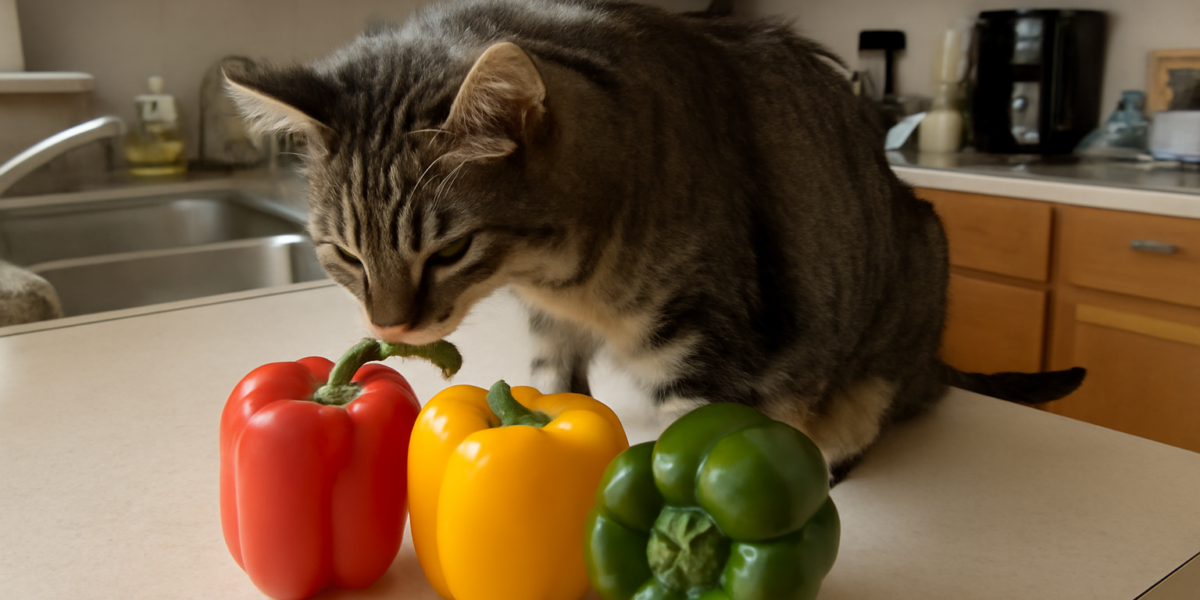
Bell peppers are a kitchen staple prized for their vibrant colors, satisfying crunch, and sweet flavor. If your cat has ever batted a pepper slice across the counter or shown curiosity about the vegetables on your cutting board, you may have wondered whether bell peppers are safe for feline consumption. The good news is that bell peppers are non-toxic to cats and can be offered in small amounts as an occasional treat. In this article, we will cover the nutritional benefits of bell peppers for cats, safe preparation methods, recommended portions, and important distinctions between bell peppers and their spicier relatives.
Bell Peppers vs. Hot Peppers: An Important Distinction
Before we go any further, it is crucial to distinguish between bell peppers and hot peppers, as the safety profiles are very different. Bell peppers — also known as sweet peppers or capsicums — belong to the species Capsicum annuum and are classified as non-pungent, meaning they contain zero or negligible amounts of capsaicin, the compound responsible for the burning sensation in hot peppers.
Hot peppers — including jalapenos, habaneros, cayenne, and chili peppers — contain significant amounts of capsaicin and should never be given to cats. Capsaicin can cause pain and irritation to a cat’s mouth, throat, stomach, and intestines. It can also cause drooling, vomiting, diarrhea, and significant distress. If your cat accidentally ingests hot pepper, contact your veterinarian.
Bell peppers, on the other hand, are gentle and mild. They come in several colors — green, red, yellow, and orange — each representing a different stage of ripeness. Green bell peppers are the least ripe and have a slightly bitter, grassy flavor. Yellow and orange peppers are more mature and sweeter. Red bell peppers are the most fully ripe, the sweetest, and the most nutrient-dense of the group.
All colors of bell pepper are safe for cats. If you are looking for other safe vegetable options to offer your feline, carrots and broccoli are also non-toxic choices worth exploring.
Nutritional Benefits of Bell Peppers for Cats
Bell peppers are nutritionally impressive for a low-calorie vegetable, though it is important to frame these benefits within the context of feline biology. Cats are obligate carnivores and derive their essential nutrients from animal sources. That said, small amounts of bell pepper can offer supplemental nutritional value.
Vitamin C: Bell peppers are exceptionally rich in vitamin C — red bell peppers contain nearly three times the vitamin C of an orange by weight. While cats produce their own vitamin C and do not have a dietary requirement for it, supplemental vitamin C from whole foods can provide antioxidant support, particularly for older cats or those under physical stress.
Vitamin A and Beta-Carotene: Red and orange bell peppers are excellent sources of beta-carotene, which the body can convert to vitamin A. Vitamin A is essential for eye health, immune function, skin integrity, and reproductive health in cats. However, cats are less efficient at converting beta-carotene to vitamin A compared to some other species, so preformed vitamin A from animal sources remains more important in their diet.
Vitamin B6: Bell peppers contain pyridoxine (vitamin B6), which supports protein metabolism, nervous system function, and red blood cell production. This is particularly relevant for cats given their high protein dietary requirements.
Vitamin E: As a fat-soluble antioxidant, vitamin E protects cells from oxidative damage and supports immune health and skin condition. Bell peppers contribute a modest amount of this important vitamin.
Fiber: The dietary fiber in bell peppers can support digestive regularity in cats. A small amount of fiber helps promote healthy bowel movements and can be beneficial for cats prone to constipation or hairball accumulation.
Water Content: Bell peppers are approximately ninety-two percent water, which means they can contribute to hydration. Many cats do not drink enough water, so water-rich foods — even in small amounts — can be a helpful addition.
Low Calorie: With only about thirty calories per medium-sized pepper, bell peppers are a very low-calorie treat option. This makes them suitable for cats that need to manage their weight but still enjoy the sensory experience of a crunchy snack.
How to Prepare Bell Peppers for Your Cat
Preparing bell peppers for your cat is straightforward, but there are a few important guidelines to follow for safety and palatability.
Remove Seeds and Stem: Always remove the stem, core, and all seeds from the bell pepper before offering any to your cat. While bell pepper seeds are not toxic, they can be a choking hazard and are difficult for cats to digest. The stem is tough and fibrous and should be discarded entirely.
Wash Thoroughly: Rinse the bell pepper under running water to remove any pesticide residue, dirt, or wax coatings. If you are particularly concerned about pesticide exposure, choose organic bell peppers or soak them in a vinegar-water solution for a few minutes before rinsing.
Raw or Cooked: Cats can eat bell peppers both raw and cooked. Raw bell pepper offers a crisp texture that some cats find intriguing, while cooked (steamed or lightly boiled) bell pepper is softer and easier to chew and digest. If your cat has dental issues or is a senior, steamed bell pepper is the better option. Never cook bell peppers with oil, butter, salt, garlic, onion, or any seasonings when preparing them for your cat.
Cut Into Small Pieces: Cats have small mouths and are prone to swallowing food in larger chunks. Cut the bell pepper into very small, thin strips or tiny dice — no larger than a pea for most cats. This reduces the risk of choking and makes it easier for your cat to chew.
Remove the Skin If Needed: The outer skin of a bell pepper can be tough and somewhat difficult for cats to chew and digest. If your cat seems to struggle with the skin or spits it out, you can peel the pepper after roasting (the skin comes off easily after charring) or simply offer the softer inner flesh.
Some creative cat owners puree steamed bell pepper and mix a tiny amount into their cat’s wet food as a nutritional booster. This works well for cats that will not eat visible vegetable pieces but can benefit from the added vitamins and hydration. Just keep the amount very small — half a teaspoon of puree mixed into a meal is plenty.
Portion Sizes and Feeding Frequency
Because cats are carnivores and do not have a nutritional need for vegetables, bell pepper portions should be kept very small. Think of bell pepper as an occasional enrichment treat rather than a dietary component.
For an average adult cat, one to two small pieces of bell pepper — roughly the size of a pinky fingernail — is an appropriate serving. This can be offered two to three times per week at most. Some cats will eat bell pepper enthusiastically, while others will sniff it and walk away. Both responses are completely normal.
When trying bell pepper for the first time, offer just one tiny piece and wait a full day to observe your cat’s response. Watch for any signs of digestive upset including vomiting, diarrhea, gas, or loss of appetite. If your cat handles it well, you can continue to offer small pieces occasionally.
Do not be surprised if your cat shows different preferences for different colors. Some cats prefer the sweetness of red bell pepper, while others are drawn to the crunch of green. You can experiment with different colors to see which your cat enjoys most.
Bell peppers pair well with other cat-safe vegetables as part of a small veggie medley for curious cats. Tiny pieces of bell pepper combined with a bit of steamed green beans can make an interesting sensory experience for cats that enjoy variety. Just keep the total vegetable portion very small relative to your cat’s meat-based meals.
Potential Risks and Precautions
Bell peppers are one of the safer vegetable options for cats, but there are still some considerations to keep in mind.
Digestive Upset: Cats’ digestive systems are optimized for processing meat, not plant matter. Some cats may experience mild stomach upset — including gas, loose stools, or vomiting — after eating bell pepper, especially if they eat too much or are trying it for the first time. Starting with a very small amount and increasing gradually is the best approach.
Choking Hazard: Pieces of bell pepper that are too large or still have tough skin can be difficult for cats to chew properly and may pose a choking risk. Always cut bell pepper into small, manageable pieces and supervise your cat while they eat.
Pesticide Residue: Bell peppers frequently appear on the Environmental Working Group’s “Dirty Dozen” list of produce with the highest pesticide residues. Washing thoroughly, peeling, or choosing organic peppers helps minimize exposure. Cats are smaller than humans and may be more sensitive to pesticide residues on a body-weight basis.
Confusion with Hot Peppers: Make absolutely certain that what you are offering your cat is a sweet bell pepper and not a hot pepper variety. Some hot pepper varieties can resemble bell peppers in shape and color, particularly when they are young. If there is any doubt, do not offer the pepper to your cat. Hot pepper ingestion can cause oral pain, gastrointestinal irritation, drooling, and significant distress.
Seasoned or Cooked Peppers from Human Dishes: Bell peppers from stir-fries, fajitas, salads with dressing, or any seasoned preparation should never be offered to cats. These dishes invariably contain ingredients like garlic, onion, oil, salt, and spices that are harmful to cats. Only plain, unseasoned bell pepper is safe.
Nightshade Sensitivity: Bell peppers belong to the nightshade family (Solanaceae), which also includes tomatoes, potatoes, and eggplant. While bell peppers themselves are safe, the leaves and stems of nightshade plants contain solanine, which is toxic. Ensure your cat does not have access to bell pepper plants if you grow them at home. The fruit itself is safe; the plant is not.
Excessive Feeding: While bell peppers are non-toxic, feeding them in large quantities can lead to digestive issues and may displace more nutritionally important animal-based foods in your cat’s diet. Keep bell pepper as a small, occasional treat and prioritize meat-based nutrition for your cat’s core dietary needs.
Frequently Asked Questions
Which color bell pepper is best for cats?
All colors of bell pepper are safe for cats, but red bell peppers are the most nutritionally dense. Red peppers are fully ripe and contain the highest levels of vitamin C, vitamin A, and beta-carotene. They are also the sweetest, which some cats find more appealing. Green bell peppers are slightly more bitter and less nutrient-rich but are still perfectly safe. Yellow and orange peppers fall in between. You can offer any color your cat seems to enjoy, or try a few to discover their preference.
Can cats eat bell pepper seeds?
While bell pepper seeds are not toxic to cats, they are best removed before serving. The seeds are small, hard, and offer no nutritional benefit. They can be difficult to digest and may pose a minor choking hazard, particularly for smaller cats or kittens. Taking a moment to core and deseed the pepper before cutting it up for your cat is a simple safety precaution.
What should I do if my cat ate a hot pepper instead of a bell pepper?
If your cat ate a hot pepper, watch for signs of oral and gastrointestinal distress including drooling, pawing at the mouth, vomiting, diarrhea, or loss of appetite. Offer your cat fresh water and a small amount of plain food to help dilute the capsaicin. Do not offer milk, as many cats are lactose intolerant and milk may add to their digestive distress. If symptoms are severe, persistent, or if your cat seems to be in significant pain, contact your veterinarian or an animal poison control hotline for guidance. Most cats will recover from a small exposure, but veterinary advice can help manage discomfort.
Can kittens eat bell peppers?
Kittens over twelve weeks of age can try a tiny piece of plain bell pepper, but it is not a necessary or particularly beneficial addition to their diet. Kittens have specific and demanding nutritional requirements for growth that are best met by high-quality kitten food. If you do offer a tiny piece of bell pepper to a kitten, make sure it is very small, soft (steamed is preferable to raw), and free of seeds and skin. Monitor for any digestive upset and do not offer bell pepper frequently. For kittens, prioritizing their complete and balanced kitten diet is far more important than offering vegetable treats.
Bell peppers are a colorful, crunchy, and safe occasional treat for curious cats. They offer hydration, vitamins, and a low-calorie snacking experience that some felines genuinely enjoy. By choosing plain, seedless, appropriately sized pieces and keeping portions modest, you can let your cat explore this vibrant vegetable with confidence. And if your cat decides bell peppers are not their thing — well, that just means more for your salad.


