
Last updated: April 10, 2026
In this article
Can Cats Eat Blue Cheese? The Short Answer
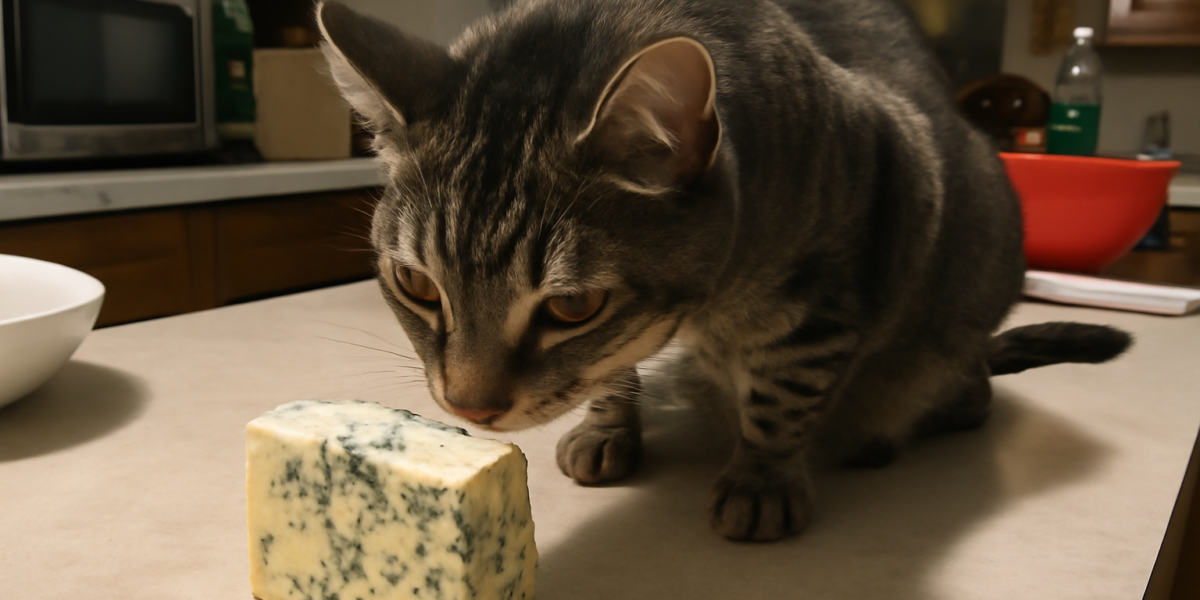
No, cats should not eat blue cheese. While a tiny accidental nibble is unlikely to cause a life-threatening emergency, blue cheese poses several real health risks that make it an unsafe snack for your feline friend. The mold cultures used to create blue cheese produce a substance called roquefortine C, which is toxic to cats even in small amounts.
Beyond the mold issue, blue cheese is a dairy product, and most adult cats are lactose intolerant. The combination of a toxic mold byproduct, high sodium content, and lactose makes blue cheese one of the worst cheeses you could offer your cat. Keep reading to understand exactly why this pungent treat belongs on your charcuterie board and nowhere near your cat’s food bowl.
Why Blue Cheese Is Dangerous for Cats
Blue cheese gets its distinctive veining and sharp flavor from Penicillium roqueforti mold cultures. During the aging process, these molds produce roquefortine C, a mycotoxin that affects the nervous system. In cats, even small exposures can lead to neurological symptoms including tremors, disorientation, and seizures.
The concentration of roquefortine C varies between blue cheese varieties. Roquefort, Gorgonzola, Stilton, and Danish blue all contain this compound. There is no “safe” blue cheese variety for cats because all of them rely on the same family of mold cultures to develop their characteristic taste and appearance.
Cats are also significantly smaller than humans, so a quantity that seems negligible to us can represent a substantial dose relative to your cat’s body weight. A single cube of blue cheese that you might casually toss to a begging cat could contain enough roquefortine C to trigger gastrointestinal upset or worse.
Roquefortine C Toxicity in Cats
Roquefortine C is a neurotoxin produced by several species of Penicillium mold. When ingested by cats, it can interfere with normal neurotransmitter function and cause a range of symptoms from mild digestive upset to serious neurological distress.
Symptoms of roquefortine C exposure in cats may include:
- Vomiting and diarrhea within a few hours of ingestion
- Muscle tremors or twitching
- Restlessness or agitation
- Loss of coordination and stumbling
- Seizures in severe cases
- Elevated body temperature
These symptoms can appear within two to six hours after your cat eats blue cheese. If you notice any neurological signs such as tremors, unsteadiness, or seizures, contact your veterinarian or an emergency animal poison hotline immediately. Time matters when dealing with mycotoxin exposure.
Your vet may induce vomiting if the ingestion was recent, administer activated charcoal to reduce further absorption, or provide supportive care including IV fluids and anti-seizure medication if needed.
Lactose Intolerance and Dairy Concerns
Even without the mold toxin issue, blue cheese would still be a poor choice for cats. Most adult cats lose the ability to properly digest lactose after weaning. Their bodies stop producing adequate amounts of lactase, the enzyme needed to break down the milk sugar found in dairy products.
When a lactose-intolerant cat eats blue cheese, the undigested lactose ferments in the intestines, causing bloating, gas, abdominal cramps, and diarrhea. While aged cheeses generally contain less lactose than fresh milk, blue cheese still retains enough to cause discomfort in sensitive cats.
The high fat content of blue cheese is another concern. A single ounce of blue cheese contains around eight grams of fat, which is excessive for a cat’s small digestive system. Repeated exposure to high-fat foods can contribute to obesity and, in some cases, pancreatitis, a painful inflammation of the pancreas that requires veterinary treatment.
Sodium Content and Your Cat’s Kidneys
Blue cheese is notoriously high in sodium. A single ounce contains roughly 325 to 400 milligrams of sodium, which is far more than a cat should consume in an entire day. Cats need only about 21 milligrams of sodium per day to meet their basic nutritional requirements.
Excess sodium intake forces a cat’s kidneys to work harder to filter and excrete the extra salt. For cats with existing kidney disease, which is extremely common in older felines, high-sodium foods can accelerate kidney damage and worsen symptoms like increased thirst and urination.
Even in healthy cats, a sudden spike in sodium intake from eating blue cheese can cause excessive thirst, vomiting, and in rare cases, sodium ion poisoning. Signs of sodium toxicity include lethargy, loss of appetite, tremors, and in extreme situations, coma. If your cat manages to eat a significant amount of blue cheese, monitor closely for these signs and call your vet.
What to Do If Your Cat Eats Blue Cheese
Accidents happen. Cats are curious creatures, and that block of blue cheese on the counter might prove irresistible. If your cat eats a small lick or crumb of blue cheese, monitor them for the next 12 to 24 hours for any signs of digestive upset or unusual behavior.
For larger amounts, or if your cat shows any symptoms like vomiting, diarrhea, tremors, or lethargy, contact your veterinarian right away. Be prepared to tell them approximately how much blue cheese your cat consumed and when the ingestion occurred.
Steps to take immediately:
- Remove any remaining blue cheese from your cat’s reach
- Note the time of ingestion and approximate amount eaten
- Do not try to induce vomiting at home unless specifically directed by your vet
- Offer fresh water to help with hydration
- Watch for symptoms over the next several hours
Prevention is always the best approach. Store blue cheese and other potentially harmful foods in sealed containers in the refrigerator, and be mindful when preparing food that contains blue cheese crumbles or dressing.
Safe Cheese Alternatives for Cats
If your cat is drawn to cheese, there are safer options than blue cheese, though all dairy should be offered sparingly. Plain, low-sodium cheeses like small bits of cheddar or Swiss contain less lactose than softer varieties and lack the dangerous mold compounds found in blue cheese.
Even with safer cheese options, portion size matters. A pea-sized piece once or twice a week is more than enough for an occasional treat. Many cat owners find that cheese works well as a vehicle for hiding medication, but it should never become a regular part of your cat’s diet.
For protein-rich treats that are naturally better suited to a cat’s dietary needs, consider small pieces of plain cooked chicken, turkey, or fish. You can also explore whether your cat enjoys cooked shrimp as an occasional treat. These options provide the animal protein cats crave without the risks associated with dairy products.
Frequently Asked Questions
Can a small lick of blue cheese hurt my cat?
A tiny lick is unlikely to cause serious harm, but it is still not recommended. Even small amounts of roquefortine C can cause mild gastrointestinal symptoms in sensitive cats. Watch your cat for any changes in behavior or digestive issues over the next 12 hours, and contact your vet if symptoms appear.
Is blue cheese dressing also unsafe for cats?
Yes. Blue cheese dressing contains the same mold-derived compounds as solid blue cheese, along with additional ingredients like garlic and onion powder that are toxic to cats. The liquid form may actually be more dangerous because cats can consume larger quantities more quickly.
Are other moldy cheeses dangerous for cats too?
Any cheese that uses Penicillium mold cultures, including Roquefort, Gorgonzola, Stilton, and Cambozola, carries the same roquefortine C risk. Stick to plain, non-moldy cheese varieties if you want to offer your cat a rare dairy treat, and always keep portions extremely small.
My cat ate blue cheese and is vomiting. Should I go to the emergency vet?
If the vomiting is persistent, or if your cat also shows tremors, disorientation, or seizures, go to the emergency vet immediately. A single episode of vomiting followed by normal behavior may resolve on its own, but call your vet for guidance to be safe. They can advise you on whether an in-person visit is necessary based on the amount consumed and your cat’s symptoms.
What cheeses are safest for cats?
If you want to share a tiny cheese treat, opt for plain cheddar, Swiss, or mozzarella in very small amounts. These contain less lactose and no mold toxins. However, remember that cats are obligate carnivores and dairy is not a natural part of their diet. For healthier treat ideas, explore whether sardines are a good option for your cat or check out our guide on feeding rotisserie chicken to cats.


