
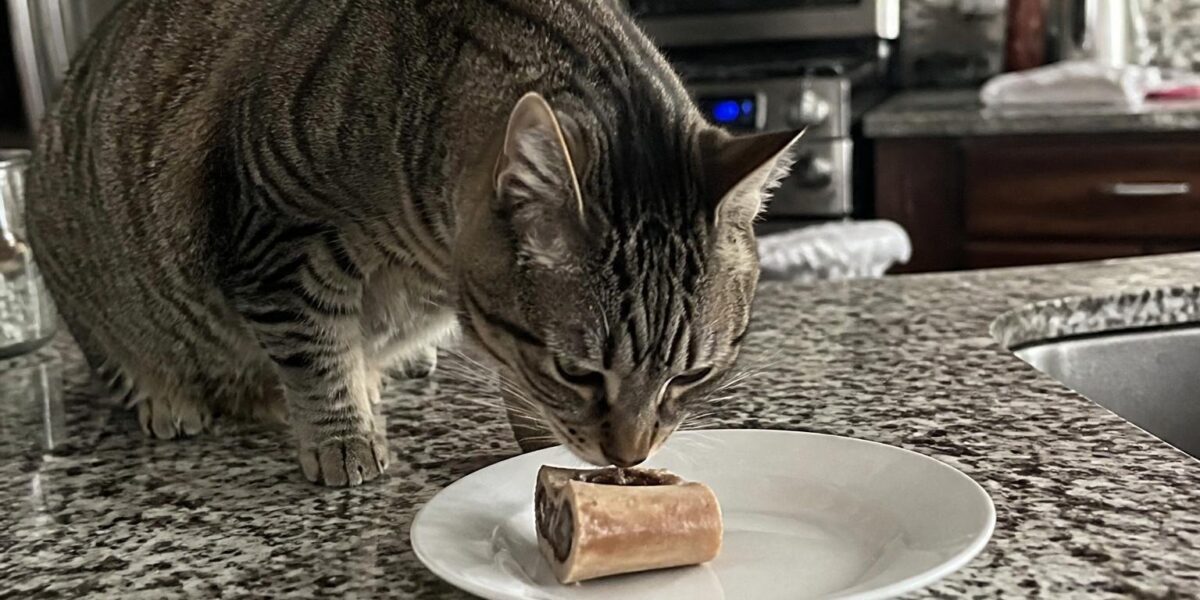
Can Cats Eat Bone Marrow? The Short Answer
Yes, cats can eat bone marrow in small amounts, and many cats find it irresistible. Bone marrow is the soft, fatty tissue inside bones, and it’s packed with nutrients and rich flavor. The catch is that it’s very rich and very fatty, so it should be an occasional treat in modest portions — not a regular indulgence. And there’s a separate, important safety point: while the marrow itself is fine, the bones it comes in can be dangerous, especially cooked bone fragments.
In this article
So can cats eat bone marrow? A little scooped-out marrow now and then is a lovely treat for most healthy cats. Just keep the portions small to avoid stomach upset, and make sure your cat never has access to cooked bone shards, which can splinter and cause choking or internal injury. Here’s how to enjoy it safely.
What’s in Bone Marrow?
Bone marrow is nutrient-dense and appealing to a carnivore’s palate. It contains:
- Healthy fats that provide concentrated energy.
- Some protein and collagen that support joints and connective tissue.
- Minerals such as iron, zinc, and phosphorus.
- Fat-soluble vitamins in small amounts.
The richness that makes marrow tasty is also why moderation matters. That high fat content delivers a lot of calories in a small serving, and too much can lead to digestive upset or, in sensitive cats, contribute to pancreatitis. Treated as an occasional luxury, though, marrow can be a satisfying and nourishing treat.
To put the fat in perspective, marrow is one of the most calorie-dense foods you can offer a cat. Even a teaspoon carries a meaningful amount of fat relative to a small animal’s daily needs, which is why portions have to stay so tiny. This isn’t a reason to avoid marrow entirely — it’s a reason to treat it like the rich indulgence it is, the feline equivalent of a small piece of decadent dessert rather than an everyday snack. Enjoyed occasionally and in small amounts, it gives your cat a flavorful treat without tipping the scales on calories or fat.
The Cooked Bone Warning
This part matters as much as the marrow itself. The marrow is safe, but the bones are not a chew toy. Cooked bones — including the marrow bones sold at the butcher once they’ve been roasted — become brittle and can splinter into sharp fragments. If a cat gnaws on them or swallows a piece, those shards can:
- Cause choking
- Crack or break teeth
- Cut the mouth, throat, or digestive tract
- Cause an intestinal blockage or perforation
To keep marrow safe, scoop the marrow out yourself and serve it on its own, away from the bone. Don’t leave your cat alone with a marrow bone to lick out, and never let them chew or swallow bone pieces. If your cat does swallow a fragment of cooked bone, watch closely and call your veterinarian, especially if you notice gagging, drooling, vomiting, or a painful belly.
How Much Bone Marrow Can a Cat Have?
Because it’s so rich, a little marrow goes a long way. Keep servings tiny:
- Offer about a half teaspoon to a teaspoon of marrow as an occasional treat.
- Feed it no more than once or twice a week.
- Always count it within the ten-percent-of-daily-calories treat guideline.
Start with a small taste the first time and watch how your cat’s stomach responds. If you see loose stools or vomiting, scale back or skip it. Overweight cats and those prone to pancreatitis should have marrow only with a vet’s blessing, since the fat load can be a real problem for them.
How to Serve Bone Marrow Safely
Keep preparation plain and simple:
- Choose a raw or gently cooked marrow bone and scoop out the soft marrow.
- Serve only the marrow — never the bone — in a small amount.
- Skip all seasoning, salt, butter, onion, and garlic.
- Discard the bone securely so your cat can’t get to it later.
If you cook the marrow, do so without oil or seasoning and let it cool. Marrow can also be mixed in a tiny amount into your cat’s regular food as a flavor boost for a fussy eater.
If you’re drawn to marrow because your cat loves rich, meaty foods, there are leaner, more everyday-friendly options too. See our guides on whether cats can eat beef heart and whether cats can eat steak for taurine-rich muscle meats, and whether cats can eat liver for another small, occasional organ treat.
Raw vs. Cooked Marrow
Owners often ask whether marrow should be served raw or cooked, and there are reasonable points on both sides. The most important rule applies either way: it’s the marrow you offer, never the bone for chewing.
Raw marrow, as part of a thoughtfully designed raw-feeding approach, keeps nutrients intact and appeals to a cat’s natural instincts. The trade-off is the usual raw-meat consideration — careful sourcing and hygiene to limit bacterial risk. Cooked marrow reduces that bacterial concern and is the simpler choice for most households, but cooking makes the surrounding bone brittle and more likely to splinter, so you must be especially careful to serve only the scooped-out marrow and discard the bone.
Either way, keep the portion tiny because of the fat, skip all seasoning, and never let your cat gnaw the bone itself. If you’re unsure which approach suits your cat, your veterinarian can help you weigh the options against your cat’s health and your household’s needs.
Why Cats Love Marrow So Much
If your cat goes a little wild for marrow, there’s a good reason. As obligate carnivores, cats are drawn to rich, fatty animal foods, and marrow is about as concentrated and savory as it gets. The aroma and mouthfeel hit all the right notes for a meat-eater.
That powerful appeal is exactly why moderation takes a little discipline on your part. Because cats find marrow so irresistible, it’s easy to give in and offer “just a little more,” and those small extras add up fast in fat and calories. A few ways to keep the enthusiasm in check:
- Pre-portion a tiny amount before you start, so you’re not scooping on the fly.
- Use marrow as a special reward or a way to tempt a fussy eater, not an everyday snack.
- Pair the treat with a little play or affection, which cats value just as much.
- Keep the rest of the marrow out of sight and reach once the treat is over.
Enjoyed this way, marrow stays a delightful highlight rather than a fatty habit, and your cat gets the rich treat they love without the downsides of overindulgence.
When to Skip Bone Marrow
Marrow isn’t for every cat. Skip it, or check with your vet first, if your cat is overweight, has a history of pancreatitis, or is on a low-fat prescription diet. Kittens are better off with foods formulated for growth rather than rich fatty treats. And any cat with a sensitive stomach may do better avoiding the heavy fat content altogether.
When in doubt about whether marrow suits your individual cat, your veterinarian can advise based on weight, age, and health history. With small portions and the bone safely removed, though, bone marrow can be a delightful occasional treat.
Frequently Asked Questions
Is bone marrow safe for cats?
The marrow itself is safe in small amounts for most healthy cats. It’s very rich and fatty, so keep portions tiny and occasional. The bones, especially cooked ones, are not safe to chew or swallow.
Can cats chew on marrow bones?
It’s not recommended. Cooked bones can splinter and cause choking, broken teeth, or internal injury. Scoop the marrow out and serve it alone, then discard the bone where your cat can’t reach it.
How often can cats have bone marrow?
No more than once or twice a week, in a half-teaspoon to teaspoon portion. Its high fat content means it’s best as an occasional treat, not a regular food.
My cat swallowed a piece of bone — what should I do?
Watch for gagging, drooling, vomiting, loss of appetite, or a painful belly, and call your veterinarian. Cooked bone fragments can cause choking or internal injury, so don’t wait if your cat seems distressed.
Is bone marrow good for a cat’s joints?
Marrow contains some collagen and nutrients that support connective tissue, but the amounts in a tiny treat are modest. It’s not a substitute for a joint supplement; if your cat has joint concerns, ask your vet about a product designed for that purpose.
Can kittens have bone marrow?
It’s best to skip it. Kittens need a complete growth diet, and marrow’s high fat content isn’t ideal for their developing systems. Stick to kitten-appropriate foods and ask your vet about safe treats.


