
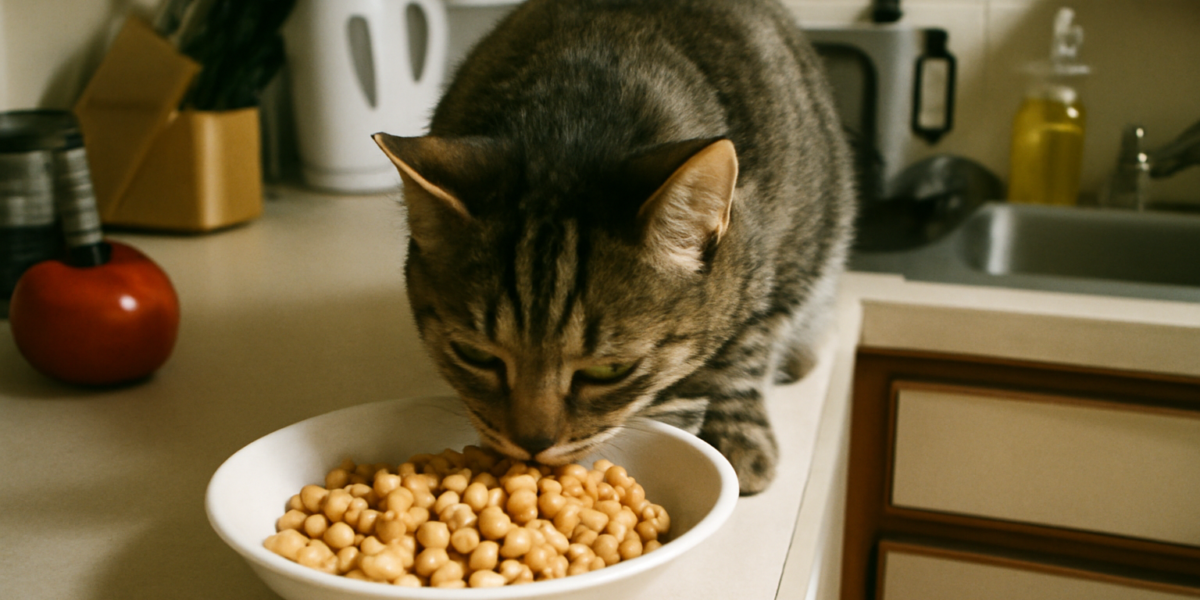
Cats Can Eat Chickpeas — But Only Plain, Cooked, and in Tiny Amounts
Cats can eat chickpeas safely in very small, occasional portions, provided the chickpeas are cooked, plain, and served without any seasoning, salt, or additives. Chickpeas (also called garbanzo beans) are non-toxic to cats and offer some protein and fiber. However, the conditional verdict here matters: while not harmful, chickpeas are far from an ideal food for cats and come with real digestibility limitations that every cat owner should understand.
In this article
- Cats Can Eat Chickpeas — But Only Plain, Cooked, and in Tiny Amounts
- Nutritional Profile: What Chickpeas Offer (and What Cats Actually Need)
- Digestibility Concerns: Why Cats Struggle with Legumes
- How to Serve Chickpeas to Your Cat Safely
- Safe Portion Size and How Often
- Signs of Trouble After Eating Chickpeas
- Frequently Asked Questions
Cats are obligate carnivores, and their digestive systems are not well-equipped to break down legumes efficiently. Chickpeas contain complex carbohydrates, oligosaccharides, and plant-based proteins that can be difficult for cats to digest. In large amounts or with frequent feeding, chickpeas can cause gas, bloating, diarrhea, and stomach discomfort. A few chickpeas as a rare treat are fine — making them a regular part of your cat’s diet is not.
If you have been wondering whether to share a chickpea or two with your curious cat, this guide covers everything you need to know about digestibility, safe preparation, appropriate portions, and when to skip chickpeas entirely.
Nutritional Profile: What Chickpeas Offer (and What Cats Actually Need)
Chickpeas have an impressive nutritional profile for humans — they are a cornerstone of plant-based diets worldwide. But the nutritional value of chickpeas for cats is a different story, because feline nutritional needs differ fundamentally from human needs.
Protein: Chickpeas contain about 15 grams of protein per cooked cup, which sounds substantial. However, this is plant-based protein, which cats cannot utilize as efficiently as animal-based protein. Cats require specific amino acids — particularly taurine and arginine — that are found abundantly in animal tissue but are absent or present in negligible amounts in chickpeas. Plant protein is not a substitute for the animal protein cats need.
Fiber: With about 12.5 grams of fiber per cooked cup, chickpeas are high-fiber food. A tiny amount of fiber can support digestive regularity in cats, but too much causes gas, bloating, and diarrhea. The fiber in chickpeas includes both soluble and insoluble types, and the complex carbohydrate structure makes it particularly challenging for cats to process.
Carbohydrates: Chickpeas are carbohydrate-heavy, with roughly 45 grams per cooked cup. Cats have a limited ability to metabolize carbohydrates. Their livers have reduced activity of the enzyme glucokinase, which means they process carbohydrates less efficiently than omnivores. High-carbohydrate foods are not appropriate as a significant part of a cat’s diet.
Vitamins and minerals: Chickpeas contain folate, iron, phosphorus, manganese, and B vitamins. While these are not harmful to cats, a complete and balanced cat food already provides all the vitamins and minerals your cat needs. Chickpeas are not filling a nutritional gap.
The bottom line: chickpeas are nutritious for humans but offer limited value for cats. The plant protein is not bioavailable enough to benefit your cat, and the carbohydrate and fiber content can cause digestive issues. If you offer chickpeas, do so as a treat — never as a nutritional supplement.
Digestibility Concerns: Why Cats Struggle with Legumes
Understanding why can cats eat chickpeas is a conditional “yes” requires a closer look at feline digestion and what happens when legumes enter a cat’s short, meat-optimized digestive tract.
Short digestive tract: Cats have a significantly shorter digestive tract relative to body size compared to omnivores. This shorter tract is optimized for quickly processing animal protein and fat. Plant matter, especially complex carbohydrates like those in chickpeas, passes through too quickly to be fully broken down and absorbed.
Limited carbohydrate enzymes: Cats produce lower levels of amylase (the enzyme that breaks down starches) compared to omnivores. This means the starch in chickpeas is not efficiently digested, leading to more undigested material reaching the large intestine — where bacteria ferment it, producing gas.
Oligosaccharide content: Like all legumes, chickpeas contain raffinose and stachyose — complex sugars that no mammal can digest enzymatically. In the large intestine, gut bacteria ferment these sugars, producing hydrogen and carbon dioxide gas. This is the primary reason beans and legumes cause flatulence in both humans and animals.
Anti-nutritional factors: Raw chickpeas contain lectins, phytic acid, and trypsin inhibitors — compounds that can interfere with nutrient absorption and protein digestion. Cooking significantly reduces these anti-nutritional factors, which is why cooked chickpeas are much safer than raw ones. Never feed raw chickpeas to your cat.
These digestibility limitations do not make chickpeas toxic — they make them a food that should be offered sparingly and with awareness of the potential for digestive discomfort.
How to Serve Chickpeas to Your Cat Safely
If you want to offer your cat a taste of chickpeas, proper preparation is non-negotiable. Here is the step-by-step approach:
Step 1: Use cooked chickpeas only. Whether you cook dried chickpeas from scratch or use canned chickpeas, they must be fully cooked (soft throughout). Raw or undercooked chickpeas are hard, difficult to digest, and contain higher levels of anti-nutritional compounds.
Step 2: If using canned chickpeas, rinse thoroughly. Canned chickpeas often sit in salted water (brine) and may contain preservatives. Drain the can and rinse the chickpeas under running water for at least 30 seconds to remove excess sodium and additives.
Step 3: Keep it plain. Do not season, oil, or flavor the chickpeas in any way. No salt, garlic, onion, cumin, lemon, tahini, or other additions. Hummus is off-limits — it typically contains garlic and lemon juice, both of which are problematic for cats (garlic is toxic).
Step 4: Mash or chop. Whole chickpeas can be a choking hazard for cats, especially smaller cats. Mash one or two chickpeas with a fork, or chop them into small pieces before offering.
Step 5: Offer a tiny amount. One to two mashed chickpeas is plenty for a single serving. This gives your cat a taste without overloading their digestive system.
Foods to absolutely avoid sharing with your cat:
- Hummus (contains garlic, which is toxic to cats)
- Seasoned roasted chickpeas (salt, spices, and oil are unhealthy for cats)
- Chickpea flour-based products (often contain other ingredients)
- Raw chickpeas (hard to digest, contain anti-nutritional factors)
Safe Portion Size and How Often
Chickpeas should be treated as an occasional treat, not a regular food item. Here are specific portion guidelines:
Portion: One to two cooked, mashed chickpeas per serving. This amounts to a small amount of additional fiber and protein without overwhelming your cat’s digestive system.
Frequency: No more than once per week, and only if your cat tolerates them well. Many cats will not show interest in chickpeas at all, which is perfectly normal and even preferable from a nutritional standpoint.
Cats who should NOT eat chickpeas:
- Cats with sensitive stomachs or inflammatory bowel disease (IBD)
- Cats with diabetes (the carbohydrate content can affect blood sugar)
- Cats with kidney disease (the phosphorus content may be a concern)
- Kittens under 12 weeks (their digestive systems are especially immature)
- Cats already on a therapeutic or prescription diet
If your cat falls into any of these categories, consult your veterinarian before offering chickpeas or any other non-standard food items. Your vet can advise whether the treat is appropriate given your cat’s specific health needs.
Signs of Trouble After Eating Chickpeas
After offering chickpeas for the first time, monitor your cat for the following:
Normal and expected:
- Your cat ignores the chickpea entirely (very common)
- Your cat eats it with no reaction
- Mild, brief flatulence
Mild reactions (reduce or eliminate chickpeas in the future):
- A single episode of vomiting
- One loose stool
- Noticeable gas and mild bloating
- Temporary decrease in appetite
Reactions requiring a vet call:
- Repeated vomiting
- Diarrhea lasting more than 24 hours
- Severe bloating or abdominal distension
- Lethargy or unusual behavior
- Any signs of intestinal obstruction (straining to defecate, complete appetite loss, crying)
Intestinal obstruction is extremely unlikely from a mashed chickpea but could theoretically occur if a cat swallowed several whole, hard chickpeas that were not fully cooked. This is another reason why proper preparation — fully cooked and mashed — is so important.
For more guidance on what foods are safe for your cat, read our articles on cilantro safety for cats and blackberry benefits for cats. Our cat adoption hub is a great resource for anyone welcoming a new cat into their family.
Frequently Asked Questions
Can cats eat hummus?
No. Hummus should not be given to cats. While the chickpea base is not toxic, hummus typically contains garlic (which is toxic to cats), lemon juice (which can cause stomach upset), tahini (high in fat), and salt (which is unhealthy in excess for cats). If your cat accidentally licks a small amount of hummus, monitor for symptoms but do not be alarmed — the garlic concentration in a tiny lick is unlikely to cause toxicity. However, intentional feeding of hummus is not recommended.
Is chickpea flour in cat food okay?
Some commercial cat foods, particularly grain-free formulas, use chickpea flour as a carbohydrate source and binder. In these products, the chickpea flour is processed and included at levels that have been formulated for feline digestibility. This is different from feeding whole chickpeas as treats. If your cat eats a commercial food containing chickpea flour and tolerates it well, there is no need for concern.
Are other beans and legumes safe for cats?
Most cooked, plain beans and legumes (lentils, black beans, kidney beans, green beans) are non-toxic to cats in small amounts. However, the same digestibility concerns apply — legumes are high in carbohydrates and fiber that cats cannot efficiently process. Green beans are the most commonly recommended legume for cats because they are lower in complex carbohydrates and easier to digest. All beans must be cooked and plain.
Can chickpeas cause an allergic reaction in cats?
Food allergies in cats are possible with any protein source, including plant proteins like those in chickpeas. Signs of a food allergy include itchy skin, vomiting, diarrhea, and ear inflammation. If your cat shows any unusual reaction after eating chickpeas for the first time, discontinue and consult your veterinarian.
Why does my cat want to eat chickpeas?
Some cats are attracted to the texture or temperature of cooked chickpeas rather than the flavor. Cats cannot taste sweetness and have limited carbohydrate taste perception, so the appeal is likely tactile or based on novelty. If your cat shows interest, a small taste satisfies their curiosity without any harm. Visit our cat care blog for more insights into feline behavior and nutrition.


