
Last updated: April 1, 2026
In this article
- Are Graham Crackers Safe for Cats?
- Nutritional Breakdown of Graham Crackers
- Potential Benefits of Graham Crackers for Cats
- Risks and Side Effects of Graham Crackers
- How to Feed Graham Crackers to Cats Safely
- Signs Your Cat Is Having a Negative Reaction
- Better Treat Alternatives for Your Cat
- Frequently Asked Questions
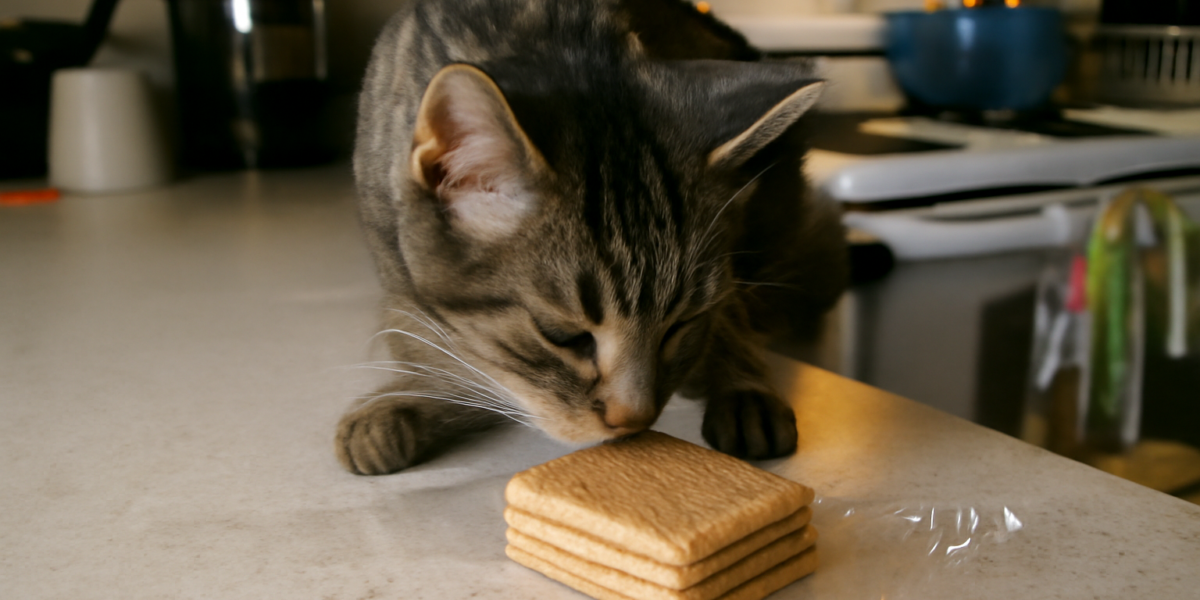
Graham crackers are a pantry staple in many households, and their sweet, crumbly texture sometimes catches a curious cat’s attention. Whether your cat snatched a piece off the counter or you are wondering if it is okay to share a small bite, it is natural to ask whether graham crackers are safe for felines. As obligate carnivores, cats have dietary needs that are fundamentally different from humans. Their bodies are built to process animal protein and fat, not the sugars, refined grains, and honey that make up the bulk of a graham cracker. Understanding what is in this common snack will help you make an informed decision about whether it belongs anywhere near your cat’s food bowl.
Quick Answer: Graham crackers are not toxic to cats, but they provide no nutritional benefit. They are high in sugar, contain honey and refined wheat flour, and can contribute to weight gain and digestive issues. A tiny plain piece on rare occasion is unlikely to cause harm, but graham crackers should not be a regular treat.
Are Graham Crackers Safe for Cats?
Graham crackers are generally considered non-toxic for cats, meaning that a small accidental ingestion is unlikely to result in a veterinary emergency. However, safety in the toxicological sense is not the same as being appropriate or healthy. Graham crackers were designed as a human snack and contain ingredients that do not align with feline dietary requirements.
The primary ingredients in a standard graham cracker include enriched wheat flour, sugar, honey, vegetable oil, and various leavening agents. None of these are acutely poisonous, but several are problematic for cats in anything more than trace amounts. The high carbohydrate content is particularly concerning because cats lack the metabolic pathways to efficiently process large amounts of starch and sugar.
Flavored varieties pose additional concerns. Chocolate-coated graham crackers are dangerous because chocolate contains theobromine, which is toxic to cats. Cinnamon-flavored versions contain the compound coumarin, which can irritate a cat’s mouth and digestive tract in larger quantities. Always check the ingredient list before assuming any processed food is safe for your pet.
Nutritional Breakdown of Graham Crackers
A single full-sized graham cracker sheet (approximately 28 grams) contains roughly 130 calories, 22 grams of carbohydrates, 5 grams of fat, 2 grams of protein, and 8 grams of sugar. For context, a typical 10-pound house cat needs between 200 and 250 calories per day to maintain a healthy weight.
This means a single graham cracker represents more than half of a cat’s daily caloric allowance while providing almost none of the nutrients they need. The 2 grams of protein come from wheat, which is an incomplete protein source for cats. Cats require specific amino acids like taurine and arginine that are found abundantly in meat but are absent from grain-based foods.
The sugar and honey content is another red flag. Interestingly, cats cannot taste sweetness — they lack the taste receptor gene for it. So while you enjoy the sweet flavor of a graham cracker, your cat is getting all of the sugar’s negative health effects without any of the sensory enjoyment.
Sodium content is relatively moderate in graham crackers compared to other snack foods like pretzels or regular crackers, but it still exceeds what is appropriate for a cat on a per-serving basis. Excess sodium can strain the kidneys and, in extreme cases, lead to sodium ion poisoning.
Potential Benefits of Graham Crackers for Cats
There are essentially no meaningful nutritional benefits to feeding graham crackers to cats. Unlike some human foods that can serve as occasional supplements — such as plain cooked chicken or certain vegetables — graham crackers do not contain any nutrient that a cat’s regular diet does not already provide in a more appropriate form.
Some cat owners report using a tiny crumble of graham cracker to disguise medication. While this can work in a pinch, purpose-made pill pockets or a small piece of deli meat are more effective and nutritionally appropriate methods. The crumbly texture of graham crackers actually makes them a poor vehicle for hiding pills compared to softer options.
The only real benefit is that graham crackers are less harmful than many other processed foods a cat might encounter. They are better than chocolate, better than anything containing xylitol, and less sodium-heavy than chips or pretzels. But “less bad than the worst options” is a very low bar.
Risks and Side Effects of Graham Crackers
Feeding graham crackers to your cat, especially on a regular basis, carries several risks:
Digestive disturbance: The combination of wheat flour, sugar, and honey can cause diarrhea, gas, bloating, or vomiting in cats. Many cats have some degree of sensitivity to grains, and the sugar content can disrupt the balance of beneficial bacteria in the gut.
Weight gain and obesity: Graham crackers are calorie-dense relative to a cat’s needs. Regularly supplementing your cat’s diet with high-carbohydrate human snacks is one of the most common contributors to feline obesity, which in turn increases the risk of diabetes, arthritis, heart disease, and fatty liver disease (hepatic lipidosis).
Dental problems: Sugar promotes bacterial growth in the mouth. While cats are less prone to cavities than humans, they are susceptible to periodontal disease. Sugar residue on teeth can accelerate plaque formation and gum inflammation.
Wheat allergy: Some cats are allergic to wheat or gluten. If your cat has a known grain allergy, graham crackers could trigger itching, skin rashes, vomiting, or chronic ear infections.
Dangerous additives in flavored varieties: Chocolate graham crackers contain theobromine. Some brands use artificial sweeteners, including xylitol, which is extremely toxic to cats. Always read ingredient labels carefully.
How to Feed Graham Crackers to Cats Safely
If you choose to let your cat have a small taste of graham cracker, take these precautions:
- Kittens: Do not offer graham crackers to kittens. Their small bodies and developing digestive systems make them more vulnerable to blood sugar fluctuations and GI upset from inappropriate foods.
- Adult cats (6–10 lbs): A piece no larger than a fingernail, plain flavor only, no more than once a month.
- Large cats (over 10 lbs): A piece no larger than a small postage stamp, plain flavor only, no more than once a month.
Only offer plain, original-flavor graham crackers. Never give your cat chocolate, cinnamon-sugar, or honey-drizzled varieties. Crumble the piece to reduce choking risk and ensure your cat has access to plenty of fresh water afterward. Monitor for any digestive changes over the next 12 to 24 hours.
Remember that all treats — including human food — should constitute no more than 10 percent of your cat’s daily caloric intake. For most cats, that is about 20 to 30 calories worth of treats per day.
Signs Your Cat Is Having a Negative Reaction
After eating graham crackers, watch for these warning signs:
Mild concerns (monitor at home): slight decrease in appetite, a single episode of soft stool, or mild lethargy. These typically resolve within 24 hours without intervention.
Moderate concerns (contact your veterinarian): repeated vomiting, persistent diarrhea lasting more than 24 hours, refusal to eat, excessive thirst, or noticeable abdominal discomfort indicated by a hunched posture or reluctance to be handled.
Severe concerns (seek emergency veterinary care): symptoms of chocolate toxicity if the cracker was chocolate-flavored (tremors, rapid breathing, seizures), signs of xylitol poisoning (sudden vomiting, weakness, collapse), or any allergic reaction such as facial swelling, difficulty breathing, or hives.
Always inform your veterinarian about exactly what your cat consumed, including the brand and flavor of graham cracker, so they can assess the situation accurately.
Better Treat Alternatives for Your Cat
Instead of reaching for the graham cracker box, consider these feline-friendly alternatives:
Cooked plain meat: Small pieces of unseasoned chicken, turkey, or lean beef provide protein and essential amino acids that cats actually need. This is the gold standard for a cat treat.
Commercial cat treats: Products formulated specifically for cats are balanced to be both appealing and safe. Look for treats with meat as the first ingredient and minimal fillers.
Freeze-dried protein: Single-ingredient freeze-dried chicken, salmon, or shrimp treats are available at most pet stores and cats tend to love them.
Small pieces of cooked egg: Eggs are a complete protein source and most cats enjoy them. Scramble a small amount without oil, butter, or seasoning.
For more information about what processed foods are and are not appropriate for cats, you may want to read our articles on can cats eat waffles and can cats eat granola. And if you are thinking about bringing a new cat into your family, consider adopting through Walk Me Home.
Frequently Asked Questions
Can cats eat s’mores?
No. S’mores contain chocolate, which is toxic to cats due to theobromine and caffeine. The marshmallow is a choking hazard and pure sugar. Even the graham cracker base, while not toxic on its own, adds unnecessary carbohydrates. Keep all s’mores components away from your cat.
What happens if my cat eats a whole graham cracker?
A whole plain graham cracker is unlikely to cause a serious medical emergency in an adult cat, but it represents a significant caloric load and may cause digestive upset. Watch for vomiting, diarrhea, or lethargy over the next 24 hours. If the cracker was chocolate-flavored, contact your veterinarian or an animal poison control hotline immediately.
Are graham cracker crumbs dangerous?
A few stray crumbs are not dangerous. The amount of sugar and carbohydrates in a few crumbs is negligible. The bigger concern is if crumbs are left in accessible areas regularly, encouraging your cat to develop a habit of seeking out human food.
Can cats eat honey, since it is in graham crackers?
Honey is not toxic to cats in very small amounts, but it is pure sugar and provides no benefit to felines. Cats cannot taste sweetness, so honey has no appeal to them beyond texture. Large amounts can cause digestive upset and contribute to obesity. There is no reason to intentionally feed honey to a cat.
Do graham crackers have enough salt to hurt a cat?
A single plain graham cracker contains about 100 to 180 milligrams of sodium, depending on the brand. While this is not enough to cause acute sodium poisoning in most adult cats, it is a significant amount relative to their daily needs. Cats require only about 21 milligrams of sodium per day. Regular consumption of high-sodium snacks can contribute to kidney strain and high blood pressure over time.
My cat seems to want graham crackers — why?
Cats are attracted to the fat content and the crumbly texture of graham crackers rather than the sweetness, since they cannot taste sugar. The butter or oil used in the recipe gives off an aroma that some cats find appealing. This does not mean the food is good for them — cats are also attracted to antifreeze, which is deadly. Redirect your cat’s interest toward a species-appropriate treat.


