
Last updated: April 9, 2026
In this article
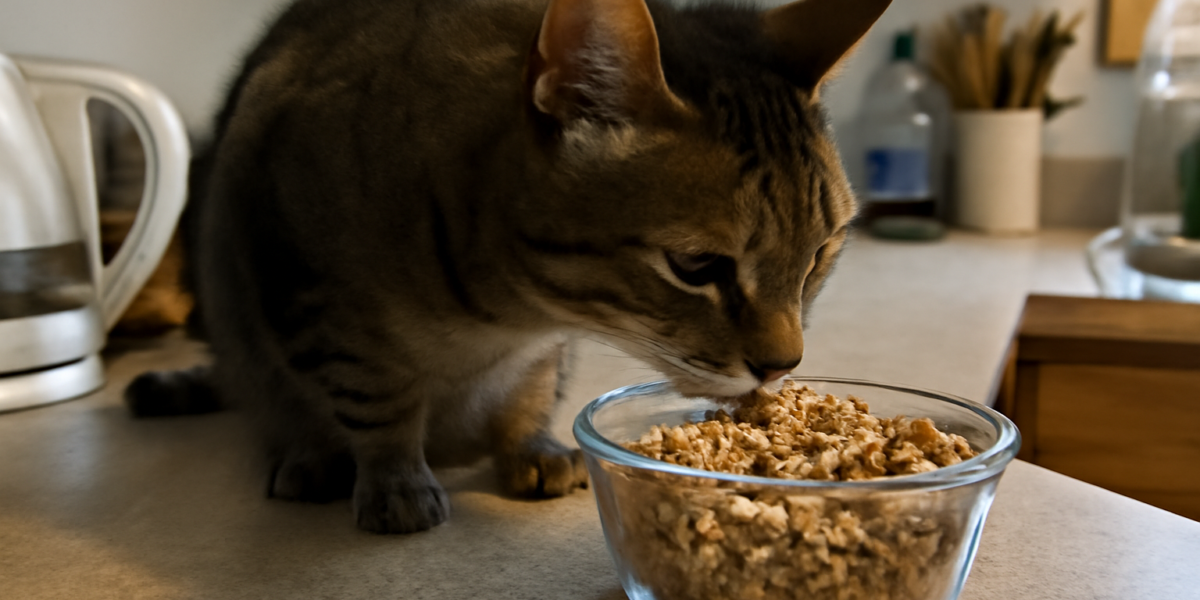
Granola’s combination of oats, nuts, honey, and dried fruit gives it a reputation as a healthy breakfast food for humans, but the picture looks very different from a feline perspective. If your cat has been eyeing your breakfast bowl or snuck a few clusters off the counter, you are right to question whether granola is safe for them. Cats are obligate carnivores whose bodies are designed to process animal protein and fat, not the complex mixture of grains, sugars, and plant-based fats found in granola. What makes matters worse is that granola frequently contains ingredients that are genuinely toxic to cats, making it one of the more concerning breakfast foods your cat could get into.
Quick Answer: Granola is not recommended for cats. While plain oats are not toxic, granola typically contains raisins (toxic to cats), chocolate chips (toxic), macadamia nuts (toxic), excessive sugar, and high sodium. Even raisin-free, chocolate-free granola offers nothing nutritionally and is loaded with carbohydrates and sugar that cats cannot efficiently process. Keep granola away from your cat.
Is Granola Safe for Cats?
The safety of granola for cats depends entirely on the specific ingredients, and this is what makes granola particularly risky — most varieties contain at least one ingredient that is harmful or outright toxic to cats.
Oats: The base ingredient in most granola is rolled oats, which are not toxic to cats. In fact, small amounts of cooked plain oatmeal are sometimes recommended by veterinarians for cats with digestive issues due to the soluble fiber content. However, the oats in granola are heavily processed with added oils and sugars.
Raisins and dried fruit: Many granola varieties contain raisins, which are toxic to cats (and dogs). Grape and raisin toxicity can cause acute kidney failure, and even small amounts can be dangerous. Dried cranberries and other dried fruits are less dangerous but are extremely high in concentrated sugar.
Chocolate chips: Some granola varieties contain chocolate or cocoa nibs. Chocolate contains theobromine and caffeine, both of which are toxic to cats. Dark chocolate and cocoa are more dangerous than milk chocolate.
Macadamia nuts: While the toxic mechanism is not fully understood, macadamia nuts can cause weakness, vomiting, tremors, and hyperthermia in pets. Other nuts in granola (almonds, pecans, walnuts) are not directly toxic but are high in fat and can cause pancreatitis.
Honey and sugar: Granola is typically bound together with honey, brown sugar, maple syrup, or other sweeteners. These add significant calories with no nutritional benefit for cats and can contribute to obesity and diabetes.
Coconut: Often added to granola in shredded form. Coconut is not toxic but can cause digestive upset due to its high fat content. See our article on can cats eat coconut cream for more detail.
Nutritional Profile of Granola
A half-cup serving of commercial granola contains roughly 200 to 300 calories, 30 to 45 grams of carbohydrates, 12 to 20 grams of sugar, 7 to 15 grams of fat, 4 to 6 grams of protein, and 50 to 150 milligrams of sodium. These numbers vary dramatically between brands and varieties.
For a cat that requires 200 to 250 calories per day, a half cup of granola would meet or exceed their entire daily caloric needs while providing almost none of the nutrients they require. The protein in granola comes from plant sources (oats, nuts) and is deficient in the amino acids cats need, particularly taurine and arginine. The fat is entirely plant-based and lacks arachidonic acid, a fatty acid cats can only obtain from animal sources.
The sugar content is particularly alarming. Some commercial granola brands contain as much sugar per serving as a candy bar. Cats cannot taste sweetness and gain nothing from sugar except excess calories and metabolic stress.
Potential Benefits of Granola for Cats
There are virtually no benefits to feeding granola to cats. The few potentially useful components of granola — oat fiber and plant protein — are present in forms that are difficult for cats to utilize and are accompanied by far too much sugar, fat, and potentially toxic ingredients.
If your cat needs additional fiber, a veterinarian would recommend plain canned pumpkin or a fiber supplement designed for cats. If they need additional calories, high-quality wet food or a calorie-dense prescription diet is the appropriate solution. There is simply no scenario where granola is the right answer for a cat’s nutritional needs.
Risks and Side Effects of Granola for Cats
The risks of granola consumption for cats range from mild digestive upset to life-threatening toxicity:
Raisin and grape toxicity: If your granola contains raisins, this is the most urgent concern. Raisin toxicity in cats can cause vomiting, diarrhea, lethargy, decreased urination, and acute kidney failure. The toxic dose is not well-established in cats, and individual sensitivity varies — meaning even a few raisins could potentially be dangerous. If your cat ate granola containing raisins, contact your veterinarian immediately.
Chocolate toxicity: Theobromine in chocolate causes vomiting, diarrhea, rapid heart rate, tremors, and seizures. Dark chocolate and cocoa are more concentrated and dangerous. If your cat consumed granola with chocolate chips, estimate the amount and call your vet.
Sugar overload: The concentrated sugars in granola cause blood glucose spikes that are especially dangerous for diabetic or pre-diabetic cats. Even in healthy cats, regular sugar consumption contributes to obesity and insulin resistance.
Pancreatitis risk: The high fat content from nuts, oils, and coconut can trigger pancreatitis, particularly in cats that are obese or have a history of the condition.
Gastrointestinal upset: Even “safe” granola (no raisins, no chocolate) commonly causes vomiting, diarrhea, and gas due to the combination of oats, sugar, oils, and nuts that a cat’s digestive system is not designed to process.
Choking hazard: Large granola clusters and whole nuts can pose a choking risk, especially for smaller cats or kittens.
How to Feed Granola to Cats Safely
The safest approach is to keep granola completely away from your cat. The risk-to-benefit ratio is simply too unfavorable, especially given the prevalence of raisins and chocolate in commercial granola products.
If your cat has accidentally consumed a small amount of plain granola (confirmed free of raisins, chocolate, and macadamia nuts), here are the maximum amounts that are unlikely to cause significant harm:
- Kittens: Do not feed granola to kittens under any circumstances. Their small size amplifies all risks.
- Adult cats (6–10 lbs): A single small cluster (about the size of a pea), plain varieties only, as a very rare occurrence.
- Large cats (over 10 lbs): No more than two to three small clusters, plain varieties only, and only if accidental.
Always check the ingredient list of any granola your cat may have accessed. If it contains raisins, chocolate, macadamia nuts, or xylitol, contact your veterinarian regardless of the amount consumed.
Signs of a Problem After Eating Granola
The symptoms to watch for depend on which granola ingredients your cat consumed:
For raisin/grape exposure: Vomiting within the first few hours, followed by lethargy, loss of appetite, abdominal pain, decreased urination, and signs of kidney failure (excessive thirst, increased or decreased urination, ammonia-smelling breath). Seek veterinary care immediately — do not wait for symptoms.
For chocolate exposure: Restlessness, rapid breathing, elevated heart rate, vomiting, diarrhea, muscle tremors, and in severe cases, seizures. Contact your vet or poison control immediately.
For plain granola without toxic ingredients: Mild to moderate digestive upset including vomiting, diarrhea, gas, and decreased appetite. These symptoms typically resolve within 24 to 48 hours. If they persist or worsen, contact your veterinarian.
For any granola with high fat content: Watch for signs of pancreatitis over the following 24 to 72 hours — vomiting, abdominal pain, lethargy, fever, and loss of appetite. Pancreatitis requires veterinary treatment.
Safe Alternatives to Granola for Cats
If your cat is attracted to granola, redirect their interest toward these safe options:
Plain cooked oatmeal: If your cat specifically enjoys oats, a tiny amount (one teaspoon) of plain, cooked oatmeal with no sugar, milk, or toppings can be offered occasionally. This provides the oat component without the dangerous additions found in granola.
Freeze-dried meat treats: Chicken, turkey, or fish freeze-dried treats provide the satisfying crunch that might appeal to a granola-loving cat, with species-appropriate nutrition.
Cooked egg: A small amount of scrambled egg (no oil, butter, or seasoning) is a nutritious, protein-rich treat that most cats enjoy.
Commercial cat treats: High-quality treats formulated for cats ensure safety and proper nutrition. Look for options with meat as the first ingredient.
For more information about similar foods and feline safety, read our articles on can cats eat waffles and can cats eat couscous. If you would like to find a cat to care for, visit our adoption page to browse cats looking for forever homes.
Frequently Asked Questions
Can cats eat granola bars?
Granola bars carry the same risks as loose granola with the added concern that they are often more heavily sweetened and may contain chocolate coatings, yogurt coatings, or additional flavoring. Many granola bars also contain raisins as a primary ingredient. Granola bars should be kept away from cats entirely.
What if my cat ate granola with raisins?
Contact your veterinarian or an animal poison control hotline immediately. Raisin toxicity can cause kidney failure in cats, and the toxic dose is unpredictable — some cats are more sensitive than others. Early veterinary intervention (including induced vomiting and IV fluids) can significantly improve outcomes. Do not wait for symptoms to appear before seeking help.
Is oatmeal safer than granola for cats?
Plain, cooked oatmeal without any additives is significantly safer than granola. It lacks the sugar, oils, and potentially toxic ingredients found in granola. Small amounts of plain oatmeal can even be beneficial for cats with minor digestive issues due to its soluble fiber content. However, oatmeal is still a carbohydrate that should not make up a significant portion of a cat’s diet.
Can cats eat muesli?
Muesli is similar to granola but is typically raw (unbaked) and may contain less added sugar. However, muesli often contains raisins, dried fruit, and nuts — the same problematic ingredients found in granola. The safety considerations are essentially identical: check the ingredient list carefully, and if it contains raisins or chocolate, keep it away from your cat entirely.
Why is my cat attracted to granola?
Cats are likely attracted to the fats in granola — the oils, butter, and nut fats give off aromas that some cats find appealing. They may also be drawn to the honey or milk powder that some brands use. Cats are curious creatures and will investigate foods that smell interesting, but attraction to a food does not mean it is safe or appropriate for them.


