
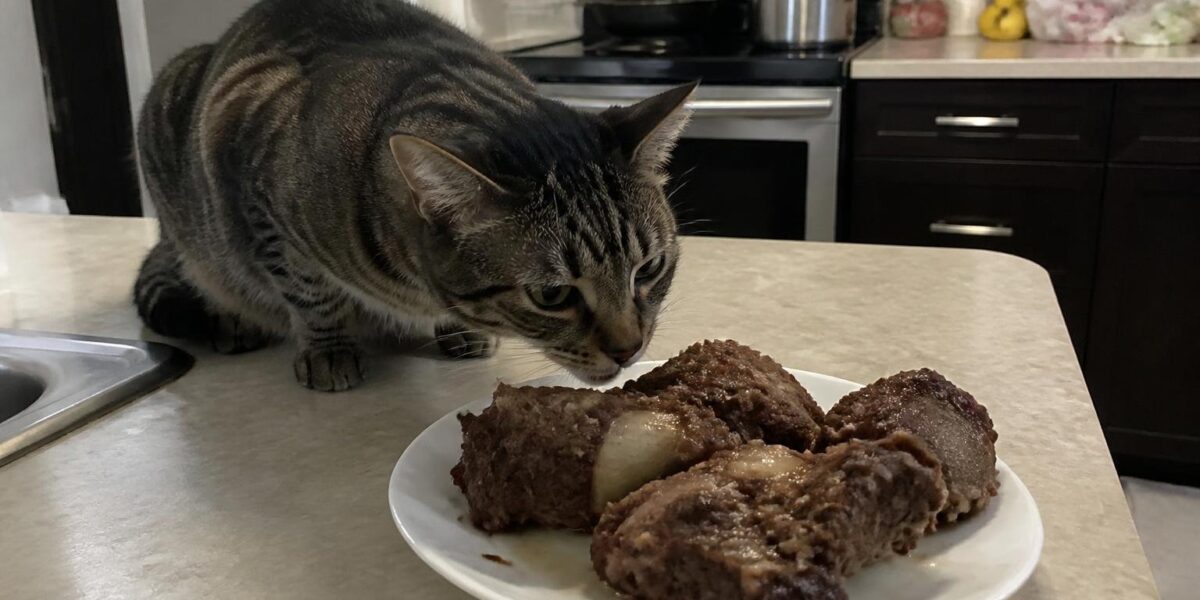
The Short Answer
Can cats eat oxtail? Only the plain cooked meat, and only in moderation. Oxtail is a flavorful cut of beef, but it is both fatty and full of bones, which makes it tricky to share safely. The meat itself is a fine carnivore protein when it is plain, well-cooked, trimmed of fat, and completely deboned. The fat content and the small bones are the two main reasons to keep portions small and preparation careful.
In this article
Oxtail is usually braised in rich, seasoned sauces, so the version on your plate is almost never safe to share directly. If you want your cat to try a little, you will need to prepare a separate plain portion rather than offering them what is in your stew.
Is Oxtail Safe for Cats?
Beef, including oxtail meat, is non-toxic and species-appropriate for cats. As obligate carnivores, cats thrive on animal protein, and the meat from oxtail can fit into that diet in small amounts. The flavor and texture can be appealing to cats, and the meat carries useful nutrients like protein and iron.
The challenges are practical rather than toxic. Oxtail is a fatty cut, and too much fat can cause digestive upset or pancreatitis. It also contains many bones, and cooked bones can splinter, posing a choking hazard or risk of internal injury. This is why only carefully removed, boneless meat should ever be offered.
Seasoning is the third concern. Traditional oxtail dishes are braised with onion, garlic, salt, and wine, all of which are harmful to cats. Onion and garlic in particular are toxic to cats, so a cat should never eat oxtail that has been cooked in a typical sauce. Only plain, unseasoned oxtail is appropriate.
The Fat and Bone Concerns
Two issues deserve special attention with oxtail:
- Fat content: Oxtail is rich and marbled. Excess fat can trigger pancreatitis, with symptoms like vomiting, diarrhea, loss of appetite, lethargy, and abdominal pain.
- Bones: Cooked bones become brittle and can splinter. They may cause choking, mouth injuries, or damage to the digestive tract.
Never give your cat oxtail bones to gnaw on, even raw ones, because of the choking and obstruction risk. Always separate the meat from the bone before serving. The marrow inside the bones is also very rich, so it is best left out of your cat’s portion to avoid an upset stomach.
It is worth appreciating just how much fat and connective tissue oxtail carries compared with a lean cut. Oxtail comes from the tail of the animal and is prized in cooking precisely because its marbling and gelatin-rich tissue melt into a rich, silky sauce during long braising. That same richness that makes oxtail a delicacy for people is what makes it a heavy, fatty food for a cat. Even after you trim away the obvious fat, a good deal of fat remains marbled through the meat itself, which is why the portion you offer a cat must be small and infrequent.
How to Serve Oxtail Safely
If you want to share a small taste of the meat, prepare it with care:
- Cook plain and thoroughly. Boil or braise in water only, with no salt, onion, garlic, or seasoning.
- Separate the meat from the bone. Remove every bone fragment, no matter how small.
- Trim the fat. Cut away as much fat as you can and use only the leaner meat.
- Cool and cut small. Let it cool, then chop into tiny pieces.
- Offer a small portion. A teaspoon of meat is plenty for a treat.
Introduce it slowly and watch for any digestive upset, especially since oxtail is richer than leaner cuts. If your cat tolerates a small amount well, an occasional taste is fine, but it should never become a regular part of their diet.
If you are cooking oxtail for yourself, the simplest way to share is to remove a small piece of meat early, before adding any seasoning, and cook it separately in plain water. That way you avoid the onion, garlic, salt, and wine that go into a traditional braise. Always let the meat cool fully and double-check for stray bone fragments before offering it, since even a single sharp splinter can cause harm.
Why Restaurant and Stew Oxtail Is Off-Limits
The way oxtail is traditionally cooked is exactly what makes the finished dish unsafe for cats. Oxtail stew, braised oxtail, and similar recipes rely on onions, garlic, salt, wine, and often a long-simmered, fatty broth. Every one of those elements is a problem for a cat.
Onion and garlic damage a cat’s red blood cells, the heavy salt can cause excessive thirst and worse, and the rich fat can trigger digestive upset. Because the seasonings soak deep into slow-cooked meat, you cannot simply rinse them off. If you want to share oxtail, you must cook a plain piece separately from the start.
The Danger of Cooked Bones
Oxtail’s many bones deserve a closer look, because cooked bones are one of the most common and preventable feeding hazards for cats. When bones are cooked, they lose moisture and become brittle, which means they tend to crack and splinter rather than bend. Those sharp fragments can lodge in a cat’s mouth or throat, or worse, puncture or block the digestive tract as they pass through.
Signs that a cat may have a problem after eating bone include drooling, pawing at the mouth, gagging, vomiting, loss of appetite, straining to pass stool, or signs of pain. Any of these warrants prompt veterinary attention, since an obstruction or perforation is a genuine emergency.
The safest rule is simple: keep all cooked bones, including oxtail bones, away from your cat. Strip every bit of meat off the bone before serving, and dispose of the bones in a secured trash can so a curious cat cannot fish them out later. This single habit prevents one of the scarier risks associated with bony cuts like oxtail.
How Much Oxtail Meat Is Appropriate
Because oxtail is both fatty and labor-intensive to prepare safely, it makes sense to keep portions firmly in treat territory. For a healthy adult cat, a teaspoon or so of plain, deboned, well-trimmed oxtail meat is plenty, offered only occasionally rather than as a regular item. The goal is a small taste of a novel flavor, not a meaningful part of the diet.
Treats of any kind should stay around ten percent of a cat’s daily calories, and with a rich cut like oxtail that ceiling is reached quickly. A cat that fills up on fatty treats may eat less of its balanced food and miss out on the precise nutrition it needs, or simply take in more calories than it should and gain weight over time. Keeping oxtail rare protects both the cat’s digestion and its waistline.
Watch how your cat handles a first small taste before offering it again. A cat that tolerates a tiny portion well, with no vomiting, soft stool, or change in appetite over the following day, can have the occasional repeat. A cat that reacts poorly, or one with a history of pancreatitis or digestive sensitivity, is better served by leaner options entirely. When unsure, a quick conversation with your veterinarian about your cat’s individual tolerance is the safest guide.
Leaner Beef and Meat Options
Because oxtail is fatty and bony, leaner cuts are easier and safer to share. Plain cooked steak trimmed of fat is a cleaner beef option, and beef organ treats like beef heart offer rich, taurine-packed nutrition in moderation.
For everyday treats, lean poultry such as chicken is gentle and easy to digest. Whatever you choose, keep it plain, cooked, and boneless, and remember that treats should stay under about 10 percent of daily calories so they do not unbalance your cat’s nutrition.
Thinking about adopting a feline friend? Visit our adopt a cat hub to meet rescue cats looking for a forever home.
Frequently Asked Questions
Can cats chew on oxtail bones?
No. Cooked oxtail bones can splinter and cause choking or internal injury. Always remove every bone and offer only the boneless meat.
Is braised oxtail from my dinner safe to share?
No. Braised oxtail is usually cooked with onion, garlic, salt, and wine, all of which are harmful to cats. Only plain, unseasoned, deboned meat is appropriate.
Why is oxtail considered fatty for cats?
Oxtail is a marbled, rich cut. Too much fat can cause digestive upset or pancreatitis, which is why portions must be small and the meat well trimmed.
How often can my cat have oxtail meat?
Only occasionally and in tiny amounts. Leaner cuts make better everyday treats. Consult your vet if your cat has a history of digestive or pancreatic issues.
Can I give my cat the marrow from oxtail bones?
It is best not to. Marrow is very rich and fatty and can cause stomach upset. Stick to small amounts of plain, lean, deboned meat instead.
Is the gelatin-rich broth from oxtail safe for cats?
Plain broth made from oxtail with no onion, garlic, or salt can be a small, hydrating treat, but most oxtail broth is heavily seasoned and therefore unsafe. If you want to offer broth, simmer a piece in plain water only and let it cool before sharing a spoonful.
What should I do if my cat swallows an oxtail bone?
Watch closely for drooling, gagging, pawing at the mouth, vomiting, loss of appetite, or straining to pass stool. Any of these can signal an obstruction or injury and warrants an immediate call to your veterinarian, as a lodged or splintered bone is a genuine emergency.


