
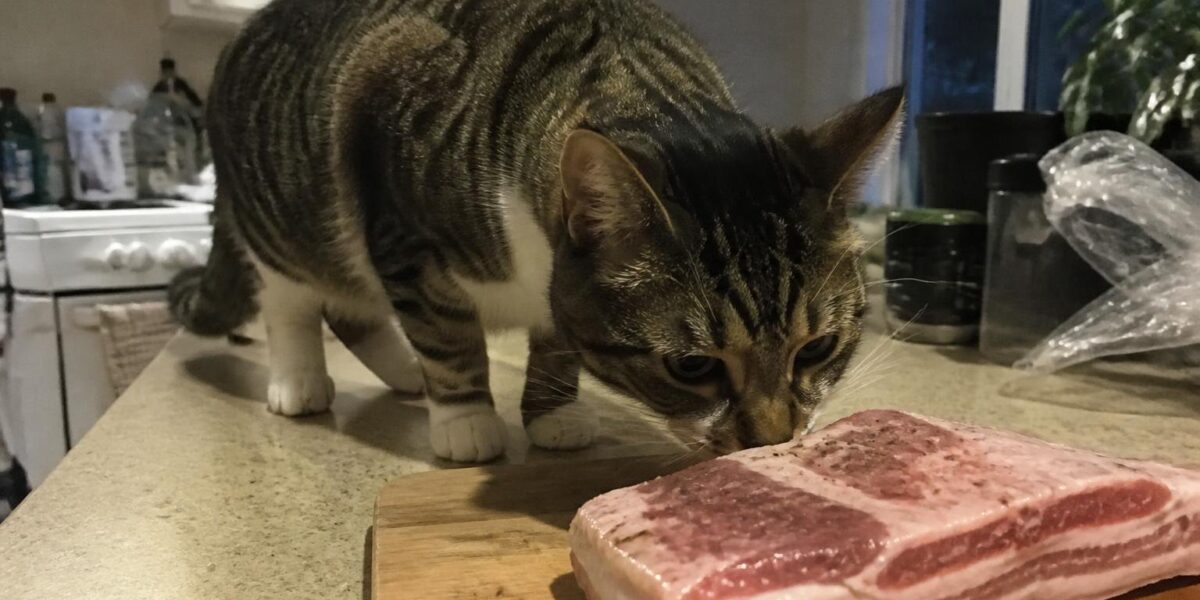
The Short Answer
Can cats eat pork belly? Only in tiny moderation, and even then with caution. Pork belly is one of the fattiest cuts of pork, and that high fat content is the main concern. Rich, fatty foods can trigger digestive upset and even pancreatitis in cats. A small bite of plain, well-cooked, lean-trimmed pork belly is not toxic, but the fat makes it a poor regular treat. Leaner cuts are always the smarter choice.
In this article
Pork itself is fine for cats in small amounts, so the issue here is specifically the heavy fat of the belly cut. The same piece of meat that makes pork belly so rich and flavorful for people is exactly what makes it hard on a cat’s digestive system.
Is Pork Belly Safe for Cats?
Plain cooked pork is non-toxic to cats, and pork belly is no exception in terms of toxicity. The problem is nutritional. Pork belly is roughly half fat, and that richness is hard on a cat’s digestive system. A cat’s body is built to use protein efficiently, but it is not designed to handle large amounts of fat at once.
Cats are obligate carnivores who handle protein well, but a sudden load of fat can overwhelm the pancreas and intestines. This is why pork belly should be limited to occasional, tiny portions rather than offered as a routine treat. A nibble of lean meat from a pork belly is acceptable, but the fatty layers should be left off the plate.
Preparation also matters. Pork belly is often cooked with salt, soy, sugar, or seasonings, all of which add risk. Crispy pork belly, braised pork belly, and bacon-style preparations are all unsuitable. Only plain, unseasoned pork belly should ever be shared.
The Pancreatitis and Fat Concern
The biggest reason to limit pork belly is the risk of pancreatitis, an inflammation of the pancreas that can be painful and serious. High-fat foods are a known trigger. Symptoms of pancreatitis or fatty-food upset include:
- Vomiting
- Diarrhea
- Loss of appetite
- Lethargy
- Abdominal pain or a hunched posture
- Dehydration
Cats who are overweight, older, or have a history of digestive issues are especially vulnerable. For these cats, pork belly is best avoided entirely. When in doubt, consult your veterinarian before offering any rich food. Pancreatitis can range from mild to life-threatening, so the symptoms above always warrant attention.
It helps to understand why fat specifically is the trigger. The pancreas releases enzymes to break down food, and fat demands far more of those enzymes than protein does. When a cat suddenly takes in a large load of fat, the pancreas can overproduce and become inflamed, sometimes turning its digestive enzymes on the organ itself. Because pork belly is roughly half fat, even a modest-looking piece represents a heavy fat load for a small cat, which is exactly the scenario that can tip a vulnerable animal into a flare. This is why portion size matters so much more with a fatty cut than with lean meat.
How to Serve Pork Belly Safely
If you want to offer a rare taste, do it carefully:
- Trim the fat. Cut away as much fat as possible and use only the leanest portion.
- Cook it thoroughly and plain. No salt, soy, sugar, garlic, or onion. Pork must be fully cooked to avoid bacteria and parasites.
- Drain and cool. Blot off excess grease and let it cool completely.
- Cut into tiny pieces. A bite the size of your fingernail is plenty.
- Offer rarely. This is an occasional treat, not a regular food.
Always introduce new foods slowly and watch for any signs of stomach upset over the following day. If your cat handles a tiny piece well, you can offer the occasional small taste, but there is never a reason to make pork belly a habit.
Be especially careful with how pork belly is typically served at the table. Dishes like braised pork belly, char siu, and crispy pork belly are loaded with soy sauce, sugar, salt, and often garlic, none of which belong in a cat’s diet. The crackling skin is pure fat and seasoning, making it one of the worst parts to share. If your cat is begging while you eat, set aside a plain, lean piece before any sauce or seasoning touches the meat.
Why Lean Cuts Are a Better Choice
The richness that makes pork belly a delicacy for people is precisely what makes it problematic for cats. Lean cuts of pork or poultry deliver the same satisfying protein and meaty flavor with far less fat, which means less strain on your cat’s pancreas and digestive tract.
If your cat loves pork, a small piece of plain cooked pork loin or tenderloin is a much gentler option. These cuts let your cat enjoy the taste they crave without the heavy fat that comes with the belly. The general principle for cat treats is simple: the leaner and plainer the meat, the safer it is.
Understanding Pancreatitis in Cats
Because pancreatitis is the main worry with a fatty food like pork belly, it is worth understanding a little about what it is. The pancreas is an organ that produces enzymes to help digest food, especially fat. When a cat takes in a large amount of fat at once, the pancreas can become inflamed, a condition called pancreatitis that ranges from mild discomfort to a serious, painful illness.
Symptoms can be vague in cats, which makes the condition tricky to spot. You might notice your cat eating less, hiding, seeming lethargic, or sitting in a hunched position that suggests belly pain. Vomiting and diarrhea may or may not be present. Because the signs are subtle, any combination of these after a fatty meal is worth a call to your veterinarian.
Cats who are overweight or who have had pancreatitis before are at higher risk, and for them even a small amount of a very fatty food can be enough to cause a flare-up. This is the central reason we recommend keeping pork belly to a rare, tiny taste at most, and avoiding it entirely for vulnerable cats.
What to Do If Your Cat Eats a Lot of Pork Belly
If your cat manages to steal a sizable piece of fatty pork belly, the first step is to remove any remaining food so they cannot eat more, and to make fresh water available. A single fatty indulgence will not always cause trouble, but because pork belly is so rich, it is worth watching your cat closely over the next day or two for signs of digestive upset or pancreatitis.
The symptoms to watch for include vomiting, diarrhea, a noticeable drop in appetite, lethargy, and especially a hunched, tucked-up posture that suggests abdominal pain. Cats are good at hiding discomfort, so subtle changes like hiding more than usual or sitting in an unusual position can be meaningful clues. If you see any combination of these, particularly in a cat that is overweight or has had pancreatitis before, contact your veterinarian rather than waiting it out.
If the pork belly was heavily seasoned, braised in sauce, or coated in salt and sugar, there is added reason for concern beyond the fat alone, since onion, garlic, and salt bring their own risks. Mention the preparation when you call your vet, as it helps them judge how worried to be and what to monitor for. Quick attention to a fatty-food incident is always safer than hoping it passes on its own.
Leaner Meat Alternatives
Because pork belly is so fatty, leaner cuts make far better treats. Plain cooked pork loin or tenderloin gives your cat the same flavor with less fat. Even better, lean poultry like chicken and turkey is gentle and easy to digest.
If you enjoy offering variety, a richer option like duck breast is still leaner than pork belly when the skin is removed. The general rule for treats is the leaner and plainer, the better, and keeping treats to about 10 percent of daily calories protects your cat’s balanced diet.
Hoping to share your home with a cat? Our adopt a cat hub features rescue felines who would love to become part of your family.
Frequently Asked Questions
Is pork belly toxic to cats?
No, plain cooked pork belly is not toxic. The concern is its very high fat content, which can cause digestive upset or pancreatitis, so it should only be given in tiny amounts.
Can cats eat crispy pork belly or bacon-style pork belly?
No. Crispy or cured versions add salt and seasoning, which compound the fat risk. Stick to plain, lean, fully cooked meat if you offer any at all.
My cat ate a chunk of fatty pork belly. Should I worry?
Watch for vomiting, diarrhea, loss of appetite, or a hunched, painful posture. If you see these signs, especially in a cat prone to pancreatitis, contact your veterinarian.
How often can a cat have pork belly?
Rarely at most. Because of its fat content, pork belly should be an occasional tiny taste, never a regular treat. Leaner meats are a better everyday choice.
Can kittens eat pork belly?
It is best to avoid it. Kittens have sensitive stomachs and need balanced kitten food. Rich, fatty foods like pork belly can easily upset their digestion.
Is the crackling or crispy skin safe for cats?
No. The crackling is almost pure fat and seasoning, making it the worst part of the cut to share. It combines the heavy fat that strains the pancreas with the salt and spices used to crisp it, so it should always be kept away from your cat.
Can cats eat raw pork belly?
No. Raw pork can carry bacteria and parasites that may make a cat ill, and the fat issue remains regardless. If you offer any pork belly at all, it must be a small piece of the leanest part, fully cooked and completely plain.


