
Last updated: April 10, 2026
In this article
Plain Pumpkin Puree Is Safe and Beneficial for Cats
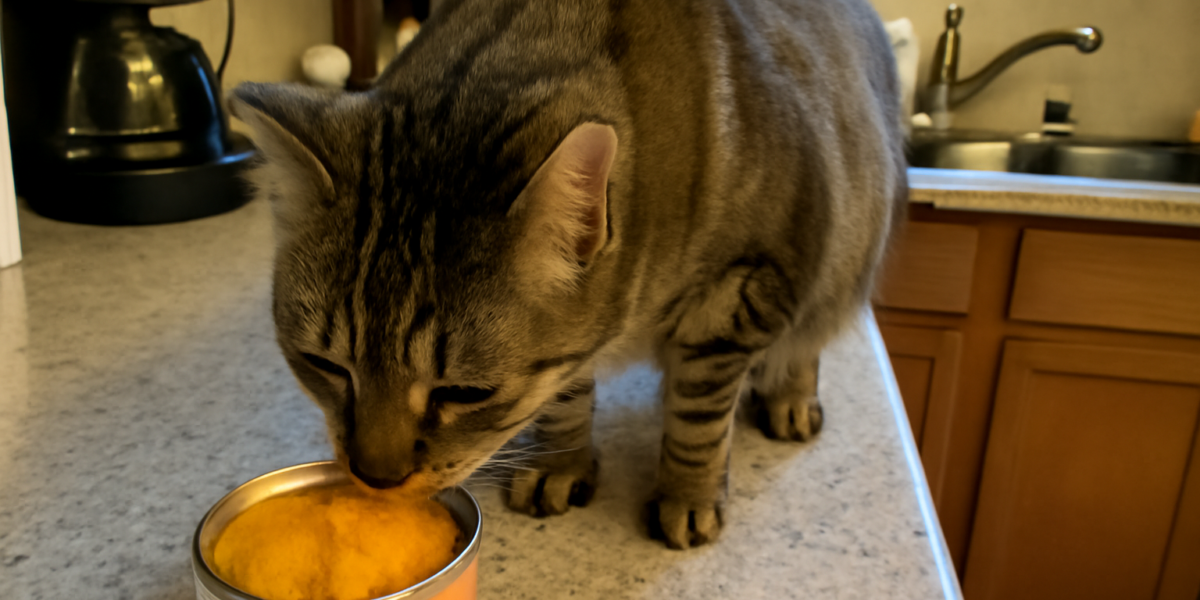
Yes, cats can eat plain pumpkin puree in small amounts, and many veterinarians actively recommend it as a natural digestive aid. Pure pumpkin puree, the kind with no added sugar, spices, or fillers, is rich in soluble and insoluble fiber that helps regulate your cat’s digestive system in both directions, easing constipation and firming up loose stools.
The critical distinction is between plain canned pumpkin puree and pumpkin pie filling. These are not the same product. Pumpkin pie filling contains added sugar, cinnamon, nutmeg, ginger, cloves, and other spices that are inappropriate and potentially harmful for cats. Only plain, 100% pumpkin puree should ever be offered to your cat.
When introduced gradually and fed in appropriate portions, pumpkin puree is one of the most commonly recommended natural supplements for feline digestive health. It is affordable, widely available, easy to serve, and generally well-accepted by cats.
How Pumpkin Fiber Helps Your Cat’s Digestion
Pumpkin puree contains both soluble and insoluble fiber, and each type plays a different role in supporting your cat’s gastrointestinal health.
Soluble fiber absorbs water in the digestive tract, forming a gel-like substance that slows digestion and helps firm up loose stools. This makes pumpkin helpful for cats experiencing mild diarrhea from dietary indiscretion, stress, or minor digestive upset. The soluble fiber also acts as a prebiotic, feeding beneficial gut bacteria that support overall digestive health.
Insoluble fiber adds bulk to stool and stimulates the natural contractions of the intestinal muscles (peristalsis). This is why pumpkin is effective for cats with constipation. The added bulk and moisture help move stool through the colon more easily, and many cats that struggle with hairball-related constipation benefit from regular pumpkin supplementation.
One tablespoon of plain pumpkin puree contains approximately 0.4 grams of fiber, 5 calories, and significant amounts of water. This combination of fiber and moisture is particularly valuable for cats, who often do not drink enough water on their own. The moisture in pumpkin puree contributes to overall hydration, which directly supports healthy digestion and urinary tract function.
Beyond fiber, pumpkin puree provides beta-carotene (a precursor to vitamin A), potassium, and iron. While cats do not need large amounts of these plant-based nutrients, they offer modest supplemental value alongside a balanced commercial diet.
When Veterinarians Recommend Pumpkin for Cats
Pumpkin puree is a tool that many veterinarians suggest for specific digestive situations. Understanding when and why it is recommended helps you use it appropriately.
Mild constipation. If your cat is straining in the litter box, producing small hard stools, or defecating less frequently than usual, pumpkin puree can help soften stools and encourage more regular bowel movements. It is often recommended as a first-line approach before stronger laxatives.
Mild diarrhea. The fiber in pumpkin absorbs excess water in the intestines, helping to firm up loose stools. This is useful for mild, short-term diarrhea from dietary changes, stress, or minor stomach upset. It is not appropriate for severe, bloody, or prolonged diarrhea, which requires veterinary diagnosis.
Hairball prevention. The fiber in pumpkin helps keep the digestive system moving, which can reduce the frequency of hairball formation by encouraging ingested hair to pass through the GI tract rather than accumulating in the stomach.
Weight management. Adding a small amount of pumpkin puree to a cat’s meal can increase the volume of food without significantly increasing calories. This helps overweight cats feel more satisfied on a reduced-calorie diet. The fiber promotes satiety, meaning your cat feels fuller for longer.
Pumpkin is not a cure for serious digestive issues. If your cat has chronic constipation, persistent diarrhea, bloody stool, vomiting along with digestive problems, or significant weight loss, schedule a veterinary examination. These symptoms may indicate conditions like inflammatory bowel disease, intestinal parasites, or other issues that need medical treatment.
Choosing the Right Pumpkin Product
Selecting the correct product is crucial. The wrong pumpkin product can cause more harm than good.
Safe: Plain canned pumpkin puree. The ingredient label should list only one item: pumpkin. Brands like Libby’s 100% Pure Pumpkin or store-brand equivalents work perfectly. This product has been cooked and pureed with no additives.
Unsafe: Pumpkin pie filling or mix. These products contain added sugar, salt, cinnamon, nutmeg, ginger, allspice, and cloves. Nutmeg is particularly concerning because it contains myristicin, which is toxic to cats in concentrated amounts. Always read the label carefully and verify you have the plain puree version.
Also safe: Fresh pumpkin. You can cook and puree fresh pumpkin at home. Cut the pumpkin, remove seeds and skin, and bake or steam until soft. Puree the flesh until smooth with no added ingredients. This is the freshest option but requires more preparation effort.
Safe with caution: Pumpkin-based cat supplements. Some pet companies sell pumpkin supplements specifically formulated for cats. These are generally safe and may include added probiotics or other digestive support ingredients. Follow the dosing instructions on the product label.
Avoid giving your cat raw pumpkin flesh, pumpkin skin, or pumpkin stem, as these are difficult to digest and may cause gastrointestinal blockage. Pumpkin seeds, while not toxic, should be avoided due to their hard texture and potential to cause digestive issues in cats.
Proper Portions and How to Serve
When it comes to pumpkin puree for cats, a little goes a long way. Overfeeding pumpkin can actually worsen digestive problems rather than improve them.
Recommended portions:
- Cats under 8 pounds: Start with half a teaspoon daily
- Cats 8 to 12 pounds: Start with one teaspoon daily
- Cats over 12 pounds: Start with one to one and a half teaspoons daily
Begin with the lower end of the range and observe your cat’s stool quality over three to five days. If constipation persists, you can gradually increase to a maximum of one tablespoon per day for an average-sized cat. If you are using pumpkin to address diarrhea and it does not improve within two to three days, consult your veterinarian.
Serving suggestions:
- Mix the pumpkin puree directly into your cat’s wet food for easy acceptance
- Serve it as a standalone treat on a small plate
- Warm the puree slightly (not hot) to enhance the aroma and make it more appealing
- For picky cats, try mixing a small amount into their favorite wet food and gradually increasing the proportion
Not every cat will enjoy pumpkin. Some cats refuse it entirely, and that is fine. Never force it. If your cat needs digestive support and will not eat pumpkin, your vet can recommend alternative fiber supplements designed for feline use. For more on feeding your cat nutritious human foods, see our guide on carrots for cats.
Storing Leftover Pumpkin Puree
Since you will only use a teaspoon or two per day, a single can of pumpkin puree will last a while. Proper storage prevents waste and ensures safety.
Refrigerate opened canned pumpkin in an airtight container for up to five to seven days. Transfer the puree from the can to a glass or plastic container, as the can may impart a metallic taste once opened.
For longer storage, freeze pumpkin puree in an ice cube tray. Once frozen, pop the cubes out and store them in a freezer bag. Each ice cube section holds roughly one tablespoon, making it easy to thaw exactly the amount you need. Frozen pumpkin puree maintains quality for up to six months.
Thaw frozen pumpkin in the refrigerator or briefly in the microwave. Do not refreeze thawed pumpkin, and discard any portion that has been sitting at room temperature for more than two hours.
Frequently Asked Questions
Can pumpkin puree replace veterinary treatment for my cat’s digestive issues?
Pumpkin puree is a supportive supplement, not a medical treatment. It works well for mild, occasional digestive irregularities but should not replace veterinary care for chronic, severe, or recurring problems. If your cat has persistent constipation, ongoing diarrhea, bloody stool, or digestive issues accompanied by vomiting, weight loss, or behavior changes, see your veterinarian for proper diagnosis and treatment.
Can I give pumpkin puree to my kitten?
Kittens over eight weeks old can have a very small amount of plain pumpkin puree, roughly a quarter teaspoon, if experiencing mild constipation. However, digestive issues in kittens warrant veterinary attention because they can become dehydrated quickly. Consult your vet before adding any supplement to a kitten’s diet.
My cat has diabetes. Is pumpkin puree safe?
Plain pumpkin puree has a relatively low glycemic index and moderate carbohydrate content. In the small amounts recommended for cats, it is unlikely to cause significant blood sugar spikes. However, cats with diabetes should have any dietary changes approved by their veterinarian, who can advise based on your cat’s specific insulin regimen and glucose management plan.
How quickly does pumpkin puree work for constipation in cats?
Most cats show improvement in stool consistency within 24 to 72 hours of starting pumpkin puree supplementation. If there is no improvement after three to four days, the constipation may require stronger interventions such as prescribed laxatives, increased hydration through wet food, or a veterinary examination to identify the underlying cause.
Can too much pumpkin cause diarrhea in cats?
Yes. Feeding too much pumpkin puree can overwhelm the digestive system with fiber and cause loose stools or diarrhea. This is why starting with small amounts and increasing gradually is important. If your cat develops loose stools after starting pumpkin, reduce the amount or discontinue temporarily. The ideal dose is the smallest amount that produces the desired effect on stool quality. Visit our cat care hub for more feline nutrition tips.


