
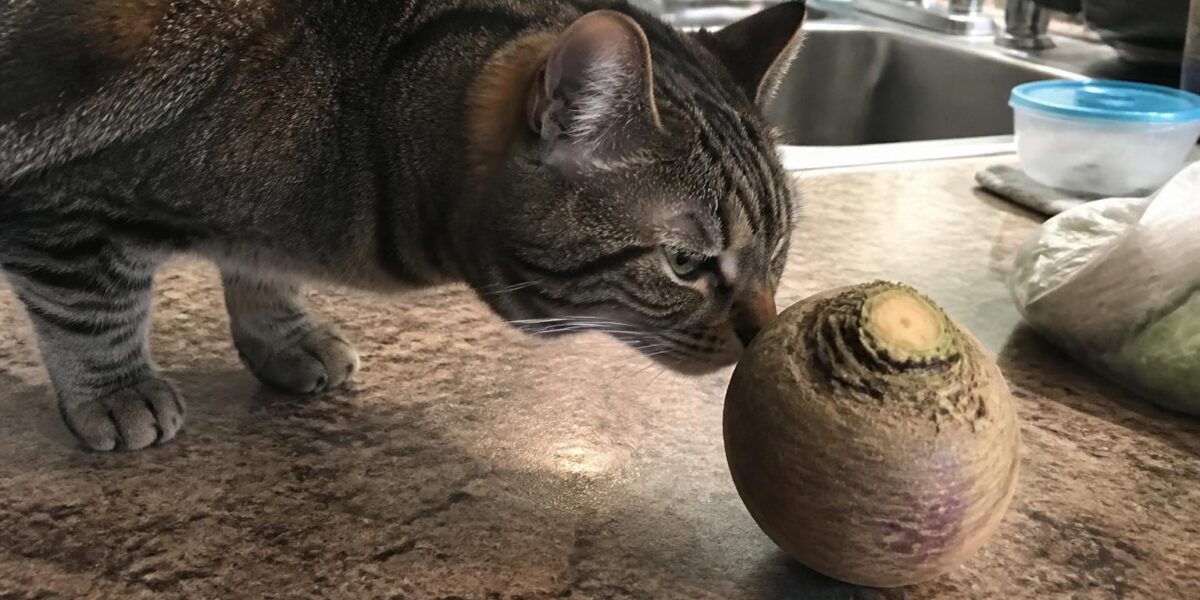
Can Cats Eat Rutabaga? The Short Answer
Can cats eat rutabaga? Yes, a tiny amount of plain, cooked rutabaga is safe for cats, but it is unnecessary. The accurate verdict is “safe in small amounts, but offering nothing your cat needs.” Cats are obligate carnivores, built to thrive on animal protein, so this starchy root vegetable is at most an occasional nibble.
In this article
Rutabaga, sometimes called swede, is a root vegetable from the cabbage family, with a mildly sweet, earthy flavor. A small bite of cooked, unseasoned rutabaga will not harm a healthy cat, but it should never become a regular part of their bowl. There are no compounds in rutabaga that benefit a feline diet.
It is a common instinct to think vegetables are universally healthy, but that logic does not transfer to cats. Their digestive systems are short and meat-focused, with limited ability to extract value from plant matter. So while rutabaga is harmless in tiny amounts, it is best viewed as a curiosity rather than a nutritious addition to your cat’s meals.
If your cat has a sensitive stomach or any chronic health condition, consult your veterinarian before introducing rutabaga or any new food.
Is Rutabaga Safe or Toxic for Cats?
Rutabaga is not toxic to cats. It contains no compounds known to poison felines, placing it among the safe-but-optional vegetables. The risks are about quantity and preparation, not toxicity.
Like other brassica vegetables, rutabaga can cause gas and bloating if a cat eats more than a small bite. The feline digestive system is not designed for large amounts of fibrous plant matter, so overfeeding can lead to discomfort and loose stools. It is also dense and firm, so raw rutabaga is hard to chew and digest and can pose a choking risk — cooking it soft is essential if you offer it at all.
Never serve rutabaga with butter, salt, garlic, or onion. These additions are unhelpful at best, and garlic and onions are genuinely toxic to cats and common in mashed or roasted root vegetable dishes. A serving from your holiday table is rarely safe to share, since it usually contains exactly these ingredients along with cream or stock.
Rutabaga also contains small amounts of goitrogens, like other brassicas, which in very large quantities could theoretically affect the thyroid. For a tiny occasional bite this is not a realistic concern, but it is another reason to keep portions small.
Nutritional Value of Rutabaga for Cats
For people, rutabaga is a healthy, fiber-rich vegetable with vitamin C, potassium, and antioxidants. For cats, those benefits do not translate. Felines make their own vitamin C and rely on animal protein, not plant fiber or carbohydrates, for their nutrition.
The small amount of fiber in rutabaga is unlikely to do much for a cat, and there are better, vet-recommended ways to support feline digestion, such as a measured amount of plain pumpkin or a fiber supplement your vet suggests. Rutabaga should never replace any portion of a complete, balanced, meat-based diet.
In short, rutabaga is a “harmless but pointless” food for cats. If your cat shows no interest, there is no reason to encourage it, and if they enjoy a tiny taste, it should stay an occasional novelty with no nutritional expectations attached.
If your cat enjoys root vegetables, you can compare rutabaga with our guides to sweet potato and carrots, which follow the same tiny-amounts-only approach.
Safe Serving Size and Preparation
If you decide to share rutabaga, keep it small and simple:
- Peel away the thick, waxy skin, which is hard to digest.
- Cook the rutabaga by steaming or boiling until soft, with no salt, oil, or seasoning.
- Let it cool and cut a very small, pea-sized piece to reduce choking risk.
- Serve it plain, on its own or lightly mixed into your cat’s regular food.
- Offer it only occasionally, never as a daily item.
All treats and extras should make up no more than 10 percent of your cat’s daily calories. Cooked rutabaga is far preferable to raw because it is softer, easier to digest, and gentler on a cat’s stomach. Start with a single tiny piece the first time so you can see how your cat handles it before offering any more.
Signs of Digestive Upset to Watch For
Because cats are not built for much plant matter, even non-toxic rutabaga can cause mild trouble if they eat too much. After offering it, watch for:
- Gas or visible bloating
- Vomiting
- Diarrhea or loose stools
- Loss of appetite
- Lethargy
Mild upset from a small amount usually resolves on its own within a day, and keeping fresh water available helps your cat recover. If your cat keeps vomiting, has ongoing diarrhea, or seems unwell beyond 24 hours, contact your veterinarian. If the rutabaga was cooked with onion or garlic, call your vet promptly, since those ingredients are the genuine concern and can cause harm that is not always immediately obvious.
Better Treat Options for Your Cat
Since rutabaga offers so little, choose treats suited to a carnivore. A small piece of plain cooked chicken or a flake of fish is far more appealing and appropriate for your cat than any root vegetable, and it provides protein they can genuinely use.
Commercial cat treats made for feline digestion are another safe option in moderation. As with all extras, keep them within the 10 percent allowance so they do not unbalance your cat’s diet.
When caring for a rescue cat with an unknown history, keeping meals simple and consistent helps their digestion settle and makes new sensitivities easier to spot. To learn more about welcoming a cat home, explore our adopt a cat resources.
Understanding Your Cat’s True Dietary Needs
The rutabaga question comes down to understanding what cats are built to eat. As obligate carnivores, cats derive their energy and nutrients almost entirely from animal tissue. They require taurine, animal protein, and specific fatty acids that root vegetables cannot provide, and their short digestive systems are not designed to extract much from fibrous plant matter.
This is why a wholesome, fiber-rich vegetable like rutabaga, so beneficial for people, offers a cat next to nothing. It is harmless in a tiny cooked amount, but it is never a nutritional necessity, and there is no reason to work it into your cat’s routine. A complete, balanced cat food already supplies everything your cat needs in the right proportions.
It is natural to want to share the foods we think of as healthy with our pets, but with cats the kindest choice is often restraint. Keeping their meals simple and species-appropriate protects the careful nutritional balance their bodies depend on and avoids the gas and stomach upset that come with too much vegetable matter.
If you are ever unsure whether a food belongs in your cat’s diet, your veterinarian is the best resource. They can advise on safe treats, appropriate portions, and any special considerations for your individual cat’s age and health.
Frequently Asked Questions
Can cats eat raw rutabaga?
It is best to avoid raw rutabaga. It is dense and firm, which makes it hard to chew and digest and can pose a choking risk. If you offer rutabaga, cook it soft, keep it plain, and serve only a tiny piece.
Is rutabaga good for cats?
Not really. Rutabaga is safe in tiny amounts but provides no nutrition that a cat actually needs. As obligate carnivores, cats get everything from meat-based food, so rutabaga is at most an occasional novelty.
How much rutabaga can I give my cat?
A pea-sized piece of plain, cooked rutabaga is plenty, and only on occasion. Larger amounts can cause gas, bloating, or diarrhea because cats are not designed to process much fibrous vegetable matter.
Can rutabaga cause gas in cats?
Yes. As a member of the cabbage family, rutabaga can cause gas and bloating, especially in larger amounts. Keep portions tiny and watch for any discomfort after feeding.
Is mashed rutabaga safe for cats?
Only if it is plain. Mashed rutabaga prepared for people usually contains butter, cream, salt, and sometimes onion or garlic, which are not safe for cats. If you want to share, set aside a tiny amount of plain cooked rutabaga before adding any seasonings. It is best to skip rutabaga entirely for kittens, who need a nutrient-dense, protein-rich diet formulated for growth rather than vegetable matter, and to check with your veterinarian before offering even a small taste to an adult cat.


