
Last updated: May 4, 2026
In this article
Quick Answer: Is Pheasant Safe for Dogs?
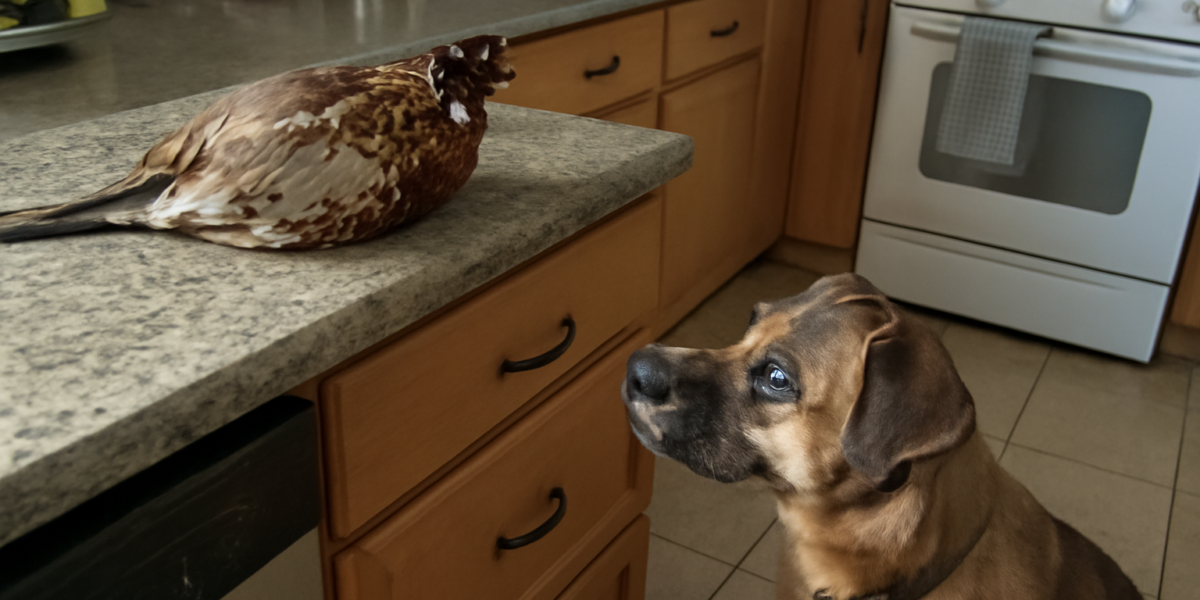
Yes, dogs can eat pheasant in moderation, but two specific concerns make this game bird different from chicken or turkey: lead-shot fragments from hunting and the brittleness of cooked bones. Pheasant is a lean, high-protein meat that is perfectly safe when sourced from butchered or processed birds rather than wild-shot animals, and when bones are kept out of the bowl. The short answer to “can dogs eat pheasant” is yes if you choose lead-free or commercially processed pheasant, cook it thoroughly, serve it plain, and never feed cooked bones.
Hunters who routinely process their own pheasant should think carefully about whether they want to share with their dogs. Lead poisoning is serious and entirely preventable by choosing meat from birds taken with steel or copper ammunition, or by buying from commercial farmers who do not use lead at all. Always loop in your veterinarian before introducing any new protein, especially for dogs with food sensitivities or chronic illness.
Nutritional Profile of Pheasant
Pheasant is lean, high-protein game meat. A 100-gram cooked portion typically delivers around 28 to 30 grams of protein and 3 to 5 grams of fat, depending on the cut. Calorie count typically runs 130 to 150 calories per 100 grams, making pheasant comparable to chicken breast in macronutrient profile but with a richer, slightly gamey flavor.
The meat provides notable amounts of iron, zinc, vitamin B12, niacin, and selenium. Iron content is higher than typical poultry, which is one of the reasons pheasant has appeared in some specialty dog foods marketed for active dogs. Vitamin B6 levels are also useful for energy metabolism, and the modest selenium contribution supports antioxidant defense.
The amino acid profile is complete for canine maintenance, similar to chicken and turkey. As with all single ingredients, pheasant alone is not a balanced diet for dogs. It works best as a rotational protein, a topper, or part of a vet-guided elimination plan. The leanness makes it appropriate for dogs that need to manage weight or fat sensitivity, although the small differences from chicken breast are unlikely to be clinically meaningful on their own.
The Lead-Shot Problem
Lead is toxic to dogs at very low doses. Pheasant taken with lead ammunition often retains tiny lead fragments in the meat, and these fragments scatter from the impact site through tissue in patterns that are hard to detect visually. Even meat that looks completely clean can carry microscopic lead particles. Cooking does not destroy lead.
The risk applies to wild-shot pheasant from any source, including birds harvested by friends and family. If you do receive a hunter-shared pheasant, ask explicitly about ammunition. Steel shot, copper shot, and other non-toxic alternatives are increasingly common but not yet universal. When in doubt, choose commercially farmed pheasant from a butcher or specialty meat retailer where lead is not part of the supply chain.
Symptoms of lead poisoning in dogs include vomiting, abdominal pain, lethargy, weakness, loss of appetite, tremors, behavioral changes, and seizures in severe cases. The condition can be acute (from a single high exposure) or chronic (from repeated low-dose exposure). Both are emergencies. Lead testing is available through veterinarians and is the only reliable way to confirm diagnosis.
Other Risks and Concerns
Bacterial contamination is a standard concern, like with any poultry. Salmonella, Campylobacter, and E. coli can be present on raw or undercooked pheasant. Cooking thoroughly to a safe internal temperature kills these pathogens. Never feed raw pheasant without a vet-supervised raw-feeding plan.
Bones become brittle when cooked. Pheasant bones, particularly the leg bones, splinter easily and can puncture the gastrointestinal tract. Never feed cooked bones from any source. Strip the meat off the bones before serving and discard the carcass where dogs cannot access it. Raw bones from game birds are sometimes used in raw-feeding programs, but only under specific veterinary guidance because of contamination concerns.
Seasoned and prepared pheasant products often contain salt, garlic, onion, and other additives that are inappropriate for dogs. Garlic and onion are toxic at meaningful doses; review onion safety before sharing any seasoned product. Pheasant is sometimes prepared with sage, thyme, and other herbs in restaurant cooking; while small amounts of thyme and sage are not toxic, the salt and other additions usually are.
Wild-caught pheasant may also have additional concerns, including environmental contaminants, pesticide residues, and parasites. Source from licensed processors when possible.
Safe Serving Size for Dogs
Modest portions work best. Small dogs under 20 pounds can have 1 to 2 ounces of plain cooked, deboned pheasant mixed into a meal occasionally. Medium dogs from 20 to 50 pounds can usually take 2 to 3 ounces, and large dogs over 50 pounds can have 3 to 4 ounces as a topper or occasional addition.
If you are using pheasant as part of a structured rotational diet or elimination trial, your vet will provide gram amounts based on your dog’s body weight and condition. Toppers and treats should stay under roughly 10 percent of total daily calories so the main diet remains the source of balance.
Introduce pheasant gradually. Offer a small bite the first day, watch for 24 hours, then increase steadily if there are no signs of vomiting, diarrhea, or other upset. Sudden protein swaps can cause digestive upset even when the new ingredient is safe.
How to Prepare Pheasant for Dogs
Choose lead-free pheasant. Either commercially farmed and butchered, or hunter-harvested with steel or copper ammunition. Check the meat carefully for visible shot fragments before cooking and discard any meat near the impact wound, even if it looks clean.
Cook pheasant thoroughly to an internal temperature of at least 165 degrees Fahrenheit, verified with a meat thermometer at the thickest part of the cut. Pan-searing, oven-roasting, baking, and gentle braising all work. Pheasant is lean and can dry out quickly, so check temperature early.
Strip the meat from the bones before serving. Cooked pheasant bones, particularly leg bones, splinter easily and can cause serious injury. Dispose of bones where dogs cannot reach them.
Serve plain. No salt, no oil, no garlic, no onion, no marinades, no rich sauces. Cool to room temperature and dice into bite-appropriate pieces. Store cooked pheasant in the fridge for up to three days or freeze in single-serving portions for up to three months.
Symptoms of Trouble After Eating Pheasant
Watch for digestive upset in the first 24 to 48 hours after introduction, including vomiting, diarrhea, gas, or appetite change. Mild upset often resolves with a return to the regular diet, but persistent symptoms warrant a vet call.
For lead exposure specifically, symptoms can develop acutely (within hours) or insidiously over weeks of repeated low-dose exposure. Acute signs include vomiting, abdominal pain, weakness, tremors, and seizures. Chronic signs include lethargy, weight loss, behavioral changes, and gastrointestinal upset that does not resolve. If your dog has eaten wild-shot pheasant and is showing any concerning signs, mention the lead exposure possibility to your vet so they can run appropriate tests.
If your dog has accidentally swallowed a cooked pheasant bone, watch for difficulty swallowing, drooling, retching, vomiting, abdominal pain, lethargy, or refusal to eat. Bone fragments can lodge in the throat, stomach, or intestines and may require surgery.
When to Call the Vet
Call the vet if vomiting or diarrhea persists beyond 24 hours, if neurological signs (tremors, weakness, seizures) develop, if there is blood in stool or vomit, or if your dog has swallowed bones and shows any signs of distress. Lead exposure suspicions should always prompt a same-day call. Dogs with chronic gut conditions need extra caution; the canine IBD guide outlines warning signs that need same-day care.
Always check with your veterinarian before introducing new proteins for dogs with known food sensitivities, pancreatitis history, or chronic illness. For dogs that hunt or are exposed to game-meat scraps regularly, periodic lead testing may be worth discussing with your vet.
Better-Known Alternatives to Pheasant
If pheasant is hard to source safely or you want a closer comparison, several proteins offer similar profiles. Turkey is leaner-game-bird-similar in macronutrients and is far easier to source. Chicken is the standard reference protein. For other lean game-style flavors without the lead concern, look at quail eggs as a small addition or rabbit meat as a leaner red-meat alternative.
For more variety alongside pheasant, duck liver and duck necks (raw, frozen, vet-approved) offer waterfowl flavor in different forms. If you are researching breeds for adoption that thrive on game-meat rotations, the dog adoption hub offers guidance on dietary needs and breed temperaments.
For households where hunting is part of the lifestyle, the simplest path forward is to commit to lead-free ammunition for any game intended for the dog. Steel and copper alternatives have improved substantially in performance over the last decade and are now standard in many regions. The investment is small compared with the cost of treating lead toxicity, and it removes the ambiguity from feeding hunter-shared game protein to your dog.
Frequently Asked Questions
Is wild-shot pheasant safe for dogs?
Only if it was taken with lead-free ammunition (steel or copper). Lead-shot pheasant carries lead-poisoning risk that is hard to detect visually. When in doubt, choose commercially butchered pheasant where lead is not part of the supply chain.
Can dogs eat pheasant bones?
Never feed cooked pheasant bones. They become brittle and can splinter, causing serious injury. Raw pheasant bones are sometimes used in raw-feeding programs, but only under specific veterinary guidance because of contamination concerns.
Where can I buy lead-free pheasant?
Specialty butchers and online game-meat retailers carry commercially farmed pheasant where lead is not used. Some hunters use steel or copper ammunition; if you are receiving meat from a hunter, ask explicitly about ammunition before feeding it to your dog.
Can puppies eat pheasant?
Healthy puppies can have small amounts of plain cooked, deboned, lead-free pheasant as a topper, but their primary diet should be a complete and balanced puppy food. Talk with your vet before adding any meat to a puppy’s plate.
How often can I feed my dog pheasant?
A few times a week as a topper is reasonable for most healthy dogs when sourced from lead-free meat. It should not replace a complete diet unless that diet is formulated by a veterinary nutritionist.


