
Last updated: May 4, 2026
In this article
- The Short Answer on Rambutan and Dogs
- What Is Rambutan?
- Nutritional Highlights of Rambutan Flesh
- The Skin and Seed: What Must Come Off
- Safe Serving Sizes by Dog Size
- When to Skip Rambutan Entirely
- Forms of Rambutan to Avoid
- How to Prepare Rambutan for Your Dog
- Symptoms of Trouble After Eating Rambutan
- How Rambutan Compares to Lychee and Longan
- Frequently Asked Questions
The Short Answer on Rambutan and Dogs
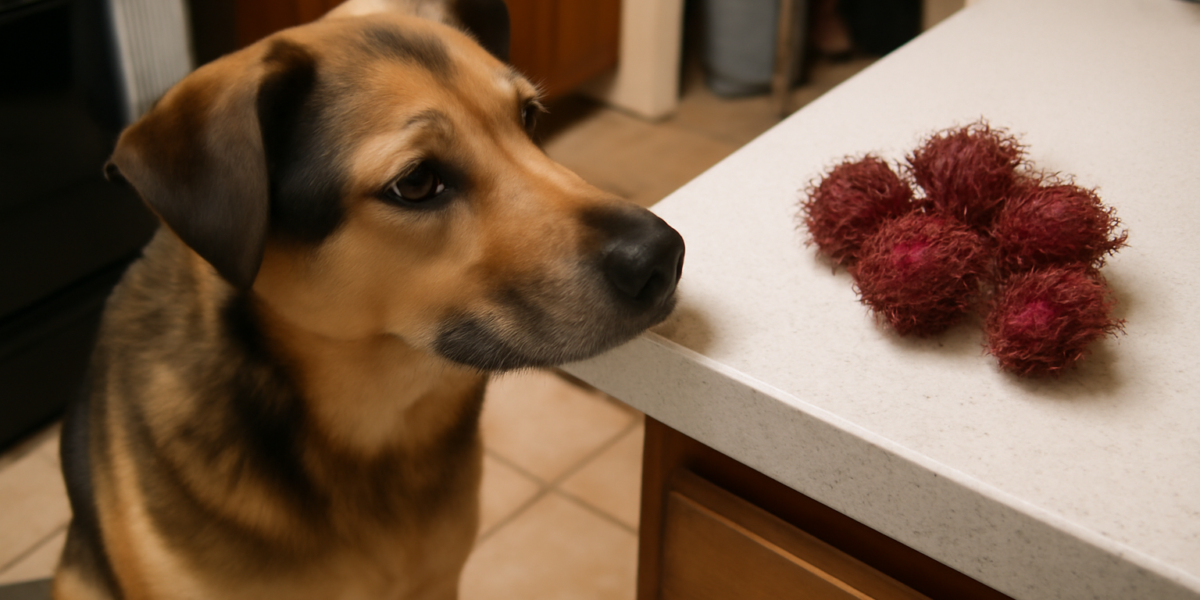
Yes, dogs can eat rambutan in moderation as long as you remove the spiky outer skin and the inner seed completely. Rambutan is a tropical fruit closely related to lychee and longan, with translucent white flesh and a distinctive hairy red exterior. The flesh itself is safe and even gently nutritious for most dogs, but the seed contains saponin compounds that are mildly toxic in quantity, and the leathery skin is inedible.
So while the answer to “can dogs eat rambutan” is yes, the preparation matters more than with most fruits. A bare slice of clean white flesh, given as an occasional treat, is fine for healthy adult dogs. A whole rambutan with skin and seed intact is a hazard. Treat it like you would lychee or any other pit-bearing tropical fruit: peel carefully, remove the seed, slice if needed, and serve sparingly.
What Is Rambutan?
Rambutan (Nephelium lappaceum) is native to Southeast Asia, particularly Indonesia and Malaysia, and the name comes from the Malay word “rambut” meaning “hair,” after the soft, fleshy spines that cover the red or yellow rind. Inside, the fruit looks remarkably like a lychee — a translucent, juicy, sweet ball of flesh wrapped around a single woody seed.
The flavor sits between lychee and grape — sweet, slightly floral, and refreshingly mild. Rambutan is sold fresh in tropical markets, sometimes still attached to its branch, and increasingly canned (often in heavy syrup) in international grocery aisles. For dogs, only fresh, peeled, deseeded rambutan flesh is suitable. Canned rambutan with syrup is too sugary, and any rambutan-flavored candy, drink, or jelly should be considered off-limits the same way you’d treat chocolate-flavored treats.
If your dog tolerates other tropical fruit like lychee, mango, or pineapple, rambutan will likely sit similarly well in their stomach. But always introduce a new fruit slowly.
Nutritional Highlights of Rambutan Flesh
Rambutan flesh is low in calories, low in fat, and contains a useful mix of vitamin C, manganese, copper, and small amounts of B vitamins. It also offers fiber and a high water content, which together can help with hydration and gentle digestive support. None of these nutrients are essential additions to a dog’s balanced diet, but they don’t hurt in treat-sized portions.
The flesh contains roughly 14 to 18 grams of natural sugar per 100 grams, mostly fructose and glucose. That puts it in the same sugar bracket as grapes (which are toxic to dogs — see why grapes are unsafe), so even though rambutan is non-toxic, the sugar load means tiny portions are wise. A diabetic dog or an overweight dog should skip rambutan entirely.
Rambutan is also a source of polyphenols and antioxidants similar to those in lychee. The marketing copy around tropical “superfruits” tends to overstate their importance for dogs, who don’t need exotic antioxidant sources in their diet. A small piece of rambutan as an occasional treat is fine — but you don’t need to feel guilty about not offering it.
The Skin and Seed: What Must Come Off
The outer skin of rambutan is leathery, fibrous, and indigestible. It can cause mouth irritation, choking, or intestinal blockage in dogs that bolt their food. Always peel it completely, the same way you’d peel a hard-boiled egg — score the skin with a thumbnail or paring knife, then pull it apart. Discard the skin in a covered trash so your dog can’t snatch it later.
The inner seed is the bigger concern. Rambutan seeds contain saponin compounds and tannins that are bitter and mildly toxic when chewed or eaten in quantity. Some traditional preparations roast and process rambutan seeds for cooking, but raw seeds eaten by a dog can cause gastrointestinal upset, drowsiness, and in larger amounts, more serious symptoms. The seed is also smooth, oval, and roughly the size of a grape — a textbook choking and obstruction hazard, particularly for small dogs.
To safely seed a rambutan, slice it open with a paring knife and pry the seed out. The flesh sometimes clings to the seed; trim what you can with a knife and discard the rest. Don’t let your dog “clean up” any pieces with seed still attached.
Safe Serving Sizes by Dog Size
Rambutan should be treated as an occasional indulgence, not a daily fruit. The 10 percent rule applies — all treats combined should be no more than 10 percent of your dog’s daily calories.
- Toy and small breeds (under 20 lb): 1 to 2 peeled, deseeded rambutans per serving, no more than once or twice a week.
- Medium breeds (20 to 50 lb): 2 to 3 peeled, deseeded rambutans per serving.
- Large and giant breeds (over 50 lb): 3 to 5 peeled, deseeded rambutans per serving.
For tiny dogs, slice each piece of flesh in half or quarters to reduce choking risk. First-timers should start with a single small piece and wait 12 to 24 hours to see how it sits. Any vomiting, diarrhea, or appetite changes mean rambutan isn’t a good fit for that particular dog.
When to Skip Rambutan Entirely
A few dogs and a few situations are not a good match for rambutan. Diabetic dogs and dogs on glucose-management diets for diabetes should not be given high-sugar tropical fruit. The fast sugar absorption can complicate blood glucose control and insulin timing.
Dogs with a history of pancreatitis or sensitive digestion are also better off skipping it. While rambutan flesh is low in fat, the sugar load can still trigger upset in vulnerable dogs. Dogs with a strong yeast-overgrowth tendency in skin and ears can also do worse on sugar-heavy treats — many vets recommend keeping fruit minimal in those cases.
Overweight dogs simply don’t need the empty calories. And puppies under 6 months should generally wait — their digestive systems are still developing, and the choking risk from seed-bearing fruits is higher in tiny mouths.
Forms of Rambutan to Avoid
The only safe form for dogs is fresh, peeled, deseeded flesh. Skip the rest:
- Canned rambutan in syrup: The syrup is mostly sugar and sometimes contains preservatives. Way too sweet for dogs.
- Dried rambutan: Concentrated sugar, sticky texture, and often other dried fruits or sweeteners mixed in.
- Rambutan-flavored candy, jelly, or drinks: Frequently contain xylitol-class sweeteners, which are highly dangerous. Treat the same way you’d treat sugar-free gum — strictly off-limits.
- Whole rambutans (skin and seed intact): Choking, obstruction, and saponin risks all in one package.
- Rambutan with seed pieces still attached to flesh: Always cut around the seed and inspect each piece.
If a friend or family member is sharing rambutan-based desserts at a gathering, keep your dog out of the dish. Rambutan-stuffed pineapple cocktails, rambutan jellies, and Asian fruit salads can all carry hidden risks.
How to Prepare Rambutan for Your Dog
Preparation is straightforward but must be thorough. First, rinse the rambutan under cool water — the spiky skin can carry residue from handling and transport. Second, slice the skin around the equator with a paring knife and pull the two halves apart to reveal the white flesh. Third, gently squeeze the flesh into a clean dish, then slice it open and pry out the seed.
What remains — a clean piece of translucent flesh — is what you offer your dog. For tiny dogs and senior dogs with dental issues, slice the flesh into halves or quarters. You can also freeze peeled, deseeded rambutan pieces for a refreshing summer treat (use a sealed container and use within a week).
Avoid mixing rambutan with other ingredients. No honey, no yogurt, no sprinkles, no chocolate-anything. The plainer, the better. Wash your hands and the cutting board afterward, and double-check the trash so curious noses can’t dig out discarded skins or seeds.
Symptoms of Trouble After Eating Rambutan
Most dogs handle a small piece of properly prepared rambutan without issue. But if your dog ate the whole fruit, multiple seeds, or an unusual amount of flesh, watch for these warning signs:
- Vomiting, especially if repeated
- Diarrhea or unusually loose stools
- Drooling, retching, or repeated swallowing
- Pawing at the mouth or face
- Lethargy, weakness, or unusual stillness
- Loss of appetite for the next meal or two
- Belly tenderness when you press gently
- Difficulty defecating or straining
Seed ingestion in particular can lead to obstruction symptoms 24 to 72 hours later. Don’t wait — call your vet if any of these signs appear, and mention exactly how many seeds or whole fruits your dog may have eaten. Abdominal X-rays are quick, routine, and the earlier an obstruction is identified, the better the outcome.
How Rambutan Compares to Lychee and Longan
Rambutan, lychee, and longan are all soapberry-family tropical fruits with translucent flesh and a single seed. They look strikingly similar inside but differ significantly outside: lychees have a bumpy red shell, longans have a smooth tan shell, and rambutans have those distinctive soft hairs.
From a dog-safety standpoint, the rules are nearly identical for all three. Peel completely. Remove the seed completely. Offer only the flesh, in small amounts, occasionally. Skip dried, canned, and flavored versions. The biggest difference is sugar concentration, with longan slightly less sweet than the other two, and rambutan often the sweetest of the three when fully ripe.
If your dog enjoys rambutan, you can rotate small amounts of mango, papaya, or dragon fruit into the treat lineup so they aren’t getting the same fruit every time.
Frequently Asked Questions
Can puppies eat rambutan?
It’s safer to wait until puppies are at least 6 months old and on a stable diet. Their digestive systems are sensitive, and the choking risk from seeds is much higher in small mouths. Start with one tiny piece of flesh only.
What happens if my dog swallows a rambutan seed?
Call your vet promptly, especially for small dogs. The seed can cause intestinal obstruction, and the saponins can cause GI upset. Watch for vomiting, appetite loss, and changes in bowel movements over the next 2 to 3 days.
Is canned rambutan safe for dogs?
No. The heavy syrup is essentially sugar water, and some canned versions contain preservatives. Stick to fresh, properly peeled and deseeded fruit.
Can rambutan cause an allergic reaction in dogs?
Rare but possible. Signs of food allergy include itching, ear infections, hives, or digestive upset. If your dog reacts after rambutan, stop offering it and mention it to your vet.
How often can my dog have rambutan?
Once or twice a week at most, in tiny amounts, and only when fresh fruit is in season. There’s no need to make rambutan a regular part of any dog’s diet — they get all the nutrition they need from balanced food and standard fruit treats.


