Last updated: May 4, 2026
In this article
Overview of the Cheetoh Cat
The Cheetoh cat is a designer hybrid created by crossing the Bengal and the Ocicat, two breeds already known for striking spotted coats. The goal was to combine the wild appearance of the Bengal with the friendlier, more domestic temperament of the Ocicat. The result is a large, athletic, deeply social cat that looks like a miniature wild cat but behaves more like a confident family pet.
Cheetohs are still uncommon. The breed was developed in Arizona by breeder Carol Drymon in the early 2000s, and registries have approached the breed cautiously since both parent breeds were themselves engineered hybrids. If you are drawn to the spotted look but want a cat that is bonded to people rather than aloof, the Cheetoh deserves a serious look — provided you can meet its considerable activity needs.
This profile walks through history, looks, personality, daily care, health honesty, and what adoption realistically looks like for a breed this rare.
Quick Facts
- Origin: United States (Arizona), early 2000s
- Parent breeds: Bengal and Ocicat
- Size: Large; many adults weigh 12 to 22 pounds
- Coat: Short, dense, glossy, with rosetted or fully spotted patterning
- Energy level: Very high
- Grooming: Low — weekly brushing
- Good with families: Yes, with active households
- Registry status: Limited; status varies by registry and year
History and Origins
The Cheetoh project began as a deliberate attempt to soften the Bengal’s intensity while preserving its dramatic coat. The Bengal brings the rosettes, the long body, and the muscular build, while the Ocicat contributes a more outgoing, dog-like personality and a long history of social temperament selection.
Because both parent breeds had documented pedigrees, breeders could track ancestry carefully — a luxury many landrace breeds don’t have. Even so, the Cheetoh is not widely recognized. Some registries have listed the breed in experimental or new-breed classes over the years, and recognition status changes. If pedigree paperwork matters to you, confirm current standing directly with the registry rather than relying on a breeder’s website.
Cheetohs share lineage with several other Bengal-derived breeds. If you are researching the wider category, the Bengal cat breed profile and our Ocicat profile give you the foundation for understanding why these crosses behave the way they do.
Appearance
The Cheetoh is built like an athlete. Adults are long, broad through the chest, and noticeably heavier than the average house cat. The legs are long and the back legs are slightly higher than the front, which gives the breed a stalking gait when it moves slowly across a room.
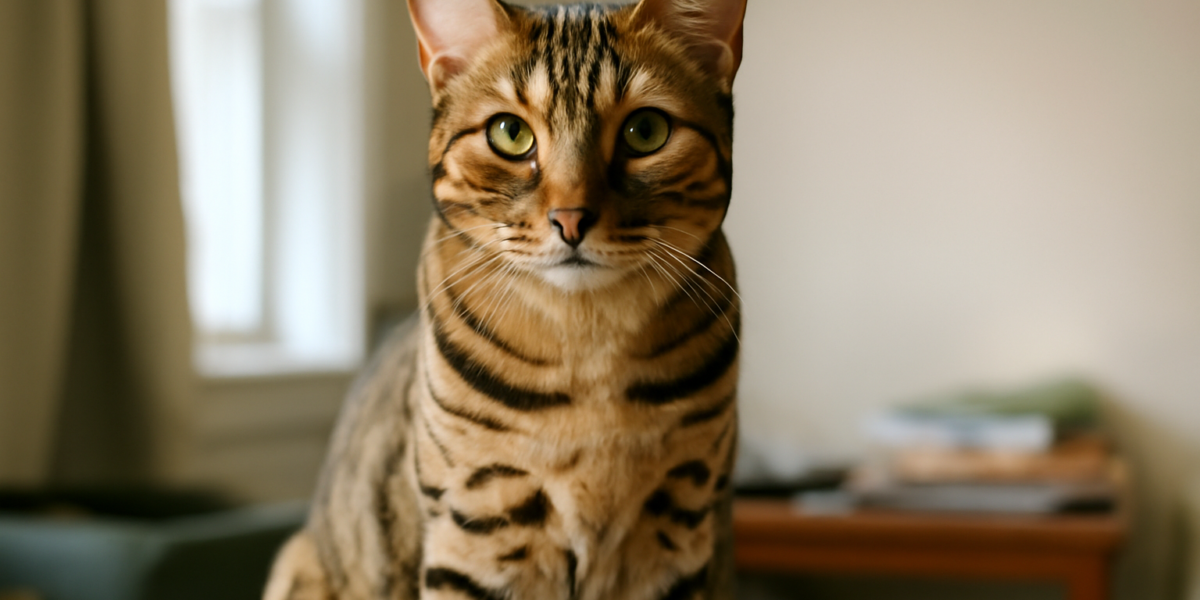
The coat is the showpiece. Spotting can be solid or arranged in rosettes, scattered randomly across a warm tan, gold, or silvery base. The belly is usually paler, with broken spots running down the flanks. The fur lies close to the body and has a glossy, almost pelted feel that resembles a wild cat’s hide more than a typical domestic cat coat.
Eyes are usually gold, copper, or green, and the ears are medium with rounded tips. There is no mistaking a Cheetoh for an ordinary tabby — the silhouette and pattern read as wild even at first glance.
Size and Weight
Females typically weigh 10 to 15 pounds and males 15 to 22 pounds, with some larger individuals on record. They mature slowly, often filling out fully only at three or four years old. If you want to compare them to other genuinely large breeds, our roundup of the largest domestic cat breeds is a useful benchmark.
Temperament and Personality
Cheetohs are confident, curious, and unusually people-focused for a hybrid breed. They tend to follow household members from room to room, climb to high perches to monitor activity, and greet visitors at the door. Many owners describe them as dog-like, and the breed is often included in trait roundups of cat breeds that act like dogs.
They are vocal but not piercing. Expect chirps, trills, and conversational mews rather than the loud yowl of a Siamese. They form strong attachments to their core people and can be moody if left alone for long stretches without enrichment.
Children and confident dogs are usually fine with a Cheetoh, provided early socialization happens. Other cats can work, but a high-energy spotted cat does best with another active companion rather than a senior or a timid lap cat.
Daily Care and Enrichment
This is the part of Cheetoh ownership that surprises new adopters most. The energy level is closer to a working dog than a typical house cat. Without daily structured play, Cheetohs invent their own entertainment — and that often means knocked-over plants, opened cupboards, and 3 a.m. zoomies.
Plan on two or three interactive play sessions per day, ideally with wand toys that mimic prey movement. Vertical territory matters too; tall cat trees, window perches, and stable shelves give a Cheetoh somewhere to burn climbing energy.
Food puzzles are nearly mandatory. Slow feeders and rotating puzzle toys, like the ones covered in our puzzle feeders for cats guide, transform mealtime from a thirty-second event into mental exercise. A bored Cheetoh is a destructive Cheetoh.
Grooming
The short, glossy coat sheds modestly and benefits from a weekly brush with a rubber curry or grooming mitt. Bathing is rarely needed unless the cat gets into something. Trim claws every two to three weeks and check ears monthly for wax buildup.
Health Considerations
Because the Cheetoh derives from two pedigreed breeds, it inherits the health profiles of both rather than introducing entirely new concerns. The most consistent concern is digestive sensitivity inherited from the Bengal side — Bengals as a population have higher reported rates of inflammatory bowel disease and food sensitivities than many breeds. Watch for chronic loose stool, intermittent vomiting, or weight loss and bring those signs to your vet promptly.
Hypertrophic cardiomyopathy is reported across many cat breeds, and Cheetohs are not exempt. Annual exams, including listening for heart murmurs and bloodwork as the cat ages, are good practice. The annual vet exam for cats guide explains what should happen at each visit.
Hybrid lineage notes: F1 to F3 generation Bengals (and by extension early-generation hybrids that include them) face ownership restrictions in some US states. Most Cheetohs marketed today are F4 or later and considered fully domestic, but verify your state and county rules before bringing one home.
Lifespan
Reliable lifespan data for a breed this rare is limited. Both parent breeds tend to live into their teens with good preventive care, and there is no reason to expect the Cheetoh to fall significantly outside that range when fed and vetted appropriately.
Cheetoh vs Related Spotted Breeds
Choosing a spotted hybrid means weighing energy, social style, and registry support. Bengals run hotter and more independent; Ocicats are slightly calmer and more openly affectionate. The Cheetoh sits between them on most behavior axes. If you are torn between Bengal-derived options, our comparison Bengal vs Ocicat covers the contrast in detail. For a wider view of spotted patterns across the species, see cat breeds with spotted coats.
Is the Cheetoh Right for You?
This is a great match if you want an interactive, athletic, conversational cat and you are home enough to keep one entertained. Multi-pet households with another energetic cat or a friendly dog often work beautifully. So do families with school-age children who can join in play sessions.
It is the wrong match if you travel often without a sitter, if you live in a small apartment without vertical climbing space, or if you want a quiet decorative cat. Cheetohs need engagement, and they will tell you loudly when they are not getting enough.
Adoption and Finding a Cheetoh
Cheetohs almost never appear in general shelters. Your realistic paths are breed-specific Bengal or Ocicat rescues that occasionally take in mixed-lineage cats, breeder surrenders, and reputable breeders who health-test parent stock. Walking through cat-only rescues first is sensible — even if a Cheetoh isn’t currently listed, the network often knows of upcoming surrenders.
Vet any breeder carefully. Our reputable rescue red flags guide flags the warning signs that apply equally to breeders: no health testing, no in-person visits allowed, kittens released before 12 weeks, or pressure to pay a deposit before meeting the cat. For broader hybrid context, the adopting a rescue Bengal cat guide covers expectations that translate directly to Cheetoh adopters.
Frequently Asked Questions
Is the Cheetoh cat legal everywhere?
Most Cheetohs sold today are F4 generation or later from Bengal lineage, which generally meets the “fully domestic” standard. Earlier generations face restrictions in some US states. Check your state and municipal rules before adopting.
Are Cheetohs hypoallergenic?
No. The Cheetoh produces normal levels of the Fel d 1 protein. If allergies are a concern, look at our best hypoallergenic cat breeds roundup instead.
Do Cheetohs get along with dogs?
Often yes, especially when introduced young to friendly, cat-savvy dogs. Their confident, dog-like personality means they rarely cower. Slow introductions still matter — see our guide to introducing a new cat to a resident dog.
How much exercise does a Cheetoh need?
Plan on at least 30 to 45 minutes of structured interactive play across two or three sessions daily, plus puzzle feeders and climbing space available all day. They are not a low-effort cat.
Are Cheetohs recognized by major registries?
Recognition has shifted over the years and varies by registry. Some have listed the breed in experimental or preliminary classes; others do not list it at all. Confirm current status with the registry directly before assuming pedigree paperwork.
Looking to adopt a Cheetoh Cat Breed Profile?
Browse Cheetoh Cat Breed Profile cats and mixes available for adoption from shelters and rescues near you.
Find Cheetoh Cat Breed Profile Cats for Adoption