Last updated: May 6, 2026
In this article
10 Largest Domestic Cat Breeds in the World
The Appeal of Giant Domestic Cats
There is something captivating about a domestic cat that approaches the size of a small dog. The largest cat breeds combine the independence and grace of a feline with a substantial physical presence that commands attention and fills a room with personality. These gentle giants often have dog-like traits — following their owners around, greeting them at the door, and even learning to fetch — that make them exceptionally engaging companions.
Large domestic cats are not simply oversized versions of average cats. Many of these breeds developed their impressive size through centuries of natural selection in harsh climates, where a bigger body meant better heat retention and survival. Others were deliberately bred for size, sometimes incorporating wild cat genetics to create domestic cats with an exotic appearance. Regardless of their origins, the largest domestic breeds share a tendency toward calm, easygoing temperaments — as if their physical size gives them the confidence to be relaxed and gentle.
At Walk Me Home Rescue, we have found homes for cats of all sizes. If you are drawn to felines on the larger end of the spectrum, these 10 breeds deliver impressive size paired with wonderful temperaments.
The True Giants
1. Maine Coon — The Maine Coon holds the record as the longest domestic cat breed, with some individuals measuring over 40 inches from nose to tail tip. Males typically weigh 15 to 25 pounds, though some exceptional individuals exceed 30 pounds. Originally from the state of Maine, these rugged, long-haired cats developed naturally in the harsh New England climate. Their large, tufted paws act as snowshoes, and their thick, water-resistant coat protects them in cold weather. Despite their imposing size, Maine Coons are gentle, playful, and surprisingly vocal — producing chirps and trills rather than typical meows. They are often called “gentle giants” and “dogs of the cat world” because of their loyal, social nature. A Maine Coon is a cat you can truly share your life with.
2. Savannah Cat — The Savannah is a hybrid breed created by crossing domestic cats with the African serval, a wild cat. The result is a tall, lean, spectacularly spotted cat that can weigh 12 to 25 pounds and stand up to 17 inches at the shoulder. Early-generation Savannahs (F1 and F2) are the largest, with later generations (F4 and beyond) being more moderate in size. Savannahs are extraordinarily athletic — they can jump eight feet vertically and love water, fetch, and outdoor adventures on a leash. They are intelligent, energetic, and require experienced owners who can provide ample stimulation. Savannahs are legal in most areas but are restricted in some states and countries, so check local laws before considering one.
3. Ragdoll — The Ragdoll is a large, plush cat that combines impressive size with an almost impossibly gentle temperament. Males typically weigh 15 to 20 pounds, and some reach 25 pounds. Their name comes from their tendency to go limp and relaxed when picked up. Ragdolls have beautiful blue eyes, semi-long silky coats, and color-point patterns. Despite their size, they are not particularly athletic — they prefer ground-level activities and are more likely to be found on your lap than on top of a refrigerator. Their docile, trusting nature and substantial size make them feel like living, purring teddy bears. Ragdolls are slow to mature, not reaching their full size until around age four.
Muscular and Powerful Breeds
4. Norwegian Forest Cat — The Norwegian Forest Cat, or “Wegie,” is a large, powerful breed that evolved in the forests of Scandinavia. Males weigh 12 to 16 pounds, with some reaching 20 pounds. They have a thick, double-layered waterproof coat, tufted ears, and a long, bushy tail. Norwegian Forest Cats are excellent climbers with strong, muscular hindquarters. They are calm, friendly, and independent — content to sit near you without demanding constant attention. Their wild, forest-cat appearance belies a gentle, patient temperament. Wegies mature slowly, taking up to five years to reach full size, and their long coat requires regular brushing to prevent matting.
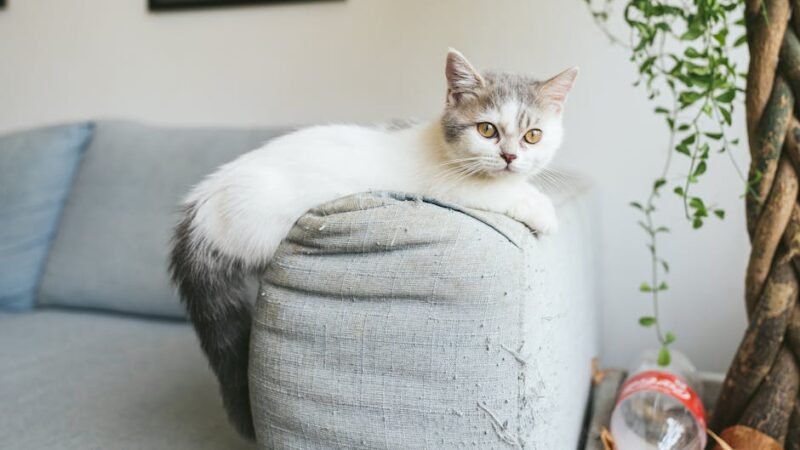
5. British Shorthair — The British Shorthair may not be the tallest or longest cat, but they are one of the heaviest. Males commonly weigh 12 to 17 pounds, with their stocky, cobby build making them feel even heavier than they are. Their round faces, dense plush coats, and sturdy bodies give them a solid, substantial presence. British Shorthairs are calm, dignified, and easygoing. They are not lap cats by nature — they prefer to sit beside you rather than on you — but they are loyal, reliable companions. Their dense muscle and heavy bone structure make them genuinely impressive when you pick one up for the first time.
6. Ragamuffin — Closely related to the Ragdoll, the Ragamuffin is a large, sweet-natured cat that weighs 10 to 20 pounds. They have plush, rabbit-like fur that comes in every color and pattern, and their large, expressive eyes give them a perpetually sweet expression. Ragamuffins are gentle, patient, and love being held — they often go limp in your arms, just like their Ragdoll cousins. They are excellent family cats who get along with children and other pets. Their dense coat is surprisingly low-maintenance for its volume, resisting tangles and requiring only weekly brushing. Ragamuffins are trusting to a fault and should be kept indoors for their own safety.
Exotic-Looking Giants
7. Chausie — The Chausie is a hybrid breed created from the jungle cat (Felis chaus) and domestic cats. Males can weigh 15 to 25 pounds with a tall, athletic build that is all lean muscle. Chausies have an exotic, wild appearance with long legs, large ears, and a short coat that comes in brown ticked tabby, solid black, or grizzled tabby. They are extremely active, intelligent, and need significant mental and physical stimulation. Chausies can be trained to walk on a leash and enjoy interactive play. They are loyal and form strong bonds with their owners but are not recommended for inexperienced cat owners due to their high energy and intelligence.
8. Bengal — While not the largest breed by weight (8 to 15 pounds for males), the Bengal’s muscular build, long body, and wild appearance make them one of the most impressive-looking large cats. Developed from crosses with the Asian leopard cat, Bengals have a strikingly beautiful spotted or marbled coat with a unique “glitter” effect that shimmers in the light. They are athletic, energetic, and love water — a trait inherited from their wild ancestors. Bengals are intelligent and need plenty of stimulation. Their combination of wild appearance, muscular build, and dynamic personality makes them one of the most visually striking domestic cats you can own.
9. Siberian — The Siberian is Russia’s national cat, a large, powerful breed that developed naturally in the forests of Siberia. Males weigh 12 to 17 pounds, with some reaching 20 pounds or more. They have a triple-layered, water-resistant coat that protected them through brutal Russian winters. Siberians are agile, athletic cats who love to jump and climb. Despite their size and power, they are affectionate, gentle, and known for being surprisingly hypoallergenic — they produce lower levels of the Fel d 1 protein that triggers most cat allergies. Siberians are playful, social, and retain a kitten-like spirit well into adulthood. Their combination of impressive size, beauty, and sweet temperament makes them increasingly popular worldwide.
10. Turkish Van — The Turkish Van is a large, muscular cat weighing 10 to 18 pounds with a unique characteristic: they love water. Known as the “swimming cat,” Turkish Vans have a semi-long, cashmere-textured coat that is naturally water-resistant. They are predominantly white with color restricted to the head and tail, a pattern known as “Van pattern.” Turkish Vans are energetic, playful, and athletic — excellent jumpers who enjoy being up high. They are loyal to their families but can be independent and do not always enjoy being held. Their size, striking appearance, and unique love of water make them one of the most distinctive large cat breeds.
Caring for Large Cat Breeds
Large cats have some specific care requirements. They need bigger litter boxes — standard sizes are often too small, and many owners of giant breeds opt for large storage bins as litter boxes. Cat trees and perches should have wide, sturdy platforms rated for higher weights, as a 20-pound Maine Coon will break a flimsy cat tree designed for a 10-pound cat. Food bowls and water fountains should be elevated to reduce neck strain, and portion sizes need to be carefully monitored to prevent obesity, which is especially dangerous for the joints and heart of a large cat.
Regular veterinary checkups are particularly important for large breeds, which can be prone to hypertrophic cardiomyopathy, hip dysplasia, and joint problems. Keep large cats at a healthy weight through measured feeding and active play. Despite their size, most large cat breeds are surprisingly gentle and well-suited to family life — just be prepared for a cat who takes up most of the sofa.
For individual breed profiles, explore our cat breeds directory. You might also enjoy our articles on the most vocal cat breeds and the longest living cat breeds. Find your gentle giant on our adoption page.
Frequently Asked Questions
How big do the largest domestic cats actually get?
The largest domestic cats can reach impressive sizes. Maine Coons hold the record, with the longest domestic cat ever recorded measuring 48.5 inches from nose to tail tip. Savannah cats can stand up to 17 inches at the shoulder and weigh up to 25 pounds. Individual Maine Coons have exceeded 30 pounds, though most males average 15 to 25 pounds. For context, a large male Maine Coon is roughly the same weight as a Cocker Spaniel. Most giant breed cats do not reach their full size until age 3 to 5, so a one-year-old kitten of a large breed still has significant growing to do.
Are large cat breeds more expensive to own?
Yes, large cats generally cost more to maintain than average-sized cats. They eat more food, require larger litter boxes with more litter, and need bigger, sturdier cat furniture. Veterinary costs can be higher because anesthesia and medications are dosed by weight, so larger cats cost more for procedures and prescriptions. Some large breeds, particularly hybrids like the Savannah, have higher purchase prices. However, the increased costs are generally moderate rather than dramatic — you might spend 20 to 40 percent more annually on a large cat compared to an average-sized one, depending on the specific costs in your area.
Do large cats need more space than regular cats?
Large cats benefit from more space but can adapt to various living situations. They need room to move comfortably, and vertical space is especially important — tall cat trees and elevated perches allow large cats to exercise and observe their environment from above. A small apartment with excellent vertical enrichment can work for many large breeds, though active breeds like the Savannah and Bengal do better with more square footage. The most important factors are environmental enrichment and interaction, not raw space. A bored Maine Coon in a mansion will be less happy than a stimulated Maine Coon in a well-equipped apartment.
Are large cat breeds good with children?
Most large cat breeds are excellent with children. The Ragdoll, Maine Coon, Ragamuffin, and Siberian are particularly known for their patience and gentleness with kids. Their larger size makes them more resilient to the inadvertent rough handling that young children sometimes subject pets to, and their calm temperaments mean they are less likely to scratch or bite in response to a child’s enthusiastic affection. However, always supervise interactions between young children and any pet, and teach children to handle cats gently and respectfully. Large, active breeds like the Bengal and Savannah can be too energetic for very young children.
Can large domestic cats be kept as indoor-only pets?
Yes, all of these breeds can live happily indoors with proper enrichment. Indoor living is actually recommended for most large cat breeds, particularly the trusting Ragdoll and Ragamuffin, who lack the wariness needed to survive outdoor threats. For high-energy breeds like the Savannah and Bengal, indoor living requires more effort — multiple cat trees, interactive toys, puzzle feeders, and dedicated play sessions. Consider leash training for breeds that enjoy outdoor exploration, or building a secure outdoor enclosure (catio) that allows fresh air and sunshine without the risks of free roaming. Indoor-only cats live significantly longer on average than outdoor cats, regardless of breed.
Looking to adopt a 10 Largest Domestic Cat Breeds in the World?
Browse 10 Largest Domestic Cat Breeds in the World cats and mixes available for adoption from shelters and rescues near you.
Find 10 Largest Domestic Cat Breeds in the World Cats for Adoption