Last updated: May 4, 2026
In this article
Overview of the Genetta Cat
The Genetta cat is a designer hybrid that combines the short legs of the Munchkin with the spotted coat patterning of the Bengal and similar wild-look breeds. The intent was to create a small, low-slung cat with the dramatic rosetted markings of a wild ancestor — a kind of miniature Bengal silhouette.
Two honesty notes up front. First, the dwarfism gene that gives the Genetta its short legs is the same gene that defines the Munchkin, and it carries documented structural concerns including lordosis (excessive spinal curvature) and pectus excavatum (chest deformity). Second, the breed is experimental and not widely recognized by major registries. If you want a cat with established pedigree paperwork and a long welfare track record, the Genetta is not yet that cat.
This profile covers what is known, what is debated, and how to think honestly about adoption.
Quick Facts
- Origin: United States, designer hybrid
- Parent breeds: Munchkin and Bengal (sometimes Savannah or domestic spotted lines)
- Size: Small to medium; most adults weigh 4 to 9 pounds
- Coat: Short, glossy, with rosettes or spots
- Energy level: High
- Grooming: Low — weekly brushing
- Health: Dwarfism-related concerns shared with all Munchkin-derived breeds
- Registry status: Experimental; not widely recognized
History and Origins
The Genetta project emerged in the United States as part of a broader trend of crossing the Munchkin with other distinctive breeds to create new short-legged variants. The named inspiration is the genet, a small spotted carnivore native to Africa and parts of Europe — though the genet itself is not a cat and is not part of the breeding program. The connection is purely visual.
Recognition has been limited. Major registries have generally declined to recognize Munchkin-derived hybrids in championship classes, citing the same welfare debates that surround the parent Munchkin breed. Some experimental or new-breed listings have appeared and disappeared over the years; confirm status directly with the registry rather than relying on a breeder’s marketing.
For background, see our Munchkin profile and Bengal profile. Both inform what to expect from a Genetta in body and personality.
Appearance
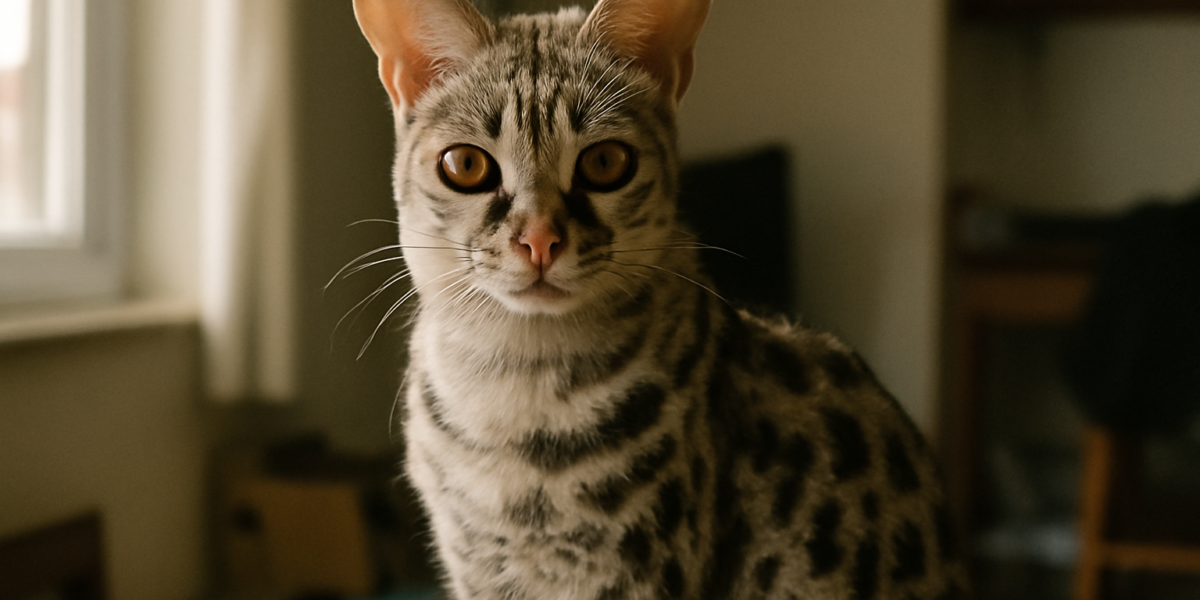
The Genetta’s defining trait is the combination of short legs and spotted coat. The body is long and low to the ground, the legs are noticeably shorter than a typical cat’s, and the coat carries Bengal-style rosettes, classic spots, or marbled patterns.
Coat colors range from warm browns and gold to silver and even charcoal, with spotting in darker tones. The fur lies close to the body and has a glossy, almost pelted quality inherited from the Bengal side. Eye colors include green, gold, and copper.
The head is moderate, with medium ears and a slightly rounded muzzle. Movement is distinctive — the short legs combined with the long body produce a ferret-like or weasel-like gait. Some cats have very tight, low-slung profiles; others have slightly longer legs depending on the cross.
Size and Weight
Most adult Genettas weigh 4 to 9 pounds, with females smaller than males. They sit alongside other short-legged breeds in our dwarf cat breeds overview and the smallest cat breeds roundup.
Temperament and Personality
Genettas are typically active, curious, and people-focused. The Bengal heritage shows in their interest in climbing, hunting prey toys, and following household activity closely. The Munchkin heritage tempers the wildest edges and contributes a friendly, sociable disposition.
They form strong attachments to their families and tend to dislike being alone for long periods. Many do well with another active cat as a companion, and most tolerate cat-savvy dogs. They are confident around respectful children but, like all small cats, need protection from rough handling.
Vocally they are moderate. Expect chirps, trills, and conversational mews — louder than a Russian Blue, quieter than a Siamese.
Daily Care and Enrichment
Despite the short legs, Genettas are remarkably athletic. They climb, jump, and chase as enthusiastically as longer-legged cats — they just take a bigger run-up and prefer slightly lower targets. Daily structured play is essential; without it, they invent destructive entertainment.
Provide vertical territory with stable, accessible levels rather than steep narrow towers. Stairs and ramps help short-legged cats access high spots without strain. Interactive wand toys, food puzzles, and rotating toy selections keep the active mind busy.
Food puzzles are especially valuable. Our puzzle feeders for cats guide covers options that suit short-legged cats well — slow feeders and rolling balls work better than vertical puzzle boxes that require leaping.
Grooming
The short coat needs only a weekly brush with a rubber curry or grooming mitt. Bathing is rarely needed. Pay attention to claw length — short-legged cats can struggle to use scratching posts as effectively as standard cats, and untrimmed claws can grow into the pad.
Health Considerations
The single most important health note about the Genetta is that the short-leg trait is a form of dwarfism. The same dwarfism gene that produces the Munchkin’s distinctive look is associated with structural concerns documented across short-legged cat breeds. The two most discussed are lordosis (an excessive inward curve of the spine) and pectus excavatum (a sunken chest deformity). Severity varies; some cats are unaffected, others have significant limitations.
Hybrid lineage adds the Bengal-side considerations. Bengals as a population have higher reported rates of inflammatory bowel disease and digestive sensitivities than many breeds. Watch for chronic loose stool, intermittent vomiting, or weight loss. Hypertrophic cardiomyopathy is a concern across many breeds and is worth screening for during annual exams. The hypertrophic cardiomyopathy guide explains what to watch for.
F1 to F3 generation Bengals (and early-generation hybrids that include them) face ownership restrictions in some US states. Most Genettas marketed are later-generation domestic cats; verify your state and county rules before adopting.
Lifespan
Reliable lifespan data for a breed this experimental is limited. Other dwarf-mix breeds and Bengal-derived breeds typically live into their teens with attentive preventive care, though severe structural cases can have shorter, more medically intensive lives.
Genetta vs Other Spotted or Dwarf Breeds
If you are drawn to the Genetta, it is worth considering related options. The Munchkin offers the same short-legged build without the Bengal-derived energy intensity. The Bengal alone gives you the spotted coat without the dwarfism question. Other spotted breeds in our spotted coats roundup — such as the Ocicat or Egyptian Mau — provide dramatic patterning with longer life expectancy and broader registry recognition.
The Bengal vs Ocicat comparison is also helpful for thinking about which spotted lineage suits your household.
Is the Genetta Right for You?
This breed makes sense for an adopter who has thought carefully about the welfare implications of dwarfism crosses, has a vet relationship for orthopedic monitoring, and wants a small, active, sociable cat. A household that is home most days and enjoys active play is a good fit.
It is not the right breed if you prefer established pedigrees, want a cat without breed-specific welfare debate, or do not have time for daily structured enrichment. The Bengal alone or the Munchkin alone may be more appropriate alternatives depending on which trait drew you in.
Adoption and Finding a Genetta
Genettas are very rare. They almost never appear in general shelters, and breeders are few. Realistic paths include direct contact with experimental-breed catteries, breed-specific Bengal or Munchkin rescues that occasionally take mixed-lineage cats, and breeder surrender networks. Start with cat-only rescues and breed-specific rescue networks.
Vet any breeder carefully. Look for orthopedic screening of breeding parents, willingness to discuss documented dwarfism concerns honestly, and contracts that allow return at any age. The reputable rescue red flags guide flags the warning signs that apply to breeders too.
For broader hybrid adoption context, the adopting a rescue Bengal cat guide covers expectations that translate well to Genetta adopters. The adopt cats hub is also worth scanning regularly.
Frequently Asked Questions
Is the Genetta a wild cat hybrid?
No. Despite the name’s reference to the African genet (a non-cat carnivore), the Genetta is bred from domestic cats — primarily Munchkin and Bengal lineage. There is no genet ancestry.
Are Genettas healthy?
It depends on the individual. The breed inherits dwarfism-related structural concerns from the Munchkin side and digestive sensitivities common in Bengal lineage. Many cats live well; some face significant medical issues. Orthopedic screening of parents and lifelong vet care matter.
Can Genettas jump?
Yes, though they take a bigger run-up and prefer lower targets than standard-legged cats. Provide ramps and stable mid-height perches rather than tall narrow towers.
Are Genettas recognized by major registries?
Recognition has been limited and shifts over time. Confirm current status directly with TICA, CFA, or your regional registry rather than relying on breeder marketing.
How is the Genetta different from a Bengal?
The Genetta has the short-legged dwarfism trait of the Munchkin combined with Bengal-style spotting. A standard Bengal has full-length legs and the same coat pattern, with broader registry recognition and more established health data.
Looking to adopt a Genetta Cat Breed Profile?
Browse Genetta Cat Breed Profile cats and mixes available for adoption from shelters and rescues near you.
Find Genetta Cat Breed Profile Cats for Adoption