
Last updated: May 16, 2026
In this article
- The Short Answer: Bay Laurel Is Toxic to Dogs and Cats
- Critical: Three Different “Laurels,” Three Very Different Risk Profiles
- Identifying True Bay Laurel: Laurus Nobilis
- The Toxic Chemistry of Bay Laurel
- Symptoms of Bay Laurel Toxicity in Dogs and Cats
- What to Do If Your Pet Ate Bay Laurel
- Bay Laurel Versus Cherry Laurel: A Closer Look
- Bay Laurel Versus Mountain Laurel
- Bay Laurel in the Kitchen: Dried Leaves and Potpourri
- How Bay Laurel Compares with Other Herb-Garden Plants
- Growing Bay Laurel Around Pets: Practical Layout
- Frequently Asked Questions
The Short Answer: Bay Laurel Is Toxic to Dogs and Cats
Bay laurel (Laurus nobilis), also called sweet bay, true laurel, or Grecian laurel, is toxic to both dogs and cats. The leaves and woody stems contain essential oils — primarily eugenol and methyl eugenol, along with cineole and linalool — that irritate the mouth, throat, and gastrointestinal tract. Severity is usually mild to moderate per ASPCA framing: drooling, vomiting, diarrhea, and reduced appetite are typical. Sharp leaf fragments can also cause physical injury during swallowing, and cats are more sensitive to the essential-oil chemistry than dogs.
If your pet has chewed bay laurel leaves, branches, or you suspect ingestion of bay essential oil, call your veterinarian, ASPCA Animal Poison Control Center at 888-426-4435 (per-call fee), or Pet Poison Helpline at 855-764-7661. Most cases resolve with supportive care, but the foreign-body risk from a swallowed bay leaf and the higher cat-specific oil sensitivity both deserve attention.
Critical: Three Different “Laurels,” Three Very Different Risk Profiles
Before going further, this is the most important clarification in the article. The word “laurel” is attached to several unrelated plants with dramatically different toxicities. Mixing them up has caused real veterinary emergencies.
- Bay laurel (Laurus nobilis) — the culinary bay leaf. Mild to moderate GI irritant from essential oils. The subject of this guide.
- Cherry laurel (Prunus laurocerasus, also called English laurel) — a Prunus species containing cyanogenic glycosides that release cyanide when chewed. SEVERE-tier toxic. A common hedging shrub in temperate landscaping; chewed leaves and crushed pits can cause rapid collapse, breathing failure, and death.
- Mountain laurel (Kalmia latifolia) — an unrelated heath-family shrub containing grayanotoxins. SEVERE-tier toxic. Causes vomiting, weakness, irregular heart rhythm, seizures, and death. Native to eastern North American forests and widely planted as an ornamental.
Three plants, three different chemistries, three different severity tiers. If you cannot identify which “laurel” your pet ate with confidence, treat it as a potential SEVERE-tier exposure and call for help immediately. Photograph the plant if you can — leaf shape and flower structure are distinctive, and ER vets often work from photos.
Identifying True Bay Laurel: Laurus Nobilis
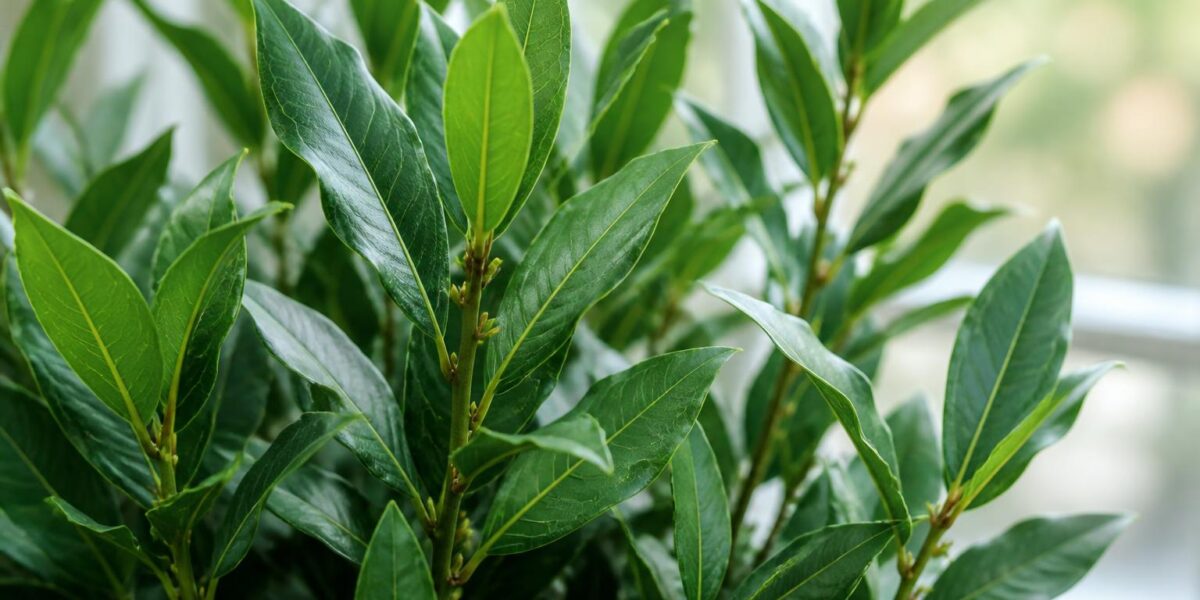
True bay laurel is a slow-growing evergreen tree or shrub native to the Mediterranean basin. Mature trees can reach 30 to 60 feet in their native climate, but most home gardeners grow them clipped as 3 to 8-foot ornamentals or in containers that come indoors over winter. Identifying features include:
- Glossy, leathery, dark green leaves 2 to 4 inches long, with smooth or slightly wavy edges
- A distinctive savory aroma when a leaf is crushed — the same scent as the dried bay leaves in the spice cabinet
- Small, pale yellow flower clusters in spring, followed by small dark purple-black berries (only on female trees)
- Smooth gray bark on young branches
Cherry laurel, by contrast, has more rounded, lighter green leaves, white spike-shaped flower clusters, and a different smell when crushed (almond-like, not savory). Mountain laurel has elliptical leaves and showy clusters of pink, white, or red cup-shaped flowers in early summer. Visual differences are clear once you know what you are looking at.
The Toxic Chemistry of Bay Laurel
The essential oils in bay laurel — eugenol, methyl eugenol, cineole, linalool, and a handful of related aromatic compounds — are concentrated in the leaves and bark. Concentrations are high enough to flavor cooking but low enough that humans tolerate the dried leaves easily. In pets, the same compounds are GI and oral irritants when chewed in larger amounts than a human cooking application would deliver.
Cats are the more sensitive species because their hepatic glucuronidation pathway clears phenolic compounds — eugenol especially — far more slowly than the dog or human pathway does. The same metabolic shortfall that makes cats vulnerable to tea tree oil, pennyroyal, and undiluted essential oils generally is in play with bay laurel oil. Concentrated bay essential oil is a meaningful exposure even at small volumes; chewed fresh leaves are a milder version of the same theme.
Symptoms of Bay Laurel Toxicity in Dogs and Cats
Most cases are mild and show up within the first few hours after chewing or swallowing. Watch for:
- Drooling, lip-smacking, or pawing at the mouth
- Vomiting, sometimes with leaf fragments visible
- Diarrhea
- Reduced appetite or refusal of the next meal
- Mild lethargy
- Coughing or gagging if leaf fragments lodged in the throat
- Abdominal discomfort or hunched posture
A specific concern with bay leaves is that the leaf is stiff, leathery, and often serrated at the edges. Whole or partially chewed leaves can scratch the esophagus, lodge in the throat, or — if multiple are swallowed — bunch up in the stomach or small intestine and behave as a partial foreign body. Persistent vomiting, retching without producing anything, or refusal to eat for more than a meal warrants a vet visit even if the immediate signs were mild.
What to Do If Your Pet Ate Bay Laurel
The right next step depends on how much was eaten, what form, and which species. Take these steps:
- Move the pet away from the plant and remove visible leaf fragments from the mouth if it is safe to do so.
- Confirm the species. Photograph the plant — leaves, any flowers, overall shape. This is the step where misidentification with cherry laurel or mountain laurel matters most.
- Estimate how much was eaten and note the time. A single chewed leaf is different from a stripped branch.
- Call your veterinarian. For cats and any concentrated essential-oil exposure, treat it as urgent. For dogs that ate a leaf or two and seem comfortable, the vet may suggest watching at home with a feeding plan.
- If your vet is closed, call ASPCA APCC at 888-426-4435 or Pet Poison Helpline at 855-764-7661. Both are available around the clock.
- Do not induce vomiting at home. Bay leaves are stiff and irritating coming back up, and aspiration is a real risk.
If your pet is symptomatic — repeated vomiting, breathing changes, weakness, or any neurological signs — go directly to an emergency clinic and bring a leaf sample. The cherry laurel or mountain laurel possibility makes this kind of in-person evaluation important when the plant identification is uncertain.
Bay Laurel Versus Cherry Laurel: A Closer Look
Cherry laurel (Prunus laurocerasus) is one of the most common landscape hedges in temperate North America and Europe. It is sold under the names English laurel, common laurel, or simply “laurel hedge.” Despite the shared common name, it is in the rose family, Rosaceae, alongside cherries, plums, peaches, and apricots — and it shares with them the dangerous Prunus signature of cyanogenic glycosides.
When cherry laurel leaves or seed-containing fruit are crushed or chewed, the cyanogenic glycosides release hydrogen cyanide. Pets exposed to a meaningful amount can show bright-red mucous membranes, rapid breathing, drooling, weakness, seizures, and collapse within minutes to hours. The clinical urgency is in the same band as oleander or yew. If you have a “laurel hedge” in the yard and cannot say with certainty whether it is bay or cherry, assume cherry until proven otherwise and keep pets away from clipped trimmings, fallen leaves, and any fruit.
Bay Laurel Versus Mountain Laurel
Mountain laurel (Kalmia latifolia) is a flowering shrub native to the eastern United States, also widely planted as an ornamental. It is in the heath family, Ericaceae, alongside azaleas and rhododendrons, and shares with them the grayanotoxin chemistry. Grayanotoxins disrupt sodium channels in nerve and muscle tissue, producing vomiting, drooling, weakness, irregular heart rhythm, seizures, and death in serious cases.
Mountain laurel’s pink, white, or red cup-shaped flower clusters in late spring make it easy to identify when in bloom. Outside of bloom, the leaves are glossy and elongated but distinctly different from bay laurel’s narrow, savory-smelling leaves. If you live in mountain-laurel range and have pets, learning to recognize the plant on sight pays for itself.
Bay Laurel in the Kitchen: Dried Leaves and Potpourri
The dried bay leaf in your spice cabinet is the same plant as the live tree. The drying process concentrates some of the essential oil and removes some — the net effect is that a dried bay leaf chewed by a dog or cat poses similar oral irritation risks to a fresh leaf, plus the extra mechanical risk of a stiff, splintery leaf in the throat.
Realistic kitchen exposures include a dropped bay leaf during cooking, a curious pet investigating a spice jar that fell off a shelf, and bay-scented potpourri or wreaths during fall and winter. Sweep dropped leaves promptly, store the spice jar in a closed cabinet, and keep decorative dried-bay arrangements out of reach. Bay essential oil, sometimes sold in aromatherapy lines, deserves the same caution as cinnamon or clove oil — concentrated, hard for cats to clear, and best kept away from areas where pets sleep or groom.
How Bay Laurel Compares with Other Herb-Garden Plants
Within the kitchen-herb risk landscape, bay laurel is squarely in the “common pot herb that turns out to be mildly irritant” tier — alongside oregano, thyme, sage, and tarragon. Cross-link reading from Walk Me Home Rescue’s herb library that gives the comparable framing includes oregano for cats, thyme for cats, and sage for cats.
The single-species cat and dog overviews of bay laurel itself remain the closest companion reads: bay laurel for cats and bay laurel for dogs. They cover the same essential-oil chemistry from each species’ angle and are useful when you want to share a single-species summary with a household member who keeps only cats or only dogs. For broader herb-garden planning, the cat-safe houseplants guide is the right starting point.
Growing Bay Laurel Around Pets: Practical Layout
You do not have to give up bay laurel to have a pet-safe yard or kitchen. The practical approach is layout. In the kitchen, keep the spice jar closed and stored above counter level, sweep dropped leaves immediately, and avoid running concentrated bay essential oil in diffusers around cats. In the garden, plant bay laurel where the dog does not chew — fenced beds, raised pots, or borders behind decorative wire — and avoid clipping fresh trimmings into a pile that a pet might investigate.
If your bay laurel is grown as a topiary or specimen tree, the trunk and main branches are not at chewing height for most pets, and the leaves at the top are out of reach. Container-grown bay on a kitchen windowsill is a higher-risk format if you have an indoor cat that climbs counters; consider a hanging planter or a closed terrarium-style display instead.
Frequently Asked Questions
Is a single chewed bay leaf an emergency?
Usually not, but it deserves attention. A pet that chewed and swallowed one or two whole bay leaves may show drooling, mild vomiting, or pass leaf fragments in stool over the next day. Watch for persistent vomiting, gagging, or appetite loss — and call your vet, ASPCA APCC at 888-426-4435, or Pet Poison Helpline at 855-764-7661 if anything progresses.
How can I tell bay laurel from cherry laurel quickly?
Crush a leaf and smell. Bay laurel smells savory and slightly sweet, like the spice. Cherry laurel smells faintly like almonds or marzipan — a giveaway for the cyanogenic chemistry. Bay leaves are also narrower with a sharper tip; cherry laurel leaves are broader and rounder. Photograph and ask your vet if you are not sure.
Is bay laurel essential oil safe to diffuse around pets?
Around cats specifically, no. Concentrated bay oil delivers eugenol at a level cats cannot clear well, and diffuser residue settles on fur that the cat then grooms. Around dogs, low-concentration short-duration use in a well-ventilated room is lower risk, but skip it around birds, small mammals, and any cat household.
My dog ate part of a bay leaf I dropped while cooking — what now?
For most healthy adult dogs, a small amount of bay leaf is more likely to cause mild GI upset than a serious problem. Offer fresh water, watch for vomiting, gagging, or appetite changes for the next 24 hours, and call your vet if anything seems off. Smaller dogs and puppies warrant a quicker call.
Are dried bay leaves more or less toxic than fresh?
Toxicologically, similar — the essential oils survive drying. Mechanically, dried leaves are stiffer and more likely to scratch the throat or lodge as a foreign body. If your pet swallowed a whole dried bay leaf, watch for repeated retching, gagging, drooling, or any signs of choking, and call your vet promptly if those appear.


