
Last updated: May 16, 2026
In this article
- The Reassuring Answer About Beet Plants
- Identifying Beet Plants in Your Garden
- What Beet Plants Actually Contain
- Beet Greens Versus Beet Roots
- The Soluble Oxalate Caveat
- Pink Pee and Pink Poop Are Normal
- Realistic Garden Risks
- Sharing Beets With Dogs and Cats
- Garden Setup for Pet Households
- When Beets Are the Wrong Choice
- When to Call a Veterinarian
- Frequently Asked Questions
The Reassuring Answer About Beet Plants
If you have caught your dog raiding the beet bed or your cat sniffing a freshly washed bunch on the kitchen counter, you can relax. Beet plants (Beta vulgaris) are listed as non-toxic to dogs and cats by the ASPCA, and the question of whether beet plants safe for pets has a reassuring answer for both the deep red taproot and the leafy green tops. Both parts of the plant are edible to people and to pets in moderate amounts.
The only meaningful caveat is that beet greens contain modest amounts of soluble oxalates, the same compound family that makes spinach and Swiss chard a “limit it, don’t ban it” food. For a pet that takes a curious nibble in the garden, this is irrelevant. For a pet that is being fed beet greens as a regular daily ingredient, or one with a history of calcium oxalate bladder stones, the oxalate content is worth knowing about.
This guide explains what is in beet plants, the practical garden scenarios that matter, and where the genuine cautions lie versus where you can simply enjoy your harvest.
Identifying Beet Plants in Your Garden
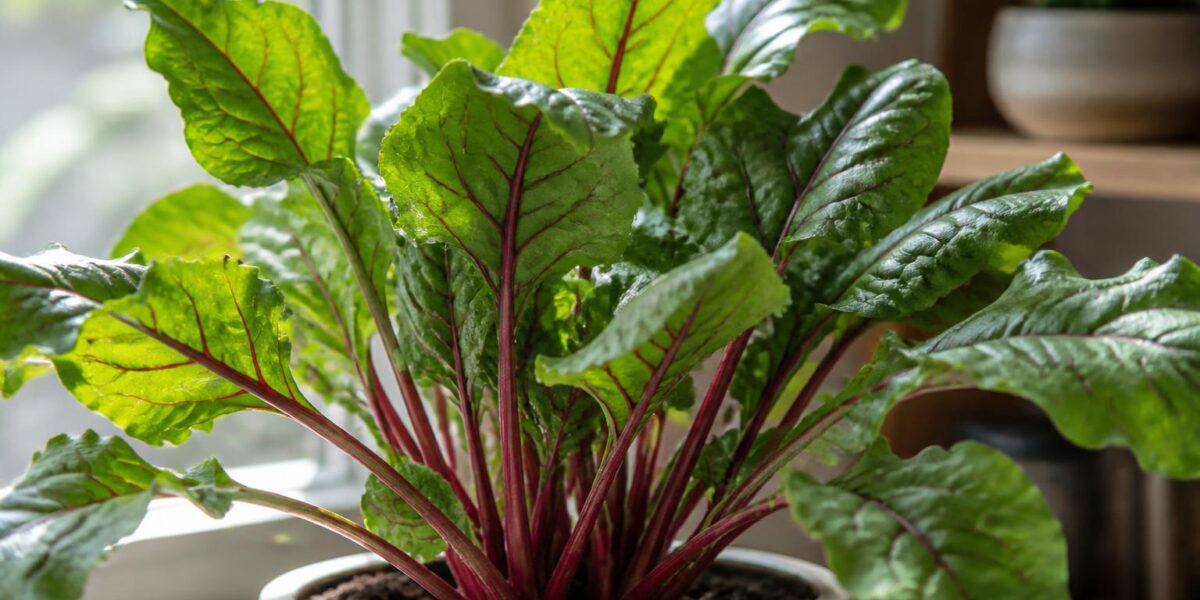
Beet plants grow as biennials, with most home gardeners harvesting them as annuals in the first season before they bolt. The leaves are large, glossy, and oval, with a thick central rib that often runs deep red, pink, or yellow depending on the variety. The leaves rise from a central crown directly above the swelling root.
The root is the rounded taproot, classically deep crimson but available in golden, white, and ringed (Chioggia) varieties. Mature roots range from golf-ball to softball-sized depending on variety. Sugar beets and fodder beets are the same species in different cultivar groups, all non-toxic to pets.
Beta vulgaris also includes Swiss chard (Beta vulgaris subsp. cicla), which is grown for the leaves rather than the root. Swiss chard is the same species as garden beet and is also considered safe for pets with the same oxalate caveat.
What Beet Plants Actually Contain
Beets are nutritionally dense. The root contains betalains (the pigment that makes beet juice red and stains everything it touches), folate, manganese, fiber, and natural sugars. Beets are unusually high in nitrates, which in humans support athletic blood-flow research; this is not a meaningful concern in pet portions.
The leafy tops are higher than the root in vitamin K, vitamin A precursors, calcium, magnesium, and importantly soluble oxalates. The oxalate content is comparable to spinach and chard, well below true oxalate-toxic plants like rhubarb leaves or sorrel.
None of these compounds are toxic to a pet that nibbles a leaf or sneaks a bite of root. The ASPCA does not list Beta vulgaris on its toxic-to-cats or toxic-to-dogs lists, and there is no specific antidote required for any plausible beet exposure.
Beet Greens Versus Beet Roots
The root is what most people think of as “beet” — sweet, earthy, deep-colored, and a kitchen staple. It is non-toxic and a small amount is fine for both dogs and cats. The earthiness comes from a compound called geosmin, the same compound that makes wet soil smell like spring rain.
The leafy tops are also edible and are sold by some markets as a separate product. Their flavor is similar to chard or mild spinach. They are non-toxic but contain more soluble oxalate than the root, which means in large daily portions over time they can theoretically contribute to oxalate-bladder-stone risk in predisposed pets.
For specifics on serving size and preparation when you want to deliberately offer beet to your pet, see the species-specific guides on whether dogs can eat beets, whether cats can eat beets, and whether dogs can eat beet greens. All three confirm beets are a small-portion safe option.
The Soluble Oxalate Caveat
Soluble oxalates are organic compounds that bind calcium in the gut and the urinary tract. In moderation they cause no problems. In high regular intake, especially in dogs predisposed to calcium oxalate urinary stones (Miniature Schnauzers, Bichon Frises, Yorkshire Terriers among others), they can contribute to stone formation.
For a one-time garden incident in which a pet ate some beet leaves, this is irrelevant. For a household feeding raw or homemade meals where someone is considering beet greens as a regular calcium-rich addition, the oxalate content is a reason to discuss the diet with a board-certified veterinary nutritionist rather than freelancing.
Cats with chronic kidney disease and dogs with a history of calcium oxalate uroliths should specifically avoid beet greens as a regular ingredient. The root is much lower in oxalate and is a safer choice for these pets, in small amounts.
Pink Pee and Pink Poop Are Normal
The deep red betalain pigment in beets passes through the digestive tract largely unmetabolized in many pets (and people), producing pink-to-red urine and pink-tinged stool for a day or two after consumption. This phenomenon has a name in human medicine — beeturia — and it is harmless.
The reason this matters is that pink urine after a beet feast can look alarmingly like blood and trigger an unnecessary emergency vet visit. If your dog ate beet trimmings yesterday and you see pink in the bowl today, the most likely explanation is the pigment.
That said, you cannot diagnose a urinary tract infection or a bladder stone from color alone. If pink urine persists more than 48 hours after the last beet exposure, if your pet is straining, urinating frequently, or seems uncomfortable, call your vet for a urinalysis to rule out the real problem.
Realistic Garden Risks
The biggest realistic risks from a beet patch are not toxicity but mess and digestion. Beet juice stains carpets, paws, and white fur indelibly. A dog that drags a beet root indoors and shreds it is going to leave evidence on every surface for days.
The second realistic risk is a dog that eats so many beets in one garden raid that the natural sugar and fiber load produces loose, pink-tinged stool the next morning. This is messy, not dangerous, and resolves on its own.
Compared with truly toxic root garden crops, beets are a low-stress plant. Contrast beet exposure with horseradish plants and their isothiocyanate burn or with the rotenone in jicama vines for examples of root-vegetable family members that genuinely warrant emergency calls.
Sharing Beets With Dogs and Cats
For dogs, cooked plain beet (no butter, no salt, no garlic, no onion) is a safe occasional addition. Raw beet is also fine but harder to digest and more likely to produce loose stool. A reasonable starting portion is a teaspoon or so of cooked beet for a small dog and a tablespoon for a large dog, no more than a few times a week.
For cats, cooked beet in tiny amounts is harmless but nutritionally unnecessary. Cats are obligate carnivores and have no dietary need for root vegetables. Most cats are indifferent to beet flavor, though a few cats find the texture interesting.
Avoid pickled beets entirely. The vinegar, salt, and often-onion content of pickled beets makes them inappropriate for pets even when the underlying beet is fine. Beet chips with added oil and seasoning are similarly off-limits for pet sharing.
Garden Setup for Pet Households
Beets grow easily in deep loose soil with consistent moisture. They are cool-season crops, planted in spring and fall in most climates. The seeds are clusters that produce multiple seedlings and need thinning. Pets generally ignore young beet seedlings.
Once the foliage is established, some dogs find the broad chard-like leaves attractive to chew, and some cats nibble the smaller inner leaves. Neither is dangerous. If you want to discourage browsing, low row cover or chicken wire over the bed solves the problem.
The roots themselves push partially above the soil as they mature, which makes them a temptation for digging dogs. Mulching around the crowns reduces visibility and slows down the dedicated digger. If a dog does extract a root, a quick rinse and the rest of the meal is salvageable for the kitchen.
When Beets Are the Wrong Choice
Beets are not the right ingredient for every pet. Three populations should specifically avoid beet greens as a regular ingredient and approach beet root with caution under veterinary direction:
First, dogs and cats with a history of calcium oxalate urinary stones. The soluble oxalate content of beet greens is a small but real contributor to stone-formation risk. Use other dark leafy options under nutritionist guidance instead.
Second, pets with chronic kidney disease, where any high-mineral, high-oxalate plant material adds an extra metabolic load that the failing kidneys handle poorly. Talk to your vet before adding any new plant ingredient.
Third, diabetic pets. Beets are sweet (about seven grams of sugar per medium beet) and the root is on the higher end of the vegetable glycemic-load scale. Stick to non-sweet vegetables in diabetic pets and discuss any fixed addition with your vet.
When to Call a Veterinarian
For pure beet plant exposure, you almost never need an emergency call. The plant is non-toxic and the realistic worst-case is digestive upset or pink urine. That said, the right call list is the same one to keep handy for any plant exposure.
Start with your own veterinarian, especially if your pet has any pre-existing condition like urinary stones, kidney disease, or diabetes. The ASPCA Animal Poison Control Center at 888-426-4435 (per-call consultation fee) is available 24/7 for plant identification and toxicology questions. The Pet Poison Helpline at 855-764-7661 is the second nationwide 24/7 hotline.
If a pet develops repeated vomiting, lethargy, blood in stool (separate from the pink betalain pigment), straining to urinate, or collapse after a garden incident, those symptoms point to something other than beet exposure and warrant prompt veterinary evaluation regardless.
Frequently Asked Questions
Are beet greens poisonous to dogs?
No. Beet greens are non-toxic to dogs. They contain soluble oxalates similar to spinach and chard, which are a concern for pets with calcium oxalate urinary stones or chronic kidney disease but are fine in moderate amounts for healthy dogs.
Why is my dog’s urine pink after eating beets?
The deep red betalain pigment in beets passes through some pets’ systems and tints the urine pink for a day or two. This is harmless. If pink urine persists or comes with straining or frequent urination, see your vet to rule out a urinary tract issue.
Can cats eat beets?
A small amount of plain cooked beet is harmless for cats but nutritionally unnecessary. Cats are obligate carnivores and lack the sweet receptor, so most are indifferent. Avoid pickled, salted, or seasoned beets entirely.
Are sugar beets safe for pets?
Sugar beets are the same species as garden beet (Beta vulgaris) and are non-toxic per ASPCA. The very high sugar content makes them a poor regular treat, especially for diabetic, overweight, or pancreatitis-prone pets.
How much beet is too much for a dog?
A teaspoon of cooked beet for a small dog or a tablespoon for a large dog, a few times a week, is a reasonable upper limit as an occasional addition. More than that adds sugar, fiber, and oxalate that displace better daily nutrition.


