
Last updated: May 16, 2026
In this article
- The Honest Answer About Horseradish Plants
- Identifying Horseradish Plants
- The Allyl Isothiocyanate Mechanism
- What Pets Experience
- Severity Tier and Comparison
- The Plant Versus the Condiment
- What to Do After Suspected Exposure
- Other Toxic Garden Plants for Cross-Reference
- Garden Setup for Pet Households
- When to Call a Veterinarian
- Frequently Asked Questions
The Honest Answer About Horseradish Plants
Horseradish plants deserve a clear toxic-tier framing. Armoracia rusticana contains allyl isothiocyanate (AITC) and related compounds at extreme concentrations, and the question of whether horseradish plants toxic to pets has an unambiguous answer: yes, the entire plant — root, leaves, and flowering stems — can cause severe oral and gastrointestinal irritation when chewed, eaten, or even handled by sensitive pets. The same chemistry that makes prepared horseradish bring tears to your eyes makes the raw plant a moderate-to-severe irritant for dogs and cats.
Horseradish is in the Brassicaceae (mustard) family, the same family as cabbage, kale, radish, and mustard. What makes horseradish stand out is the unusually high concentration of glucosinolates that release allyl isothiocyanate when the tissue is bitten or crushed. The compound is a defensive chemical the plant evolved to deter herbivores, and it works exactly as intended on dogs and cats.
This is not a SEVERE-tier systemic poisoning like oleander or lily. There is no cardiac or neurologic mechanism. The harm is direct chemical irritation of the mouth, throat, esophagus, and stomach, ranging from mild redness for a brief lick to severe inflammation, drooling, vomiting, and aspiration risk for a dog that chews on a freshly dug root.
Identifying Horseradish Plants
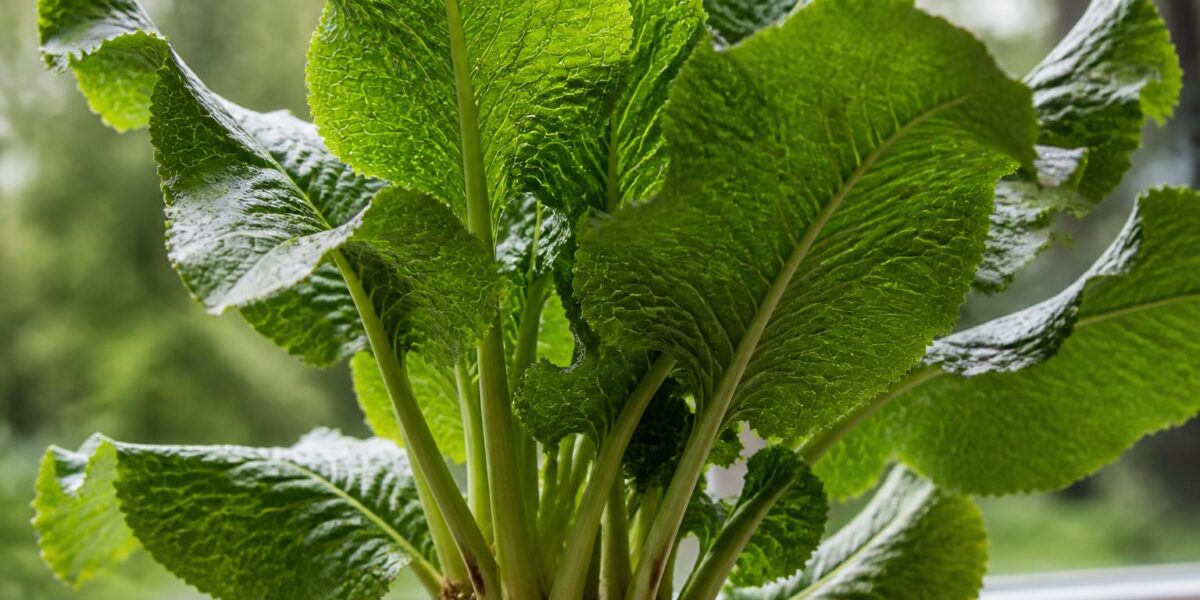
Horseradish is a hardy perennial in the Brassicaceae family. The above-ground foliage forms a clump of large dark green elongated leaves up to two to three feet tall, with a slightly rough texture and wavy margins. The leaves grow from a central crown and look somewhat like coarse spinach or large dock leaves.
The root is the part most people know — long, thick, white-fleshed, and aromatic when cut. The roots are typically harvested in fall or early spring and processed by grating to release the sharp pungency. A whole horseradish plant in the garden has a substantial taproot that can persist for years, and any small root fragment left in the soil regrows the plant aggressively.
In late spring, mature horseradish plants send up tall flowering stalks with small white four-petaled flowers in branching clusters. Most home growers cut the flower stalks before they bloom to direct energy back to root development.
The Allyl Isothiocyanate Mechanism
Horseradish stores its defensive chemistry as a stable precursor compound called sinigrin in cell vacuoles. When tissue is damaged — by a knife, a tooth, or a curious dog — the enzyme myrosinase contacts sinigrin and releases allyl isothiocyanate (AITC), the volatile compound responsible for the burning pungency.
AITC binds directly to TRPA1 receptors on sensory nerve endings in the mouth, eyes, and respiratory tract. This is the same receptor activated by mustard oil, wasabi, raw garlic, and tear gas. The result is immediate burning pain, watery eyes, salivation, sneezing, coughing, and reflex avoidance.
For a pet, the experience is the same as it would be for a human who took a large bite of fresh horseradish — only worse, because pets have no cultural context that says “this is going to burn.” A dog that bites into a horseradish root often paws at its mouth, drools profusely, and can develop swelling and inflammation in the lips, gums, and throat. In severe cases, the swelling can compromise breathing.
What Pets Experience
The clinical picture depends on how much horseradish tissue contacted the pet’s mucous membranes and for how long.
Mild exposures (brief lick of a freshly cut root, single nibble of a leaf): drooling, head shaking, pawing at the mouth, mild swelling, brief vomiting, and rapid resolution within hours once the pet stops contact.
Moderate exposures (chewing on a harvested root, eating multiple leaves): persistent drooling, repeated vomiting, abdominal pain, lethargy, refusal to eat, and visible inflammation of the mouth and tongue. These pets benefit from veterinary support including anti-inflammatories and possibly fluids.
Severe exposures (a dog that finds a stash of harvested horseradish roots and gnaws on them, or a dog that eats a substantial amount of mature plant): severe oral and pharyngeal swelling, possible aspiration of stomach contents during vomiting, dehydration from continuous drooling, and rare cases of upper airway compromise requiring emergency intervention.
Severity Tier and Comparison
Horseradish exposure sits in the moderate severity tier, with potential to cross into severe-tier with high-volume ingestion. The mechanism is mucosal chemical injury, not systemic poisoning, which makes the prognosis generally good if the pet receives prompt supportive care.
Compare with mustard plants (same family, same chemistry, lower concentration in foliage but high in seeds). Horseradish concentration in fresh root is dramatically higher than mustard greens, which is why mustard greens are eaten as cooked food and horseradish is grated by the gram.
Compare also with the genuinely SEVERE-tier garden plants in this batch — jicama vine rotenone can cause systemic mitochondrial poisoning at high doses. Horseradish is a chemical irritant rather than a metabolic poison, which is why most well-managed horseradish exposures recover fully with supportive care.
The Plant Versus the Condiment
Most pet owners encounter horseradish as a finished condiment — prepared horseradish in vinegar, horseradish sauce, or wasabi (which is often actually horseradish dyed green). These prepared forms still contain AITC but at lower volatile concentrations because the compound dissipates over time and is partly tamed by vinegar.
Pet ingestion of prepared horseradish from the kitchen counter is much less concerning than ingestion of fresh raw root or live plant tissue. A dog that eats a tablespoon of horseradish sauce will be uncomfortable, drool, and possibly vomit, but is not in serious danger. A dog that chews on a whole fresh horseradish root from the harvest pile faces a much higher exposure dose of active AITC.
Wasabi paste — whether real wasabi (Eutrema japonicum, related plant family) or “wasabi” that is actually horseradish — falls in between. Treat any pet ingestion of pungent root condiments as a moderate concern and call your vet or a poison control hotline for guidance based on the amount and the pet’s size.
What to Do After Suspected Exposure
If you see your pet chewing horseradish root or eating the leaves, act quickly. Remove the source, then offer fresh water to dilute. Do not induce vomiting unless specifically directed by a veterinarian — vomited horseradish can cause aspiration and additional mucosal damage on the way back up.
Observe for signs of distress: drooling, pawing at the mouth, swelling of the lips or tongue, repeated vomiting, refusal to eat, or labored breathing. Mild signs that resolve within an hour or two can be monitored at home with bland food and fresh water available.
Moderate or worsening signs warrant a vet visit. Bring a sample of the plant or the prepared product if possible. Treatment is supportive: anti-inflammatory medication, fluid support if dehydration develops, and rarely intubation or supplemental oxygen for severe pharyngeal swelling.
Other Toxic Garden Plants for Cross-Reference
Horseradish is one of several food-garden plants that catch pet owners off guard. The Brassicaceae family is mostly pet-safe (cabbage, kale, broccoli, radish, turnip), but the high-isothiocyanate end of the family — horseradish, mustard seeds, and to a lesser extent mustard plants — produces real mucosal irritation in pets.
For comparison with other root-vegetable pet hazards in this batch: parsnip plants use phototoxic furanocoumarins (different chemistry, dermal route), and jicama vines contain rotenone (mitochondrial toxin in the non-edible plant parts).
The pattern across these “looks like food, is actually concerning” plants is that the cooked edible food (horseradish condiment in tiny amounts, cooked parsnip root, jicama tuber) is in a different risk category from the raw plant material. Horseradish is the clearest case of “the harvest itself is the hazard” because the active AITC release happens at the moment of chewing.
Garden Setup for Pet Households
Horseradish is one of the most invasive garden plants imaginable. Once planted, it persists for decades because any root fragment left in the soil regrows. Many gardeners grow it in dedicated buried containers (a deep nursery pot sunk in the ground, or a cinder-block raised bed) to confine the spread.
If you have pets and want horseradish in the garden, a confined planting area is essential. Fence the bed or use a buried container, and keep harvested roots out of pet-accessible areas (never compost piles, never on a low porch shelf, never in a partly closed cellar that a curious dog can access).
If you decide to remove an existing horseradish bed because of a pet incident, expect a multi-year project. You will dig the main roots out, then pull the regrowth from missed root fragments for two to three subsequent seasons. Repeated cutting before the plant photosynthesizes for the season eventually exhausts root reserves.
When to Call a Veterinarian
Call your veterinarian promptly if your pet has chewed horseradish root, eaten the leaves, or consumed prepared horseradish in more than a tasting amount. Time matters less here than with truly systemic poisons, but earlier supportive care reduces total inflammation and discomfort.
Reach your own veterinarian first. If your vet is closed, the ASPCA Animal Poison Control Center at 888-426-4435 (per-call consultation fee) is available 24/7 and can provide immediate decontamination guidance. The Pet Poison Helpline at 855-764-7661 is the second 24/7 nationwide line.
If a pet shows respiratory distress, severe swelling of the face or tongue, repeated forceful vomiting, collapse, or any sign of upper airway compromise, head straight to the nearest emergency veterinary hospital. Severe mucosal swelling from a high-dose horseradish exposure can rarely require emergency airway management, and that is not a wait-and-see situation.
Frequently Asked Questions
Will a small lick of horseradish sauce harm my dog?
A small lick will likely cause drooling, head shaking, and mouth-pawing for a few minutes, but is unlikely to cause lasting harm. Offer water and watch for any worsening swelling or repeated vomiting. Call your vet if symptoms persist beyond an hour or two.
Are horseradish leaves as toxic as the root?
The leaves contain glucosinolates and produce the same AITC chemistry when bitten, but at lower concentration than the root. They are still capable of causing oral irritation and should be considered toxic to pets, just at a milder severity than the root.
Is wasabi toxic to dogs and cats?
Most “wasabi” sold outside Japan is actually horseradish dyed green. Either form contains AITC and produces oral and GI irritation in pets. Real wasabi (Eutrema japonicum) is a related Brassicaceae plant with the same general chemistry and similar risks.
Can pets recover fully from horseradish exposure?
Yes, most pets recover fully with supportive care. The injury is mucosal irritation rather than systemic poisoning, so once the AITC is gone the tissues heal within days. Severe cases with airway involvement require more intensive care but generally have good prognoses.
How do I keep my dog away from a horseradish bed?
The most reliable approach is physical fencing of the bed. Horseradish is invasive and persistent, so removing it is a multi-year project, while a simple fence eliminates the risk immediately. Buried containers prevent root spread underneath the fence.


