
Last updated: May 16, 2026
In this article
- Chinese Elm Bonsai and Pet Safety at a Glance
- Is Chinese Elm Bonsai Toxic to Cats or Dogs?
- Why Chinese Elm Is the Pet Owner’s Choice
- What If My Pet Eats a Chinese Elm Leaf?
- Mechanical Hazards: Bonsai Wire, Tools, and Topdressing
- How to Display a Chinese Elm Bonsai in a Pet Home
- Care and Pruning With Pets in the Room
- Other Pet-Safe Bonsai and Houseplant Pairings
- Outdoor vs Indoor Chinese Elm Bonsai
- Chinese Elm Cultivars and What Pet Owners Should Know
- What If My Cat Just Plays With the Tree?
- Caring for Chinese Elm Bonsai Around Pets
- Frequently Asked Questions
Chinese Elm Bonsai and Pet Safety at a Glance
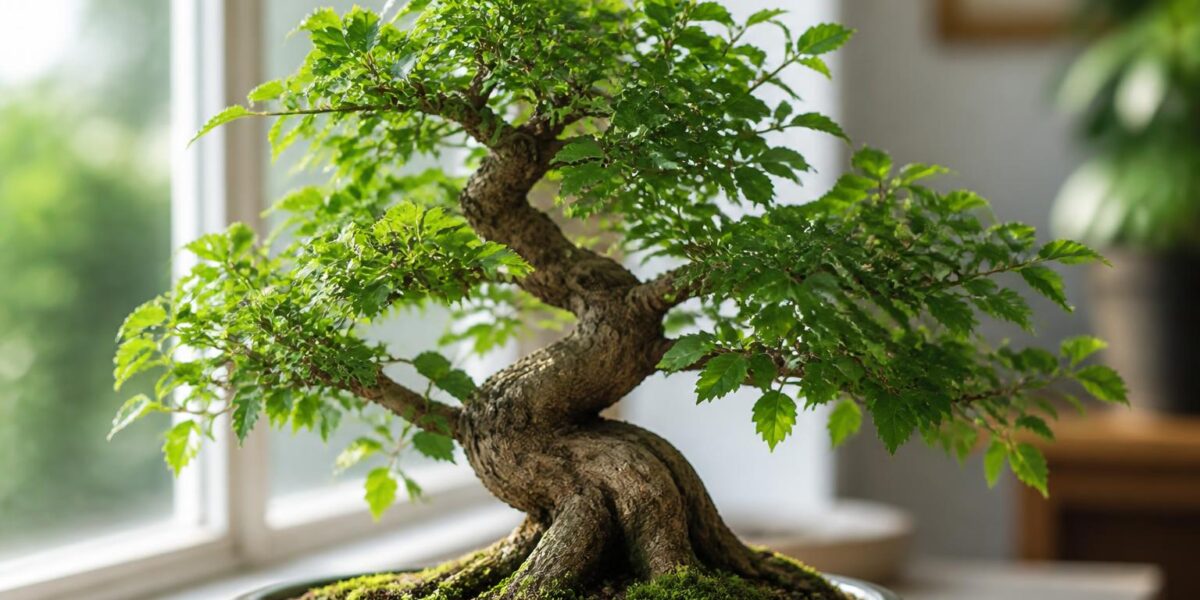
A bonsai is a miniaturized version of a full-size plant — its toxicity profile matches the underlying species exactly. Chinese elm (Ulmus parvifolia, sometimes called lacebark elm) is not on the ASPCA toxic plant list for cats or dogs, and decades of bonsai-keeping practice across Asia, Europe, and North America have not turned up significant toxicity reports. So the short answer to “is Chinese elm bonsai safe for pets” is yes — it is the gold-standard pet-safe bonsai species and a strong first choice for any household with curious cats or dogs.
“Safe” does not mean “consequence-free.” A pet that gnaws a large quantity of any plant can develop mild GI upset from sheer plant fiber, and bonsai care brings hazards beyond the species itself: thin training wire, sharp scissors, slippery glazed pots, and akadama or pumice topdressing that small dogs love to mouth. Chinese elm is the right pet-friendly choice; it is not a license to leave a bonsai unsupervised on the coffee table.
Is Chinese Elm Bonsai Toxic to Cats or Dogs?
No. Ulmus parvifolia is not classified as toxic by the ASPCA, and the broader elm family (Ulmaceae) has no significant toxicity record in companion animals. The leaves, stems, bark, and aerial roots have not been linked to vomiting, neurologic signs, or organ damage in cats or dogs at typical exposure doses. For more on the broader genus, see are elm trees safe for pets.
The most you might see if your dog snacks on a few elm leaves is a brief soft stool from indigestible plant fiber — the same reaction many dogs have to grass. Cats are usually less interested in elm foliage than they are in batting at the swaying twigs from a perch. If you catch a cat or dog mid-chew, simply remove the plant and supervise for the next few hours.
Why Chinese Elm Is the Pet Owner’s Choice
Chinese elm earns its “best beginner bonsai” reputation for reasons that overlap nicely with pet safety:
- Forgiving care. Tolerates indoor light, occasional missed waterings, and a wide humidity range.
- Small leaves naturally. Reduces in scale without aggressive pruning, so trim debris is less frequent.
- Strong recovery. Backbuds well after pruning, so an accidental cat-bat that snaps a branch is recoverable.
- Non-toxic. No raphides, no glycosides, no irritant sap.
Compare with the other common bonsai species: ficus bonsai toxic to pets, jade tree bonsai toxic to pets, schefflera bonsai toxic to pets, and the severe-tier azalea bonsai toxic to pets all carry real risk. Pine is a low-risk option but still mildly GI-irritating — see pine bonsai safe for pets.
What If My Pet Eats a Chinese Elm Leaf?
Most likely, nothing. A small amount of elm foliage is not chemically harmful. You may see:
- One brief episode of vomiting (especially in cats, who may regurgitate any plant fiber)
- A soft stool within 12–24 hours
- A short period of lip-licking if a leaf had a bitter flavor
If your pet eats a large quantity, watch for dehydration. Offer fresh water and a bland meal. If signs persist beyond 24 hours or your pet refuses food, call your veterinarian. The ASPCA Animal Poison Control Center at 888-426-4435 and Pet Poison Helpline at 855-764-7661 are available 24/7 if you want a triage opinion (a consultation fee may apply).
Mechanical Hazards: Bonsai Wire, Tools, and Topdressing
Even the safest plant species can become risky in bonsai form because of the equipment around it. Watch out for:
- Training wire. Aluminum and copper wire ends are sharp. A swallowed wire can perforate the GI tract. Tuck ends carefully into the bark.
- Akadama, pumice, or pebble topdressing. Small enough to swallow, hard enough to cause gut blockage in young or small dogs.
- Bonsai scissors and concave cutters. Razor-sharp; never leave them on the table after a pruning session.
- Liquid fertilizer and pest sprays. Many bonsai feeds and neem-based sprays are not formulated with pets in mind. Apply outdoors or in a sealed room and let foliage dry before bringing the tree back.
- Glazed ceramic pots. Top-heavy pots tip easily when batted; use museum putty or a non-slip mat under the tray.
How to Display a Chinese Elm Bonsai in a Pet Home
Even though the species is non-toxic, smart placement makes life easier for everyone:
- Choose a stable shelf with no climbing route for cats.
- Use a wide flat tray under the pot to catch water and absorb wobble.
- Add a layer of large pebbles (quarter-size or bigger) over the soil to discourage digging.
- Run a humidifier nearby rather than misting heavily — wet floor surfaces invite paw-pad investigation.
- Keep grow lights on a timer with cords secured behind furniture.
If your dog is large enough to nose the tree off a low shelf, a hanging plant hook with a saucer is a graceful workaround.
Care and Pruning With Pets in the Room
Chinese elm prunes hard. You will likely make small cuts every few weeks during the growing season. To keep the workspace pet-friendly:
- Prune over a tray or newspaper to catch leaf and twig fall.
- Sweep clippings into a closed bin immediately. Even non-toxic clippings can cause GI upset if eaten in volume.
- Wash hands and tools after pruning to remove any pesticide residue.
- Store wire spools, fertilizer pellets, and pest-control products in a sealed box on a high shelf.
If you grow several bonsai species side by side, dedicate a separate work surface for the toxic ones. Cross-contamination of clippings between a Chinese elm and a schefflera trim defeats the purpose of the safer species.
Other Pet-Safe Bonsai and Houseplant Pairings
Chinese elm pairs naturally with these other low-risk choices:
- Pine bonsai (Pinus species) — mildly GI-irritating but not classically toxic.
- Bird’s nest fern and Boston fern — non-toxic understory plants for the same shelf.
- Echeveria or Haworthia rosettes — non-toxic succulents for added texture.
For broader options, browse our pet-safe garden plants roundup. Meet adoptable companions on our adopt cats and adopt dogs pages.
Outdoor vs Indoor Chinese Elm Bonsai
Chinese elm tolerates indoor life better than most bonsai species, but it is still happiest with cool-to-cold winter dormancy and bright daylight in spring through fall. Many enthusiasts keep their tree on a balcony or patio nine months a year and bring it inside only during deep cold snaps. The pet-safety upside is obvious: an outdoor tree is an out-of-reach tree.
If you live in an apartment with no outdoor space, place the tree in front of a south-facing window and rotate it weekly so growth stays even. Use a pebble humidity tray and a small fan for airflow. The same window that gives the tree light also gives a cat a sun-spot — choose a window that does not invite climbing.
Chinese Elm Cultivars and What Pet Owners Should Know
Several Ulmus parvifolia cultivars are commonly trained as bonsai. All share the non-toxic profile of the parent species:
- “Catlin” — small leaves, refined branch ramification; popular with serious enthusiasts.
- “Hokkaido” — extremely small leaves, very dense growth, miniature scale.
- “Seiju” — corky bark and small leaves, ideal for shohin (very small) bonsai.
- “Yatsubusa” — broom-style natural growth; needs minimal training.
- Standard species — the unselected wild form; vigorous growth, larger leaves than the named cultivars.
None of these have any reported toxicity issues for cats or dogs. All are equivalently safe.
What If My Cat Just Plays With the Tree?
Many cats treat any new bonsai as a sculpted cat tree. Chinese elm tolerates a fair amount of mild abuse — a few snapped twigs grow back. The risk is not the chewing but the secondary hazards:
- Pot tip-over. A determined cat can push a 2-inch-deep bonsai tray off a shelf. Use museum putty or a heavy non-slip mat.
- Wire ingestion. Tucked-in wire ends sometimes stick out as branches grow. Inspect the tree weekly and re-tuck any sharp ends.
- Soil and pebble eating. Cats sometimes mouth akadama or pumice. Use larger river stones for topdressing.
- Water-tray drinking. A cat that drinks from a humidity tray with fertilizer runoff may develop GI upset, even though the tree itself is non-toxic.
Address each of these and the tree itself becomes a non-issue.
Caring for Chinese Elm Bonsai Around Pets
Daily and weekly care for a Chinese elm bonsai in a pet home looks like this:
- Water from below by setting the pot in a saucer of water for 10–15 minutes. This avoids splashing and reduces wet floor surfaces that invite paw investigation.
- Mist or run a humidifier on a timer rather than manually misting in front of the pet.
- Sweep the area around the pot every few days. Even non-toxic clippings can cause GI upset in volume.
- Inspect for pests (spider mites, scale) using a magnifying glass rather than chemical sprays whenever possible. If you must spray, do it outdoors and let the foliage dry fully before returning the tree indoors.
- Re-pot every two to three years in a separate workspace; clean the area thoroughly before letting your pet back in.
If you are new to bonsai and pet households, Chinese elm is the safest place to start. Pair it with non-toxic understory plants and you have a low-risk green-room setup.
Frequently Asked Questions
Is Chinese elm bonsai safe for pets?
Yes. Ulmus parvifolia is not on the ASPCA toxic plant list, and Chinese elm bonsai is widely regarded as the safest bonsai choice for households with cats and dogs.
What if my dog ate a Chinese elm leaf?
Most pets show no significant signs. You may see one brief vomit or a soft stool from plant fiber. If signs persist past 24 hours or your dog ate a large quantity, call your veterinarian.
Is Chinese elm bonsai really non-toxic, or just less toxic?
Genuinely non-toxic on the ASPCA list. There is no known irritant compound, glycoside, or alkaloid in Ulmus parvifolia at levels relevant to companion animals.
Are bonsai wires and pebbles dangerous to pets?
Yes — these are the bigger hazard with Chinese elm bonsai. Swallowed wire can perforate the gut; small pebbles can cause obstruction. Tuck wire ends into the bark and use larger stones for topdressing.
What other pet-safe bonsai species exist?
Pine bonsai is a second-choice option (mild GI irritation only), and pet-safe houseplants like Boston fern and Echeveria can fill the same green-room role. Avoid ficus, jade tree, schefflera, and especially azalea bonsai.


