
Last updated: May 16, 2026
In this article
- Schefflera Bonsai and Pet Safety at a Glance
- Are Schefflera Bonsai Toxic to Cats and Dogs?
- Toxic Compounds in Schefflera
- Symptoms After Schefflera Bonsai Ingestion
- First Aid for Schefflera Bonsai Exposure
- When to Go to the Vet
- Why Schefflera Bonsai Is Especially Tempting to Pets
- Other Bonsai Hazards to Know
- Pet-Safer Alternatives
- Living With a Schefflera Bonsai Safely
- Schefflera Arboricola vs Schefflera Actinophylla in Bonsai
- How Cats and Dogs Encounter Schefflera Bonsai
- What to Tell Your Vet or Poison Control
- Long-Term Living With a Schefflera Bonsai and Pets
- Frequently Asked Questions
Schefflera Bonsai and Pet Safety at a Glance
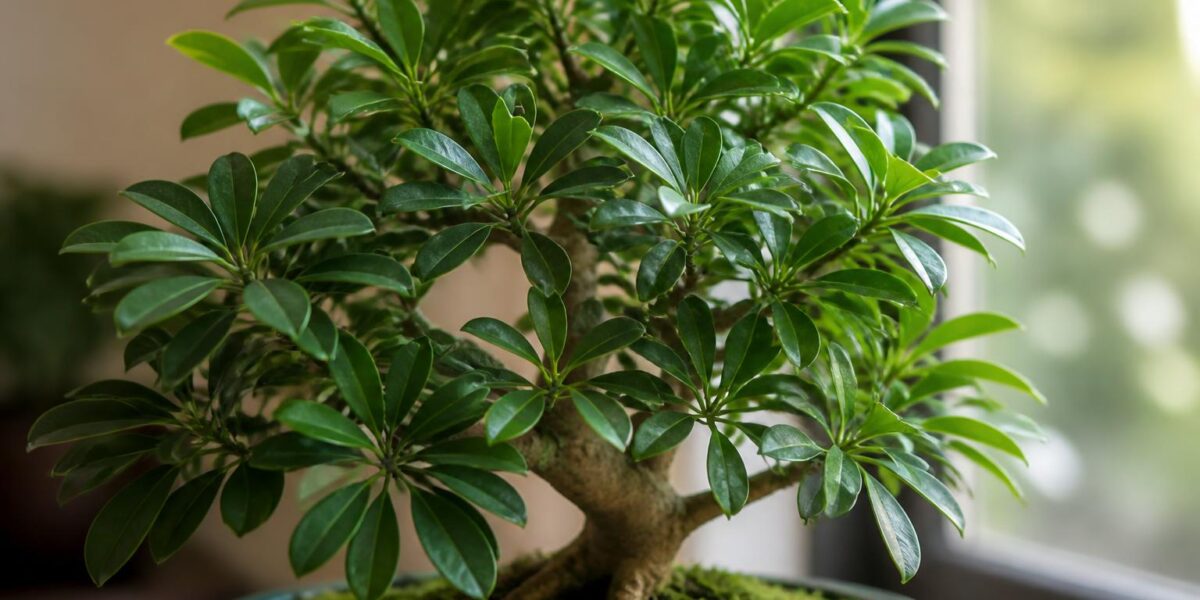
A bonsai is a miniaturized version of a full-size plant — its toxicity profile matches the underlying species exactly. A schefflera bonsai is most often Schefflera arboricola (dwarf umbrella tree), the same shrub sold as a 6-foot floor plant in big-box garden centers, simply trained into a tabletop tree by a bonsai artist. Because the species is on every major toxic-plant list, the answer to “is schefflera bonsai toxic to pets” is yes — for both cats and dogs.
Schefflera toxicity is mostly mild-to-moderate, dominated by oral burning and GI upset. The compounds responsible are insoluble calcium oxalate raphides plus saponins and unidentified terpenes. The mechanical irritation from the raphides — microscopic needle-shaped crystals that embed in soft tissue — is what causes the dramatic drooling and head-shaking owners notice first. Severe airway swelling is rare but possible, especially in small cats.
Are Schefflera Bonsai Toxic to Cats and Dogs?
Yes. Both Schefflera actinophylla (umbrella tree) and Schefflera arboricola (dwarf umbrella tree, the more common bonsai parent) are listed by the ASPCA as toxic to cats and dogs. The species-level guides at are schefflera toxic to cats and are schefflera toxic to dogs apply directly. For the dwarf form most often sold as bonsai, see are schefflera arboricola toxic to pets.
Within minutes of chewing a leaf or twig, the calcium oxalate raphides eject from specialized cells and embed in the lips, gums, tongue, and palate. The pet feels intense oral pain — the same burning sensation a person gets from biting a raw philodendron leaf. The mouth swells, drool runs, and the pet often paws at the face or rubs the muzzle on the carpet. Saponins in the sap layer on a second wave of GI irritation: vomiting, sometimes diarrhea, and decreased appetite over the next 6–12 hours.
Toxic Compounds in Schefflera
The bioactive components in umbrella plant tissue include:
- Insoluble calcium oxalate raphides — needle-shaped microscopic crystals stored under pressure in specialized cells (idioblasts). Chewing ejects them like darts into oral tissue.
- Saponins — soap-like glycosides that disrupt cell membranes and irritate the GI tract on swallowing.
- Falcarinol and related polyacetylenes — terpene-class compounds with skin-irritating properties; partly responsible for contact dermatitis.
The combination produces a brief but dramatic oral burn followed by mild GI upset. Severe systemic poisoning is uncommon but worth respecting in small or fragile patients.
Symptoms After Schefflera Bonsai Ingestion
Look for the following signs in the first 5–60 minutes:
- Sudden drooling or hypersalivation
- Pawing at the mouth, head shaking
- Visible tongue or lip swelling
- Reluctance to swallow or drink
- Gagging, retching, or vomiting
- Hoarse or absent meow/bark
Over the following 6–12 hours you may see:
- Decreased appetite
- Mild diarrhea
- Lethargy
- Skin redness on paws or chin where sap contacted
First Aid for Schefflera Bonsai Exposure
Move your pet away from the plant. Wipe the mouth gently with a damp cloth to remove any embedded plant fragments. If your pet will tolerate it, offer a small amount of cool water, a teaspoon of plain yogurt, or a lick of cottage cheese — the calcium binds free oxalate and may shorten the burning sensation, although it does nothing for crystals already lodged in tissue.
Do not induce vomiting. Vomiting brings the raphides back up through the same tissues they already injured, which can worsen oral burns. Do not give milk, hydrogen peroxide, or any salt-based home remedy.
Phone your veterinarian, the ASPCA Animal Poison Control Center at 888-426-4435, or the Pet Poison Helpline at 855-764-7661. Have the species (Schefflera arboricola is most likely), your pet’s weight, and exposure timing ready. The poison-control hotlines charge a consultation fee, but they will tell you whether home monitoring is sufficient or whether to drive in.
When to Go to the Vet
Head to a clinic the same day if you see:
- Persistent drooling beyond an hour
- Visible swelling of the lips, tongue, or face
- Difficulty swallowing or breathing
- Repeated vomiting
- Lethargy or collapse
- Any change in voice (hoarse meow or bark)
Veterinary care typically involves a thorough oral exam, gentle rinsing, anti-inflammatory medication, anti-emetics, and IV fluids if dehydration is a concern. Severe airway swelling — uncommon but possible — is treated with corticosteroids and oxygen support.
Why Schefflera Bonsai Is Especially Tempting to Pets
Schefflera bonsai presents three pet hazards that the floor-plant version does not:
- Tabletop reach. Cats and small dogs can swipe a leaf without leaving the floor.
- Hand-shaped leaflets. The leaflets fan out from a central point and look like little batting toys.
- Frequent pruning. Each pinched leaf releases fresh sap onto the surrounding pot rim and floor.
The species is also propagated easily from cuttings, so many bonsai households accumulate multiple specimens — multiplying the exposure surface.
Other Bonsai Hazards to Know
If you keep a schefflera bonsai, you may also be tempted by other tropical bonsai forms. Cross-reference your collection against these:
- Ficus bonsai — toxic; sap with ficin and psoralens. See ficus bonsai toxic to pets.
- Jade tree bonsai (Crassula ovata) — toxic; saponins and possible cardiac glycosides. See jade tree bonsai toxic to pets.
- Azalea bonsai — severely toxic; cardiac and neurologic emergency. See azalea bonsai toxic to pets.
Pet-Safer Alternatives
If you love the umbrella-leaf bonsai aesthetic but want a non-toxic option, the closest match is Chinese elm bonsai (Ulmus parvifolia) — a small leafy deciduous tree that responds beautifully to bonsai training and is ASPCA non-toxic. See Chinese elm bonsai safe for pets. Pine bonsai is another lower-risk option (mild GI irritation only).
For broader pet-safe greenery, browse our cat-safe houseplants guide. Meet adoptable companions at adopt cats and adopt dogs.
Living With a Schefflera Bonsai Safely
If you choose to keep your tree, place it on a tall, stable shelf with no climbing route. Bonsai trays are slippery and easy to knock over — anchor the pot to a non-slip pad and consider a museum-style adhesive putty under the tray.
Wear gloves when pruning. Wipe pruning shears, the pot rim, and the tabletop with a damp cloth after every session. Sweep dropped leaves into a closed bin immediately. If your pet has shown any past curiosity, the simplest long-term answer is relocation — a sunroom, office, or screened porch your pet does not enter.
Schefflera Arboricola vs Schefflera Actinophylla in Bonsai
The two main Schefflera species used as bonsai are sister taxa with identical toxicity but different growth habits:
- Schefflera arboricola (Dwarf Umbrella Tree) — smaller, more compact, smaller leaflets; the more common bonsai parent. Leaflets are 2–4 inches long and arranged in groups of 7–9.
- Schefflera actinophylla (Australian Umbrella Tree, Octopus Tree) — larger species with leaflets up to 12 inches long arranged in groups of 7–16. Less common as bonsai because the leaves resist miniaturization.
Both contain the same toxic compounds in the same proportions. Identification is useful for plant care but does not change the first-aid approach. See are schefflera arboricola toxic to pets for species-specific detail.
How Cats and Dogs Encounter Schefflera Bonsai
The leaves and twigs are the highest-risk parts because they are the most accessible and the easiest to chew. Three common exposure routes:
- Batting and chewing. The umbrella-fanned leaflets are exactly the right size and movement profile to attract a cat. One clean bite ejects raphides into the mouth.
- Pruning debris. Bonsai care produces a regular stream of small leaflets and stem fragments. Sap is most concentrated in fresh cuttings.
- Aerial root mouthing. Older Schefflera arboricola develops aerial roots that hang within reach of small or medium dogs.
Wipe pruning shears, the pot rim, and the workspace after every session. Sweep clippings into a closed bin immediately.
What to Tell Your Vet or Poison Control
Provide: your pet’s species, breed, weight, age, pre-existing conditions and medications; the plant species (Schefflera arboricola or actinophylla); the exposure amount and time; and any signs observed. Note specifically whether you saw any swelling of the lips, tongue, or face, and whether your pet’s voice sounds different — those are markers of more significant raphide injury.
Photograph the plant and bring a leaf to the clinic. If you keep other raphide-carrying houseplants in the same room (peace lily, philodendron, dieffenbachia, pothos), mention them — the symptom pattern overlaps and the vet may want to confirm the actual culprit.
Long-Term Living With a Schefflera Bonsai and Pets
If you have decided to keep your schefflera bonsai and you live with cats or dogs, the practical reality is that you need a maintenance routine that prevents accidental contact. Daily and weekly habits that work:
- Display on a high stable shelf with no climb route. A bookshelf top with closed sides or an upper kitchen cabinet works well.
- Sweep the area around the pot daily — dropped leaflets are the most common exposure route.
- Wear gloves and prune over a tray; clean shears, the pot rim, and the work surface afterward.
- Use larger pebbles for topdressing to discourage cat digging and dog mouthing.
- Keep fertilizer, pest sprays, and tools sealed and out of pet reach.
- Inspect the tree weekly for fresh pruning wounds or broken branches that may bleed sap.
If you also keep peace lilies, philodendron, dieffenbachia, or other raphide-carrying houseplants, give them the same supervision rules. The toxic mechanism is similar across this group, and the symptom pattern is hard to distinguish without species ID.
Frequently Asked Questions
Is schefflera bonsai toxic to pets?
Yes. Schefflera arboricola and S. actinophylla are both toxic to cats and dogs. Calcium oxalate raphides plus saponins cause oral pain, drooling, vomiting, and possible swelling.
What happens if my cat chews a schefflera bonsai leaf?
Within minutes, expect drooling, head shaking, pawing at the mouth, and possibly vomiting. Severe airway swelling is rare but possible — call your vet immediately if breathing changes.
How long do schefflera symptoms last in dogs?
Oral pain typically eases within 1–2 hours; mild GI upset can last 12–24 hours. Persistent vomiting or lethargy past 24 hours warrants a clinic visit.
Should I induce vomiting if my pet ate schefflera?
No. Inducing vomiting drags raphides back through already-injured tissue. Call ASPCA APCC at 888-426-4435 or Pet Poison Helpline at 855-764-7661 for case-specific guidance.
Is schefflera arboricola the same as regular schefflera?
They are sister species in the same genus with identical toxicity. S. arboricola is the smaller, dwarf umbrella tree most commonly trained as bonsai; S. actinophylla is the giant umbrella tree.


