
Last updated: May 16, 2026
In this article
- Jade Tree Bonsai and Pet Safety at a Glance
- Are Jade Tree Bonsai Toxic to Cats and Dogs?
- Toxic Compounds in Crassula Ovata
- Symptoms After Jade Tree Bonsai Ingestion
- First Aid Steps for Jade Tree Bonsai Exposure
- When to Go to the Vet Immediately
- Why Bonsai Form Increases the Risk
- Living With a Jade Tree Bonsai Safely
- Pet-Safe Bonsai and Houseplant Alternatives
- Distinguishing Jade Tree Bonsai From Other Crassula Forms
- Why Jade Bonsai Is Easy to Underestimate
- Information to Have Ready When You Call the Vet
- Long-Term Care of a Jade Tree Bonsai in a Pet Home
- Frequently Asked Questions
Jade Tree Bonsai and Pet Safety at a Glance
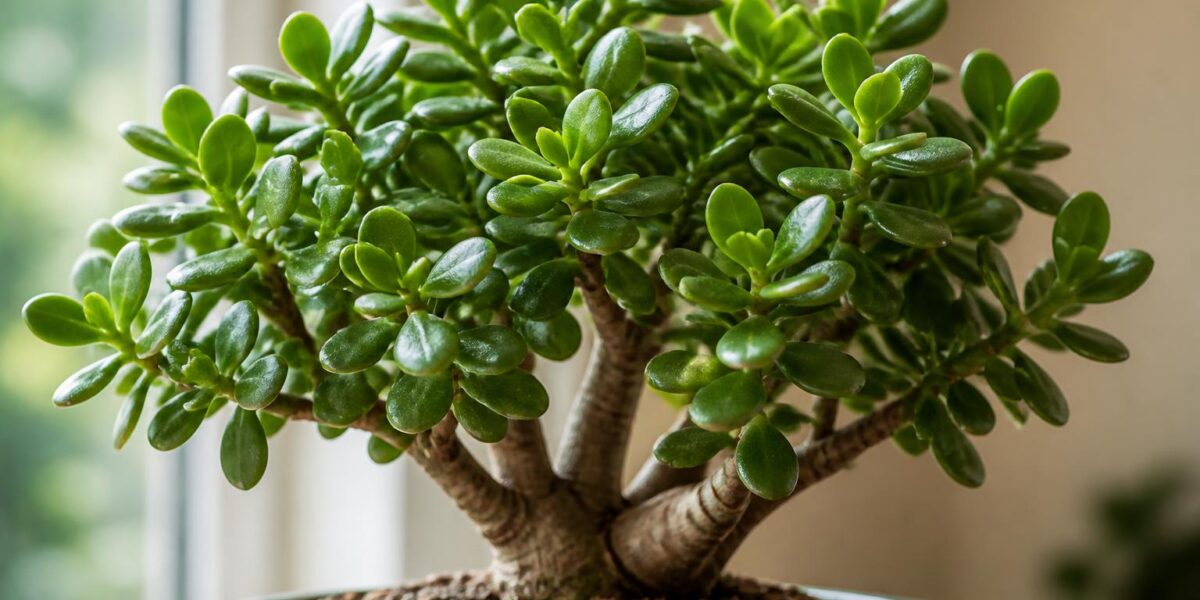
A bonsai is a miniaturized version of a full-size plant — its toxicity profile matches the underlying species exactly. A jade tree bonsai is simply a Crassula ovata (the same “money tree” or “lucky plant” sold as a house succulent) that has been root-pruned, wired, and trained into a miniature tree shape. So if you have asked “is jade tree bonsai toxic to pets,” the answer is the same as for a regular jade plant: yes, it is toxic to cats and dogs.
Jade tree bonsai sits in the mild-to-moderate toxicity tier. It is not in the same league as azalea, oleander, or lily of the valley, but it consistently causes vomiting, depression, and incoordination in pets that chew the leaves or stems. Because bonsai are usually displayed at tabletop or windowsill height — exactly cat-batting and puppy-mouthing range — exposures are common in households that do not realize the genus is a problem.
Are Jade Tree Bonsai Toxic to Cats and Dogs?
Yes. Crassula ovata (also sold as jade plant, jade tree, money plant, friendship tree, lucky plant, and dollar plant) is on the ASPCA toxic plant list for both cats and dogs. The active toxic agents are not fully characterized in the veterinary literature, but the working hypothesis includes saponins and bufadienolide-like cardiac glycosides — the same family of compounds that make Kalanchoe (a close relative) much more dangerous.
Cats appear to be slightly more sensitive than dogs. Cat-side signs include vomiting, depression, ataxia (wobbly walking), and occasionally a slow heart rate. Dogs typically show vomiting and lethargy with less neurologic involvement, but every exposure deserves a vet call.
For full-size species coverage, see are jade plants toxic to cats, are jade plants toxic to dogs, and the umbrella explainer at are jade tree toxic to pets.
Toxic Compounds in Crassula Ovata
Suspected and reported toxins in jade tree bonsai include:
- Saponins — soap-like glycosides that disrupt cell membranes and irritate the GI tract.
- Bufadienolide-like cardiac glycosides — a family of compounds that, in higher concentration relatives like Kalanchoe, cause arrhythmias. Crassula ovata appears to carry far less than Kalanchoe, which is why most jade exposures stop at vomiting and lethargy rather than cardiac collapse.
- Unidentified GI irritants — the ASPCA explicitly notes that the exact toxic principle has not been confirmed.
The lack of a confirmed compound is one reason jade tree bonsai gets underestimated. The clinical signs are real and reproducible even if the lab chemistry is incomplete.
Symptoms After Jade Tree Bonsai Ingestion
Watch for any of the following within the first 1–6 hours after suspected exposure:
- Vomiting (most common sign)
- Depression, low energy, hiding behavior
- Ataxia — wobbly walking, falling sideways, missed jumps
- Slow heart rate (more often noted in cats)
- Loss of appetite
- Drooling
- Mild diarrhea
Most pets recover within 24–48 hours with supportive care. The danger curve rises if your pet is small, very young, very old, or has pre-existing kidney or heart disease.
First Aid Steps for Jade Tree Bonsai Exposure
Move the bonsai immediately to a place your pet cannot access. Pick up dropped leaves, count broken branches, and estimate how much was eaten — even a rough “two leaves” or “tip of one stem” helps the vet triage. Photograph the plant in its pot.
Offer water but do not force it. Do not give milk, butter, hydrogen peroxide, or any home remedy. Do not try to induce vomiting unless your veterinarian specifically directs you to.
Call your veterinarian, the ASPCA Animal Poison Control Center at 888-426-4435, or the Pet Poison Helpline at 855-764-7661. Have your pet’s weight, the species name (Crassula ovata), and the time of exposure ready. A consultation fee may apply to poison-control hotlines, but the per-case toxicology guidance is well worth it.
When to Go to the Vet Immediately
Skip home monitoring and head straight to the emergency clinic if you see:
- Repeated vomiting that will not stop
- Profound lethargy or collapse
- Severe ataxia or seizures
- Slow or irregular heartbeat
- Pale gums or signs of shock
- Any cardiac symptom in a pet with known heart disease
Bring a leaf or photo. Veterinary supportive care typically includes anti-emetics, IV fluids, electrocardiogram monitoring for any cardiac signs, and overnight observation in higher-risk patients.
Why Bonsai Form Increases the Risk
A jade tree as a bonsai is more accessible than the same plant in a hanging basket or on a tall plant stand. Three reasons it deserves extra attention:
- Tabletop placement. Bonsai are usually displayed at coffee-table height for visual enjoyment.
- Frequent pruning. Bonsai care involves regular leaf pinching and stem trimming. Each cut leaks sap, which is at its most concentrated in the trim debris.
- Trim debris. Pruning sessions leave small leaves and stem pieces on the floor — exactly the size and texture a cat or small dog likes to mouth.
If you also keep other Crassula succulents — see Crassula perforata toxic to pets, Crassula tetragona toxic to pets, and Crassula arborescens toxic to pets — the same toxicity profile applies. The whole genus is best treated as one risk category in a multi-pet household.
Living With a Jade Tree Bonsai Safely
Place the bonsai on a tall sturdy shelf with no climb route. Avoid hanging it where a cat can reach from a perch above. Sweep dropped leaves and trim debris into a closed bag immediately after every pruning session.
If a leaf falls during the day, pick it up before your pet finds it. Keep grow lights and humidifier cords secured so they do not act as ladders or chew lures.
Train a “leave it” cue with your dog so any new plant introduction is met with disengagement, not a sniff-and-taste investigation. For cats, the practical reality is environmental management — a bored cat will eventually find any reachable leaf, so out-of-reach is the only reliable strategy.
Pet-Safe Bonsai and Houseplant Alternatives
If the toxic risk feels like too much to manage, consider:
- Chinese elm bonsai (Ulmus parvifolia) — ASPCA non-toxic; the safest bonsai for pet households.
- Pine bonsai (Pinus species) — mildly GI-irritating but not classically toxic. See pine bonsai safe for pets.
- Pet-safe houseplants for the same green-room aesthetic — browse our cat-safe houseplants guide.
Meet adoptable cats and dogs at adopt cats and adopt dogs.
Distinguishing Jade Tree Bonsai From Other Crassula Forms
The genus Crassula contains over 200 species, several of which are commonly sold as houseplants and trained as miniature trees. Jade tree bonsai is specifically Crassula ovata, but the broader genus all shares the same toxicity profile. Common cousins include:
- Crassula ovata “Gollum” — tubular finger-like leaves with red tips; trained as bonsai.
- Crassula ovata “Hobbit” — curled spoon-shaped leaves; another bonsai-friendly cultivar.
- Crassula arborescens (Silver Dollar Plant) — round silver-blue leaves; tree-like form.
- Crassula perforata (String of Buttons) — stacked triangular leaves on upright stems.
- Crassula tetragona (Mini Pine Tree) — needle-like leaves; often confused with pine bonsai.
All carry the same suspected toxic compounds. Identifying the exact species is helpful for plant care and conversation but does not change the first-aid approach. See Crassula arborescens toxic to pets and Crassula perforata toxic to pets for the cousins.
Why Jade Bonsai Is Easy to Underestimate
Jade plants have a reputation as “indestructible beginner succulents.” That reputation rubs off on the bonsai form too — owners often display them at coffee-table height, leave them in low pots, or hang them from a kitchen window. Three reasons the relaxed attitude is a mistake in pet households:
- Soft leaves. Crassula ovata leaves are plump, soft, and easy to chew — much more inviting to a curious mouth than a stiff pine needle.
- Bonsai pruning. The miniaturizing process generates frequent leaf and stem fragments that fall to the floor.
- Snap-off habit. Jade leaves and small branches break off cleanly when batted, scattering across hard floors.
The combination produces a higher accidental-exposure rate than the toxicity tier alone would suggest.
Information to Have Ready When You Call the Vet
Hotline and clinic staff will want: your pet’s species, breed, weight, age, any pre-existing conditions or medications; the species (Crassula ovata, jade plant, or jade tree bonsai); the approximate amount eaten; the exposure time; and any signs already observed. Photograph the bonsai and the area where chewing occurred. Bring a leaf or stem to the clinic if possible.
If you keep multiple succulents, name them all. A household with jade tree bonsai, kalanchoe, and aloe should be triaged differently from one with only the jade — Kalanchoe in particular is much more cardiotoxic and changes the urgency level.
Long-Term Care of a Jade Tree Bonsai in a Pet Home
If you decide to keep your jade tree bonsai and you live with cats or dogs, the goal is a routine that consistently keeps plant material out of pet reach. Practical habits that work:
- Display on a high stable shelf with no climb route. Avoid coffee tables, end tables, and low windowsills.
- Sweep the area around the pot daily. Snapped leaves are the single most common exposure source.
- Prune over a tray or newspaper; sweep all clippings into a closed bin immediately.
- Wipe the trunk, pot rim, and surrounding surfaces after every pruning session.
- Use larger pebbles (quarter-size or bigger) for topdressing to discourage cat digging and dog mouthing.
- Keep fertilizer, pest sprays, and tools sealed and out of pet reach.
If you also keep Kalanchoe, aloe, or other Crassulaceae-family succulents, give them the same supervision rules — many of them are more toxic than jade and warrant the same or stricter handling.
Frequently Asked Questions
Is jade tree bonsai toxic to pets?
Yes. Jade tree bonsai is Crassula ovata, the same plant as the regular jade plant, and it is toxic to cats and dogs per the ASPCA. Exposures cause vomiting, depression, and sometimes ataxia or slow heart rate.
How much jade tree bonsai is toxic to a cat?
Veterinary literature does not give a firm threshold, but even one or two leaves can cause vomiting and lethargy in a small cat. Treat any ingestion as worth a vet call.
What are the symptoms of jade poisoning in dogs?
Vomiting, lethargy, depression, decreased appetite, and occasional ataxia. Severe cases may show slow heart rate or collapse — call your vet or ASPCA APCC at 888-426-4435 immediately.
Is bonsai jade more toxic than a regular jade plant?
The toxicity is identical. Bonsai is a cultivation style, not a different species. The risk only changes because the plant sits at a more accessible height and is pruned more frequently.
What is the safest bonsai for cats and dogs?
Chinese elm bonsai (Ulmus parvifolia) is the safest, ASPCA non-toxic option. Pine bonsai is also relatively low-risk if you accept mild GI irritation as a possibility.


